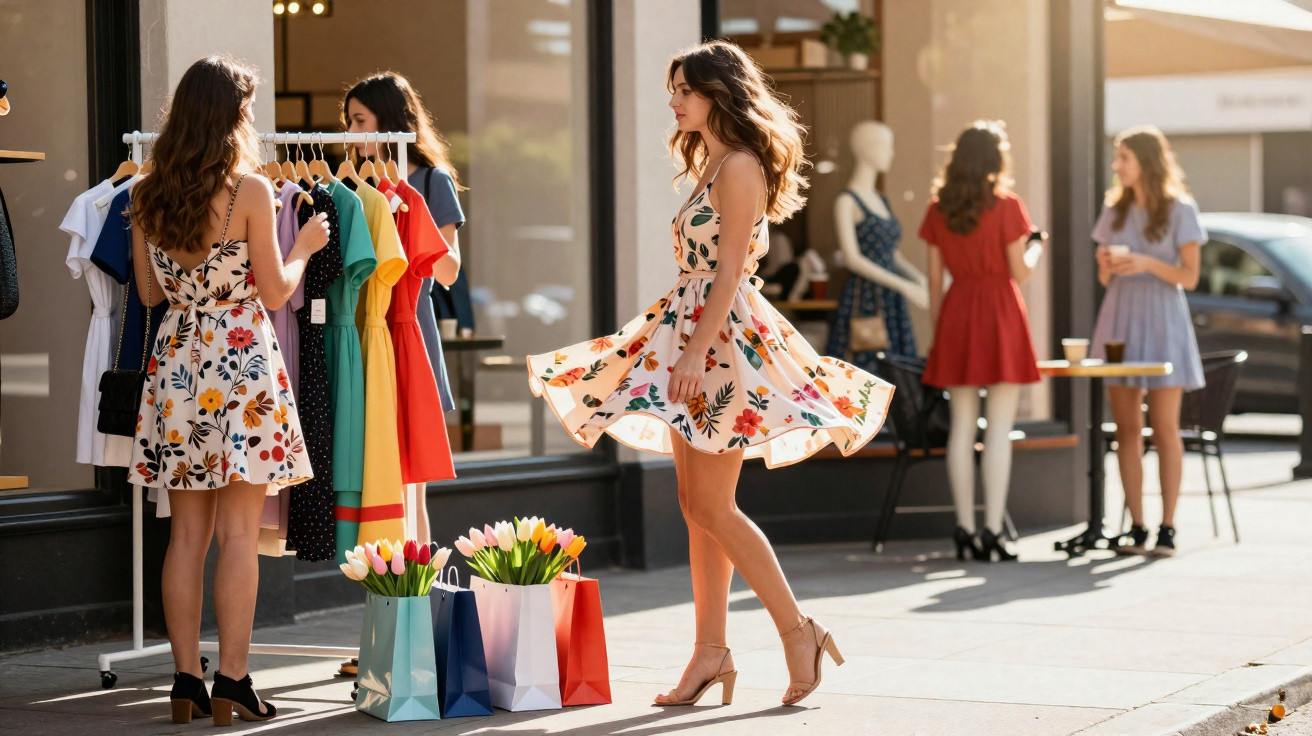
As soon as temperatures rise by a few degrees, one item moves to the top of the wardrobe pile: the short dress. Zara, Mango and H&M are currently releasing a wave of new styles that makes the direction of spring fashion clear: shorter, lighter and more feminine, but with a contemporary edge rather than girlish fussiness.
Short dresses: why they return everywhere in spring
Once the weather warms up, even slim-fit jeans can quickly feel like armour. A short dress, by contrast, immediately feels more effortless. Fabric moves around the legs, there is no tightness around the stomach, yet the result still looks put together. That combination of comfort and impact is precisely what makes short dresses such a strong spring choice.
The latest Zara, Mango and H&M collections demonstrate just how versatile they can be. There are designs with softly puffed sleeves, A-line cuts that draw attention to the legs, dresses with waist belts for a curvier silhouette, and very clean, almost minimalist styles with little embellishment. The range spans everything from romantic to urban-cool.
“The short dress has now become a staple of every spring wardrobe – much like the trench coat and white trainers.”
Designers are also making interesting use of volume: a little extra fabric at the shoulders, a gently swaying skirt below and a defined waist between the two. This creates a shape that can flatter many body types. There are suitable silhouettes both for anyone wanting to disguise small problem areas and for those who would like to make their legs the focus.
Between retro flair and clean minimalism
Many new short dresses visually reference the 1960s or 1970s, without looking dated. Straight, subtly flared mini dresses in structured fabrics, collars reminiscent of vintage blouses and playful floral prints bring a nostalgic note. Alongside them are highly modern options with sharp lines, broad shoulders and textured materials.
On the catwalks, designers have shown for several seasons that dresses are not disappearing from view. If anything, the reverse is true: they are constantly being reimagined. Zara, Mango and H&M translate these influences for the high street, with accessible prices and fabrics intended to cope with daily life between the office, the train and after-work drinks.
These 12 dress trends from Zara, Mango and H&M are shaping spring
Although the exact selection differs between shops, several clear trend directions are emerging. Typical examples include:
- short shirt dresses with a belt at the waist
- knitted mini dresses with a subtly body-skimming shape
- patinated A-line cuts with a swishing skirt
- styles with puff sleeves and romantic patterns
- plain dresses in bold shades such as cobalt blue or tomato red
- simple black mini dresses as an “all-purpose weapon”
The established fashion chains are placing a strong emphasis on variety. Anyone looking for an everyday city look could choose a short shirt dress in khaki or denim, then pair it with white trainers and a crossbody bag. For the evening, short knitted dresses work surprisingly well with a blazer and ankle boots – an outfit that can shift from officewear to a going-out look through accessories.
“The short dress is no longer purely a party piece, but a kind of modular system for almost every everyday situation.”
How to wear the new dresses
For a quick overview, use this straightforward styling guide:
| Dress style | Suitable occasion | Shoe choice |
|---|---|---|
| Short shirt dress | Office, city, café | Loafers, trainers, ankle boots |
| Knitted mini | After work, dinner, date | Ankle boots, knee-high boots, court shoes |
| Patinated A-line cut | Breakfast, brunch, shopping | Slingbacks, ballet flats, sandals |
| Romantic floral dress | Birthday, garden party, family celebration | Strappy sandals, espadrilles |
With chains such as Zara, Mango and H&M, it is particularly worthwhile to look deliberately for styling potential. A minimalist black mini dress can look very chic with gold-coloured jewellery and high heels, while a denim jacket and trainers give it an unexpectedly relaxed feel.
How every figure can find the right short dress
When choosing short dresses, the balance of length, volume and neckline matters greatly. A few basic guidelines can make the decision easier:
- Petite people often appear taller in slightly shorter lengths when the dress ends just above the knee and the waist is defined.
- Wider hips can be balanced with gently flared skirts and longer sleeves.
- Anyone who does not want to emphasise their arms can choose three-quarter sleeves or loosely draped puff sleeves instead of spaghetti straps.
- Very body-hugging knitted minis work well with a long blazer or trench coat to soften the outline.
“Short dresses do not have to be ultra-short – the ‘right’ length is the one in which you can move comfortably.”
Fast-fashion chains in particular offer numerous versions of the same core silhouette each season. If you are unsure during the first fitting, it is worth trying several lengths. Just a few centimetres can often make a noticeable difference to the overall look.
Colours, patterns and fabrics for spring short dresses
While winter collections are often dominated by black, grey and navy, spring at Zara, Mango and H&M brings visibly more colour. Pastels such as pale yellow, rose and mint sit alongside vibrant statement shades. Plain dresses usually look more grown-up and are easier to style, whereas floral prints and graphic patterns have a more playful character.
Lightweight woven fabrics, viscose and blended materials lead the way for fabrics. Knitwear remains popular during the transitional period because it provides warmth without appearing “wintry”. Many shoppers choose styles that work with a coat in spring and can be worn on their own in summer – a practical benefit that makes the wardrobe work harder.
How accessories can change the look quickly
Anyone who does not want to buy a new dress every week can achieve plenty with accessories. The very same short dress can look completely different on several days. A few options include:
- a belt in a contrasting colour to define the waist more strongly
- statement earrings for evening looks
- a lightweight cardigan or blazer for a more professional office appearance
- chunky boots instead of sandals for an everyday contrast in style
Simple short dresses are especially suited to serving as a “canvas” for accessories. A striking bag or coloured tights can transform their character instantly, without changing the main item itself.
What makes short dresses practical for everyday wear
Beyond their fashion appeal, short dresses offer several practical advantages. They take up little room in a suitcase, many fabrics crease very little and they can be put on in seconds. Anyone under pressure in the morning saves time because the top and bottom are already combined in one piece – leaving only one decision: which shoes to wear with it?
Concerns about freedom of movement and showing “too much leg” are one reason why many people hesitate over shorter styles. Two things help here: selecting the right length and wearing suitable layers underneath, such as seamless shorts that stay hidden beneath the dress. This makes it easier to feel at ease when climbing stairs or sitting on a bicycle.
Short dresses therefore support the transition from wet, cold late winter to sunnier days not only visually, but functionally too. Choosing one or two strong styles from Zara, Mango or H&M now creates the basis for numerous uncomplicated outfits – from the first coffee on the balcony to a garden party in May.








Comments
No comments yet. Be the first to comment!
Leave a Comment