
Bicarbonate of soda is said to soften fine lines and brighten under-eye shadows, but can it really deliver? Here is what the trend promises, how it is being used, and when extra care is essential.
What the trend claims
Bicarbonate of soda, also called baking soda, has traditionally been used to scrub ovens and neutralise smells. It has recently found an audience among beauty enthusiasts, who use it as a mild exfoliant and instant brightening treatment. The theory is straightforward: it removes surface build-up, cuts through oil and may leave the complexion looking more refreshed after a brief application.
Plenty of people say their skin feels smoother immediately after they rinse it away. Foundation may apply more evenly, while sebum can appear less noticeable. Around the eyes, some users notice a short-lived improvement if their shadows are caused by puffiness rather than pigmentation. This result usually disappears within a few hours.
Short contact and low concentration make the difference between a tidy polish and a barrier-disrupting mistake.
What the science supports
The skin’s surface naturally sits at a pH of roughly 4.7–5.5, whereas bicarbonate of soda has a pH of about 8–9. Frequent use, or leaving it on for too long, may remove lipids, increase transepidermal water loss and cause irritation. Dermatologists therefore consider it an occasional, well-diluted aid rather than an everyday skincare treatment.
Because it acts as a gentle physical exfoliant, it may remove dead skin cells and oil, briefly making fine lines appear less visible. However, it cannot restore collagen, lighten deep pigmentation or stand in for sunscreen. The delicate skin beneath the eyes leaves very little room for error.
How to use bicarbonate of soda safely, if you still want to try it
A milder kitchen-cupboard mask
Should you decide to experiment, reduce the alkalinity and keep its time on the skin short. This basic mixture is designed to be less harsh.
- 1 level teaspoon bicarbonate of soda
- 1 tablespoon plain yoghurt or finely ground oats
- 1 teaspoon runny honey
- Enough cool water to create a soft paste
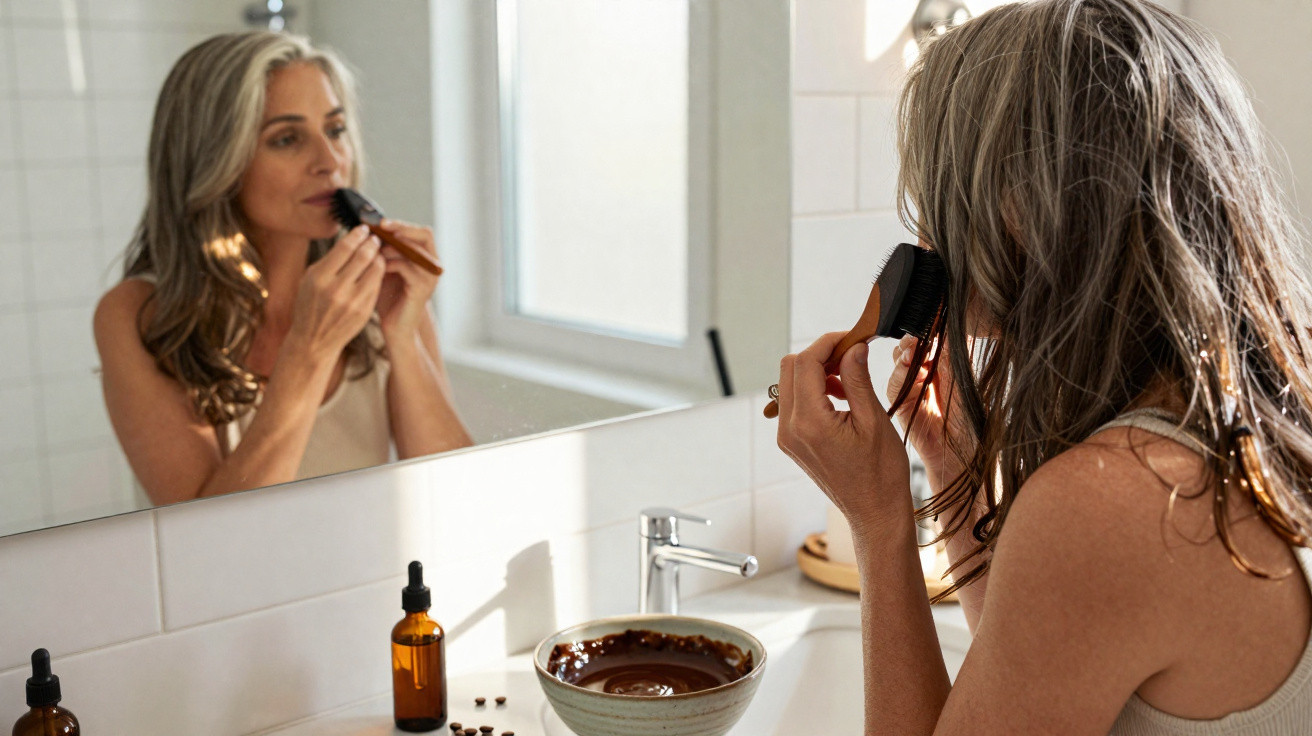
Smooth it over clean skin using your fingertips. Keep at least a fingertip’s width away from the eye area. Massage with an extremely light touch for 10 seconds, then leave it in place for 60–120 seconds. Rinse fully with lukewarm water, pat the skin dry and follow with a ceramide-rich moisturiser. Use no more than once every 7–10 days.
Keep total contact under two minutes and moisturise straight after. That simple rule prevents most irritation.
Who should avoid it
- People with very sensitive skin, eczema, rosacea or a damaged skin barrier
- Those with active acne, open lesions, or who have recently had a peel or laser treatment
- Darker skin tones susceptible to post-inflammatory pigmentation, as irritation may leave marks
- Anyone using potent actives that week, including retinoids, AHAs/BHAs or benzoyl peroxide
Fine lines and dark circles: what bicarbonate can and cannot do
| Target | Possible effect | Why | Better-proven options |
|---|---|---|---|
| Fine lines | Temporary softening | It removes surface cells and oil, which improves light reflection | Retinoids, peptides, sunscreen, consistent hydration |
| Under-eye puffiness | May seem less noticeable after rinsing | Slight decongestion and a cool rinse can reduce swelling | Cold compress, caffeine eye gel, sleep, less salt |
| Dark circles (pigment) | Unlikely | Pigment is within the skin, and alkalinity cannot remove it | Vitamin C, niacinamide, SPF, professional peels |
| Clogged pores | Some improvement | It can help loosen debris | Salicylic acid, gentle cleansers, non-comedogenic make-up |
Patch-test method
Combine a small amount with your chosen buffer, then apply it to the inner forearm for 10 minutes before rinsing. Monitor the area for 24 hours. If you experience redness, stinging, tightness or flaking, do not use it. Keep essential oils away from the eyes, as they may sting even when diluted.
Expert view: pH and protecting the skin barrier
Healthy skin holds moisture in and keeps irritants out through its lipid matrix and mildly acidic “acid mantle”. Increasing pH, even for a short period, boosts enzyme activity that can break down these lipids. Most skin recovers, but sensitive skin may struggle to do so.
Thoughtful aftercare can make a difference. Choose moisturisers containing ceramides, cholesterol and fatty acids. Humectants, including glycerin and hyaluronic acid, help replenish hydration. During the day, use broad-spectrum SPF 30 or above, as recently exfoliated skin can be more reactive in sunlight.
Bicarbonate can polish the look of skin. It cannot replace sunscreen, retinoids, or time-tested actives for real wrinkle care.
Eye-area safety
Under-eye skin is thin and highly vascular, so irritation can quickly show up as redness or persistent darkness. When shadows are mainly vascular, appearing bluish or purple, topical brightening products will not alter their root cause. Prioritise sleep, managing allergies and cold compresses instead. If the darkness is pigment-related and brownish, daily sunscreen plus focused ingredients such as vitamin C and niacinamide are more effective than kitchen chemistry.
A simple practical routine
Once-a-week bicarbonate of soda routine
- Use it in the evening only, and avoid strong acids or retinoids that day.
- Cleanse first, then apply the buffered mixture for no longer than two minutes before rinsing thoroughly.
- Apply a barrier-supporting cream afterwards, without layering active products on top.
- Use sunscreen the following morning, and avoid other exfoliants for 48 hours.
Cost and clarity
A box of bicarbonate of soda costs pennies per application, which is appealing during a cost-of-living squeeze. Yet value is about more than the initial price. A mild salicylic cleanser used several times weekly can often clear pores with fewer flare-ups. For fine lines and dark circles, longer-term habits tend to offer more: daily SPF, retinoids on several nights each week if tolerated, reliable hydration and a consistent sleep routine.
Extra points that prevent problems
- Bicarbonate of soda is different from baking powder. Baking powder includes acids and starch, so it should not be used in skincare.
- Do not apply bicarbonate alongside vitamin C serums. The acid will be neutralised, wasting both products.
- Avoid trying it before an important event, since an unfamiliar routine can cause unexpected reactions.
- Keep the box sealed and dry, as clumped powder is more abrasive.
When to seek professional advice
Ongoing dark circles may be hereditary or linked to bone structure. Fillers, lasers and prescription creams can sometimes help, but need an appropriate assessment. Deep wrinkles respond most effectively to retinoids, professional peels or energy-based devices. A pharmacist can offer initial guidance at the counter, while a dermatologist can create a treatment plan.
For anyone who is curious, bicarbonate of soda may have a very limited occasional use as a quick polish when skin looks dull. Use a small quantity, buffer the formula and prioritise the skin barrier. For lasting results, rely on the unglamorous essentials and treat trends as secondary.












Comments
No comments yet. Be the first to comment!
Leave a Comment