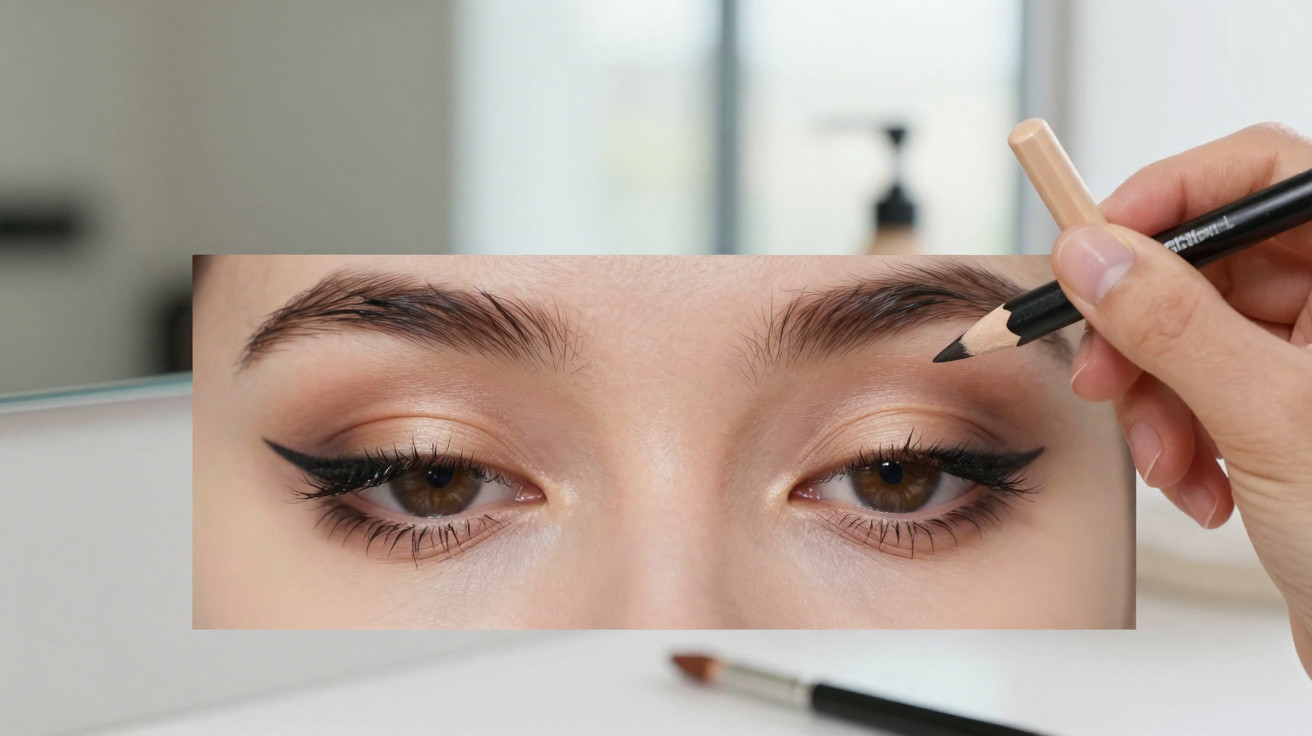
A black eye pencil is one of those make-up bag staples that can make a face feel instantly finished. Yet the familiar habit of running it along the lower waterline can sometimes have the opposite effect: rather than defining the eyes, it may make them look smaller, create a heavier-looking shadow underneath or smudge by lunchtime.
The useful switch is not necessarily giving up black liner. It is placing it more strategically. Keeping the deepest colour close to the upper lashes, softening the lower lash line and, if you like, using a beige or soft neutral pencil on the lower waterline can give definition while creating a fresher, more open-looking finish.
Why dark lower waterline liner can feel heavy
The waterline is the damp inner rim of the eye. An opaque black pencil here creates a strong dark border inside the eye shape, reducing the visible area of the white of the eye. For some people, that gives a deliberate smoky, dramatic effect. For others, especially when the rest of the make-up is light, it can look more severe than intended.
A hard line beneath the eye can also make natural texture and shadows in that area more noticeable. Fine lines, puffiness and darker under-eye areas are entirely normal, but strong contrast can draw the eye towards them.
This is not an age-based rule. Black waterline liner can look striking at any age. The point is simply to choose it when you want a bold, sultry result, rather than assuming it is the only way to define your eyes.
Dark liner works best when it supports the rest of your make-up instead of becoming the first thing you notice.
Know the difference between the waterline and lash line
Confusing these areas is often why eyeliner ends up looking stronger than planned.
- Waterline: the moist rim just inside the lower or upper lid.
- Upper lash line: the skin immediately above the roots of the upper lashes.
- Lower lash line: the skin immediately beneath the lower lashes.
- Tightlining: applying product right at the roots of the upper lashes to make the lash base look fuller.
A dark pencil worked into the upper lash roots can add impact without creating the closing-in effect of a fully lined lower waterline. It can also make lashes look denser without requiring a visible wing.
If you have sensitive eyes, wear contact lenses or are prone to blocked eyelid glands, avoid applying product inside the upper lid. Keep liner on the outer lash line instead.
A softer way to use black eyeliner
If black is your favourite shade, use it where it can define the eye without boxing it in. A creamy pencil is usually easier to soften than a very dry formula.
1. Start at the upper lashes
Look down into a mirror and apply the pencil in tiny strokes along the roots of the upper lashes. Avoid trying to draw one long, solid line in a single movement.
For a subtly elongated effect, focus on the outer two-thirds of the eye. A thick dark line taken right into the inner corner can make the eye look more enclosed.
2. Soften before it sets
Use a small angled brush, clean pencil brush or cotton bud to blur the edge slightly. The aim is a soft haze at the lashes, not a smudged band across the lid.
If your eyelids become oily during the day, press a small amount of matching brown, charcoal or black eyeshadow over the pencil. Pressing, rather than sweeping, helps keep loose pigment from falling beneath the eye.
3. Keep the lower line light
For an understated daytime look, leave the lower waterline bare. If you want a little balance beneath the eye, apply taupe, soft brown or grey-brown shadow close to the outer third of the lower lashes, then diffuse it with a small brush.
This keeps some definition while avoiding the sharp ring of darkness that can result from lining the whole eye.
Try brown, charcoal or plum instead of jet black
Black is not the only shade that creates contrast. Softer dark tones can define lashes and enhance eye colour while looking less stark against the skin.
Consider these options:
- Deep brown: a versatile everyday alternative to black.
- Charcoal: gives a cooler, softly smoky finish.
- Dark plum: a subtle choice that can complement green, hazel and brown eyes.
- Bronze or warm brown: useful when you want a warmer daytime look.
- Navy: a polished alternative to black that can provide clear definition when applied neatly.
There is no need to match eyeliner rigidly to eye colour. Test shades in daylight and see which gives your lashes enough definition without looking harsh against your complexion.
When a beige pencil may be the better choice
A matte or satin beige pencil on the lower waterline can make the eye area look more open because it lightens the inner rim rather than darkening it. A very pale cream shade may suit some complexions, but can look conspicuous if it is too bright or chalky. Beige, peach-beige and soft biscuit shades are often easier to wear.
Choose a pencil close to your natural waterline colour rather than automatically reaching for pure white. Apply one light pass, then check the result at arm’s length. A little is usually enough.
For a polished finish, pair a neutral waterline with curled lashes and mascara concentrated at the upper lash roots. This helps keep visual emphasis upwards.
A light waterline pencil should look like a quiet adjustment, not an obvious stripe of colour.
Build brightness around the eye, not only inside it
Eyeliner placement matters, but the overall eye area affects the result just as much. If you want a rested, illuminated-looking finish, combine a few small steps rather than relying on a heavy line.
- Curl lashes before mascara, checking that the curler is clean and its pad is intact.
- Apply mascara in thin coats to reduce clumps and flaking.
- Use a soft neutral shadow through the crease for shape.
- Add a small touch of light-reflecting shadow at the inner corner if you like, avoiding chunky glitter if it emphasises texture.
- Conceal only where needed beneath the eyes, blending the edges well.
- Keep brows groomed and softly defined to frame the eye.
In the UK’s low winter light, check your eye make-up near a window before heading out. Bathroom lighting can make liner appear softer than it does outdoors.
Common mistakes that make eyeliner look less polished
The issue is rarely black pencil itself. More often, it is a combination of placement, thickness and product that has moved during the day.
Lining the whole eye with one solid band
A thick, unbroken circle of liner can overwhelm smaller or hooded eye shapes. Try concentrating the deepest pigment along the upper lash line and outer corner instead.
Pulling the skin while applying liner
Tugging at the eyelid can make a line look uneven when the skin returns to its natural position. Rest your elbow on a surface and use short strokes for better control.
Applying too much pencil to a wet waterline
The waterline naturally produces moisture, so a thick layer may transfer, gather in the corners or migrate beneath the eye. Use a freshly sharpened pencil and build gradually.
Leaving the lower line unblended
If you use shadow or pencil beneath the lashes, soften the edge. A small brush can make the difference between intentional definition and a tired-looking smudge.
Ignoring formula and expiry guidance
Old eye pencils can become dry, drag across the skin and become contaminated. Follow the packaging guidance, and discard any product sooner if its smell, texture or performance changes.
Eye make-up hygiene and comfort
Never share eyeliner, especially pencils used near the waterline. Sharpen traditional pencils before use to remove the exposed surface, and keep brushes and sharpeners clean.
If you wear contact lenses, insert them before applying make-up and consider products labelled for sensitive eyes. Do not apply liner to irritated, infected or recently treated eyes. Stop using any product that stings, causes watering or leaves ongoing redness. If symptoms do not settle, ask a pharmacist, optometrist or healthcare professional for advice.
Remove eye make-up gently before bed rather than rubbing at the lashes. Never use household products, glitter intended for crafts or non-eye-safe pigments around the eyes.
Make the placement work for you
There is no rule saying you must abandon a dramatic black waterline after a certain birthday. Make-up should still be enjoyable. But when you want eyes to look larger, clearer and softly defined, shift the darkest pigment towards the upper lashes, keep the lower edge diffused and consider a natural beige pencil inside the lower rim.
Try the change on one eye first in good daylight. A side-by-side comparison can show whether a subtle upper lash line, brown lower shadow or neutral waterline gives you the finish you prefer. Often, the most effective eye make-up is not more product, but better placement.














Comments
No comments yet. Be the first to comment!
Leave a Comment