A notification appeared: “Brigitte Bardot has died.” For a moment, the room became oddly still. It was not that we had known her, but that a piece of the shared imagination seemed to have disappeared.
Then came the images: Bardot barefoot and bronzed on a Saint-Tropez beach; Bardot in a studio, a cigarette between her fingers and black liner framing her eyes. And there was always that extraordinary cloud of hair - the beehive that appeared to borrow a few extra centimetres from the sky.
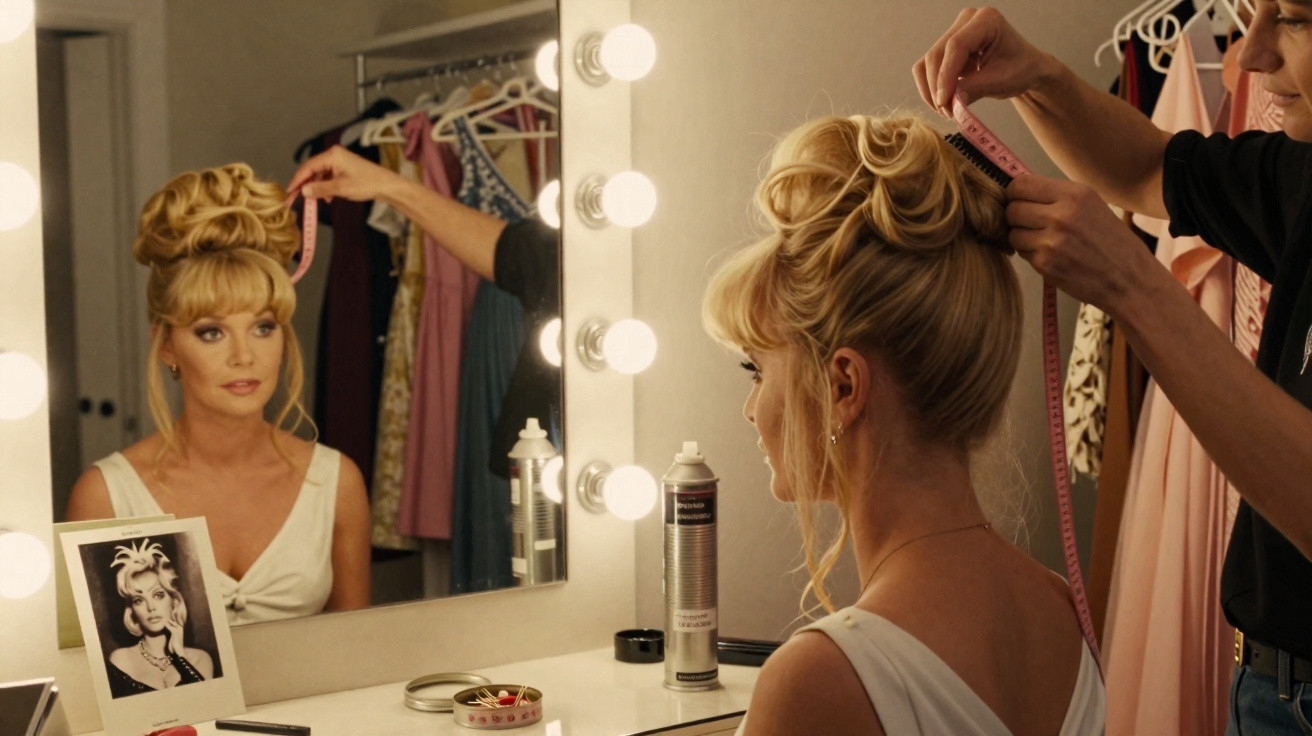
Stylists once murmured that her signature required “at least 15 centimeters” of height, constructed like concealed architecture above her head. It was never merely a hairstyle: it was a declaration, a defence, a gentle rebellion created with a teasing comb.
No YouTube tutorial has ever fully recreated what took place in front of that mirror.
The beehive that outlasted the star
Once news of her death broke, old Brigitte Bardot clips filled social feeds. One feature repeatedly drew the eye: her high, deliberately unpolished beehive. It was neither a regal coiffure nor a rigid red-carpet helmet. It looked ready to fall apart at any moment, which was precisely its appeal.
Her hair was never sculpted with the immaculate precision of a 1960s newsreader. The edges remained untidy, the crown was soft, and wisps fell across her eyes as though she had just left bed or a backstage dressing room. This was not restrained volume. Her beehive carried desire, liberty and a touch of disorder, all secured above her head.
Photographers have said that, when Bardot arrived on set, her beehive appeared before the actress did. First came the outline, then came the woman.
Across film stills from the early 1960s, her increasing height can almost be measured in centimetres. In “And God Created Woman”, her hair is still taking shape. By the time she moves through “Le Mépris”, the construction is complete: a raised crown, falling sides and a silhouette recognisable from memory alone.
A hairstylist working in Paris at the time reportedly measured her lift at over 15 centimeters on major shoot days. It was chaos carefully arranged in layers: teasing, spray, concealed padding and an impression of complete ease. The sort of style that takes an hour to create so that it can suggest you have just got out of bed.
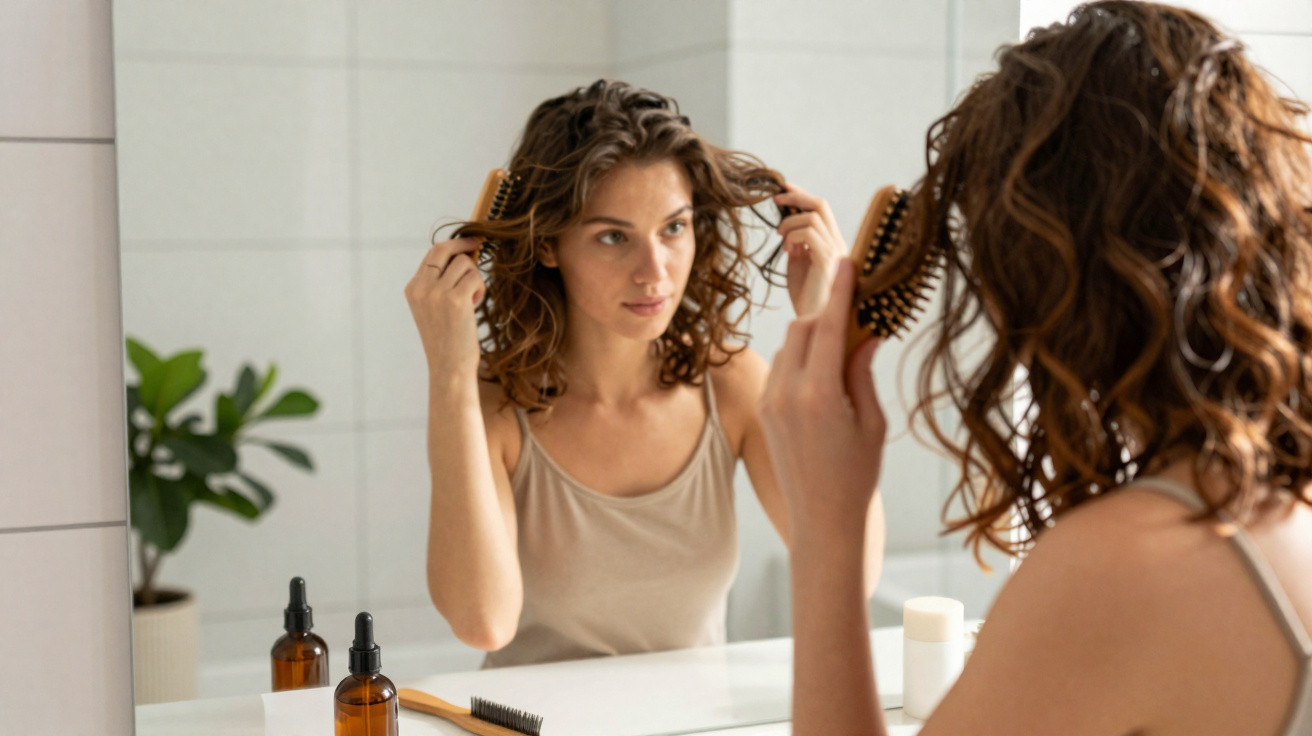
Today’s statistics seem almost amusing beside that analogue force. Search interest in Bardot rises every single time a retro beauty trend returns, whether it is cat-eye liner, French-girl hair or 1960s make-up. Young women on TikTok recreate her beehive in fluorescent-lit bathrooms, pursuing a fantasy born in smoky monochrome studios.
Her hair evolved beyond a simple style reference and became a form of shorthand. When a magazine mentions “Bardot hair”, the meaning is immediate: crown volume, soft ends and sensuality without the need to announce it. The look is identifiable even to people who have never watched any of her films.
There is a sound reason that this beehive remained fixed in the public memory. It occupied the meeting point between two social changes: women wishing to be glamorous without becoming statues, and a more visible form of sensuality emerging. Bardot’s beehive was sex-symbol hair that did not require brushing every five minutes.
The height gave her stature, presence and something close to stage lighting around her face. Yet its looseness kept her relatable: like the woman arriving late for dinner, lipstick slightly blurred, entirely unconcerned. In an era that expected women to look neat and controlled, her hair seemed to say that she could be immaculate and undone at once.
It was also an ingenious visual device. Those 15 centimeters at the crown lengthened the neck, defined the jaw and redirected attention towards the eyes. On camera, the style narrowed the face without anyone referring to “contouring”. Before Instagram angles, Bardot hair was already doing the contouring for you.
The hidden construction behind “15 centimeters”
The fabled height of Bardot’s beehive was not the result of genetics or divine intervention. It came from a backstage routine: slow, repeated movements capable of turning something ordinary into a signature. And there really was a technique behind it.
Her stylists began by separating the upper section of hair, approximately from the arch of one eyebrow to the other. This “island” formed the base. They lifted it, applied a light mist of spray and vigorously backcombed from the roots, producing a dense internal cushion that could nearly stand unsupported. Strong hairspray turned that teased section into an unseen framework.
Under the smooth exterior, photographs and accounts suggest another element: subtle padding. Small hair cushions, or even rolled hairpieces matched to her colour, were placed at the crown to cheat those additional centimetres. Her own hair on the outside, a secret structure underneath.
When attempting the look in a bathroom today, the usual instinct is to overdo every stage: excessive teasing, too much product and too much anxiety. The result is rigid hair that feels more “school play” than French cinema icon. The paradox is that Bardot’s beehive appeared carefree only because a strict system lay beneath it.
A modern stylist’s version of her method can be split into three short stages: make the foundation, conceal the foundation, then disrupt the finish. The foundation is pure construction - teasing, perhaps a small cushion and highly localised spray. Concealing it involves placing a fine, smoother layer of hair over the top, brushing only its surface gently so that the structure below remains untouched.
The final stage is where the Bardot effect takes over. Run fingers through the lengths, pull a few pieces around the face and loosen one side as though you have just crossed town on a scooter. Let’s be honest: nobody completes this entire three-stage routine on a Monday morning before work.
The most frequent mistake is believing that Bardot hair was effortless hair. She had teams, mirrors, lighting and time. Trying it alone in a compact bathroom, using one phone torch, can easily make you feel as though you have failed. You have not. You are simply styling without the unseen support team she had behind her.
Another familiar mistake is to replicate the height while losing the softness. Apply too much hairspray at the wrong stage and the sensual quality disappears. Begin with flexible hold and reinforce only the roots. Keep the ends loose enough to move with the wind. In practice, this means spraying from a slight distance and keeping the brush away from backcombed roots.
Emotionally, it is easy to overlook how profoundly a haircut can alter posture. Add 15 centimeters at the crown and the way you carry your head changes. You are physically taller. Your shoulders draw back and your chin rises a little. That confidence is not imaginary; it has been constructed.
“She didn’t just wear her beehive,” a former set photographer once said in an interview, “she walked like the world had to look up to meet her eyes.”
That is the unspoken part of the technique: it concerned not only hair, but attitude stitched into every strand. The beehive framed her gaze and gave her a private space amid public attention. It was a small fortress of lacquer and curls in which she could conceal herself, even as the world watched.
- Create height only where it is needed: at the crown, rather than across the entire head.
- Choose a light teasing comb instead of an ordinary brush.
- Keep a neat upper layer separate, so it stays smooth over the teased foundation.
- Leave the ends soft and almost undone for that lived-in Bardot quality.
- Allow one small flaw to remain: a fallen strand, a loosened side or a defiant curl.
What Brigitte Bardot’s beehive reveals about us today
Brigitte Bardot has gone, but her image still moves through our feeds whenever we scroll too late at night. Her beehive is more than a nostalgic flourish from vintage posters. It has become a kind of code - a visual language repeatedly rewritten in our own bathrooms and salons.
We live in an age equally fixated on authenticity and filters. Bardot’s hair embodied that contradiction before it had a name. It was constructed almost theatrically, yet presented as “oh, this old thing?”. Perhaps that is why her silhouette returns whenever we wonder how to look as though we woke up beautiful without admitting the work involved.
At a deeper level, the tale of those “at least 15 centimeters” poses a straightforward, mildly uncomfortable question: how much concealed effort are we prepared to build beneath our own version of effortless beauty? We pad, contour, lift and smooth, then act as though none of it happened. One day it is a beehive; on another, lip liner or lash extensions.
On a bus, in a packed underground carriage or in the reflection of a café window, it is sometimes possible to notice a contemporary Bardot echo: a young woman with slightly untamed hair, fullness at the back and a fringe dropping into her eyes. She is scrolling, perhaps studying somebody else’s picture and considering whether she should alter something. The same uncertainty, in another century.
We have all experienced the week when a fresh haircut made us feel like a different version of ourselves. It is a private lift, a quiet pact with the mirror. Bardot merely expanded that feeling to a global scale, one teased section at a time.
That may be why her death feels oddly intimate to those who never watched her films all the way through. The woman has gone, but the gesture endures: tease, lift, pin, deliberately release a few strands. A little construction to face the world; a little disorder to remain human.
Her beehive shows that what we dismiss as “just looks” often contains stories of freedom, control, desire and exhaustion. Hairstyles grow old, but the impulse behind them seldom does. Somewhere between comb and hairspray, between the 15 additional centimeters and the bare scalp, the same question remains: who do I want to be when I open the door today?
| Key point | Detail | Why it matters to the reader |
|---|---|---|
| Hidden construction | Teased foundation, discreet padding, smooth outer layer | Explains how Bardot achieved her celebrated 15 cm height |
| Soft versus rigid volume | Firm roots, loose ends, restrained hairspray | Provides a practical route to recreating a sensual rather than plastic-looking beehive |
| Psychological lift | Additional height altered posture and attitude | Encourages readers to view hair as a confidence tool, not merely an aesthetic choice |















Comments
No comments yet. Be the first to comment!
Leave a Comment