
Two founders turned it into a business model.
In France, a pair of founders has built a brand devoted entirely to textured hair: curls, corkscrew curls, coily hair and tightly curled hair. What began with a highly specific everyday challenge has now developed into a movement for greater visibility and confidence around natural hair textures.
How a personal challenge became a business idea
For a long time, straight hair was treated as the benchmark in the Western beauty industry. People with Afro-textured, curly or coily hair often found only straightening products or heavy styling creams on high-street shelves; these tended to weigh hair down rather than care for it. In France alone, this affects around one fifth of the population – millions of people whose needs were simply overlooked in the haircare aisle.
This is precisely where entrepreneur Rebecca Cathline saw an opportunity. Having grown up with roots in Guadeloupe and Côte d’Ivoire, she understood the everyday difficulties of caring for textured hair first-hand: unsuitable products, frustration in the bathroom and hours spent trying to find hairdressers with genuine expertise in Afro hair.
Together with her co-founder Didier Derozin, she launched a service in 2015 rather than a product shop. Their app allowed customers to book specialist hairdressers who would come to their homes and treat textured hair professionally. The thinking was straightforward: people who have been ignored for so long first need access to expert knowledge, not merely another shampoo shelf.
“A neglected beauty segment gradually became a rapidly growing market in its own right.”
From a hair app to a brand for supplements and care
Over time, it became clear that demand for textured-hair specialists was enormous. At the same time, many customers wanted to look after their hair more effectively at home, using products genuinely suited to their hair texture rather than products that simply made attractive promises on the packaging.
The turning point came in 2020, with the COVID lockdown. Hair salons were closed and styling appointments disappeared. People spent more time in their bathrooms, experimented with routines, read ingredient lists and researched hair growth, hair loss and scalp health online. It was during this period that Rebecca and Didier decided to launch their own haircare range.
Launching the brand during lockdown
From the outset, the brand focused on two core concerns: reducing breakage and encouraging growth. Rather than relying on colourful marketing campaigns, it centred on a clear product promise: natural ingredients, vegan formulations, no animal testing and production in France. To develop the range, the pair worked with a specialist cosmetics laboratory, tested different formulas and refined them until the performance and tolerance were right.
One distinguishing feature is the brand’s strong emphasis on hair supplements alongside traditional care products. Capsules and treatment programmes are intended to nourish the hair root from within, improving hair quality over the long term. For many customers experiencing hair loss after pregnancy, illness or severe stress, this became a sensitive and emotional issue.
“Hair-growth products are not sold here solely as a beauty tool, but as a way to regain a measure of self-esteem.”
Why so many women identify with the brand
The response was faster than the founders had initially expected. The community grew because many women saw themselves reflected in the imagery and product descriptions for the first time. Instead of polished, straight-haired advertising models, the brand featured real curls, Afro hairstyles, transition stages after straightening and visible edges – precisely the details that many other campaigns had previously avoided.
The founder drew heavily on users’ experiences. Questions from the community informed new product ideas: Which problems keep recurring? Does hair break at the ends, at the roots or after straightening? How does the scalp react to protective styles such as braids or twists? Where do difficulties arise in the daily routine?
- Breakage in highly textured hair
- Hair loss after pregnancy or stress
- Sensitivity to harsh ingredients
- A shortage of specialist hairdressers in many areas
These responses led to products designed for particular situations: supportive treatments intended to strengthen the hair root, care for dry lengths and more lightly formulated oils that define curls without weighing them down.
Recognition in retail and the professional sector
The approach did not go unnoticed. In France, the founder won digital and beauty awards that would otherwise more commonly go to major corporations. The brand secured a place in well-known retail chains, natural beauty shops, online boxes, pharmacies and hair salons. This brought textured hair further into the mainstream, rather than treating it solely as a niche.
The duo’s plans extend further: nationwide availability, greater responsibility in education and, in the longer term, international expansion. For the founders, one point is clear: wherever people with curls and Afro hair still have to search among standard products, there is scope for specialist solutions.
Why textured hair needs specialist care
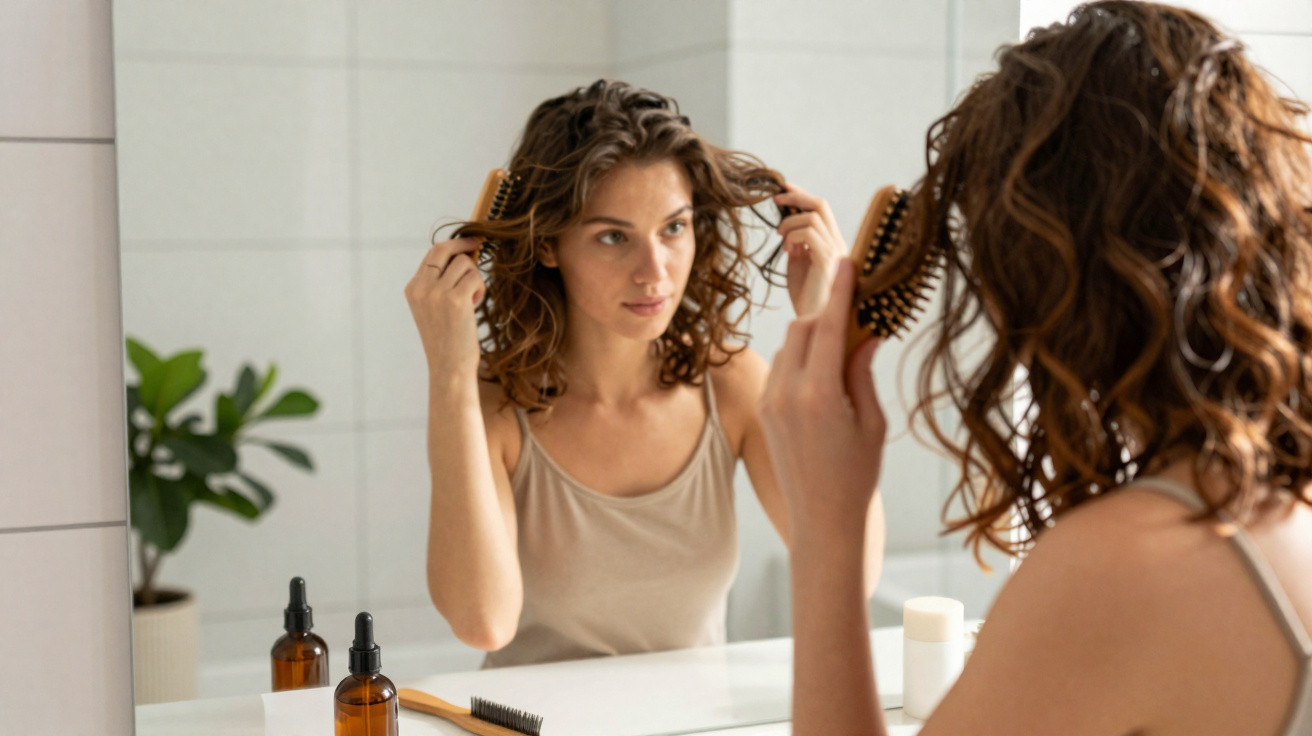
People with straight hair often underestimate how differently curls and Afro-textured hair behave. Their shape places uneven strain on the cuticle, the lengths become dry more quickly, and the scalp is often subjected to greater stress, for example from tight braided styles or chemical straightening. Standard products designed for rapid degreasing and “silicone shine” frequently make the issue worse.
This is where modern care for textured hair comes in:
- gentler surfactants to avoid drying out the scalp
- moisturising ingredients such as aloe vera or plant oils
- formulas without heavy film-forming agents, so that curls do not look flat
- supplements containing vitamins, minerals and trace elements that may support hair growth
For this brand, the combination of external care and internal support is central. The idea is that anyone seeking to address recurring breakage properly must work on both the hair root and everyday habits – including diet, stress, protective styles and suitable products.
What customers should consider before buying
Before choosing capsules or specialist haircare, it is worth taking an honest look at one’s own routine. Frequent causes of damage to textured hair include harsh straightening treatments, repeated heat styling without protection, overly tight braids and products with high alcohol content. No supplement can fully compensate for these factors.
A gradual approach makes sense:
- assess hair texture realistically: curly, coily, fine or dense
- review existing products and replace highly harsh formulas
- wear protective styles more loosely and allow breaks between them
- only then add targeted specialist products or treatments
Anyone taking supplements should look for transparent ingredient information and, if in doubt, speak to a doctor, particularly if they have existing health conditions or are pregnant or breastfeeding.
More than cosmetics: haircare as part of identity
The story of this brand also illustrates how closely haircare is linked to identity, belonging and social norms. For many women and men with textured hair, noticeable hair loss means far more than a styling concern. It affects self-image, professional presentation and cultural codes.
When founders such as Rebecca Cathline create products specifically for this area and make their customers visible, the wider perception of beauty shifts too. Curls, Afro hairstyles and transition periods after chemical straightening are no longer treated as an “exception”, but as an ordinary part of hair diversity.
“When products, advice and visibility finally align, it changes more than hair – it often changes the confidence with which people live their everyday lives.”









Comments
No comments yet. Be the first to comment!
Leave a Comment