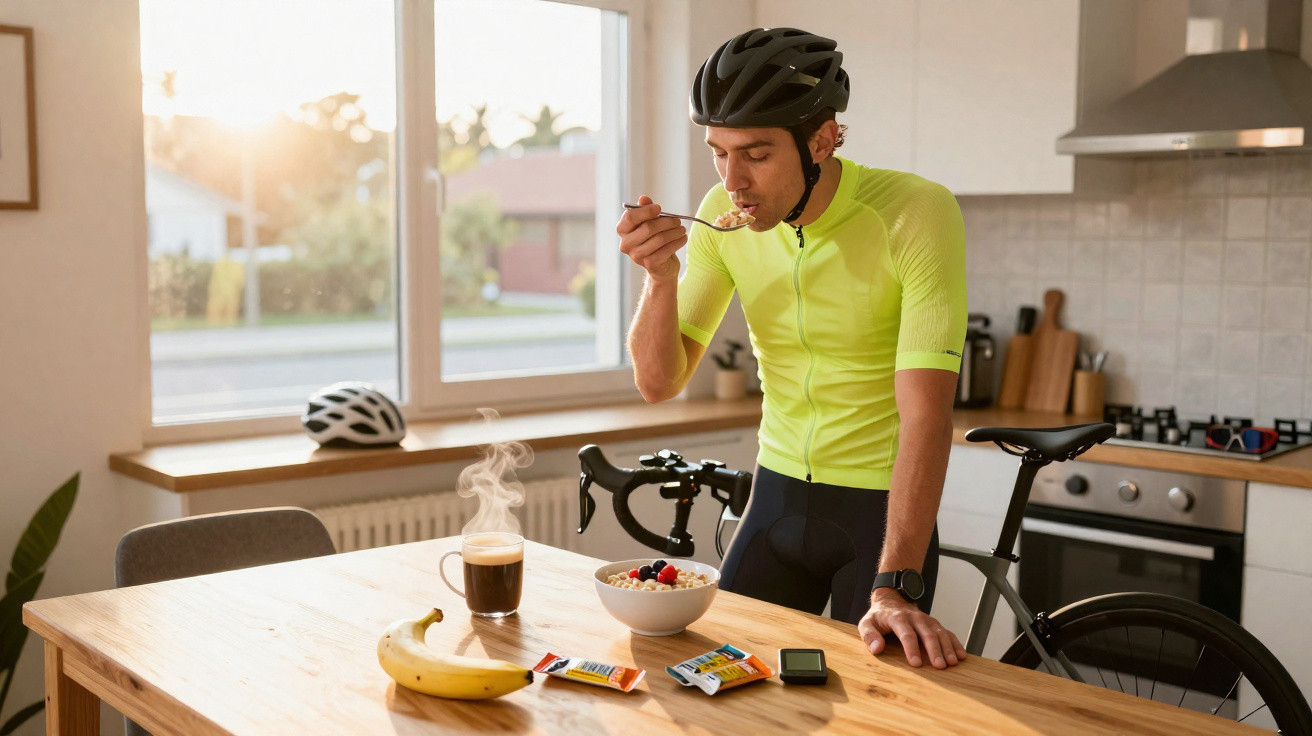
For anyone setting off on a morning bike ride, the same question almost always arises: eat first, or put on your shoes, get on the bike and go? A sports scientist explains why there is no simple yes-or-no answer, how the ride’s intensity and duration matter, and why smart preparation can determine whether it feels enjoyable or becomes an exhausting struggle.
What really happens in the body when cycling
Cycling is traditionally classed as an endurance sport. The body works mainly aerobically, meaning it uses oxygen. Its energy is supplied chiefly by two sources: carbohydrates and fats.
- At an easy pace, the body draws more heavily on fat stores.
- As intensity rises, it increasingly relies on carbohydrates.
- These carbohydrates are stored primarily as glycogen in the muscles and liver.
When glycogen reserves run out, performance drops sharply. Many athletes know this moment as “bonking”: sudden weakness, unsteady legs and difficulty concentrating. Anyone hoping to avoid it needs to plan their energy intake, starting before they even get on the bike.
“Whether a bike ride rolls along easily or turns into an ordeal is often decided at the breakfast table – and by what is in the bottle cage.”
Breakfast before a bike ride: when eating is essential
For anyone planning to ride for longer or at a more athletic pace, the advice is clear: eating before the ride pays off. Once the outing lasts more than around 60 to 90 minutes, or a demanding pace is planned, the body needs a dependable energy base.
A light meal around 60 to 90 minutes before setting off is ideal. This gives the stomach time to digest and allows blood sugar levels to settle before the ride begins.
Suitable breakfast ideas before a bike ride
- Porridge oats with yoghurt and fruit
- Wholemeal bread with honey or nut butter
- A banana with plain yoghurt
These combinations provide readily available carbohydrates alongside some protein. Protein helps prevent blood sugar from rising too quickly before crashing again.
Very fatty, heavy foods should be avoided, including bacon, large amounts of cheese or buttery croissants. They remain in the stomach for a long time and can cause nausea, heartburn or a stitch during exercise.
When a fasted bike ride makes sense
Getting on the bike without breakfast can work when certain conditions are met. The sports expert considers fasted rides most useful when the effort remains short and gentle.
- Duration: around 30 to 45 minutes
- Intensity: clearly below an individual’s race-pace threshold
- Aim: base training, stimulating the metabolism, clearing the mind
At this level, the body relies more strongly on fat reserves. Many recreational athletes associate this with hopes of greater fat burning and weight loss. However, it only works if both intensity and duration stay within suitable limits.
As soon as the pace increases or the trip goes on for longer, the risk of circulation problems and reduced performance rises considerably. Anyone who has generally eaten too little before setting off, such as the previous evening, risks hitting an energy slump.
“Fasted training can be a sensible building block – but only when it is short, easy and undertaken by people without health limitations.”
An extreme example: 260 kilometres in one day
An account from a sports scientist who regularly cycles around 10,000 kilometres per year illustrates how crucial preparation and energy planning can be. For a charity ride from Berlin to the Brocken in the Harz mountains – roughly 260 kilometres – he planned every stage carefully.
The key details of the ride were:
- Distance: around 260 km
- Riding time: 9 hours and 13 minutes
- Average speed: just under 28 km/h
- Energy expenditure: around 6.578 kilocalories
- Fluid lost through sweating: more than 6.2 litres
Figures like these show just how demanding endurance sport is for the body. Without a clear food and drink strategy, maintaining that pace would have been very difficult.
What was eaten before and during the marathon ride
Before departure, he chose breakfast deliberately:
- Porridge oats with banana and honey
- Plain yoghurt
- Coffee and around 500 millilitres of water
While cycling, the sports scientist consumed energy approximately every 30 to 40 minutes:
- Bananas
- Small cereal bars
- An occasional piece of bread
- Drinks containing electrolytes
Electrolyte drinks replace not only water but also minerals such as sodium, potassium, magnesium and chloride. Particularly on warm days, this can help protect against muscle cramps and performance declines caused by dehydration.
“Anyone wanting to keep going for a long time should fuel their muscles like a long-distance engine: regularly, methodically and without long gaps in between.”
Mental strength: a performance factor on long rides
After several hours on the bike, it is not only the legs and back that start to complain; the mind has a battle too. Fatigue, monotonous roads and neck pain can all erode motivation. This is where mental strength becomes important.
It does not mean blindly ignoring the body’s warning signals. Instead, it involves assessing the strain realistically, taking breaks at sensible moments and repeatedly focusing on the next section rather than the entire distance still to come.
- Set small stage goals, such as reaching the next village or the next bottle.
- Maintain calm, steady breathing.
- Recall successful training sessions to build confidence in your own body.
Well-stocked energy stores also support the mind: when the body feels stable, confidence for the rest of the route naturally increases.
The simple rule of thumb for recreational cyclists
For most people who get on their bike at the weekend or after work, sports science offers three practical basic rules:
| Duration / intensity | Recommendation before setting off | Food and drink during the ride |
|---|---|---|
| Up to 45 minutes, easy pace | Eating beforehand is not essential if the evening meal was substantial | Usually unnecessary; water is enough |
| 45 to 90 minutes, moderate | Light meal 60–90 minutes beforehand | Some water; in warm weather, a small amount of carbohydrates can be useful |
| More than 90 minutes or very athletic | A deliberate breakfast with carbohydrates and some protein | Regular energy intake every 30–40 minutes, plus electrolytes |
Modern strategies: how many carbohydrates per hour?
For a long time, the recommendation during intensive endurance exercise was to consume around 30 to 60 grams of carbohydrates per hour. Current findings indicate that trained athletes can process considerably more when the composition is right.
Today, amounts of around 80 to 120 grams of carbohydrates per hour are considered realistic during tough efforts lasting several hours. This is made possible by combining different sugars, such as glucose and fructose, which are absorbed through different transport pathways in the gut.
- Glucose uses one transporter, which reaches its limit relatively quickly.
- Fructose uses a second transport route, opening up additional capacity.
- Combining them increases the total amount the body can process.
This may sound technical, but it has clear practical consequences: anyone wishing to use these amounts in competition should test them in training. Like a muscle, the gastrointestinal system can be conditioned to handle larger carbohydrate quantities; without this preparation, it may react with stomach pain, bloating or nausea.
Cycling, health and a few important terms
Cycling is considered easy on the joints, strengthens the heart and blood vessels, and gets the metabolism moving. People who cycle regularly reduce their risk of cardiovascular disease, improve insulin sensitivity and relieve stress.
One term commonly appears in discussions of training: “aerobic base endurance”. It refers to the ability to sustain effort over a long period at low to moderate intensity. This is exactly the range of a typical after-work or weekend ride, making it ideal for gradually but sustainably improving fat metabolism, heart function and lung capacity.
Beginners can use a simple test: if they can still speak in full sentences without difficulty while riding, the intensity is generally at base-training pace. If they can manage only individual words, they are already working considerably harder and should plan their energy intake more carefully.
Practical examples for everyday life and leisure
Anyone with little time in the morning can gain a lot from small adjustments. A banana and a small yoghurt before a 60-minute ride are often enough to keep the body steady. Longer trips benefit from a clear structure: breakfast at home, bars or bread in a jersey pocket, and water bottles containing minerals.
Combinations with other activities also matter. Those who commute by bike, for example, automatically build training into their day. After a long working day, though, the body may already be under strain. A small snack before the ride home, such as a banana or a wholemeal bread roll with a filling, can stop the journey from becoming an ordeal.
Anyone aiming to lose weight should not do every session fasted. Instead, the focus should be on the overall weekly routine: moderate, regular rides, a balanced diet and sufficient sleep. Individual fasted rides can be included, but without pressure – and ideally only once a certain level of base fitness has been built.














Comments
No comments yet. Be the first to comment!
Leave a Comment