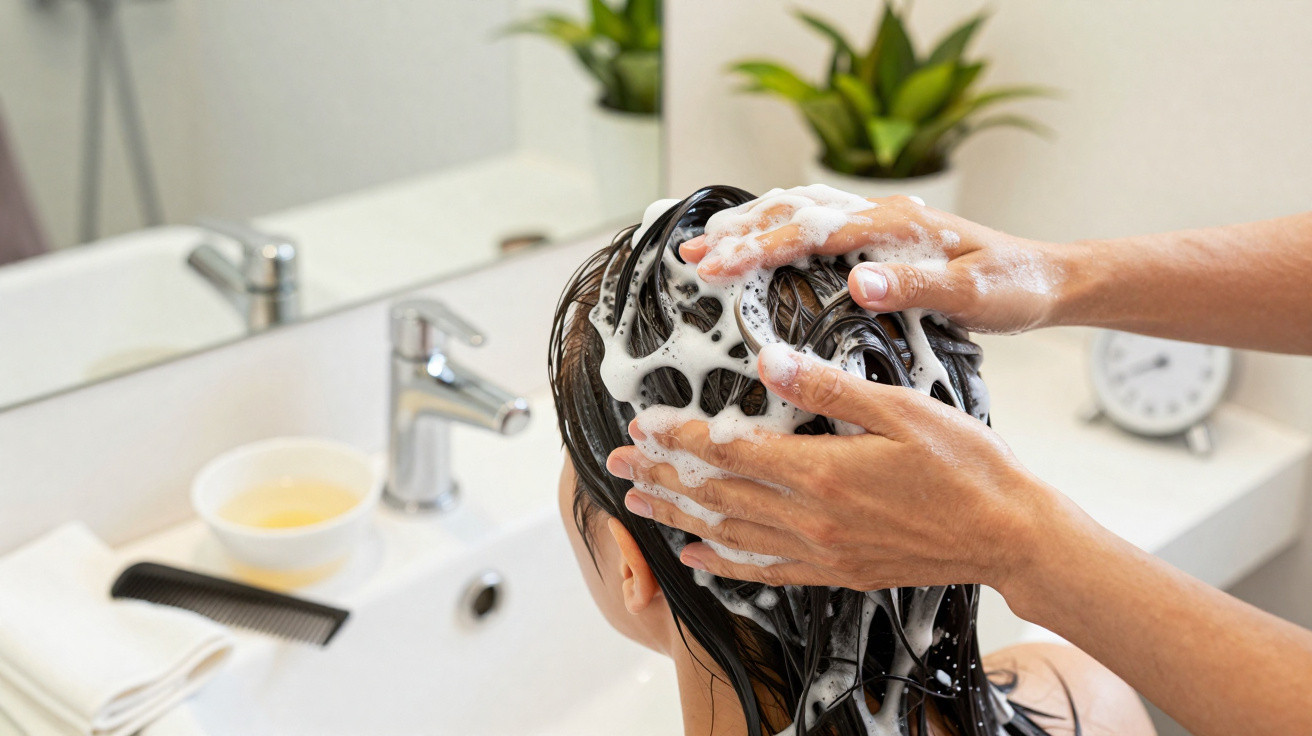
Her hair was clean and even glossy, yet the hairdresser was gently shaking her head. “You’re washing it like it’s a T‑shirt,” she said, letting her fingers glide across the scalp. All around them, hairdryers buzzed and hot water flowed, forming the familiar soundtrack of a weekday salon. Clients scrolled through their phones, partly tuned in and partly elsewhere.
The stylist moved closer and dropped her voice, as though passing on a piece of gossip. “Ninety percent of my clients wash their hair the wrong way,” she said. “They don’t even know what their shampoo can really do.” Her client laughed, although a flicker of alarm showed in her eyes. What else had she been doing incorrectly for all these years?
Smiling, the hairdresser picked up a shampoo bottle and began to explain, patiently and precisely, as if she had delivered the same advice countless times. The basin gurgled, the client eased back, and warm foam scented the air. It was an entirely ordinary salon moment, yet the atmosphere suddenly felt different.
After hearing this, you may never wash your hair in quite the same way again.
“Most people treat their hair like laundry”
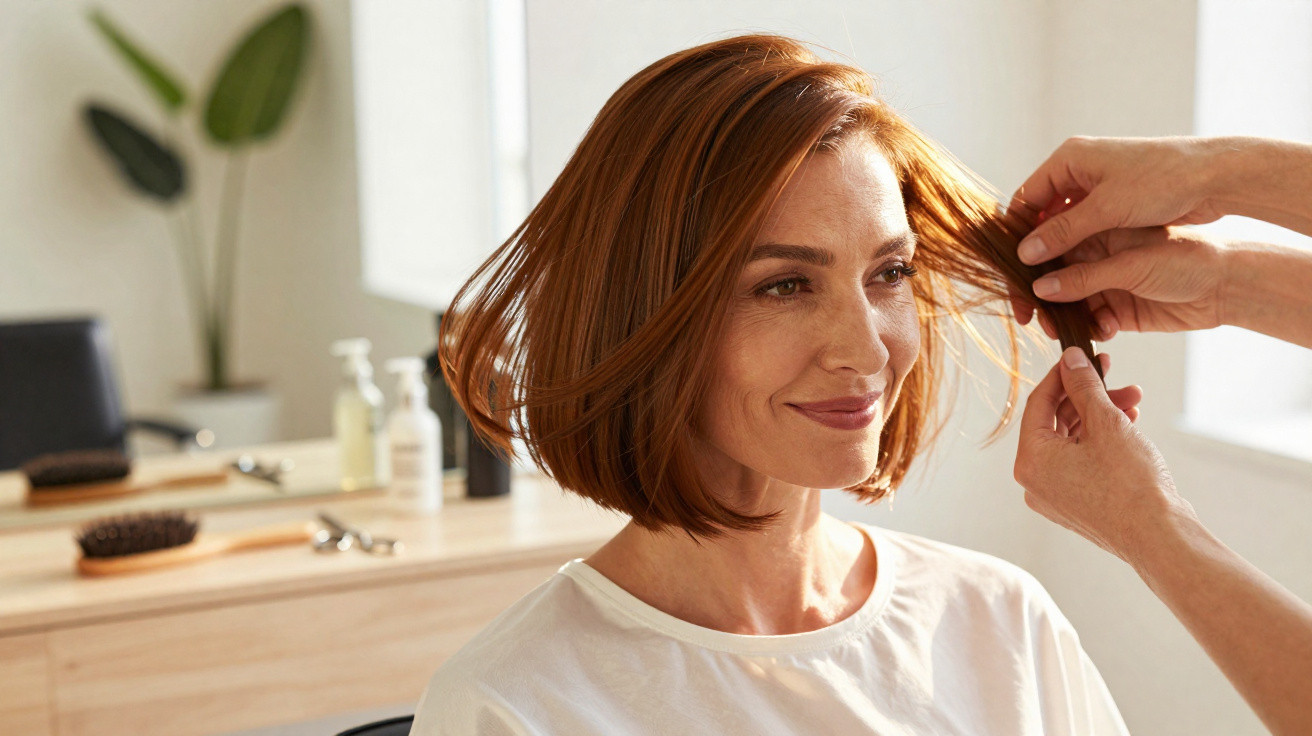
The hairdresser behind this small revelation is Laura, 36, who has a sharp bob and the sort of glossy fringe that prompts strangers to ask which products she uses. For fifteen years, she has watched people arrive at her London salon carrying the same muted frustration: oily roots, dry ends and the familiar complaint, “My hair never does what I want.”
It is not the damage itself that surprises her most, but the routine that creates it. There are rushed showers, harsh towel-rubbing and large handfuls of shampoo squeezed out “just in case”. Laura says many people attack their scalp as though they are scrubbing a mark from a white shirt: fast, frantic and almost aggressive. Afterwards, they blame their genes, hormones or the weather rather than considering how they are actually washing their hair.
She is convinced there is a clear pattern. When you see several hundred heads each month from the same viewpoint at the basin, the same mistakes begin to repeat on a loop.
One afternoon between colour appointments, Laura decided to keep count. Over one week, she asked 53 people about their at-home hair-washing habits. Did they shampoo twice? For how long did they massage their scalp? Where did they put conditioner first? Their replies became a familiar catalogue of routines: clarifying shampoo used daily “to feel really clean”, conditioner spread over the roots and rinsed away after ten seconds, and lukewarm water saved solely for the final rinse “to save time”.
One client proudly said she shampooed three times in succession because she “liked the squeaky feeling”. Another confessed that she never rinsed properly behind her ears because “no one sees there”. Just 4 out of 53 said they massaged their scalp for longer than 30 seconds; plenty spent under 10 seconds on it. They searched social media for miracle products, while their shower technique remained completely automatic.
Laura began to see the effects in a tangible way. There was waxy build-up around the crown that colour would not take to, and lengths that snapped during combing despite clients insisting they bought “expensive shampoo from the internet”. Volume also fell away, particularly at the back of the head, where people rinsed least thoroughly. This was not simply dirty hair; it was stressed hair, treated as an object rather than a living fibre connected to a real scalp.
She started telling clients that washing is not merely a chore but a treatment in disguise. Shampoo should be used on the scalp before the lengths, while conditioner should protect the hair rather than weigh it down. Hot water acts like a harsh spotlight by opening everything up, whereas cooler water settles the cuticle. When clients grasped this straightforward sequence, they noticed changes over time. Not instantly, but gradually with every wash, in ways they could genuinely feel.
Laura’s hair-washing method everyone should follow
Laura’s idea of a “correct wash” may look almost unremarkable on paper, but it can change hair that constantly appears greasy or dull. She begins with water rather than product. “Soak the hair until you don’t see any dry patches at the roots,” she says. That takes longer than most people expect. Rather than flooding the scalp with shampoo, she advises using a coin-sized amount and emulsifying it between the hands beforehand. The foam should be in the palms before it reaches the scalp, not created directly on the head.
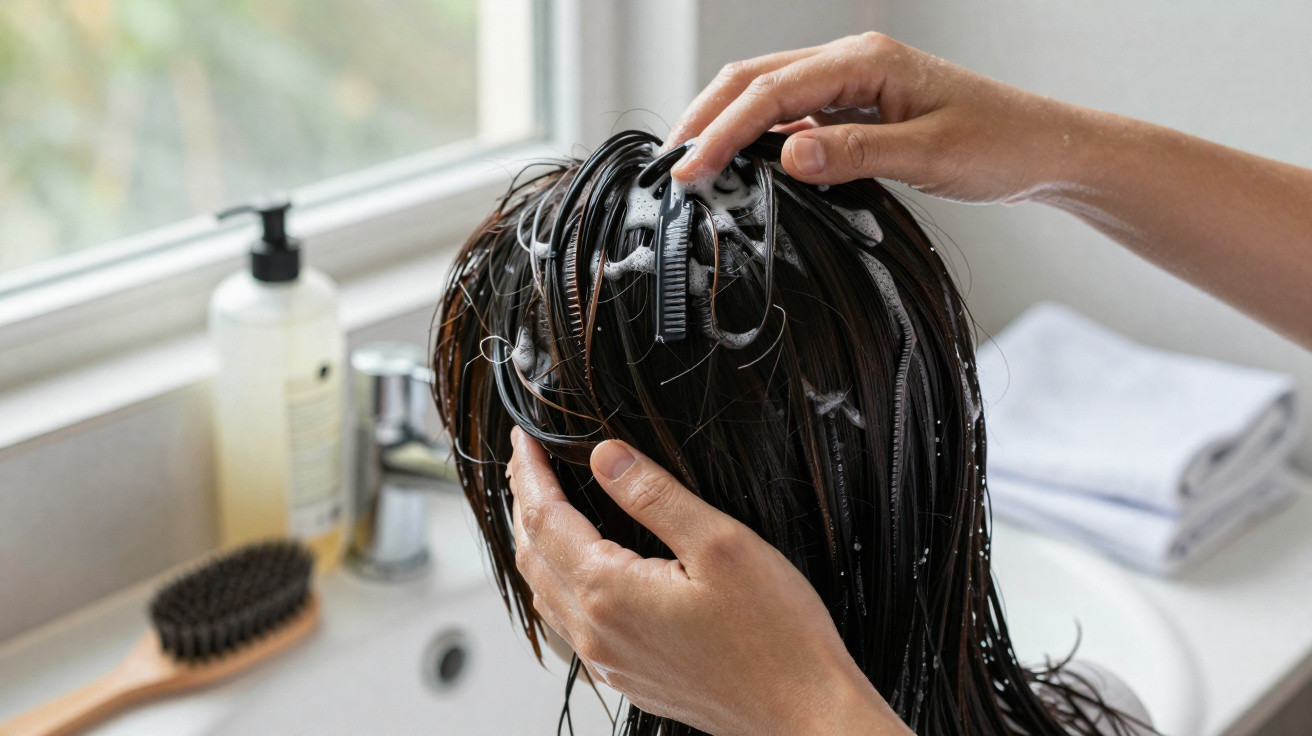
Her central rule is simple: shampoo the scalp rather than the ends. Using fingertips, never nails, she presses into the roots and makes small circular movements, as though quietly playing a piano. A full minute is the minimum. “If your shoulders don’t start to relax, you’re not really massaging,” she jokes. The lengths are cleaned only by the remaining foam as it runs down them. Rinse quickly, then use a second, lighter shampoo only if the hair is especially oily or loaded with product.
The rinsing stage is where many people switch off, but Laura remains attentive. She raises sections of hair, examines the nape and runs her fingers behind the ears. As she does so, the water becomes progressively cooler. It does not need to be freezing, only cool enough to wake the scalp up. This, she says, is the point at which hair truly becomes “clean”.
Once shampoo has been rinsed away, Laura turns to what she calls the “quiet hero”: conditioner. First, she squeezes out surplus water so that the product does not slide straight off. She then works it through the mid-lengths and ends, like icing a cake from the centre outwards. The roots are generally left alone unless the hair is very thick or highly curly. Conditioner is left for two to five minutes, often while a client chats or scrolls on their phone. There is no haste, and no large dollop applied only to be washed away at once.
She will often use a wide-tooth comb to detangle gently beneath the running water, beginning at the bottom and working upwards. The idea of combing wet hair makes some people wince, but Laura says the key is to be slow and gentle. “Hair stretches when wet, so go easy on it,” she reminds them. This is followed by another short yet intentional cool rinse. It is not meant as punishment, but rather like pulling up a zip on the cuticle so that it lies flatter and catches more light.
After leaving the shower, Laura replaces rough towel-drying with pressing and squeezing, using a soft cotton towel or even an old T-shirt. “Vigorous towel drying is like sandpaper on your cuticle,” she says. Styling products go on while hair is still damp, rather than when it is partly dry and frizzy. Every stage involves less force and more purpose. For something as routine as showering, it feels unexpectedly indulgent.
Laura’s advice is not really about getting everything perfect. It is about changing a handful of entrenched habits that quietly undermine hair week after week. She also speaks often about guilt. Clients apologise for greasy roots, flaky scalps and split ends, almost whispering as if they are sharing a secret. Laura has heard every version of it. She understands that people go to bed with wet hair because they are exhausted, and that some reach for body wash in a panic. None of it shocks her.
“On a bad day, just try to get one thing right,” she tells them. It might mean rinsing for longer, avoiding that unnecessary third shampoo, or finishing with cooler water for the final thirty seconds. Small adjustments are more achievable than instant perfection. Her approach is level-headed, useful and never preachy. She wants clients to leave the salon thinking, “I can actually do that,” rather than, “I need a whole new life to have decent hair.”
Let us be honest: nobody really does all of this every day. The complete routine, the scalp massage and the saintly patience can fall away when life becomes hectic, children hammer on the bathroom door or the hot water runs out. Laura understands that. This is partly why her advice resonates: she is not selling an impossible fantasy. She is simply showing that small, consistent actions go further than miracle shampoos.
“Most people think they need a better product,” Laura says. “In reality, they need a better relationship with their own hair. The way you wash it is the beginning of that relationship, not the boring bit at the start.”
She then lists the familiar pitfalls she encounters repeatedly. People use scalding water because “it feels like a spa”. They miss out conditioner altogether because they fear losing volume. They scratch at their scalp with their nails until the skin becomes red. They go to sleep with soaking hair twisted into a tight bun, then wonder why their ends break. Or they change shampoo every few weeks because nothing appears to “work”.
- Put shampoo on the scalp only, allowing the foam to cleanse the lengths.
- Massage softly with your fingertips for at least 60 seconds.
- Rinse for longer than seems necessary, particularly around the nape and behind the ears.
- Apply conditioner from mid-lengths to ends, leave it for 2–5 minutes.
- Replace vigorous towel-rubbing with gentle squeezing using soft fabric.
What happens when you finally wash your hair “right”
The first difference people notice after trying Laura’s method is not necessarily something dramatic such as “mirror-shine overnight”. It is usually more understated. Their scalp may itch less between washes, their hair may not feel greasy again the following morning, and a blow-dry can last one extra day. The change may look slight in the mirror, but it can feel significant in the flow of an ordinary week.
Social media is focused on dramatic before-and-after images. Laura’s results tend to develop more slowly. A client who once relied on dry shampoo daily may suddenly manage without it twice a week. Someone who used to wash their hair four times weekly without thinking might reduce that to two. Such changes save time and money, while also bringing a little more confidence. On a windy day, you can step outside without immediately worrying about who might see the back of your head.
Giving your hair attention in the shower also changes your mindset. When you massage the scalp for a full minute, you begin to notice details: a tight-feeling area, a more sensitive spot, or how much your hair is shedding, if at all. Washing stops being a blurred, habitual action and becomes a brief check-in with a part of your body that you rarely inspect closely. The routine does not take longer; it simply feels different. More deliberate. A little like finally making eye contact with someone while speaking to them.
| Key point | Detail | Why it matters to the reader |
|---|---|---|
| Shampoo for the scalp | Use a small amount, emulsify it in your hands, concentrate on the roots and massage for 60 seconds | A cleaner scalp, less grease and fewer wash days required |
| Conditioner for the lengths | Apply only from mid-lengths to ends, leave for 2–5 minutes and rinse with cool water | Softer hair, fewer tangles and less breakage |
| Gentle drying routine | Press with a soft towel, avoid harsh rubbing and use products on damp hair | Less frizz, a smoother texture and hair that looks freshly styled for longer |













Comments
No comments yet. Be the first to comment!
Leave a Comment