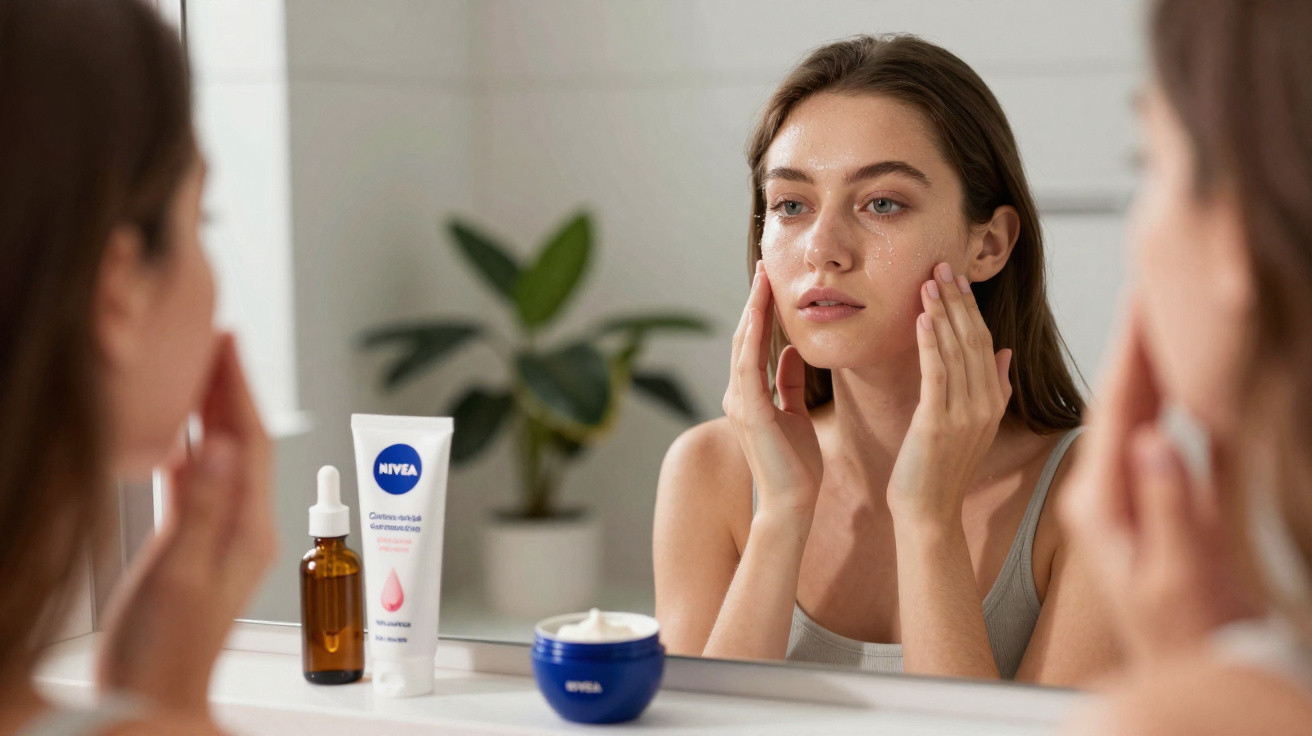
The famous blue tin has been a bathroom staple for generations, used for everything from dry elbows to after-sun care. But how does this cult cream perform in a direct facial skincare test when it is applied consistently every evening to just one side? That is exactly what was tried, with surprisingly clear differences after only seven nights.
Why choose the blue Nivea Creme?
Nivea Creme is one of skincare’s enduring classics. Its core formula has remained largely unchanged for more than 100 years. There is no fancy packaging or influencer campaign required – yet the tin still sells in the millions.
The reason is that this is an exceptionally rich cream that works on many areas of the body. Many people use it as an all-purpose product:
- Care for dry hands and feet
- A soothing cream after sun exposure
- Smoothing care for rough elbows and knees
- An emergency cream for irritated or tight-feeling skin
- A protective layer against winter cold, particularly on the face
Even so, one question remains: in 2026, is this “all-purpose” formula still enough to count as serious facial skincare when highly specialised serums, retinol, niacinamide and more are available?
The self-test: Nivea on only one half of the face
To find out, the approach was kept strict: for one week, only one side of the face received a thick layer of Nivea Creme every evening. The other side followed the usual routine, without an additional layer of Nivea.
The evening routine used
The tester kept to their regular skincare regimen, adding Nivea on one side only:
- Double cleanse: an oil-based cleanser followed by a gel or foaming cleanser
- A serum suited to the skin type, such as a hydrating hyaluronic acid serum
- Eye cream
- A lightweight moisturiser
- Finally, a thick layer of Nivea Creme as an “overnight mask” – but on one half of the face only
This method is similar to the “slugging” trend, in which an occlusive, sealing layer is applied over skincare to reduce moisture escaping from the skin.
“The Nivea acted like a protective film: it sealed in the skincare beneath it and visibly slowed overnight moisture loss.”
What happened after the first week
The first differences between the two sides of the face were already apparent after a few days.
Noticeable effects in the morning
On the Nivea side, the skin looked visibly plumper in the morning. It appeared smoother and better hydrated. Fine dehydration lines, which often become visible around the mouth and cheeks during the day, were less noticeable there.
The untreated side was not neglected, as it still received the normal routine. Yet the comparison revealed a difference: the Nivea side felt softer, as though the skin had retained more water.
| Area | With Nivea | Without Nivea |
|---|---|---|
| Skin feel in the morning | Softer, smoother, well hydrated | Normally cared for, but slightly drier |
| Visible effect | A light glow, fewer dehydration lines | Matte, with fine lines slightly more noticeable |
| Pores / blemishes | Small spots in the T-zone in some areas | No additional changes |
Where the method reaches its limits
As convincing as the glow effect was, the experiment was not entirely free of side effects. Small blemishes appeared on the Nivea side in the T-zone – the forehead, nose and chin. Nothing dramatic, but they were visible.
This aligns with what dermatologists say about highly occlusive products: people prone to combination skin, oily skin or under-the-skin congestion may be more likely to develop blackheads or spots beneath such layers.
“Nivea worked as an intensive moisture booster in the test, but the layer was too much for every evening – particularly in the T-zone.”
Slugging with Nivea: how often does it make sense?
The experiment suggests that the cream can do a great deal as an “overnight mask”. Used every day, however, it can quickly become too rich for many skin types.
Who is this Nivea method suitable for?
- Dry to very dry skin: benefits noticeably, especially in winter or in heavily heated homes.
- Normal skin: generally tolerates the method well when it is used only occasionally.
- Combination and oily skin: should limit application to selected areas and avoid repeating it too often.
A sensible frequency could be:
- Once a week as a “moisture treatment”
- Or every two weeks if the skin is more prone to blemishes
It is important to adjust the amount used. In the test, the cream was deliberately applied generously to achieve the strongest possible effect. In day-to-day use, a thinner layer on particularly dry areas – such as the cheeks or around the mouth – is often enough.
What is behind the effect of the blue cream?
The formula is based on a blend of fats and waxes that forms a film across the skin. As a result, less water stored in the deeper layers can evaporate.
This is known as an “occlusive effect”. The cream does not necessarily provide large quantities of high-tech active ingredients; its primary role is to keep what is already present within the system.
“Nivea Creme works less like a high-tech serum and more like a lid that keeps moisture beneath the skin’s surface.”
That is why combining modern skincare with a classic cream can make sense: first come lighter textures containing ingredients such as hyaluronic acid, niacinamide or antioxidants. A layer of Nivea then seals in those ingredients and helps protect against dryness.
How to add Nivea Creme to a routine smartly
Anyone who does not want to recreate the test in its full intensity can begin more gently. Here are several practical options:
- Apply it only to cheeks that are often dry, avoiding the T-zone.
- Use it as an emergency mask after a winter walk or a day at a ski resort.
- Apply it overnight to very dry areas on the hands or around the lip line.
- Before a long-haul flight, use a thin layer on the face to limit moisture loss in the cabin.
Those with sensitive skin should first test the cream on a small area, such as along the jawline, before treating the whole face.
Potential risks and who should take extra care
Although the blue cream appears simple, it does not suit every skin type. People with pronounced acne or very oily skin may experience more problems under the occlusive film. Pores are not “clogged” in the technical sense, but the warm, moist environment may encourage bacterial growth.
A gradual trial is also worthwhile for very sensitive skin prone to redness. The dense texture can trap heat, which may be uncomfortable for some people with rosacea.
Why old classics are still worth a closer look
The experiment demonstrates that an old, uncomplicated formula can still have a place in a modern routine – when used thoughtfully. Nivea Creme does not replace a targeted serum or tailored daytime moisturiser, but it can work as a supplement, particularly during periods when the skin is dehydrated.
There is also an interesting psychological effect: for many people, a visible, thicker layer on the skin creates the feeling of intensive care. Anyone who approaches their evening ritual more consciously as a result often falls asleep more peacefully, and good sleep is an underestimated factor in healthy skin.
Anyone curious does not need to moisturise just one side of their face for a full week. A trial over a cold weekend, when a flawless complexion is not needed during the day, is often enough to discover that the blue tin can do more than simply bring back childhood memories.











Comments
No comments yet. Be the first to comment!
Leave a Comment