We have all had that moment: leaving the hairdresser convinced we have the cut of the moment, only for Instagram to remind us that we are already a trend behind.
For two years, the French bob has ruled social feeds: short, tousled, chic and almost too perfect. But behind the scenes, have hair professionals already moved on? From fashion-show backstage areas to discreet London salons, another take on the bob is beginning to take hold. Freer. Sharper. More self-assured. Experts say that in 2026, it will be the bob clients ask for first. And its name has real impact.
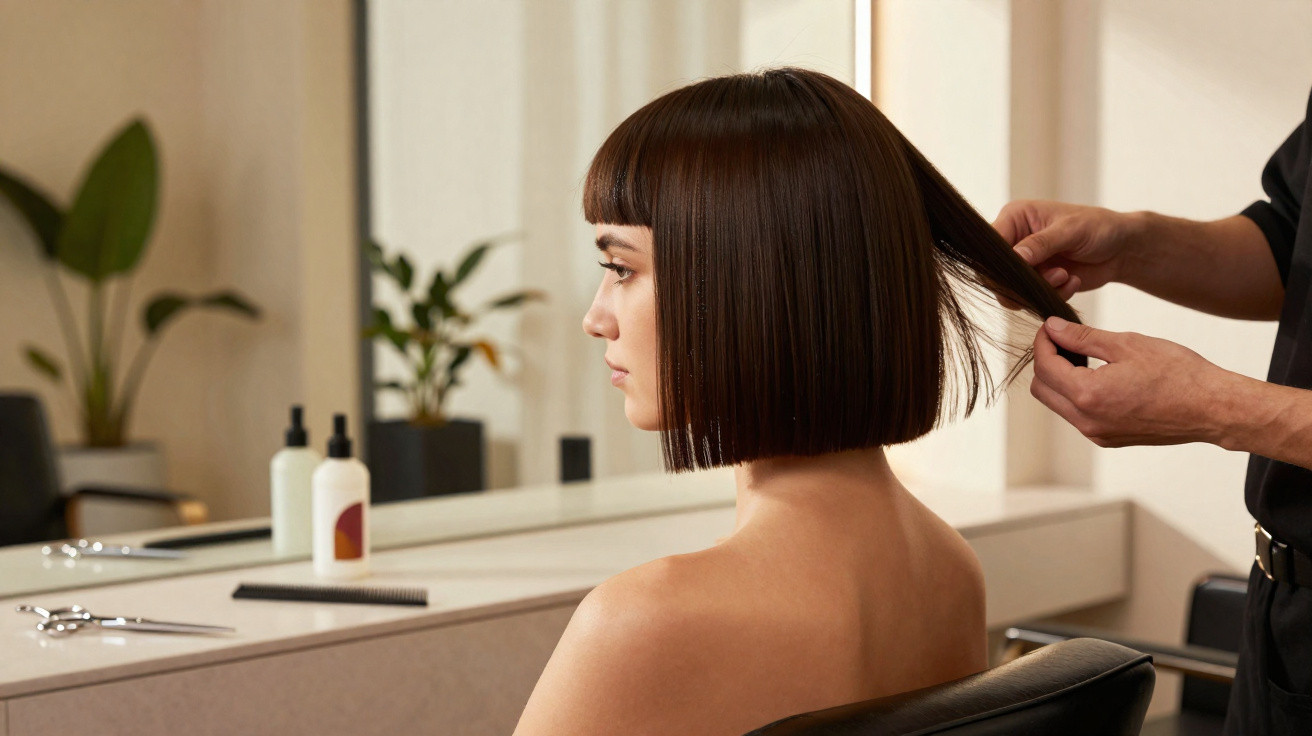
On a rainy Tuesday morning in Paris, at a discreet salon near République, a client places her phone on the marble counter. Its screen is filled with a mosaic of perfectly messy French bobs. She sighs, looks at her reflection and says, almost sheepishly: “Do you have anything else, or am I going to look like everyone else?”. Her hairdresser smiles slightly and lifts his scissors, as though he has been waiting months for this very moment. He creates a crisp line just below her jaw, refines the nape and removes a little weight from the ends. Gradually, the French bob disappears. In its place is a bolder, more graphic bob that catches the light. He calls it the “structured blunt bob”. The client does not know it yet, but she has just skipped straight ahead to 2026.
The structured blunt bob: the cut overtaking the French bob
The French bob has had its moment, but hairdressers say it with a half-smile: we are reaching saturation point. The photographs look alike, so do the requests, and the cutting mistakes are even more repetitive. In contrast to this “effortless” wave, a new desire is emerging: something more deliberate, sharper and almost architectural. The structured blunt bob is a straight, full bob, cut with laser-like precision around the face while being softly worked through internally. From the outside, its outline looks strikingly sharp. In reality, it is entirely wearable, designed to move, be lived in and become a little rumpled.
At a New York salon, a colourist says she keeps seeing the same screenshot arrive in her clients’ DMs: a straight bob sitting slightly below the chin, with no visible layers, worn with either a centre parting or one shifted subtly to the side. Some clients are coming from long, wavy hair, while others have a French bob they suddenly consider “too cute”. One woman in her thirties says she wants “a bob that says something when I walk into a room”. The figures support the shift: several salon chains in Europe are already reporting a double-digit rise in requests for jawline-adjusted blunt bobs. And this wave is only just beginning.
Why is the graphic bob returning now? Professionals point to a need for clarity after years of blurred hair looks and the attitude of “I’ll grow it out and see”. A clean cutting line frames the face, creates structure and almost provides a mental framework. Unlike the French bob, which relies on movement and irregularity, the structured blunt bob centres on the precision of a horizontal line, along with extremely subtle internal shaping. The ends remain weighty and the base stays full, without the “triangle” effect that made the 2000s so daunting. It is a cut that says: “I choose. I cut. I own it.” And it fits surprisingly well with a generation tired of constant uncertainty.
How to wear a structured blunt bob without getting it wrong
Technically, the structured blunt bob comes down to millimetres. The first tip is to select the length according to one reference point only: the jawline. For a round face, experts advise a line that sits slightly below it to create length. On an angular face, the cut can brush the bone for a striking editorial effect. The nape is cut just a touch shorter, almost imperceptibly, so that the hair naturally falls forwards. This tiny adjustment creates that “expensive” drape without requiring a complicated blow-dry.
Most hairdressers who excel at this bob ask for the same thing at the start of an appointment: to see how the hair air-dries. No quick straightening and no hastily undone bun. They assess its movement, cowlicks and areas that expand. This is where many people go wrong: they bring a Pinterest image, conceal their true texture and end up disappointed. Let us be honest: nobody really recreates that perfect miniature salon blow-dry at home every day. A well-executed structured blunt bob, on the other hand, should need no more than a quick dry and a little product applied with the fingers.
A London hairstylist often sums up the philosophy behind this cut for hesitant clients:
“The aim is not to have a perfect bob. The aim is to have a clear line that also withstands your low-effort days, your short nights and your Zoom meetings.”
She also highlights the classic mistakes to avoid: too much layering at the nape, a thinned-out base that ages the cut within three weeks, and helmet-like fixed volume. To make the decision easier, many professionals now share a short checklist to keep in mind when booking an appointment:
- Ask for a full base, with a very slight undercut if the hair is particularly dense.
- Choose a length that can realistically be tied back with a clip or a tiny ponytail on off days.
- Opt for a “soft blow-dry” style: a large brush, gentle heat and a slight inward bend.
This bob is not meant to stay rigid; it is made to work with real life.
After the French bob: what this new bob says about us
The structured blunt bob does more than replace an Instagram trend; it disrupts an entire way of presenting ourselves to the world. Where the French bob embraced nonchalance, this new bob projects something more direct. It belongs to the return of decisive lines: structured blazers, pleated trousers and statement glasses. There is a sense of wanting to redraw ourselves and put boundaries back in place after years of “comfy everything”. It is not merely a haircut, but a small visible decision that changes a silhouette in three snips.
Hairdressers tell remarkably similar stories: a break-up, a new job, a house move, followed by an almost physical urge to cut it all off cleanly. Many choose this particular bob because it retains a softness without tipping into a radically short style. There is something reassuring about knowing that, within 2 centimetres, it can still be tied back, curled or straightened. Yet on the morning it is left loose against the shoulders, the difference is immediately visible in the mirror. The face becomes more defined, the nape takes shape and the way the head is held changes.
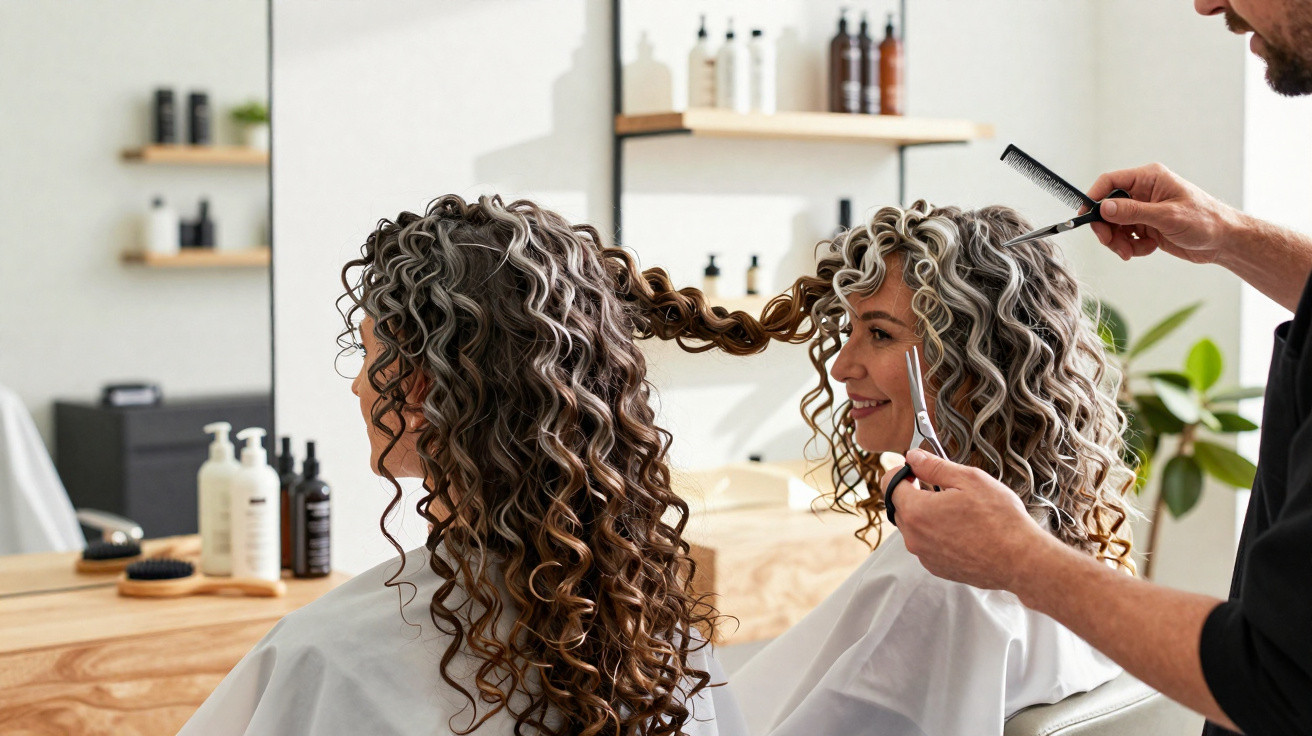
What makes this bob especially promising for 2026 is its ability to work across styles. On glossy brunette hair, its line looks graphic and almost minimalist. On textured blonde hair, it takes on the feel of a chic Californian cut. On curly hair, with a little weight removed internally, the structured blunt bob becomes a kind of controlled cloud around the face, with a clear base that prevents it from becoming an undefined mass. This is not a niche cut reserved for catwalks or “perfect” faces. It is a real-life hairstyle that gains character as the weeks go by. Professionals know that this is the secret to ensuring a trend does not die after three scrolls.
| Key point | Detail | Benefit for the reader |
|---|---|---|
| “Structured blunt bob” cut | Straight bob, full base, crisp line around the jawline | Know the precise name to request at a salon in 2026 |
| Face adaptation | Length tailored to the jawbone, with a slightly shorter nape | Avoid the “helmet” effect and achieve a flattering result for facial features |
| Realistic maintenance | Simple drying, a trim every 6–8 weeks, lightweight products | Plan the required time and budget without illusions |












Comments
No comments yet. Be the first to comment!
Leave a Comment