A band of sunlight falls across the linoleum, beside a pile of last year’s magazines and the soft squeak of orthopaedic shoes. Then the hands catch your eye: thick nails, yellowing at the edges and small cuts around the cuticles. People adjust in their seats, tucking their fingers into their sleeves or drawing their toes back inside their socks. No one says much about it, but half the waiting room has come for the same issue: a minor infection that began “after a little trim at home.”
The overlooked risk at the ends of fingers and toes
Once you are over 65, looking after your nails is less about appearance and more about protecting your health. The difficulty is that routines formed when the body was more resilient do not always remain safe with age. You may not bend as freely, your eyesight may have changed and your skin is more delicate. Scissors can seem harder to hold. As a result, a fast nail trim on a Sunday evening can become a small injury that will not heal.
Most people know the moment: a nail catches on a sock, so you decide to “just fix it quickly.” One hurried cut, a corner clipped too far back, or a piece of skin removed with the nail. There is a sting, slight redness and a little swelling that you assume will be gone by morning. Sometimes it is. After 65, however, it may not be - and that is often how problems begin quietly.
The figures show that this is more than an occasional story. Infections affecting toes and feet are among the most frequent reasons older people visit a GP or podiatrist. They may start with something as ordinary as an ingrown toenail or a tiny cut beside a fingernail. As we age, circulation becomes slower, immunity can weaken slightly and conditions such as diabetes make healing more difficult. A nick that was once harmless can then let bacteria or fungus in. The particular danger is that such infections may be less painful at first, meaning they are spotted later.
Small nail care habits that make a real difference
The first safeguard sounds simple: alter how you trim your nails. Fingernails and toenails need different treatment. Fingernails may be given a slight curve, while toenails should be cut straight across, with their corners left visible rather than rounded. This alone helps prevent ingrown nails - painful edges that press into the skin and create an opening for infection.
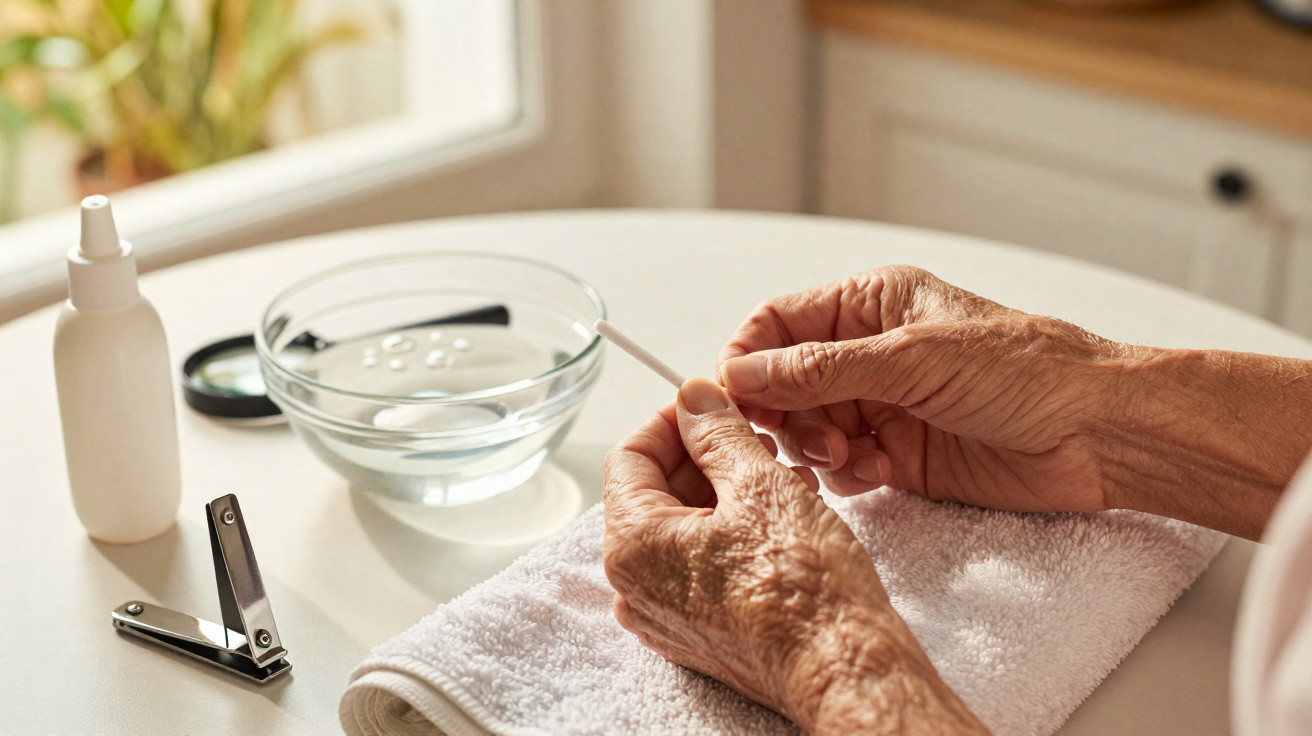
It is equally important to take your time. Avoid clipping your nails while standing in the bathroom with one foot raised. Instead, sit at a table with proper lighting and rest your feet on a stool or chair. Choose clippers or scissors with large handles rather than the small tools found in a travel set. After 65, nail care is a small procedure that needs suitable preparation, not a task to rush before sleep.
What happens after trimming matters too. Rinse or wipe the nails to clear away tiny clippings. Use a file gently, so sharp edges do not snag on socks or bed sheets. Make sure the spaces between the toes are dry, as dampness there encourages fungal growth. Applying a light layer of cream around the nails keeps the skin supple and makes cracking less likely. These straightforward measures may seem overly careful on paper, but they can prevent weeks of discomfort.
Common nail care mistakes that increase infection risk
The most frequent error is cutting nails too short. The thought of “I’ll go a bit further so it lasts longer” creates an ideal way in for germs. Very short nails leave the sensitive area underneath exposed, irritate the surrounding skin and can cause minute tears that are impossible to see. Socks then rub, shoes apply pressure and friction finishes the job.
Another common mistake is “digging” into the corners, particularly on the big toes. This might involve trying to remove every trace beneath the nail using pointed instruments, metal implements or even the tip of a nail file. Such tunnelling damages the skin and can encourage the nail to grow in the wrong direction. Many people do not realise anything is wrong until redness develops and walking becomes painful. At that stage, bacteria have often already taken hold.
In truth, hardly anyone disinfects nail tools every day. After 65, though, skipping this step carries more weight. Old clippers, rusty scissors and files shared with a partner or grandchildren all have their own microscopic world. Some people use the same equipment for twenty years without washing it. Soap and hot water can already remove much of the danger. A little alcohol now and then can turn an ageing clipper into a safer tool.
Learning to notice your nails every day
Beyond the practical steps, it helps to view your hands and feet differently. Later in life, nails can become a small record of your health. They may thicken, grow more slowly or alter in colour. Rather than concealing them, set aside a calm moment each week to inspect them. Are there any new lines? Is one nail yellower than the rest? Is a corner red or warm when touched?
This weekly check can take place after a shower, while sitting on the side of the bed with a towel over your lap. It needs only a few minutes. For some people, the greatest challenge is not checking their nails but being willing to ask for assistance. Stiff hips, back pain or reduced vision can make independent nail care unrealistic. That is not a failure; it is simply another phase of life. Contacting a podiatrist, nurse or trusted relative is not being “needy”; it is a way to avoid complications that could result in hospital treatment.
Some professionals put it with striking simplicity:
“Most of the serious foot infections I treat in older adults started with a small, neglected nail problem. It’s not neglect out of laziness. It’s people who bend less, see less, or simply don’t realize that nails don’t age at the same speed as the rest of the body.”
To make safer routines stick, print a few basic reminders and keep them in the bathroom:
- Trim toenails straight across, without cutting into the corners.
- Keep a narrow white edge rather than cutting down to the skin.
- Wash and dry tools after every use, replacing them when they become blunt or rusty.
- Dry between the toes daily, particularly after showering.
- Seek professional advice when a nail changes shape or colour, or becomes painful.
Nail care as a modest act of self-respect
These seemingly minor actions raise a larger question: how do we care for a body that is steadily changing? Fingernails and toenails do not demand attention as loudly as an aching knee or a persistent cough. Instead, they give quiet signals: redness in one place, thickening in another, or a shoe that unexpectedly feels tight. Paying attention to those signals says: “I’m still here, I’m still paying attention.”
Some older people describe this routine with unexpected warmth. One man in his seventies said he uses the time spent on nail care to reflect on his week. A woman in her eighties explained that she only began trimming her nails while seated at a table after a podiatrist demonstrated it, and wondered why no one had shown her sooner. These small actions are not vanity; they are modest supports for independence. Even where somebody else provides help, choosing how and when it happens preserves a measure of control.
If this brings to mind a parent, neighbour or yourself, it no longer feels like a theoretical subject. It concerns real hands, real feet and genuine infections that can require antibiotics and, at times, surgery. Changing a habit, buying new clippers or arranging a podiatry appointment may appear less important than a “serious” illness. Yet this is often where the sequence starts: a tiny cut, a swollen toe, difficulty walking, then a fall. Nail care after 65 is not insignificant. It is one of the quiet, everyday ways we protect the abilities that still allow us to stand, walk, cook, hug and live.
| Key point | Detail | Value for the reader |
|---|---|---|
| Safer cutting technique | Cut toenails straight across, leave a small edge and avoid digging into corners | Reduces ingrown nails and related infections |
| Clean tools and environment | Wash and dry clippers, use good lighting and sit comfortably | Lowers the risk of introducing bacteria or causing small, unseen wounds |
| Regular monitoring | Check nails weekly for changes in colour, shape and sensitivity | Helps identify problems early, before they become painful or serious infections |
FAQ:
- Question 1 How often should nails be cut after age 65? Every 2 to 4 weeks is usually sufficient. Where nails grow very slowly, once a month may be suitable, provided you still inspect them weekly.
- Question 2 Is it risky to get a pedicure at a salon when you’re older? This depends on hygiene standards, your health - particularly if you have diabetes or circulation problems - and the way tools are handled. Medical or podiatry-based salons are safer than salons that offer purely cosmetic treatment.
- Question 3 What are the first signs of a nail infection? Look for redness around the nail, warmth when touched, pain on pressure, swelling or yellowish discharge. There may also be an unpleasant smell or a noticeable change in nail colour.
- Question 4 Can thick, hard nails be a normal part of aging? Yes, nails commonly thicken with age. However, nails that are extremely hard, misshapen or discoloured may also indicate fungus or another issue worth showing to a professional.
- Question 5 When should a doctor or podiatrist be consulted urgently? Do not wait if a toe or finger suddenly becomes very painful, very red or hot, or if you have a fever, diabetes or poor circulation. Seek medical advice promptly.
















Comments
No comments yet. Be the first to comment!
Leave a Comment