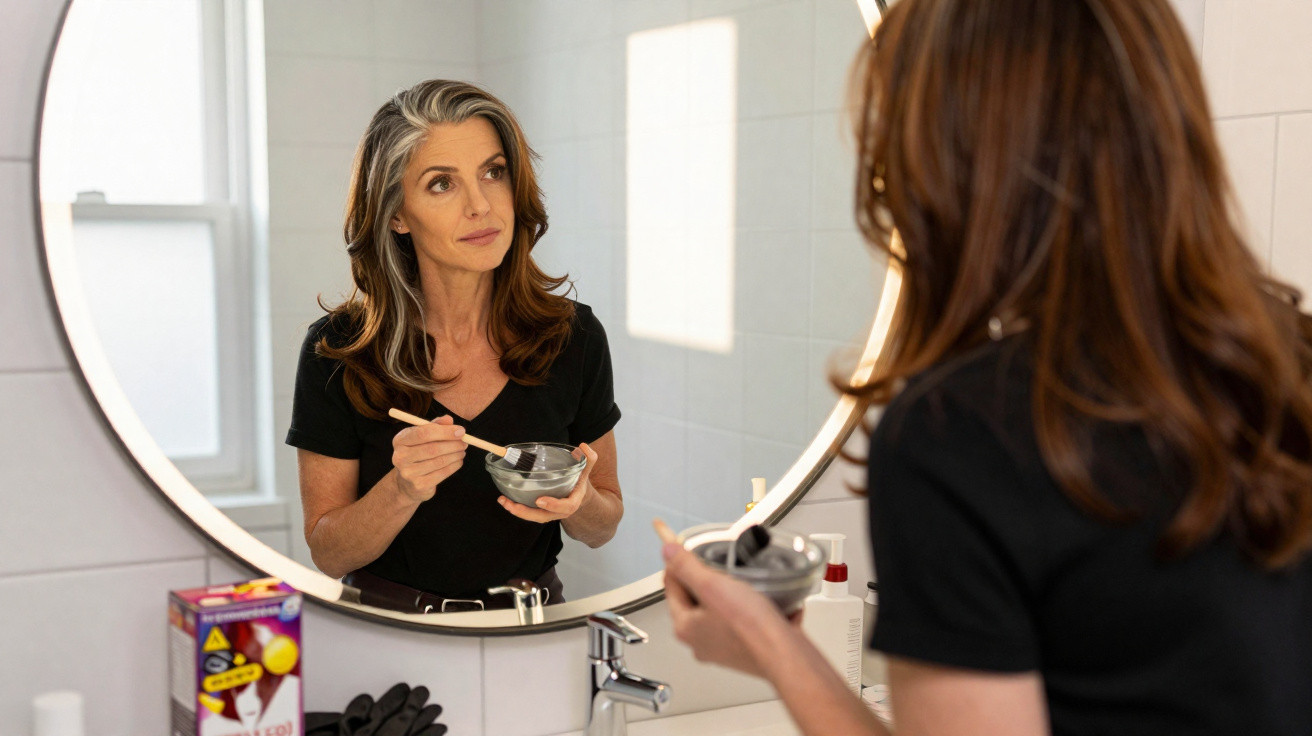
The bathroom light hummed beneath its harsh white glare, the sort that reveals every pore and each fine silver strand. With a towel over her shoulders, Emma leaned towards the mirror as the familiar chemical smell of dye filled the room. She did not think of herself as vain - or so she insisted. She simply wanted her “real” colour back: the shade she had at 27, before stress, children and late-night emails began leaving their mark on her hair.
As she twisted a lock, she spotted something else: her scalp was slightly red. Again. She blinked, dismissed it, opened the box and slipped on the flimsy plastic gloves.
Ten minutes later, while the dye developed, she was scrolling through her phone when she found a headline about toxic hair dyes and cancer risk.
Her phone timer was still ticking down.
So was something else she could not see.
The chemicals hiding in plain sight in your bathroom
If your bathroom drawer resembles a miniature hair salon, you are far from alone. Permanent colour kits, root touch-up sprays, toners and purple shampoo “for shine” can form an entire army against grey hair. Hair dye is often treated as casually as mascara: just another part of the routine.
But the contents of those glossy, reassuring boxes may be far from harmless. Many permanent dyes still use potent ingredients such as ammonia, resorcinol and aromatic amines - substances that health authorities and researchers regularly scrutinise.
The contradiction is stark. We colour our hair to feel more youthful and confident, while repeatedly exposing ourselves to mixtures of molecules that the skin can absorb, little by little, each month.
Dermatologists frequently encounter the effects before many of us have even read an ingredients label. Scalps become red and itchy “suddenly” after years of trouble-free colouring. Rashes can appear behind the ears, around the hairline or even on the eyelids days afterwards. In some cases, facial swelling or breathing difficulties lead to an A&E visit.
One European study indicated that regular users of dark permanent dyes might face a slightly increased risk of certain cancers, particularly bladder and blood cancers, although findings differ and the precise effect remains under scientific debate. Fast-moving headlines often lose that nuance, yet the question remains unsettling.
While experts debate percentages, your skin is repeatedly and directly exposed to substances made to penetrate the hair shaft. Your scalp, meanwhile, is among the thinnest and most absorbent areas of the body.
The principle is straightforward, if rather alarming. To cover grey hair for the long term, a formula must open the hair cuticle, place colour deep within it and then seal it again. This usually requires alkaline agents alongside colour precursors that react with oxidants such as hydrogen peroxide.
Certain molecules, including PPD (para-phenylenediamine), have a particularly troublesome reputation. They work very effectively on resistant grey hair, especially in darker shades, yet are also among the leading causes of allergic reactions to hair cosmetics.
Regulators restrict their use, and manufacturers repeatedly reformulate their products. Yet routines in the bathroom do not always keep pace with regulation. Long-standing habits persist, and the “miracle color” you have used for a decade may be among the harshest products you own.
Grey blending: the unexpected trend that conceals grey while supporting your health
A quiet rebellion is taking place on bathroom shelves, although it hardly resembles a typical beauty trend. Rather than applying full root-to-tip coverage every four weeks, increasing numbers of people are choosing a softer, layered technique known as grey blending.
Its premise is deceptively simple. Instead of removing every trace of grey and acting as though it never existed, you diffuse it. A colourist blends your natural base with several lighter, slightly cooler strands, allowing grey hair to become part of a textured, light-reflecting overall look.
The result can still look fresher and more youthful, but the stark regrowth line at the roots almost vanishes. With fewer full-head dye applications, the scalp gets more breathing room - and exposure is reduced.
Most people know the feeling: a one-centimetre white stripe emerges along the parting, and suddenly it is impossible to notice anything else. That particular panic is what grey blending is designed to prevent.
Consider Marc, 49, who once coloured his hair every three weeks to maintain dark temples. He stopped only after a severe allergic reaction involving swollen eyelids, a burning scalp and days of antihistamines. His colourist proposed another approach: cool, sandy highlights, his natural brown softened by one tone, and temples left a little lighter.
The outcome? He seemed less tired and somehow more “expensive”, while no one could identify where the grey began or finished. He now visits the salon every 10–12 weeks rather than every 3–4. His bathroom door stays shut more often. His skin is grateful.
Grey blending brings another less obvious benefit: it works with the way hair genuinely ages. Grey rarely appears evenly. It commonly starts at the temples, moves to the front hairline and then develops in scattered patches.
Forcing that variation into one solid block of colour can create a severe visual effect. The contrast between coloured hair and a pale scalp makes even minimal regrowth appear glaringly obvious. Multi-tonal, blended colour does the reverse, leading the eye to notice light and movement instead of “white intruders”.
There is a chemical benefit too. Partial methods, including highlights, lowlights and glosses, treat less surface area and can often use milder formulas or lower-strength oxidants. This reduces the time products spend in contact with the skin, limits sensitising events and places less cumulative strain on the hair fibres.
Honestly, hardly anyone studies the complete ingredients list on a dye box every month.
How to colour more intelligently and age better without losing your style
If you are not prepared to stop using dye altogether - and most people are not - it is still possible to shift from habitual colouring to more conscious choices. Start by slowing the schedule. Rather than using permanent colour across the whole head each month, alternate it with semi-permanent glosses or root sprays that remain on the surface of the hair.
Speak with your hairdresser about making your base colour one or two shades lighter, which reduces the contrast between regrowth and natural grey. A gentler shade can often look more youthful, rather than older.
When trying a new dye at home, test it behind the ear or in the elbow crease 48 hours beforehand. It may feel irritatingly old-fashioned, but it could prevent a severe reaction. Your future self may appreciate those uneventful two days.
One major misconception is that “natural” automatically means safe or gentle. Henna can create beautiful results, but blended powders sold online may include metallic salts or undeclared additives. These can react unpredictably with other dyes or salon treatments.
Another error is attempting to recreate the exact shade you wore at 22. Dark, opaque colours can make mature facial features look harder and draw attention to every line. A little more softness in the colour often creates a more youthful effect than complete coverage does.
Treat your scalp kindly between colour appointments. Gentle shampoos, avoiding vigorous scrubbing and reducing heat styling can all lessen pressure on the skin barrier. A 15-step haircare regime is unnecessary; consistency and a little less harsh treatment are enough.
Colourist Léa D. puts it in a single sentence: “My goal isn’t to make grey disappear, it’s to make it irrelevant.” She works with clients in their 30s and 60s who face the same choice: conceal everything or accept hair that does not reflect how they feel inside.
“Grey blending is like a truce,” she explains. “You’re not surrendering to age, you’re signing a new contract with your mirror.”
- Replace one in every two permanent colour applications with a semi-permanent product or gloss.
- Ask your stylist about grey blending or soft highlights rather than all-over coverage.
- Carry out a patch test for each new brand or formula, even where the shade appears similar.
- Keep your shade a little lighter and softer than your original natural colour.
- Let your scalp rest by leaving several weeks between chemical processes.
Rethinking grey hair: strategy rather than surrender
The truly quiet threat in the bathroom is not just the chemicals. It is also the belief that ageing hair is a problem to erase quickly, every four weeks and without question. That mindset can trap us in routines we do not even enjoy, using products we barely understand for an image that may no longer represent who we are.
What if grey hair were viewed as information rather than defeat? It can signal stress, genetics or lifestyle - and invite adjustment instead of panic. You may still choose to colour it. You may prefer blending. Or you may embrace fully silver hair and focus instead on cut and shine.
What matters most is intention. When you open a dye box, are you responding from fear, or selecting a look suited to your health, age and actual life?
The next time a metallic glimmer catches your eye in the mirror, perhaps you will not immediately reach for the gloves. You may stop, tilt your head and think, “Okay. How do I want to play this?”
| Key point | Detail | Value for the reader |
|---|---|---|
| Grey blending as an option | Combining a natural base, highlights and grey to soften harsh regrowth | Creates a younger, softer appearance with fewer full-head dye sessions |
| Awareness of chemical exposure | Recognising ingredients such as PPD and frequent colouring cycles | Can help lower health risks and prevent serious allergic reactions |
| A health-first hair routine | Patch tests, milder formulas and longer gaps between colouring | Protects the scalp, preserves hair quality and provides long-term peace of mind |












Comments
No comments yet. Be the first to comment!
Leave a Comment