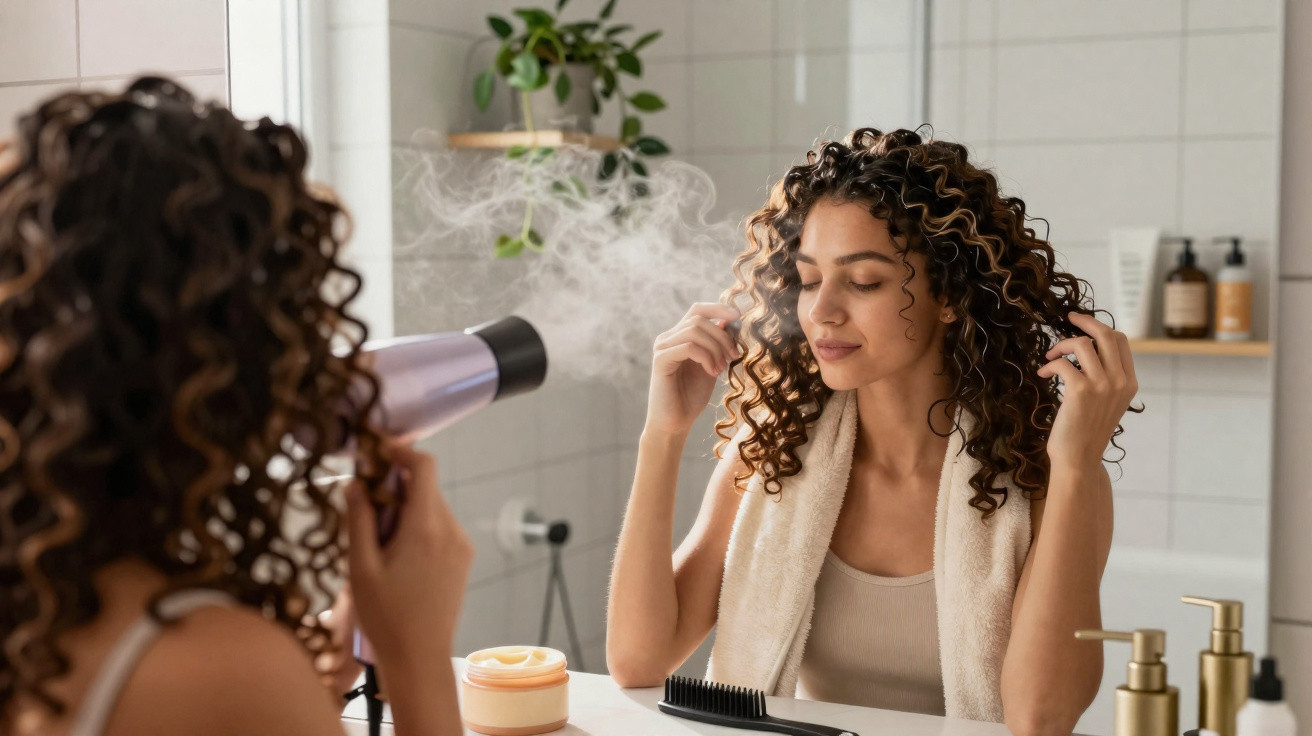
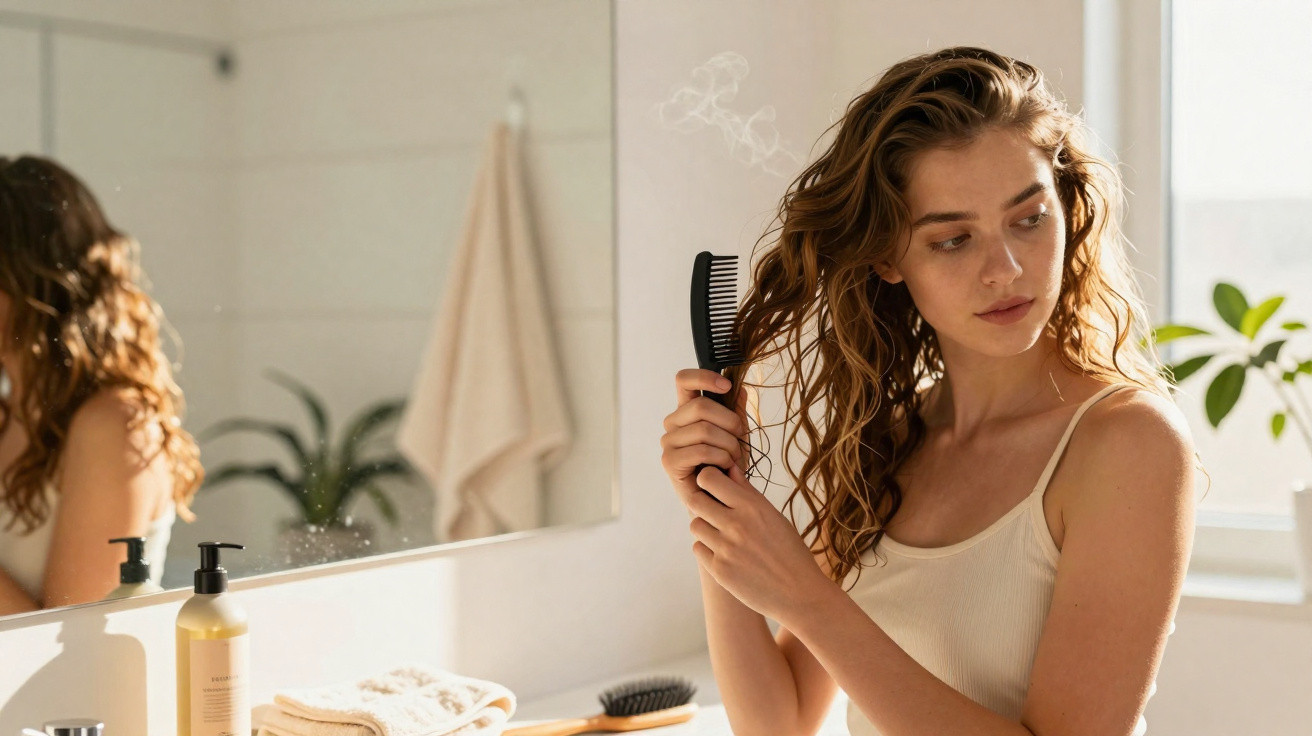
People with curly hair know that even slight dryness can bring on frizz and cause curls to lose definition. One straightforward technique has gained attention for seeking to improve this balance: using steam on curly hair. It pairs moist heat with treatment masks to make strands softer, more manageable and better defined.
Why does curly hair dry out so easily?
The spiral shape of curly strands makes it harder for the natural oils produced by the scalp to travel down the full length of the hair. As a result, the ends and sections furthest from the roots can lose moisture and lipids more readily, leaving hair rough, dull and more prone to frizz.
This is why hydration often plays an important part in a curly-hair routine. The aim is not to saturate each strand with products, but to provide the right amount of water and conditioning ingredients, maintaining elasticity and helping the hair retain its natural shape for longer.
How can steam enhance hydration for curly hair?
Known as moist heat, steam can temporarily make the hair surface more receptive to treatment, helping the mask spread more evenly from roots to ends. In practice, this may allow hydrating and conditioning ingredients to work more uniformly during the processing time.
Masks containing ingredients such as aloe vera, glycerine, panthenol and botanical extracts are widely used for this kind of care. However, the choice should reflect the hair’s actual condition: highly damaged strands may need repair, whereas hair that is simply dry tends to respond better to hydrating or nourishing treatments.
How to use steam on curly hair without making it complicated
This treatment can be incorporated into a routine without too many steps. The key is to start with clean hair and select a mask suited to its needs. Steam is used while the treatment is processing and should feel comfortable, with excessive heat or any contact that could irritate the scalp avoided.
A simple sequence can keep the routine organised and prevent overdoing it:
- Wash your hair with a suitable shampoo to remove build-up and excess oil.
- Apply a mask that matches the level of hydration or repair your hair requires.
- Keep the hair exposed to gentle steam for around 10 to 20 minutes, without using intense heat.
- Rinse thoroughly and finish with the products already included in your curly-hair routine.
Watch the video shared by the YouTube channel Ester Lima, which shows an ideal care routine for curly hair.
What effects might appear in curls?
When the treatment suits that particular hair type, strands may become softer, more flexible and look more hydrated. This generally makes curl formation easier and may reduce the appearance of flyaways, particularly when frizz is associated with dryness and a lack of manageability.
Steam can also be used carefully to help refresh hair between washes, especially when curls have lost their shape. Even so, results differ from one person to another, and more steam does not necessarily mean better results. Watching how your hair responds remains the best guide.
How often is this technique worth using?
There is no single frequency that works for every hair type. For some people, using steam every one or two weeks may be enough, while others need longer intervals. Too many hydrating treatments can leave certain hair types overly soft, weighed down or less defined, indicating that it is time to use the method less often.
The key is to balance hydration, nourishment and repair. If curls feel rough, lack shine and are difficult to define, it may be worth trying the technique in moderation and monitoring the outcome. Start slowly, observe your hair’s response and adjust your routine before overuse turns a helpful step into another problem.












Comments
No comments yet. Be the first to comment!
Leave a Comment