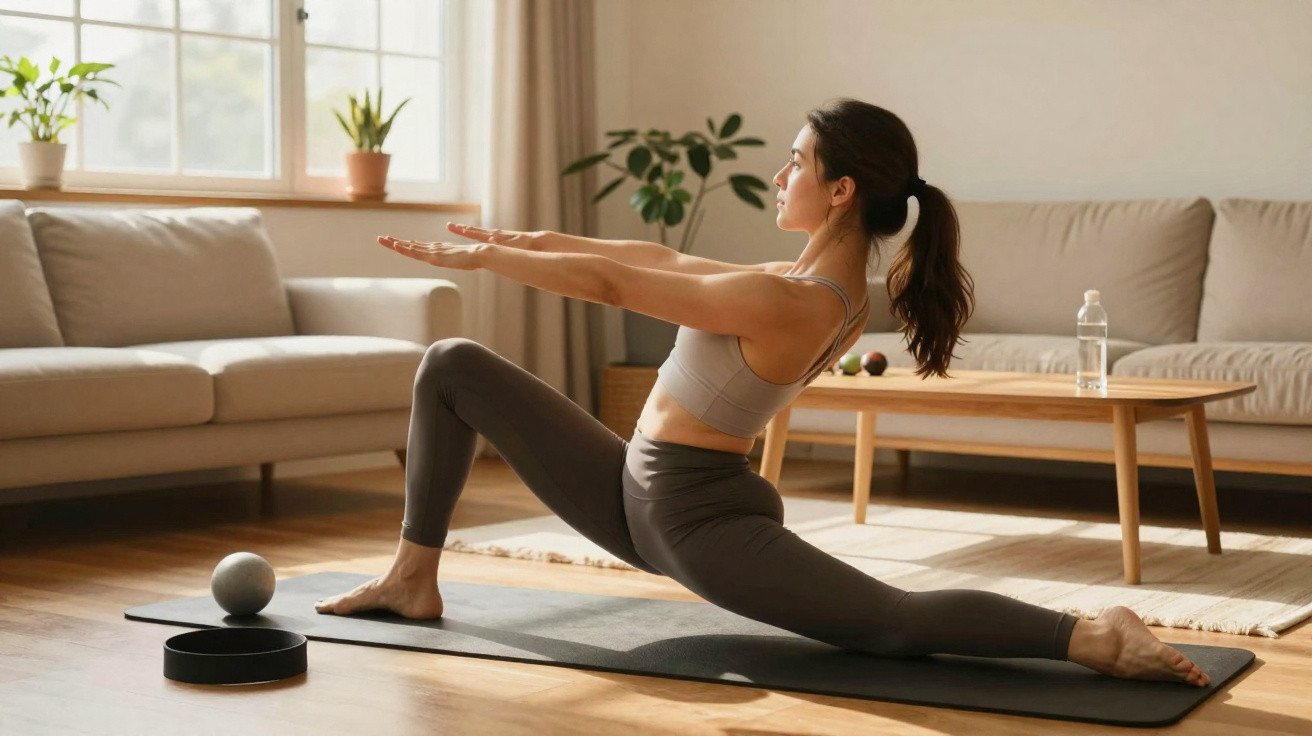
If your waistband feels tighter after every meal, it is easy to respond with even more crunches – only to end up with neck or back pain. This is exactly where a specific Pilates sequence, recommended by experienced instructors, comes in. It targets the deep abdominal muscles, requires no equipment and can be done in your living room. When followed consistently, it can make the waist look more defined in as little as around three weeks.
Why a genuinely toned stomach starts from within
For many people, abdominal training immediately means sit-ups. The issue is that these familiar exercises mainly work the superficial muscles: the rectus abdominis and obliques. The deeper muscles, especially the transverse abdominis, are often neglected – yet this is the muscle that functions like an internal corset.
Targeting the deep abdominal muscles stabilises the spine, takes strain off the back and shapes the midsection from the inside out.
Experienced Pilates coaches describe the technique like this: first, draw the lower stomach in with a deliberate exhale; only then should the movement begin. This engages not just the visible “six-pack layer”, but the whole core musculature.
There is also a second benefit that is often overlooked: Pilates improves posture and mobility. Sitting upright, keeping the pelvis neutral and letting the shoulders relax will naturally make the waist appear slimmer – with no extra dieting tricks required.
The five-step Pilates routine for a flatter stomach
The coach featured here relies on five key exercises that she regularly includes in her classes. Each can be performed barefoot, without equipment, on a mat or carpet.
- Single Leg Stretch – engages the transverse and oblique abdominal muscles while building core endurance.
- Double Leg Stretch – works the entire abdominal area and also improves mobility through the shoulders and hips.
- Double Leg Lower Lifts – places a clear emphasis on the lower stomach, making it ideal for small “love handle” areas.
- Shoulder Bridge with Kick – strengthens the glutes, hamstrings and back muscles while the core remains stable.
- Scissors – mobilises the hips and maintains abdominal tension over several breaths.
How to perform the Pilates exercises correctly
Single Leg Stretch: Lie on your back, lifting your head and shoulders slightly, with your knees drawn towards your chest. Extend one leg forwards while keeping the other close to your body. Change sides with every breath. Keep your lower back heavy on the floor and draw your stomach flat inwards.
Double Leg Stretch: Begin in the same position, with both knees towards your chest. As you inhale, extend both legs forwards while taking your arms overhead. As you exhale, carefully return your legs and arms to the centre. Keep the lumbar spine steady and avoid arching your lower back.
Double Leg Lower Lifts: Start with both legs extended vertically upwards. On an inhale, lower them slowly towards the floor, going only as far as you can while maintaining abdominal tension. Exhale as you lift them back up. Keep the lower stomach firm, as though you are mentally fastening your trouser button.
Shoulder Bridge with Kick: Lie on your back with your feet placed hip-width apart. As you exhale, roll up vertebra by vertebra into a shoulder bridge. Your pelvis, knees and shoulders should form one line. Extend one leg upwards, perform a small kick, then lower it to the height of the opposite knee. Switch legs afterwards. Keep the hips as still as possible.
Scissors: While lying on your back, raise both straight legs. Reach one leg towards the ceiling and the other towards the floor. Use both hands to support the back of the upper leg. Draw it a little closer towards you with two small pulses, breathing consciously, then change sides. Keep your stomach firm and your neck relaxed.
Living-room training plan: fitting the routine into your week
The five exercises can be combined into a brief yet intensive workout. Beginners can start with a session lasting around ten to fifteen minutes.
| Exercise | Repetitions | Guidance |
|---|---|---|
| Single Leg Stretch | 8–10 per side | Breathe steadily and keep the neck relaxed |
| Double Leg Stretch | 8–10 | Do not lower the arms too far; keep the stomach flat |
| Double Leg Lower Lifts | 6–8 | Lower only as far as the back remains stable |
| Shoulder Bridge with Kick | 8 kicks per leg | Keep the hips level |
| Scissors | 8–10 per side | Use small pulses; do not jerk |
Three short sessions per week, performed with conscious breathing and focus, usually deliver results more quickly than occasional long workouts.
Many users report noticing a tangible difference after around 21 days: their stomach looks firmer, their trousers fit more loosely and their body feels less “puffy” in the morning. At the same time, tension in the lower back eases because the supporting muscles are working more effectively.
An improvised studio: turning your living room into a Pilates space
The good news is that you do not need an expensive studio or a reformer. A non-slip surface is enough. If you wish, thick socks or small sliding pads can help make certain movements smoother. A smooth floor is useful, but it should not be so slippery that you lose control.
Fitness professionals generally recommend exercising barefoot because it makes the foot muscles work more actively. Make sure there is sufficient room to fully extend your legs without brushing against furniture. Keep the lighting pleasant and, ideally, put your phone into flight mode. In Pilates, concentration on breathing and body awareness matters far more than speed or maximum strength.
How quickly will visible results appear?
A period of around three weeks comes up repeatedly as an average. This timeframe is realistic if you complete the routine two to three times per week and keep your day-to-day habits reasonably stomach-friendly: limit highly processed foods, get enough sleep and include a moderate amount of movement.
Those who already experience back or neck problems often benefit particularly well. Activating the deep muscles stabilises the core, making everyday movements such as lifting, bending down or sitting for extended periods easier.
Can this Pilates routine replace traditional crunches?
For many people, yes. These five exercises engage the deep musculature much more effectively while also being kinder to the neck and lumbar spine. Crunches still have a place, but they often strain precisely the areas that may already be sensitive – particularly when technique and breathing are not correct.
If you enjoy variety in your training, you can deliberately add crunches, perhaps once a week in small doses. However, the foundation of the routine remains working from the centre, rather than chasing the highest possible repetition count.
Pilates over 60: what older adults should consider
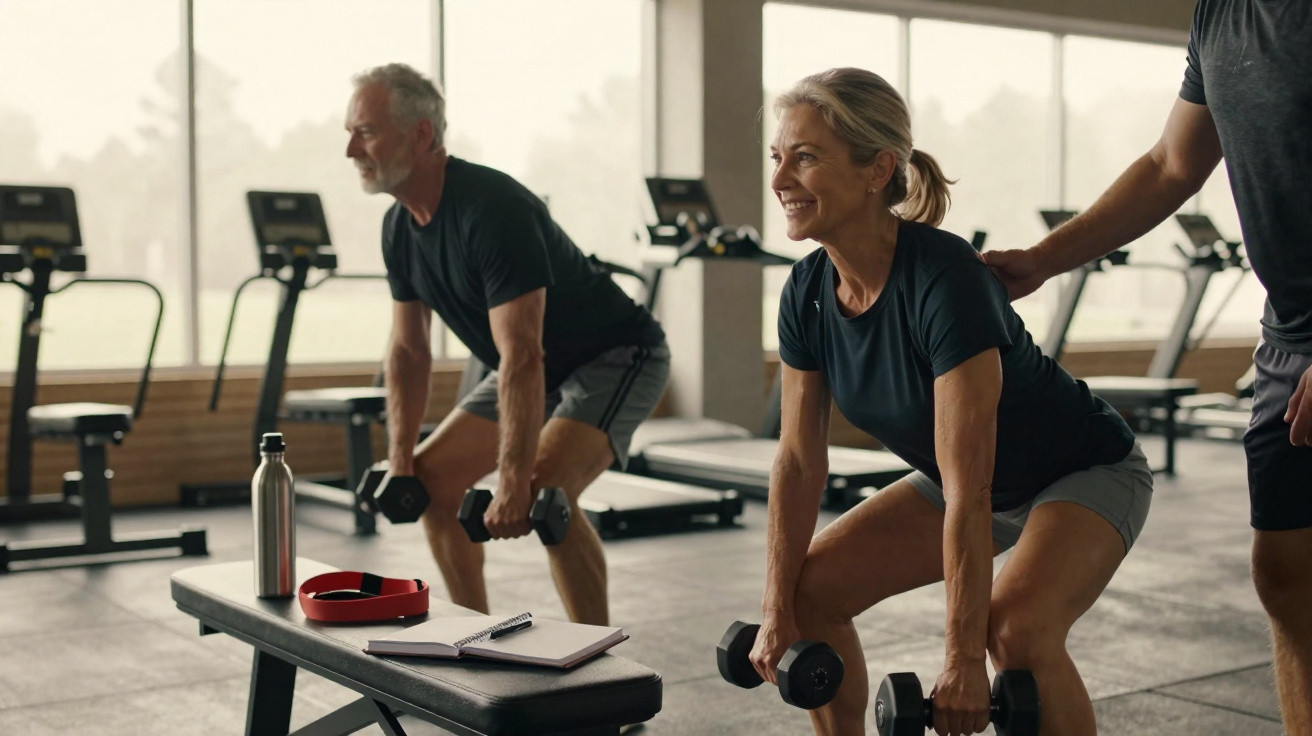
This type of training is generally suitable at an older age too, provided that you allow for adaptations. The range of movement can be smaller and the pace slower. Feeling secure through the back is more important than achieving the perfect angle.
- Seek medical advice beforehand if you have known heart or back problems.
- Lower the legs only as far as your lower back feels stable.
- It is better to take more breaks than to push through discomfort.
- Relieve strain on the neck; if necessary, keep your head on the floor.
Many people over 60 report feeling steadier on their feet after a few weeks, with improved balance and less effort needed for everyday tasks such as climbing stairs or shopping.
Breathing, the pelvic floor and daily habits: what enhances the effect
One frequently underestimated detail can noticeably enhance the effect on the stomach: the pelvic floor. Gently drawing the pelvic floor inwards and upwards while exhaling automatically increases tension in the deep abdominal area. This protects against downward pressure while helping to shape the waist at the same time.
It is also worth looking at everyday habits. Constantly sitting with a rounded back, continually looking down at your phone and shallow breathing all reduce the strength of the core. Small adjustments can make a difference: stand up more often, consciously roll your shoulders back, lift your gaze and send several deep breaths into the sides of your ribcage.
Combining these habits with the short Pilates routine gradually builds a strong core – and makes a flatter stomach not a short-term effect, but a welcome by-product of a more stable, mobile body.


Comments
No comments yet. Be the first to comment!
Leave a Comment