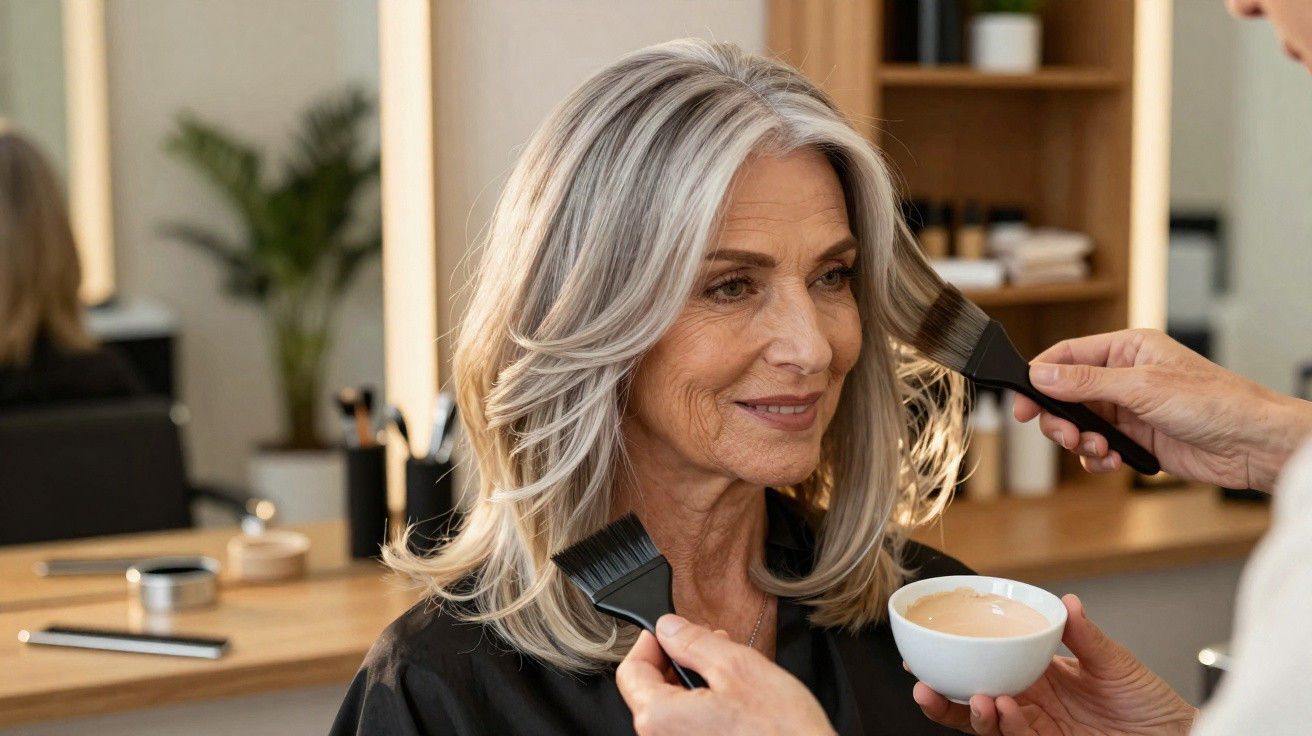
Greige balayage has become one of the most recommended techniques for blending grey hair after 60 without turning to all-over colour. It combines cool grey, beige and silver highlights to soften the change between natural roots and lengths that still retain colour.
Why does greige balayage enhance grey hair?
Rather than fully concealing white strands, greige balayage uses carefully placed highlights to bring the shade closer to the natural hair colour. This produces a gentler blend between greys, previous highlights and faded ends.
The technique works particularly well because it follows the natural distribution of grey hair. Instead of covering every strand with a dark dye, the hairdresser uses cool and beige nuances to add depth, shine and movement.
How does this technique blend greys without ageing the look?
The blending relies on controlled contrast. Fine highlights break up the harsh line of white roots, avoiding the pronounced regrowth effect that can emerge just a few weeks after an even, single-process colour.
- Cool grey shades help balance more noticeable white strands.
- Beige reflections soften the overall effect when the complexion benefits from added warmth.
- Fine highlights form a natural transition from the roots to the lengths.
- Toning minimises the yellowing often seen in grey hair.
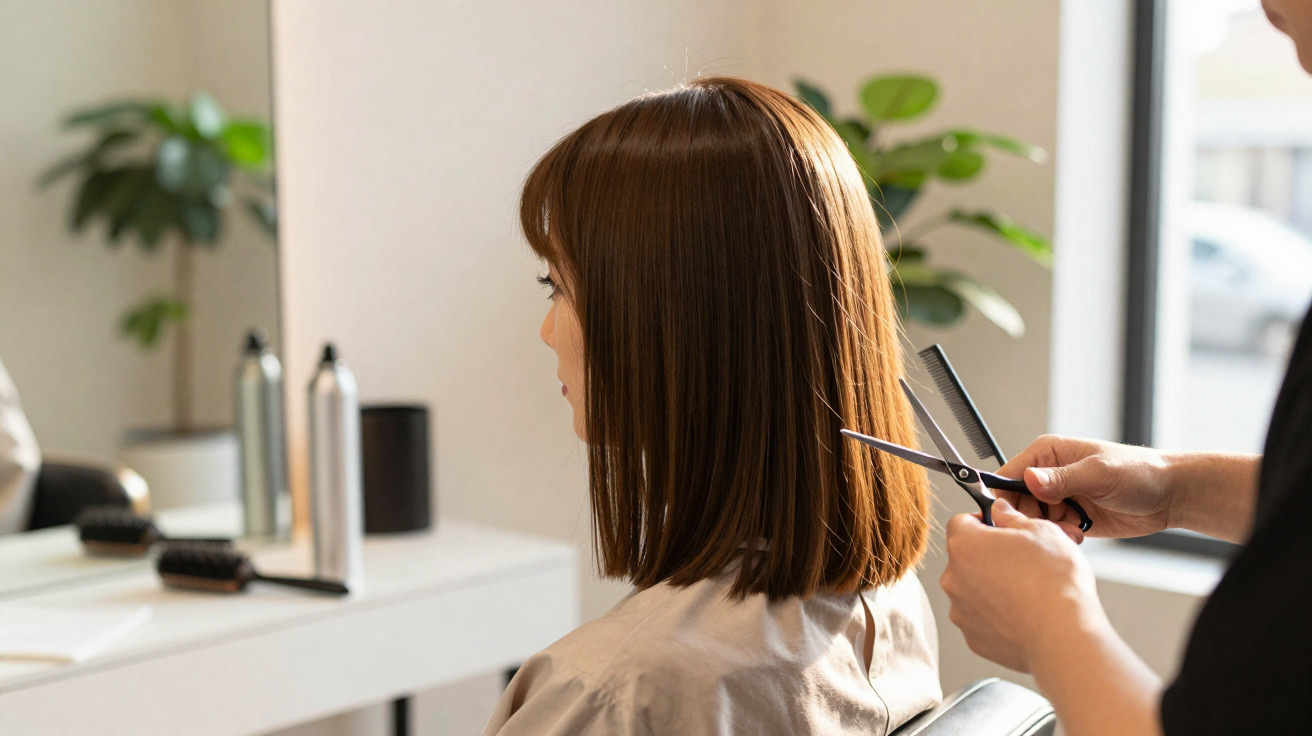
- Lightly layered cuts help distribute the colour as the hair moves.
Who should consider greige balayage after 60?
Greige balayage suits people wishing to move away from dark dyes without having to deal with a stark white band at the roots. It is also a good option for those with a high proportion of grey hair who feel that their hair has lost its shine or developed yellow tones.
Before the treatment, the stylist should assess the colouring history, the hair's strength and the percentage of grey strands. Hair that has been severely compromised by bleaching, straightening treatments or frequent dyeing may need conditioning before highlights are applied.
What care keeps the result elegant for longer?
Following the procedure, upkeep is more about maintaining shine and tone than frequent, intensive root touch-ups. The aim is to retain a cool reflection without leaving the hair dull, dry or excessively grey-looking.
- Use purple shampoo only as often as your hairdresser recommends.
- Alternate hydrating and nourishing treatments to prevent rough ends.
- Shield the hair from the heat of hairdryers, straighteners and curling tongs.
- Avoid using too many yellow-toned or oily products through the lengths.
- Have a gentle toner applied when the grey starts to lose its luminosity.
Elegance lies in a well-planned transition
Greige balayage works because it makes grey hair part of the overall look rather than something that needs hiding every month. The highlights act as a bridge between the former hair colour and this new stage, creating less contrast at the roots and greater harmony through the lengths.
After 60, the technique gives its best result when paired with a suitable cut, precise toning and hydrating care. The grey strands then appear intentionally styled, the hair retains its brightness and the transition looks sophisticated without constant reliance on full-head dyeing.











Comments
No comments yet. Be the first to comment!
Leave a Comment