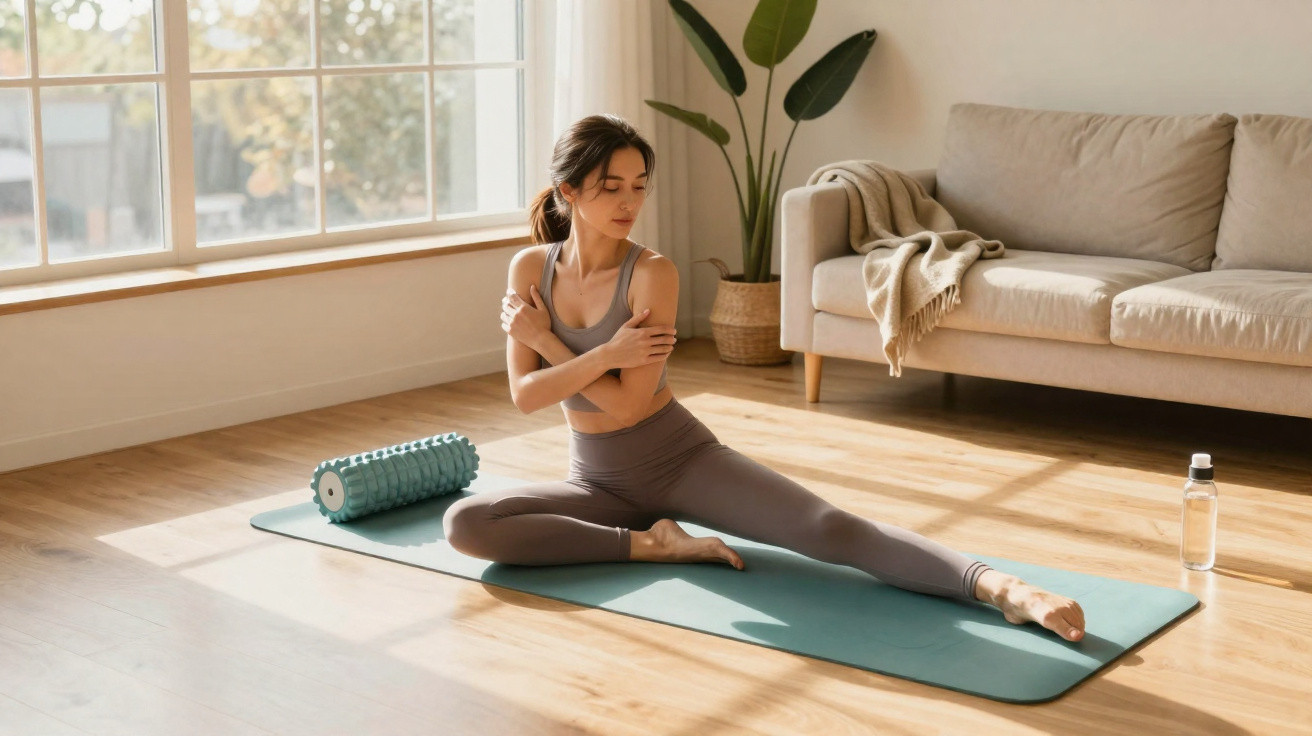
Countless exhausting sit-ups with little to show for them: an experienced Pilates instructor shares a gentle home routine that tones the stomach – without a crunch marathon.
A tighter waistband, a stomach that feels stretched after eating, and traditional crunches that only strain the neck: it is a familiar situation. This is precisely where a dedicated Pilates sequence, created by a Pilates coach, comes in. It specifically targets the deep abdominal muscles. Anyone willing to spend 10 to 15 minutes on it several times each week may notice that their stomach area looks noticeably more stable and flatter after around three weeks.
Why Pilates can make the stomach look slimmer
Pilates works from the inside out. Rather than placing strain solely on the visible “six-pack muscles”, it primarily engages the deeper muscles around the waist, back and pelvic floor. This is where the internal “corset” is formed, helping to firm the stomach and improve posture.
Instructors repeatedly stress the distinction between the superficial and deep abdominal muscles. The outer layer – the rectus abdominis and oblique muscles – is strong and creates visible definition. The inner layer, particularly the transverse abdominal muscle, stabilises the torso and gently draws the stomach inwards.
“When you first engage the deep abdominal muscles during Pilates and consciously breathe out, you activate the entire core far more effectively.”
This emphasis brings several benefits:
- the lower stomach appears less protruding
- the lower back is relieved, which may reduce back pain
- posture becomes more upright and the waist appears more defined
- movements feel more controlled rather than jerky and tense
This combination of core stability, mobility and supple muscles is exactly why Pilates is an alternative to demanding abdominal training at the gym for many people.
The 5 key exercises for a firmer stomach
For her basic home routine, the coach relies on five classic Pilates moves that can easily be performed on a mat in the living room. They are suitable for healthy beginners and more experienced exercisers who want to train without equipment.
1. Single Leg Stretch – controlled leg work for the waist
Begin lying on your back. Lift your upper body slightly and raise the legs one at a time. Draw one leg towards the chest while extending the other diagonally forwards.
Coordinate each leg change with your breath: draw one leg in, breathe, switch legs, then breathe again. Keep the lower back heavy against the mat and draw the stomach inwards.
Training goal: the deep abdominal muscle and obliques, along with endurance in holding core tension.
2. Double Leg Stretch – full-body coordination for the core
Again, begin on your back with your upper body lifted. Bring both knees towards your chest and loosely wrap your arms around your legs. As you breathe in, extend the arms behind you and the legs forwards; as you breathe out, bring everything back to the centre.
Important: choose a smaller range of movement rather than allowing your back to arch. Keep the stomach drawn flat, as if you were fastening the zip of a pair of tight jeans.
Training goal: the entire abdominal musculature, plus shoulder and hip mobility.
3. Double Leg Lower Lifts – focus on the lower stomach
This variation directly targets the often “stubborn” lower stomach. Start on your back with your legs extended upwards in a gentle V shape. You can keep your upper body down if your neck is sensitive.
As you breathe out, slowly lower both legs, only as far as you can keep your back stable on the floor. As you breathe in, lift the legs back up. Maintain a calm tempo and continuously resist with the stomach.
“Anyone who works with good form here will quickly feel how strongly the area below the navel is engaged – without pulling in the lower back.”
4. Shoulder Bridge with leg lift – glutes, back and stomach working together
In this Shoulder Bridge variation, your shoulders and feet remain on the floor while you lift your pelvis until the knees, pelvis and shoulders form a line. From this position, extend one leg upwards, then lower it again to roughly the knee height of the supporting leg.
Keep the pelvis as still as possible without tipping it to either side. The stomach stabilises the centre while the glutes and backs of the thighs work hard.
Training goal: the glutes, hamstrings and back, alongside a strong core.
5. Scissors – a scissor movement for hips and core
Lie on your back and lift both legs upwards. Lower one leg forwards towards the floor while keeping the other extended towards the ceiling. With every breath, switch the legs like a pair of scissors.
Some variations include two small pulling movements on the upper leg before changing sides. The key point remains the same: draw the stomach inwards, keep the ribcage soft and relax the neck.
How to fit the Pilates routine into everyday life
You do not need hours-long workouts to see tangible changes. A few minutes done consistently can often be enough when used well.
One possible mini workout at home:
- Single Leg Stretch – 8 to 10 repetitions per side
- Double Leg Stretch – 8 to 10 repetitions
- Double Leg Lower Lifts – 8 controlled repetitions
- Shoulder Bridge with leg lift – 8 kicks per side
- Scissors – around 10 changes per leg
Depending on your pace, the sequence takes 10 to 15 minutes. Many users report noticeable changes after about three weeks when doing two or three sessions a week: a firmer stomach, less pulling in the back and greater stability in everyday life.
“What matters is not perfection but consistency: short, clean sessions beat uncontrolled marathon workouts.”
Training in the living room: how to make your home workout safe
The good news is that this routine only requires a mat or a firm carpet. Some instructors like using slippery socks or small gliding pads to make movements flow more smoothly – similar to using a Pilates Reformer, but without the expensive purchase.
A few practical safety tips:
- always train barefoot or in non-slip socks
- the surface should be firm, but not as hard as tiles
- with every exhale, gently engage the pelvic floor, as though briefly holding back the urge to urinate
- stop or simplify the exercise as soon as pain occurs in the back or neck
- seek medical advice beforehand if you have known heart or back problems
If you are unsure, begin with a smaller range of movement or initially place your head on a thin cushion to ease the neck. As your strength builds, you can gradually increase the challenge.
How quickly will visible results appear?
Training reports from Pilates students often mention roughly three weeks before the first changes can be felt and sometimes seen. The requirement is regular practice several times a week, combined with a reasonably balanced lifestyle that includes enough sleep, moderate everyday movement and foods that are not heavily processed.
Anyone expecting unrealistic results – such as a completely “magically disappeared” stomach in record time – is more likely to be disappointed. What is realistic is a firmer feeling through the middle, a lower stomach that appears flatter, less of a bloated-stomach look and greater stability in the lower back.
Is this Pilates routine a genuine alternative to crunches?
Many people with sensitive necks or backs quickly find that traditional crunches place more strain on them than they deliver in benefits. The five Pilates exercises presented here take a different approach: they generate strength from deep within rather than from momentum.
| Abdominal crunches | Pilates routine |
|---|---|
| puts considerable strain on the neck | focuses on the core, so the neck does not have to work hard |
| mainly emphasises the rectus abdominis | engages deep and oblique muscles |
| movements are often jerky | slow, controlled pace |
| no direct effect on posture | improved upright posture and stability |
Many people who switch to Pilates abdominal exercises report that they can stop doing crunches entirely without feeling that they are doing less for their waist.
Who is this programme for – and what are its limits?
The routine can generally be adapted at any age, including for people over 60. The important considerations are a smaller movement range, a slower pace and very clear control of breathing and core tension. Anyone with osteoporosis, significant back problems or cardiovascular conditions should get the go-ahead from their doctor before starting.
After pregnancy or abdominal surgery, consult a qualified professional, build up gradually and take warning signs seriously. It is better to stop at the slightest sensation of “pulling” around the surgical area, downward pressure in the pelvic floor or dizziness.
What enhances the effect: daily habits, food and breathing
The Pilates routine works particularly well when it is not done in isolation. If you spend a lot of time sitting during the day, incorporate regular posture checks: roll the shoulders back, lift the breastbone slightly and gently draw the stomach inwards. This alone can noticeably change how your midsection looks.
Food also plays a role. Heavily salted convenience foods, lots of sugar and large late meals encourage water retention and a bloated stomach. Drinking more water, eating fibre-rich vegetables and protein sources, and eating slowly can be supportive.
Breathing is an often underestimated factor. Pilates uses so-called lateral ribcage breathing: the stomach stays relatively flat while the ribs move outwards. Once you understand this technique, you can use it in everyday life – while walking, in the office or even in the car – to discreetly keep the deep abdominal muscles active.







Comments
No comments yet. Be the first to comment!
Leave a Comment