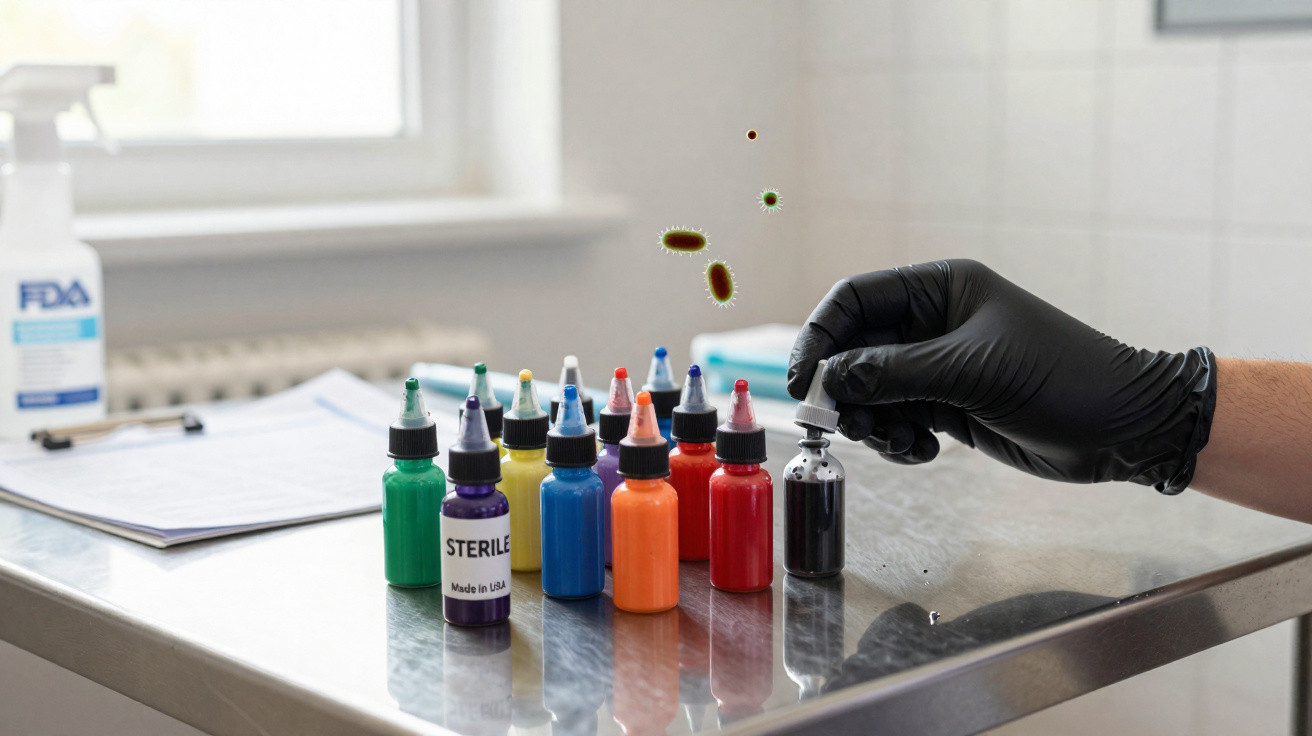
Tattooing has been an artistic practice for thousands of years.
People mark their bodies with images and symbols that matter to them, piercing the protective skin barrier with needles to place ink permanently beneath the epidermis.
Naturally, no-one wants this process to introduce potential pathogens. In recent years, the tattoo industry has improved its approach to sterilisation.
Yet a 2024 US Food and Drug Administration study uncovered a concerning result. After examining 75 sealed tattoo and permanent make-up inks, researchers found bacteria in one-third of them, including species that can make people ill.
The agency has since extended its investigation to establish whether that result was an outlier.
FDA analysis finds widespread tattoo ink contamination
A retrospective review of four FDA investigations into tattoo ink, carried out from 2018 to 2024, found bacteria in one-third of 259 unopened containers of tattoo and permanent make-up ink. In total, the testing produced more than 250 bacterial isolates from 94 species, some of which are recognised human pathogens.
The 2024 result, then, was not a one-off.
"These findings underscore that microbial contamination in tattoo and permanent makeup inks is widespread and diverse, reinforcing the need for sensitive molecular detection methods, expanded surveillance, and harmonized manufacturing standards to ensure product safety," writes a team led by FDA microbiologist Ohgew Kweon in a paper published in Scientific Reports.
Each of the four FDA surveys independently indicated that contaminated ink is a real concern, including among products carrying sterile labels.
However, because every survey examined a distinct selection of products using a particular approach, key questions remained. These included the overall frequency of contamination across the surveys, whether specific product features could predict it, which microbes repeatedly appeared, and how much bacterial diversity may still have gone undetected.
Perhaps the most significant unresolved issue was where, and by what route, the inks became contaminated.
These were the gaps in knowledge the researchers aimed to investigate.
They combined the earlier surveys into a sample of 259 unopened tattoo and permanent make-up inks, covering numerous brands, colours and stated sterility claims.
In the original tests, the inks were opened under laboratory conditions. Genetic sequencing was then used to identify bacterial species in colonies grown from each sample. This means the team did not merely detect tiny fragments of DNA: the bacteria were alive enough to grow into colonies.
For the latest research, the scientists applied one consistent analytical framework to the combined findings, allowing them to identify patterns that no individual dataset could have revealed.
Contamination levels differed markedly between the four surveys. Taken together, however, they produced a pooled estimate of bacterial contamination of 35.4 percent.
Sterile labels provided limited reassurance
One result was especially notable.
A sterile label did little to indicate genuine sterility. Of the 118 samples labelled sterile, almost one-third – 30.5 percent – were contaminated. That compared with 35.5 percent of samples that made no sterility claim.
Neither the ink's category nor its origin offered a reliable safeguard. Bacteria were found in 33.3 percent of tattoo inks and 33.0 percent of permanent make-up inks. Meanwhile, 33.5 percent of US-made inks were contaminated, alongside 31.9 percent of imported inks.
However the data were divided, the figure came to roughly one-third.
More concerning still was the range of bacterial species detected. The researchers found 94 species from 38 genera, dominated overwhelmingly by Bacillus, followed by Pseudomonas, Staphylococcus and Lysinibacillus.
Of these 94 species, about one-third – 34 – are regarded as potential pathogens because of documented links with human illness. They include Pseudomonas aeruginosa, Bacillus cereus and Cutibacterium acnes.
This does not mean that every contaminated ink will cause an infection. Although the study detected bacteria capable of causing disease, it did not assess whether the contaminated products had actually made anyone unwell.
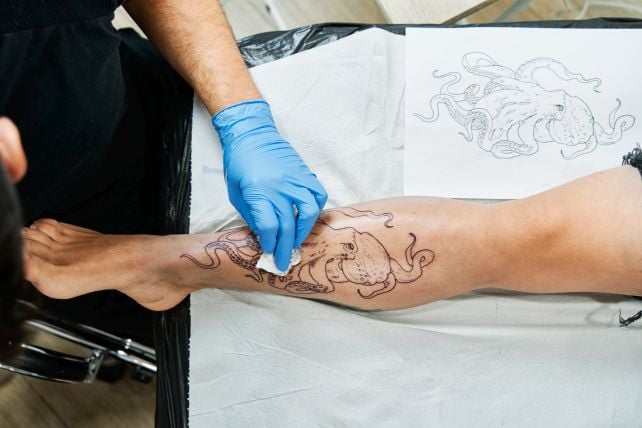
Good hygiene standards in the studio can minimise infection risks. (Alvaro Medina Jurado/Moment/Getty Images)
"These findings are consistent with documented infection events and product recalls associated with microbial contamination introduced during ink manufacturing or distribution," the researchers write.
The full scale of bacterial diversity remains unclear
The 94 identified species may not show the problem's full extent.
As more samples were added, the number of bacterial species kept increasing. Although the curve slowed, it did not level off, suggesting that a larger sample could reveal still more bacteria.
The research was also restricted to species that readily grow in culture. Slow-growing, fastidious and viable-but-nonculturable bacteria could therefore have escaped detection.
For instance, several outbreaks of tattoo-associated nontuberculous mycobacteria infection have been reported. These bacteria may need specialised growth media and longer incubation periods than those used in the surveys.

The study also cannot establish when or how contamination takes place. Sterility claims did not reliably predict it, nor did an ink's type, colour or country of origin.
There is no clear measure available to consumers, or even practitioners, that would let them inspect a bottle of tattoo ink and judge whether it is safe.
Related: Artist Tattooed Himself to Solve Mystery of Ötzi The Iceman's Tattoos
The authors say their findings point to weaknesses in existing manufacturing and quality-control practices. Their analysis indicates that validated controls and sterilisation processes during manufacturing are needed.
"These findings underscore the need for improved manufacturing quality control, validated sterilization procedures, and enhanced microbiological surveillance using complementary culture-based and molecular approaches to strengthen microbial risk assessment and improve the safety of tattoo and PMU ink products," the researchers write.
For anyone considering a tattoo, though, the advice is largely unchanged. Research the artist carefully. Artists who follow rigorous hygiene procedures and monitor ink recalls and package integrity are probably a safer choice than your friend Jim's mate with a tattoo gun in his garage.
The findings were published in Scientific Reports.
This article was fact-checked and edited by Rebecca Dyer. Although we take pride in our process, we are only human. If you notice an error, please let us know.
















Comments
No comments yet. Be the first to comment!
Leave a Comment