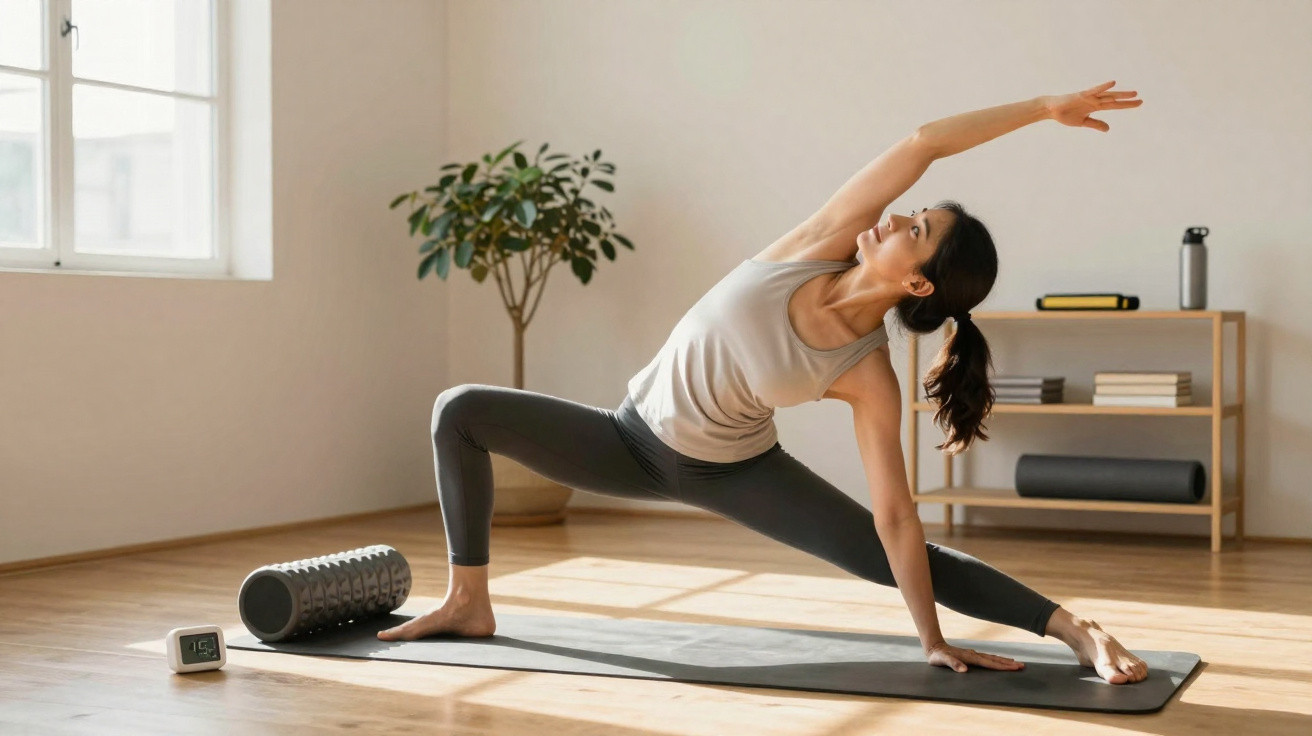
If you get out of bed in the morning and need to “loosen up” first, you will know the feeling: your hips feel tight, your back complains and those first few steps are laborious. An experienced coach and physiotherapist swears by one targeted stretching exercise that should be done every day and may help keep the body mobile for longer. The appealing part is that it takes only a few minutes, works almost the entire body and can be performed at home without equipment.
Why mobility is so closely linked to healthy years of life
With every passing year, the body loses muscle strength, tendons become less elastic and joints grow stiffer. Spending long periods sitting makes matters worse: the hip flexors shorten, the lumbar spine is put under strain and the shoulders round forwards. Many everyday aches are not simply a consequence of “age”, but primarily of too little movement and one-sided loading.
Good mobility is now regarded as an important marker of healthy years of life – as significant as blood pressure or body weight.
Studies show that people who can bend, turn and get down to the floor from standing before rising again freely not only live longer, but also manage daily life more independently. Moving the joints regularly through a wide range of motion improves the supply of nutrients to cartilage, eases tension and helps you stay steadier on your feet.
The World’s Greatest Stretch – what the exercise involves
The exercise recommended by the coach is known in fitness circles as the World’s Greatest Stretch. The name may sound rather grand, but there is substance behind it: one flowing sequence mobilises several key areas that are crucial for healthy ageing.
The exercise brings together three elements:
- a deep lunge position for the hips and legs;
- a rotational movement through the thoracic spine;
- a targeted stretch for the backs of the legs.
In just a few movements, the stretch reaches:
- the hips and groin area;
- the lower and middle back;
- the shoulders and ribcage;
- the core and stabilising muscles.
These are precisely the areas that trouble many people from midlife onwards. Essentially, the exercise acts like a daily “service appointment” for the body: once a day, move everything that would otherwise seize up during everyday life.
How to perform the World’s Greatest Stretch correctly, step by step
You do not need a gym; a carpet or exercise mat is enough. To begin with, set aside three to five minutes.
Starting position: a stable plank
- Begin in a high plank: place your hands beneath your shoulders, straighten your arms and create a line from your head to your heels.
- Gently engage your abdominal muscles and glutes so that your back does not sag.
Large lunge with rotation
- Step your right foot to the outside of your right hand. Your front knee should point forwards and sit roughly above your ankle.
- Keep the back leg straight, or lower the knee if you want less pressure through the hip.
- Slowly raise your right arm towards the ceiling. Open your chest and let your gaze follow your hand.
- Hold the position for several breaths. Breathe calmly in and out without losing tension through your core.
- Then bring the arm back down with control and place your hand on the inside of your right foot.
Targeted stretch for the backs of the legs
- Gently shift your hips backwards until you feel the back of your right leg.
- Straighten the front leg as far as feels comfortable – there is no need to lock the knee completely.
- Hold the stretch for around 10 seconds while continuing to breathe steadily.
- Return to the lunge position.
- Step the right foot back into the plank.
- Switch to the left side and repeat every step.
For a short “longevity routine”, 5 to 10 repetitions on each side are sufficient. The key is to avoid jerky movements and go only as far as a clear pulling sensation, never pain.
Why this exercise supports the “lifespan” of your joints
This is not just any stretch: it targets several areas that commonly cause problems with age.
- Hip flexors and psoas: Long periods of sitting cause them to shorten. The lunge position opens this exact region and reduces strain on the lower back.
- Spine: Rotating the upper body restores movement to the thoracic spine, which can feel almost “frozen” for many people.
- Backs of the legs: Tight hamstrings pull on the pelvis and can contribute to back problems. The final position specifically lengthens these muscles.
- Core and balance: The body has to stabilise while the arms and legs move. This trains the deep muscles and overall body tension.
Anyone who regularly mobilises this chain of hips, core and back can substantially reduce the risk of many typical “age-related aches and pains”.
The dynamic sequence also stimulates circulation. Joints are nourished through synovial fluid, and movement is needed for this process. The stretch provides exactly this “lubricating movement” in a brief, structured routine.
How often to do the stretch, when to use it and who it suits
The coach advises incorporating the exercise daily. Three moments are particularly suitable:
- In the morning: As a gentle way to begin the day and reduce stiffness after the night.
- After prolonged sitting: For example, after a day at a desk, a car journey or a television marathon – ideal for “opening up” the hips and back.
- Before training: As part of a warm-up, especially before running, strength training or sports involving frequent changes of direction.
Even five minutes a day can produce noticeable results, particularly if you have done very little stretching before. The exercise is suitable for beginners and active people alike. If you are unsure, start with a smaller range of movement and build up gradually.
Important guidance for people with existing problems
If you have existing issues with your knees, hips or spine, it is worth checking with a doctor or physiotherapist before practising more intensively. Warning signs include:
- sharp or burning pain;
- tingling or numbness in the leg or foot;
- severe lower-back pain with minimal movement.
If any of these symptoms occur, stop the exercise and seek professional advice. Many people benefit from starting with the back knee lowered, which takes pressure off the hips and lumbar spine.
How to get the most from your stretching ritual
The stretch delivers its benefits mainly through consistency. There is little value in giving everything once a month and then wondering why it does not become easier. Instead, make it part of your routine like brushing your teeth: brief, but regular.
Useful additions may include:
- Gentle strength training for the legs and core, such as squats, lunges or planks.
- Short movement breaks during the day: stand up every 45–60 minutes, roll your shoulders and walk a few steps.
- Easy walking or cycling to use the muscles loosened by the stretch in everyday life.
If you enjoy yoga, the World’s Greatest Stretch is a kind of condensed version of several poses. Conversely, the exercise can be a starting point for progressing to longer mobility sessions later on.
Another point that many people underestimate is breathing. Deep, calm breaths during the stretch signal to the nervous system that there is no danger. The muscles release more easily and the stretch feels more controlled. Holding your breath while maintaining the position creates unnecessary tension and makes the exercise harder than it needs to be.
The aim is not perfect, gym-style technique, but a practical routine that fits into a busy life. Three to five minutes, a little space in the living room and one stretch that can help you remain more supple, stable and independent over the years.










Comments
No comments yet. Be the first to comment!
Leave a Comment