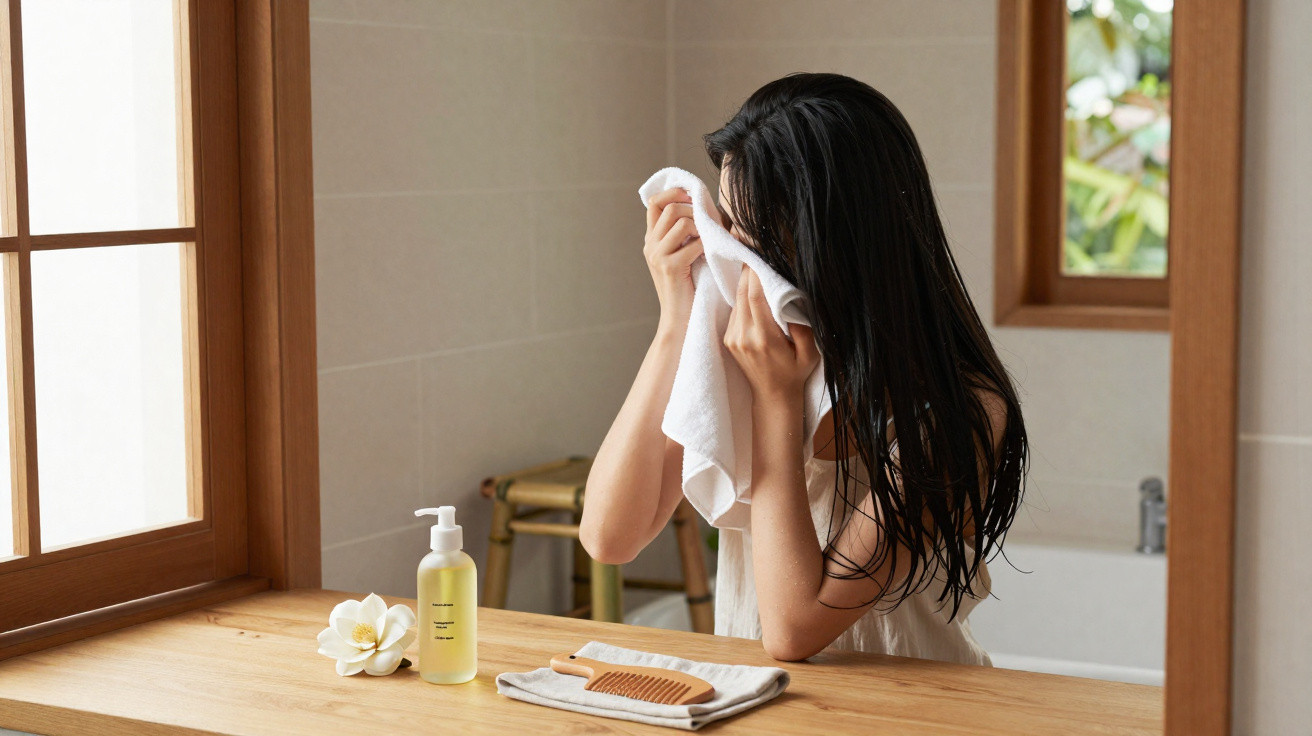
Her fingers travelled unhurriedly from root to tip, inspecting the ends of her hair as carefully as you might examine a silk blouse. There were no flyaways, no stiffness and no visible residue. Only a soft, weighty curtain of mirror-black hair that looked, somehow, entirely effortless.
Outside, beauty adverts promoted 10-step routines and miraculous oils. In her lap sat a small, half-used bottle of high-street shampoo. No leave-in treatment, no styling cream, no dry shampoo covering for an extra day between washes.
Moments like this make you realise that the Japanese approach to hair care is built differently: less fuss, less clutter and better-looking results.
The question is straightforward, almost challenging:
Why does hair look healthier when you stop piling products onto it?
Why Japanese hair looks so polished with so little
Step into a Tokyo office at 8:45 a.m. and it is immediately noticeable. People appear well groomed rather than overly styled. Their hair moves naturally, swinging as they turn instead of remaining fixed in place by hairspray.
When a lift fills up, there is no overwhelming cloud of fragrance. You rarely spot the dull, tacky shine that comes with too much serum. The impression is one of understated refinement, like clothing that has been properly looked after rather than forcefully styled.
That composed finish begins long before any styling product is used. The scalp comes first, then the cut, then the everyday habits. By the time styling enters the picture, it is almost unnecessary.
A 2022 survey by a major Japanese cosmetics company revealed something notable: most women said they regularly used fewer than five hair products. Shampoo, conditioner or a treatment, perhaps a scalp tonic and occasionally a lightweight styling milk. Nothing more.
Contrast that with many Western bathrooms, crowded with mousses, sprays, masks, oils, glosses and pastes. The shelves may be packed, but hair can still feel “not quite right”.
A Tokyo stylist once told me that he spends longer asking clients about their washing and drying habits than he does discussing colours or trends. What matters to him is what comes into contact with their scalp every day, rather than simply what they apply five minutes before leaving the house.
This preference for fewer products is not about cutting corners. It stems from an older belief: when the foundation is healthy, there is no need to battle it every morning.
Japanese hair care is strongly focused on prevention rather than repair. Keep the scalp clean so the follicles remain healthy. Have hair cut so it settles naturally, avoiding a fight with a round brush at 6 a.m. Rinse properly so residue does not develop into flaking, itching and irritation later on.
Western marketing often encourages people to solve every concern with another purchase. In Japan, the routine is more likely to centre on a quieter question: what can I do today to stop my hair becoming a problem at all?
The essentials of a Japanese-inspired hair routine that uses less
The routine often begins with a detail that is easy to overlook: the way you shampoo. In many Japanese homes, shampoo is not applied directly to the scalp. Instead, it is lathered between the hands, or turned into a foam with a little water, before being gently worked through the roots.
The massage is slow and nearly meditative. Use fingertips rather than nails, making small circular movements. You are not merely washing your hair; you are caring for your scalp as you would your skin. After all, it is skin.
Rinsing commonly takes longer than the actual wash. This is the less glamorous secret: a product should not remain behind unless it has been designed to do so. Wash away what has done its job and leave only what is there to nourish.
A common Japanese habit is to wash hair in the evening instead of squeezing it into a rushed morning. City dust, sweat and pollution are removed before bed, allowing the scalp to breathe overnight. There is also time to towel-dry gently, smooth a small amount of treatment through the mid-lengths and either air-dry or finish with a hairdryer on a low heat.
That rhythm alone can reduce the familiar cycle of “I overslept, now I need three styling products and a prayer”. The haircut plays a part, too. Many salons prioritise shapes that hold for weeks, rather than a blow-dry that survives only until the first light rain.
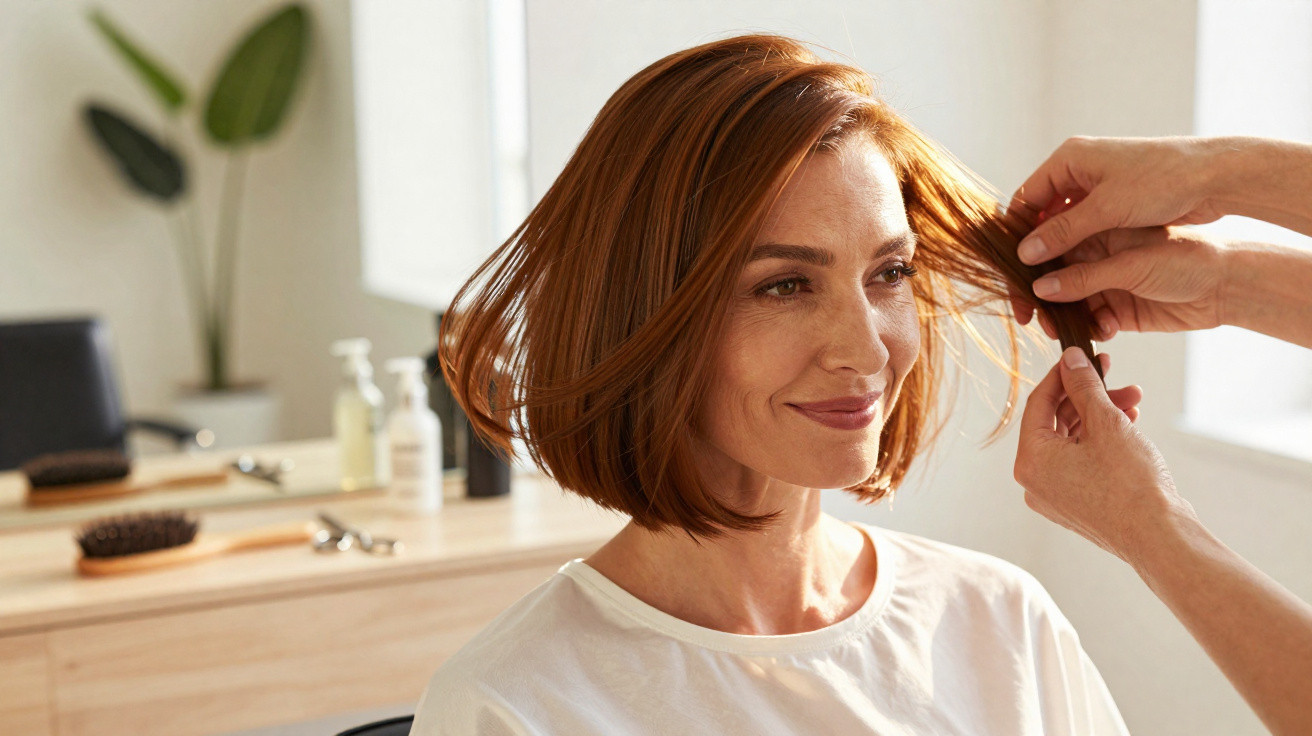
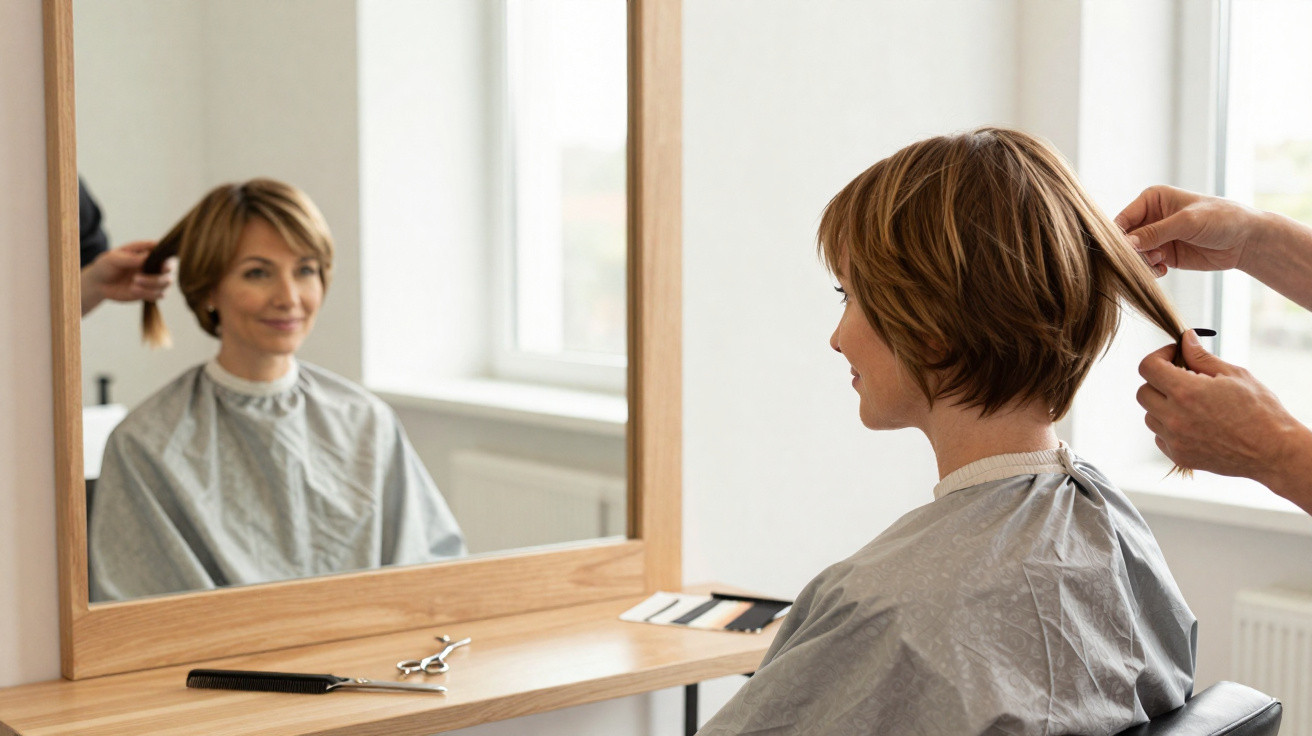
On a wet day in Osaka, I watched a stylist spend almost as much time texturising the inner layers of a bob as she did trimming its overall length. There was no enormous round brush afterwards. Just a few minutes of drying and a quick shake. The hair settled perfectly, as though it had been rehearsing for weeks.
When the shape is already created in the cut, far less styling product is required. That is where the understated brilliance lies.
There is a practical argument for this, too: fewer products mean fewer possible irritants. Each bottle contains a combination of surfactants, fragrances, preservatives and active ingredients. Some are helpful; others simply remain on the skin and cause irritation.
Concentrating on a mild cleanser, a purposeful conditioner or treatment and perhaps a single leave-in product reduces the daily chemical mix your scalp must tolerate. Over time, hair can reflect this in reduced breakage and fewer frazzled ends.
Heat damage is also lessened. When a routine relies on swift, low-temperature drying and air-drying where possible, you are not scorching the cuticle to force a short-lived style. Scalp-focused care, regular trims and thoughtful washing work more quietly than one “miracle mask”, but their benefits last longer.
How to adopt the Japanese-inspired routine without moving to Tokyo
Begin with one uncomplicated change: make your scalp the priority. As you step into the shower, think of it as “skincare above my eyebrows” rather than a “foam party for my hair”.
Use a modest amount of shampoo instead of a full palmful. Add water in your hands until it becomes light and airy, then massage it into the roots using the pads of your fingers. Let the foam run down the lengths during rinsing rather than scrubbing the ends directly.
Treat the final rinse as though you are just about to miss a train: stay focused, be thorough and do not rush those last few seconds. Squeaky hair is not the aim. The aim is hair that feels clean without leaving the scalp tight.
One mental adjustment makes a considerable difference: stop assuming that more product means better care. On an exhausting evening, it can be tempting to apply a mask, serum, oil, cream and spray “just in case”. That is how build-up begins, often without being noticed.
Choose one nourishing post-wash step. Use conditioner or a treatment, rather than both every single time. Concentrate it on the mid-lengths and ends, where hair needs slip and protection. Rinse until it feels smooth between your fingers, but not slippery or coated.
Let us be honest: nobody truly does this every day. Some nights will be skipped, and some mornings will be rushed. The goal is a straightforward routine you can maintain most of the time, not an ideal one you give up after four days.
In practical terms, that means using two to three core products consistently rather than owning seven half-finished bottles. It means one heat tool on a lower setting, and one small styling product rather than three applied in layers.
Stylists in Japan often repeat a quiet mantra to new clients:
“Healthy hair is what you do every day, not what you buy once a month.”
That is the essence of the method. Small, sustainable practices are more effective than dramatic “repair” sessions. A simple routine is also less likely to be abandoned on stressful days, which are often when the scalp reacts most badly.
- Put scalp health first and hair length second.
- Choose fewer, gentler products and use them consistently.
- Depend on a good cut and low heat instead of heavy styling.
- Rinse carefully to prevent build-up and irritation.
- Select a routine you can genuinely live with, rather than one you only admire on TikTok.
Let your hair behave like hair again
There is something quietly radical about the Japanese approach to hair care. It rejects the idea that beauty must be a daily battle. Instead of the drama of “rescue” products, it favours calm repetition, small actions and respect for the scalp.
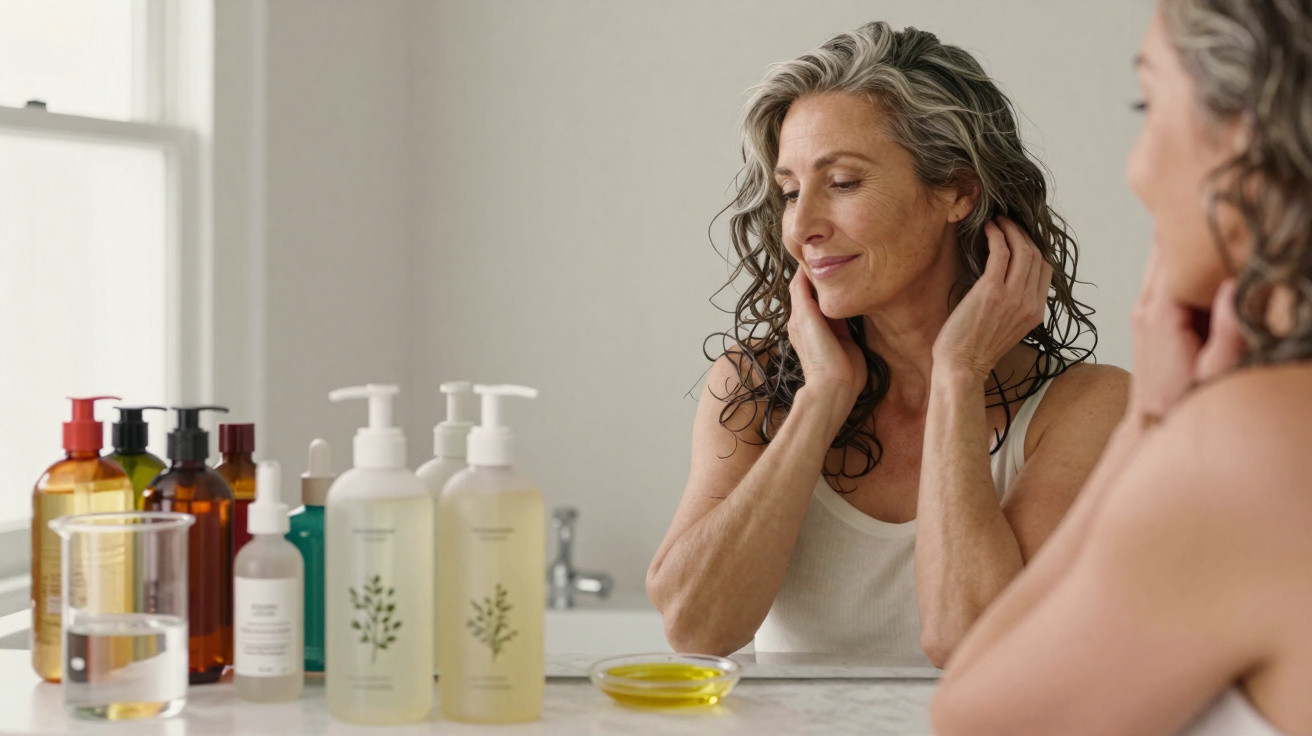
Once you reduce your shelf to just a few bottles and pay attention to how your hair responds from week to week, subtle changes become apparent. Less itching. Fewer tangles. A little more shine that is not artificially glossy, but alive.
On a very human level, this is about more than hair. It raises the question of how much of our routine is shaped by panic and marketing, and how much comes from listening to our bodies. On a hurried Tuesday morning, that distinction can feel enormous.
On a bad day, of course, you may still reach for dry shampoo or a quick styling shortcut. Everyone does. But on a good day, you may find yourself running your fingers through your hair and recognising that you do not need to conceal it beneath anything. On a train, in a mirror or in a window reflection, your hair simply looks… like yours.
That is the quiet, determined magic of a Japanese-inspired routine: it does not promise “perfect”. It provides a structure in which healthy hair becomes normal, while product overload gradually stops feeling necessary.
| Key point | Detail | Benefit for the reader |
|---|---|---|
| Scalp-first approach | Gentle cleansing, longer rinsing and fingertip massage | Reduces itching, flakes and oiliness with fewer products |
| Fewer, better-chosen products | 2–4 core products used consistently rather than a crowded shelf | Saves money, lowers the risk of irritation and simplifies everyday life |
| Cut and low-heat styling | Precision cuts that sit well, with minimal use of hot tools | Hair looks polished without daily damage or heavy styling |













Comments
No comments yet. Be the first to comment!
Leave a Comment