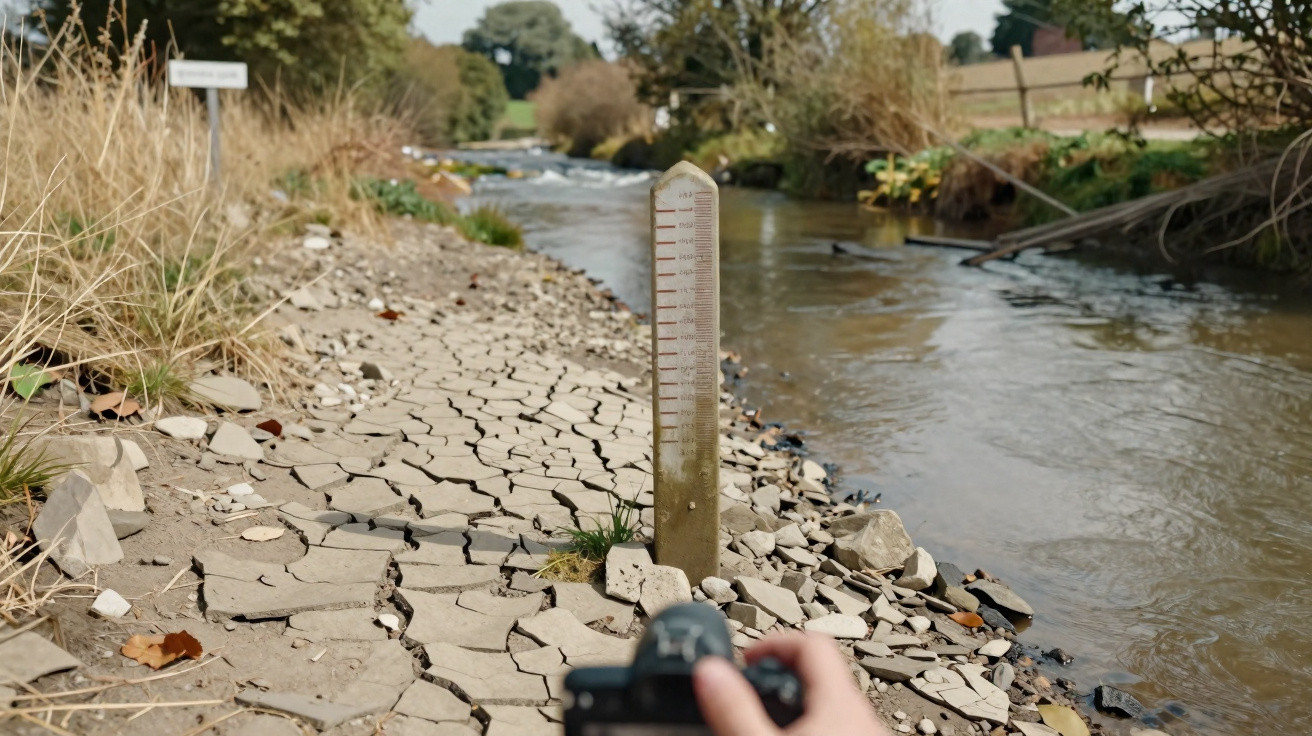
A dry spell can seem like an abstract item on a weather map until a familiar place begins to look different. The grass in the local park turns straw-coloured, the river at a regular walking route shrinks back from its banks, or a pond develops a broad muddy edge.
The useful trick is to look for change rather than one dramatic sign. A brown lawn alone does not confirm drought, but low rivers, stressed vegetation, dry soil and falling reservoir levels can build a clearer picture of how prolonged dry weather is affecting a landscape.
Drought is not simply a hot afternoon or a yellowed lawn. It is a longer-term shortage of water that can affect soils, rivers, wildlife, crops and water supplies.
A dry spell is not always a drought
People often use dry spell and drought interchangeably, but they are not quite the same thing. A dry spell is a period with little or no rain. Drought is a more sustained condition, assessed using a range of information such as rainfall, river flows, groundwater, reservoir storage and demand for water.
Conditions can also differ sharply across England. One area may have received useful rainfall while another remains very dry, particularly where soils, rivers or groundwater take longer to recover.
That is why the best visual clues tend to appear in combination:
- a river channel noticeably narrower than usual;
- exposed stones, silt or riverbed;
- ponds retreating to a small central pool;
- dry, compacted ground and dusty paths;
- grass losing its green colour across a wide area;
- trees shedding leaves earlier than expected;
- reservoir margins sitting well below familiar paths or walls.
A few days of proper rain can revive grass quickly. Rivers, groundwater and reservoirs may take far longer to respond.
Rivers make low water levels easy to see
A river is often the most striking place to notice a prolonged lack of rainfall. At a regular crossing, bridge or riverside footpath, people may see features that are normally hidden: gravel bars, stones, weed beds and stretches of bank usually under water.
Fixed structures make the change easier to judge. A ford marker, bridge pier, mooring ring or water-level gauge provides a point of comparison that an open stretch of water does not.
Low water does not always have one simple explanation. Levels vary with the season, recent weather, groundwater, upstream releases and water use. Still, a very low channel alongside dry ground and stressed vegetation can be a useful indication that conditions are unusually dry.
Reading a low-river photograph carefully
- Find a fixed reference point. A bridge, wall, marker or distinctive tree can show how far the water has receded.
- Look beyond the water itself. Exposed silt, dry banks and browning vegetation add context.
- Check the date. A low level in late summer may be more expected than the same scene in winter.
- Compare similar views. A photograph from the same safe public viewpoint is more useful than a comparison with an unrelated image online.
Never step on an exposed riverbed for a better picture. What looks firm can be deep silt, slippery clay or unstable ground, and channels can remain deeper than they appear.
Parks and commons reveal stress close to home
In towns and cities, dry weather is often most visible in green spaces. Lawns can fade from green to pale gold, while bare patches develop around goal mouths, picnic spots and well-used paths.
This can make a park look alarming, but grass is resilient. Many established lawns recover after sustained rainfall, even when they seem completely dormant in dry weather. The more significant signs are prolonged dryness across a wider area, including compacted soil, thirsty young trees and shrinking ponds.
Trees can also look autumnal earlier than usual. In dry conditions, some may shed leaves to reduce water loss. That does not automatically mean a tree is dying, but it is a reminder not to add pressure by damaging roots, climbing stressed trees or compacting the ground around their base.
A familiar view taken honestly, from the same place over time, can show more than an overly dramatic drought photograph.
Heat can intensify the effects of dry weather
Heatwaves and droughts are related but different. A heatwave concerns unusually high temperatures; drought concerns a longer-term shortage of water. Either can occur without the other, but hot weather can make dry conditions harder on landscapes.
Higher temperatures increase evaporation from soil and open water. Plants may need more water, while already dry ground can become hard and difficult to re-wet. After a spell of intense heat, rain may run off compacted soil rather than soaking in straight away.
That is one reason a brief shower does not necessarily end a dry period. The ground, rivers and water stores often need sustained rainfall over time.
For households, the sensible response is usually simple: use water carefully, follow any advice from the local water company, and avoid watering established lawns simply to keep them green. Newly planted trees, container plants and food crops may need more careful attention, but local restrictions should always come first.
Sports grounds can look deceptively tough
Cricket outfields, football pitches, golf courses and school playing fields often show dry conditions clearly because people expect them to be green and springy.
Hard ground can change how a ball bounces and make falls less forgiving. Grounds teams have to balance safe, usable surfaces with sensible water use, particularly if restrictions are in place.
If you are using a public field during dry weather:
- obey signs and temporary closures;
- keep off newly seeded or protected areas;
- wear appropriate footwear on hard, uneven ground;
- avoid driving or parking on dry grass;
- never use disposable barbecues on grass, even if they are sold nearby.
Dry vegetation can ignite quickly. Follow local guidance on barbecues, campfires and smoking, especially near heathland, woodland edges and long grass.
Reservoirs show the scale of water storage
Reservoirs offer a broader view of dry conditions. As water levels fall, wide strips of bank may appear, sometimes exposing old walls, paths or foundations that are normally covered.
These sights can attract visitors, but newly exposed ground is not an invitation to explore. Reservoir edges may be steep, boggy or unstable, while water can become deep very quickly. Operational sites also have fences, structures and access restrictions for good reason.
Photographing lower reservoir levels safely
- Stay on established public paths and viewpoints.
- Keep back from cracked mud, steep banks and soft sediment.
- Do not climb walls, towers, dams or water-management structures.
- Respect fences, warning notices and private land.
- Include a fixed feature in your photograph to give the scene scale.
Do not enter the water to retrieve objects or to reach an exposed feature. Cold water, sudden depth changes and underwater debris can all create risks, even in warm weather.
Common mistakes when interpreting drought images
A striking image can be useful, but it is easy to overstate what it proves.
- Calling every brown lawn a drought: grass can dry out quickly and recover after rain.
- Ignoring season and location: river levels naturally vary through the year and between catchments.
- Assuming exposed mud is safe: apparently dry ground may conceal deep, waterlogged silt.
- Confusing heat with drought: a short hot spell is not necessarily a long-term water shortage.
- Forgetting wildlife: shallow ponds and low flows can reduce shelter and oxygen for aquatic life.
- Chasing a dramatic angle: leaving paths can harm fragile banks and put people at risk.
- Using old photographs without dates: an image is far less informative if nobody knows when it was taken.
Make your observations useful
Drought photography is most valuable when it records a genuine change in a familiar place. Take pictures from a safe, lawful public location, and note the date, weather, location and viewpoint. If possible, return after rainfall and photograph the same scene again.
For reliable local information, check updates from the Environment Agency, your water company and local authority rather than relying on social-media images alone. Follow any water-saving guidance or temporary restrictions that apply where you live.
England’s dry landscapes can be visually striking, but they are also a practical reminder: water is part of the scenery we barely notice until a river narrows, a pond retreats or a playing field turns the colour of straw.
















Comments
No comments yet. Be the first to comment!
Leave a Comment