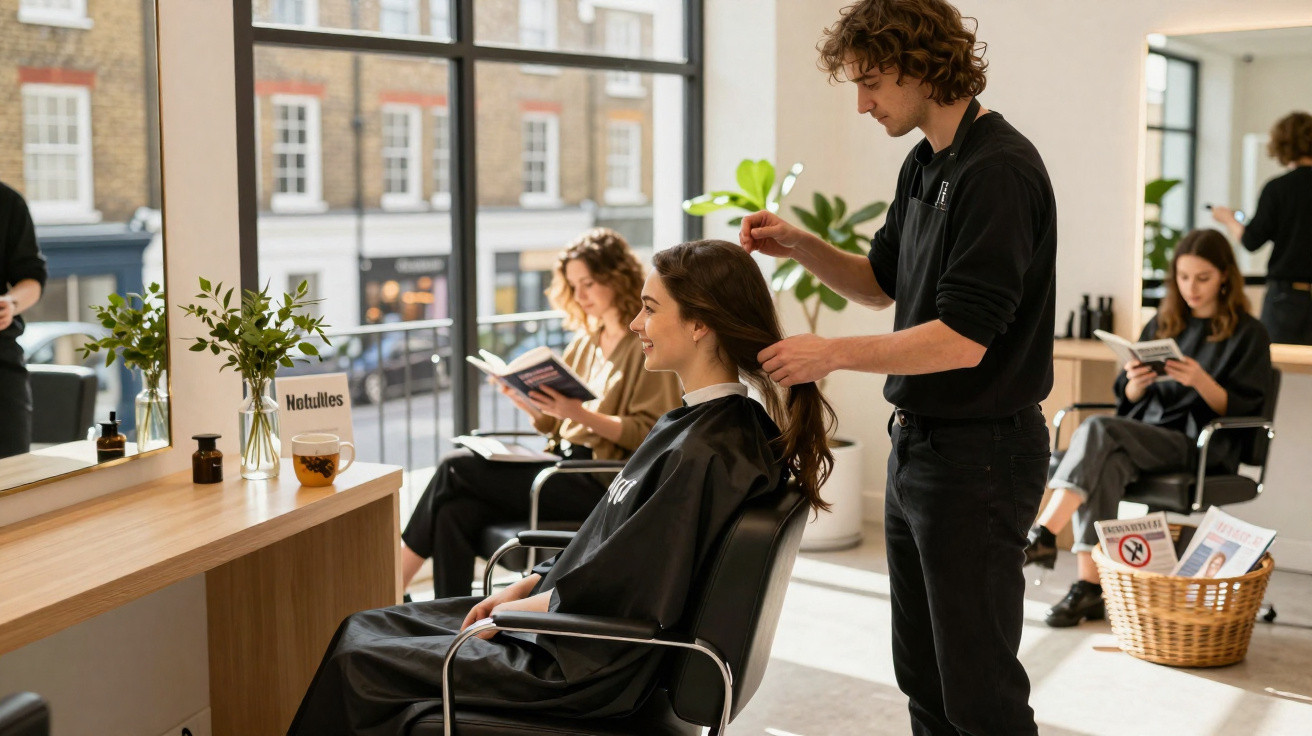
Clients still want something to leaf through, yet they increasingly find independent publications, design periodicals, or no reading material whatsoever. It may seem like a minor replacement. It is not.
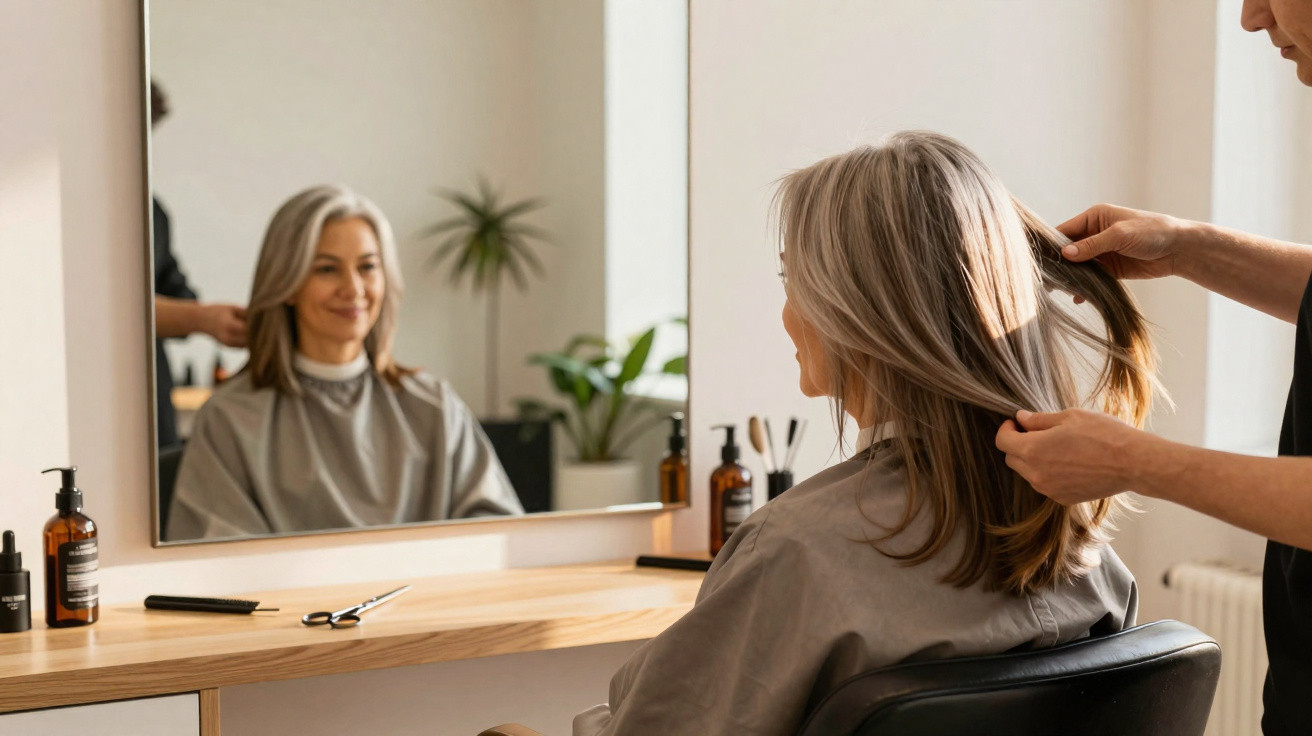
In a timber-fronted salon near Dalston, the kettle clicks off as the bell above the door rings and a woman in a navy trench coat takes a seat. Her eyes move to the waiting table. There is no heap of tabloids, no battered glossy magazines with creased corners and saccharine cover lines. In their place sit a polished collection of short fiction, a zine on queer gardening and a slender guide to scalp care. The stylist asks whether she would prefer a “chatty or quiet” appointment. Taken aback for a moment, the woman smiles: “Maybe quiet, with a little advice.” A hairdryer starts up, while the salon settles into the muted rhythm of scissors at work. Her reflection remains fixed in the mirror. The magazines have disappeared. In their place is a different approach.
Why gossip magazines disappeared from salon waiting tables
Stylists say they have had enough of the emotional jolts gossip publications bring into the salon. Their covers feed on humiliation, separations and bodies marked with arrows. That atmosphere seeps into salon conversations, shapes the way people describe themselves and affects the mood by mid-afternoon. A setting intended for care can quickly become a place of comparison. No one needs that when they’re staring at their own reflection for an hour.
Following a run of prominent UK discussions about tabloid pressure, many London salons stopped to consider what they were quietly validating. Owners in some neighbourhoods told me that they replaced their magazine stacks overnight with art, culture and wellbeing reading. Elsewhere, the magazine stand vanished altogether. One West London owner described the feeling as “cruelty fatigue.” Another raised concerns about libel, asking why a salon should display titles making legally fraught claims, even if they are only part of the décor. Whatever the reason, customers noticed the change. Many said the space felt more peaceful from the first day.
There is a generational change in how people fill waiting time, too. Smartphones have staged a quiet takeover. What was once a “compulsory browse” is now a scroll, and the salon table no longer automatically dictates the atmosphere. Rather than allowing algorithms to determine the mood, owners are making their own editorial decisions. Taking away gossip magazines offers the fastest reset: less scandal, more substance, or simply more quiet. It is not censorship; it is a decision about what sits within inches of the mirror.
Silent appointments and consent-based salon conversation
Many London salons now provide “silent appointments”, promoted on booking pages or mentioned softly once clients reach the chair. The arrangement is straightforward: consultation first, agreement on the plan, then colouring and cutting without obligatory chit-chat. It offers relief to people who are socially exhausted, neurodivergent or absorbed in their thoughts. Hairdryers still create their familiar hum, but the pressure to converse falls away. You can listen to your own thoughts again.
Salon owners are also teaching staff to hold conversations with clearer boundaries. Instead of asking, “Going anywhere nice on holiday?”, they might ask, “How’s this pressure on your scalp?” The difference sounds slight, but its effect is not. Most of us know the feeling when casual chat edges into personal territory just as foils begin to crackle and there is no easy way out. This emerging culture treats the chair a little like a therapist’s couch: not as a place for therapy, but as a setting where consent around conversation matters. Let’s be honest: nobody really does that every day.
Some businesses formalise these standards. An East London stylist told me that a small pledge is taped up in their staff area: no comments on bodies, no gossip, and always ask before touching hair in an unfamiliar area.
“People come to feel better,” said a senior colorist I met near Peckham. “If our magazines and chat chip away at that, we’ve messed up the job.”
In practical terms, this can mean:
- Service options labelled “chatty”, “quiet” or “focused advice”.
- A reading selection of books, zines and local newspapers, with no tabloids.
- Team members trained in mental health first-aid fundamentals and referral wording.
- Gender-neutral pricing, alongside pronoun notes on client records.
- A discreet yet noticeable “no body talk” message on the mirror.
What the change in London salons reveals
Haircutting has always combined skilled work with a community ritual. The move away from gossip magazines reveals which side of that balance is taking precedence today. These spaces are becoming small wellbeing studios: somewhere to settle anxious feelings, recalibrate self-image and leave feeling slightly lighter. They are not flawless sanctuaries; they remain busy, sociable and human. But they are more deliberate about the tone of the conversation.
There is commercial sense behind the shift as well. Salons are not selling printed pages; they are selling an emotional experience. When clients connect an appointment with calm, dignity and a break from noise, they are more likely to return and to trust a stylist with more dramatic changes. Owners tell me that a “no-gossip” policy also preserves their staff’s mental energy. Less reactive conversation leads to fewer mistakes, fewer apologies and better working days. It is, in effect, salon ergonomics for the mind.
London’s beauty industry is also pursuing sustainability and transparency. Many salons have already removed plastic-heavy retail products and introduced refill stations; replacing gossip titles with independent magazines is the cultural version of a refill. It communicates taste and thoughtfulness without making a show of it. It also indicates which voices a salon wants to elevate: local designers, diverse perspectives and useful hair science. A reading rack is never neutral. What a salon offers someone while they wait signals the sort of place it intends to be.
Putting the no-gossip policy into practice
Begin with a purposeful edit of the shelf. Take away anything that normalises shaming or speculative “source says” stories, then introduce publications that value craft, culture or tranquillity. Change the selection each month to keep the rack fresh. Where a minimal table is preferred, put out one book that invites conversation and one quiet zine. That modest act of curation communicates plenty before anyone speaks.
Then establish the wording for the offer. Reception staff could ask, “Would you like a chatty appointment, or more of a quiet one today?” Stylists should be taught to check in at the basin - “Is the water okay? Too hot? Want me to talk you through what I’m doing?” - before ending with one thoughtful sentence about maintenance. Silence is not the objective; consent is. The client remains in control while the stylist guides the journey.
Lastly, equip the team with language for difficult situations. Being curious is natural, while respecting boundaries is something people learn.
“If a client brings up something heavy, I don’t fix it,” a Notting Hill stylist told me. “I say, ‘I’m sorry you’re carrying that. Would you like quiet while I work, or to change the subject?’”
Useful prompts fit neatly on a single-page card in the staff room:
- “Would you prefer to talk hair today, or zone out?”
- “I don’t comment on bodies, but I can help with scalp health.”
- “We don’t keep tabloids, but I’ve got great short reads.”
- “Want me to explain the technique, or just relax you?”
- “I can share aftercare now or text it later-what’s best?”
What replaces gossip is not silence - it is trust
London salons are not becoming monastic. Instead, they are creating spaces where conversation is selected rather than presumed. Clients arrive carrying their own realities: a podcast in one ear, an important day ahead or a mind already racing. When a stylist asks what tone the client wants, removes the tabloids and keeps discussion rooted in care, a haircut becomes a small ritual. You leave with tidier ends and a clearer head. You may even recall something you appreciate about your face. This is not really about magazines. It is about a newer form of attention, offered by more salons one quiet page at a time.
| Key point | Detail | Why it matters to the reader |
|---|---|---|
| Salon reading racks are being curated | Gossip titles are out; independent, wellbeing and local publications are in | It creates a calmer atmosphere before the appointment begins |
| Conversation is now based on consent | “Chatty” or “quiet” options are offered at booking and in the chair | It lowers social pressure and reduces uncomfortable small talk |
| Teams are trained for safer conversations | No comments on bodies, boundary scripts and mental health basics | It strengthens trust, retention and the overall experience |










Comments
No comments yet. Be the first to comment!
Leave a Comment