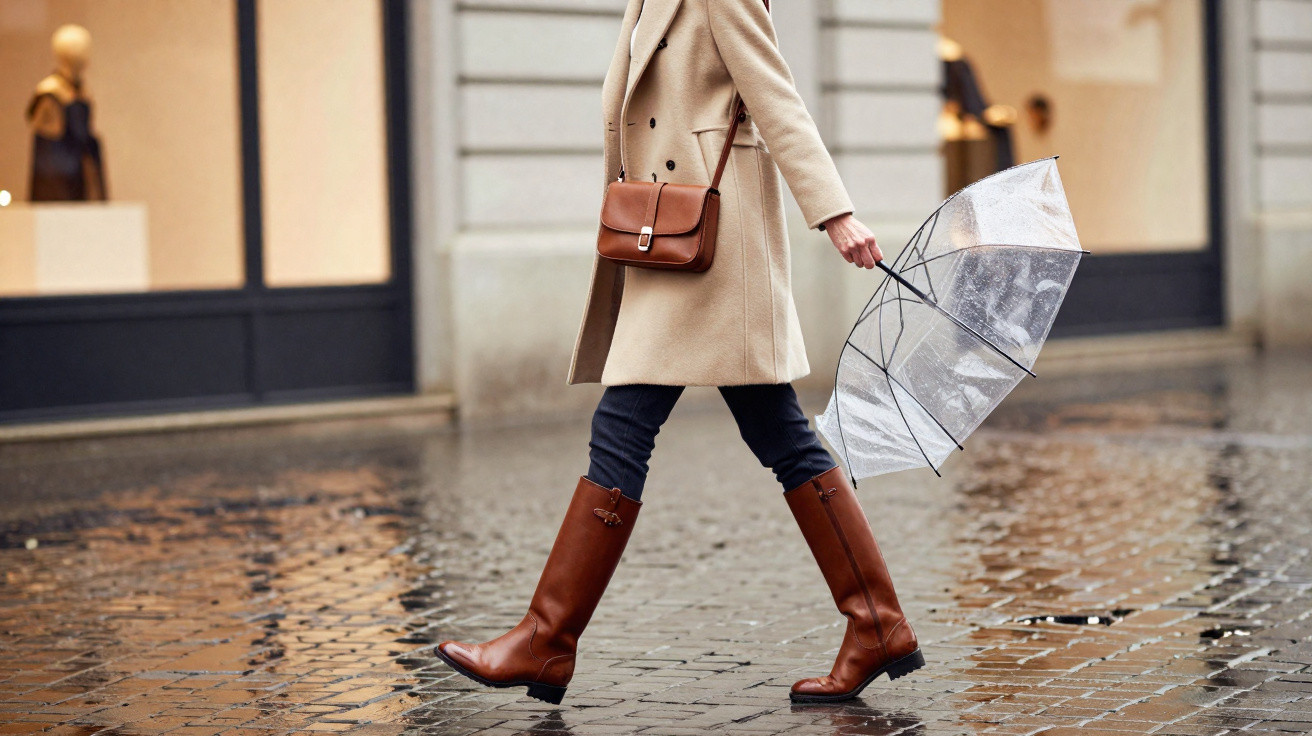
Coats are becoming lighter, umbrellas are waiting by the door, and the footwear dilemma returns: trainers that may end up soaked, or bulky boots that offer reassurance but do little for the figure. For women over 50, a different choice is quietly gaining ground, combining comfort, elegance and protection from wet weather.
The rainy-day dilemma after 50
Unpredictable weather can make even a routine outing feel like a style risk. A bright morning may become a downpour on the school run, commute or midway through a lunch date. For many women over 50, choosing footwear-not outerwear-is the most difficult part.
Chunky trainers may feel youthful, but they seldom cope elegantly with puddles. Traditional ankle boots are useful, although they can break the line of the leg at an unflattering point and make an outfit appear heavier. Rubber wellies keep out rain, but they do not usually complement a grown-up urban wardrobe.
Between soggy trainers and heavy rain boots, one style is emerging as a quiet hero: the leather riding boot.
Previously associated chiefly with stables, the riding boot is now returning to streets from Paris to Portland. Its appeal is straightforward: it has a polished appearance, manages light rain and subtly updates the silhouette, especially for women over 50.
Why the leather riding boot works in the rain
Riding boots were originally made to withstand mud, splashes and extended periods outdoors, making them unexpectedly well suited to damp spring and autumn weather.
How treated leather keeps feet dry
Many contemporary styles are made from treated leather with specialist finishes designed to repel water. They are not intended as hiking footwear, but they can make short showers and wet pavements far less worrying.
Treated leather lets raindrops bead and roll off, instead of soaking straight into the material.
For anyone who walks to work or relies heavily on public transport, this can feel like an understated luxury. The boot retains its form and smart finish, without the obvious dark patches associated with drenched suede or fine leather flats.
Coverage that actually makes sense
Where trainers and low-cut shoes leave the ankle exposed, riding boots rise over the ankle and up the calf. Their taller shaft shields against spray, unexpected puddles and wet grass in the park. Keeping feet warmer can also support circulation, something many women become more aware of as they get older.
They cannot replace technical rain boots in severe weather, but on days described as “changeable weather”, they offer an effective blend of practicality and style.
The boot that lengthens the leg after 50
Weather resistance is only part of the appeal. Riding boots are attracting attention primarily because of how they affect proportions, particularly for women over 50 who want to look fresh without following every passing micro-trend.
One clean line from foot to knee
A tall shaft draws a vertical line up the leg. When paired with slim trousers tucked inside, opaque tights or a knee-length skirt, it creates an unbroken field of colour that makes the leg appear longer.
The riding boot builds a long, clean line that subtly lengthens the figure and sharpens posture.
This styling effect can be especially helpful as the body changes over time: hips may become softer, knees less defined or calves less firm than before. Rather than gripping tightly, the boot skims the leg and adds shape without drawing attention to itself.
Why it feels more polished than trainers
Trainers can appear contemporary and fresh, but they naturally communicate a casual or athletic mood. With certain clothes, particularly tailored coats and flowing skirts, they can make the finished outfit feel less refined.
By comparison, riding boots provide a more deliberate finishing touch. They introduce a note of equestrian elegance without becoming costume-like. This mix of ease and sophistication is precisely what many style-aware women over 50 seek.
How to style riding boots for a younger-looking silhouette
The small styling choices separate a merely “practical boot” from an “ageless, confident look”. These combinations work particularly well:
- With slim jeans: Tucking dark, fitted jeans into dark boots produces a continuous, leg-lengthening column.
- With a knee-length skirt: A skirt ending just above, or at the top of, the boot leaves a narrow glimpse of leg or tights and keeps the overall effect light.
- With a midi dress: Structured boots balance a flowing printed dress, preventing the look from becoming overly soft or romantic.
- With a blazer: Slim trousers, boots and a well-tailored blazer create a clean, current shape suited to office days.
- With a trench coat: This combination remains smart in wet weather and has a distinctly London or New York street-style feel.
Choosing the right pair after 50
The key lies not only in selecting the right style, but also in choosing the correct heel and cut. Minor design details can determine whether a boot feels modern or dated.
Key features to look for
| Feature | Why it matters |
|---|---|
| Mid-height heel (2–4 cm) | Creates a more refined look and supports posture without putting pressure on knees or the lower back. |
| Shaft that follows the leg | Holds the calf comfortably without cutting in and forms a smooth vertical line. |
| Rounded or almond toe | A timeless, up-to-date shape that gives toes adequate room. |
| Discreet details | Restrained buckles and hardware make the boot more versatile and enduring. |
| Treated leather | Offers better rain resistance and helps the boot retain its polished appearance for longer. |
Fit considerations for comfort
Feet can alter with age: arches may flatten, joints can become stiffer and bunions may develop. Trying boots on later in the day, when feet are a little more swollen, provides a more accurate indication of their comfort.
A well-fitted riding boot should hug the leg lightly, allow a finger of space at the top of the shaft, and leave toes free to wiggle.
If you use orthotics, take out the boot’s original insole when trying them on, then ensure there is still enough depth. A side zip is close to essential for simple removal and dressing, especially for anyone with sensitive knees or hips.
Practical care to keep boots looking sharp
Leather exposed to rain benefits from straightforward regular maintenance rather than elaborate routines. After a wet day, wipe the boots clean and allow them to dry at room temperature to reduce the risk of cracking. Stuffing them with newspaper absorbs moisture, while boot trees or rolled towels help preserve their shape.
A leather-and-rain protection spray can provide an additional barrier. Apply it first to a concealed section to avoid unexpected changes in colour.
Real-life scenarios: from errands to evenings out
Picture a full Saturday: food shopping in drizzle, coffee with friends and an early evening meal. Trainers may feel too casual in a restaurant, while heeled ankle boots can be unsteady on slippery pavements. Riding boots work equally well on supermarket flooring, city streets and in a smarter bistro, without requiring a change of shoes.
On working days with an uncertain forecast, riding boots worn with tailored trousers and a fine knit create an appropriate office outfit. If showers are forecast for the journey home, your ankles remain dry without needing to wear full rain boots beneath a smart coat.
Beyond style: posture, stability and confidence
A low, stable heel may have a subtle effect on posture. Compared with soft trainers or ballet flats, many women say they stand taller, hold their shoulders in alignment and walk with more purpose in structured boots. That adjustment in how they carry themselves can itself appear “younger” and more confident.
For anyone concerned about slipping, sole grip is important. A rubberised outsole with light tread provides greater security on wet pavements and railway platforms. It can lower the risk of falls-a concern that increases with age-while maintaining an elegant look.
The riding boot brings together practicality, posture support and visual lift, making it a smart ally for rainy days after 50.
From the pavement, it may simply look like a chic leather boot. To its wearer, however, it offers a subtle improvement: less concern about the forecast, greater assurance when crossing wet roads and a silhouette that looks more defined with every step.















Comments
No comments yet. Be the first to comment!
Leave a Comment