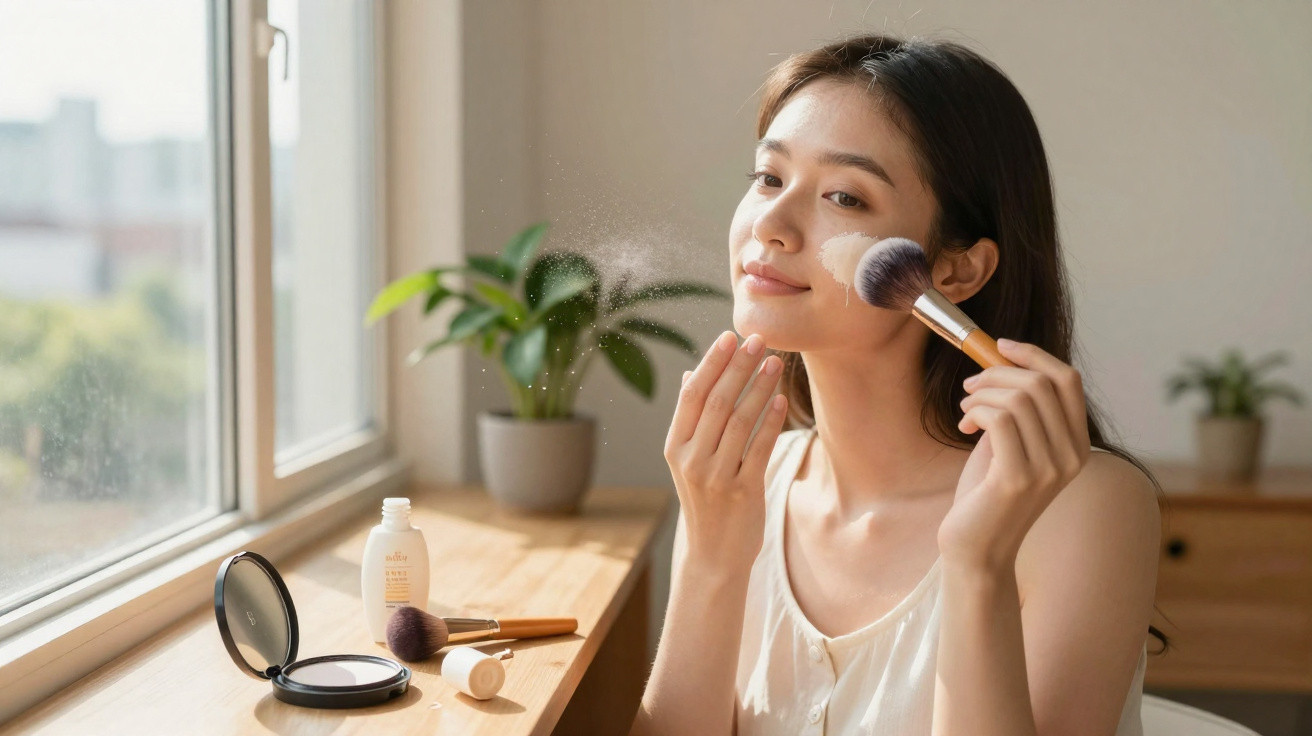
More and more people are tired of sticky lotions, microplastics in the sea and colourful chemical cocktails on their skin. At the same time, an old familiar ingredient is being seen in a new light: an unobtrusive white powder that has performed well in laboratories for years and is now being considered a straightforward, surprisingly effective barrier against the first rays of sunshine. What is behind it – and can it genuinely replace conventional sunscreen?
Why many people are reconsidering their usual sun-protection routine
As soon as the sun regains strength in March, many people instinctively reach for a tube. That is understandable, because UV radiation damages the skin long before we develop a tan. Even so, criticism of conventional sunscreen is growing:
- potentially concerning chemical filters are suspected of affecting hormones
- residues enter lakes and seas, placing pressure on coral reefs
- many products leave skin shiny and sticky, and clog pores
- a high price often brings questionable added value
It is hardly surprising that people are looking for a simpler, more transparent alternative. This is where mineral powder protection comes in – not as a cosmetic gimmick, but as a serious option that has long been recognised in research.
The “white powder”: what it actually is
When specialists refer to white powder protection, they generally mean mineral filters in powder form, above all:
- titanium dioxide
- zinc oxide
Rather than chemically converting UV radiation, both substances scatter and reflect it. They form a fine mechanical protective layer on the skin. It is precisely this straightforward physical action that makes them so appealing.
“Mineral powders create a kind of miniature mirror layer: much of the UV radiation bounces off before it can reach deeper layers of the skin.”
Studies indicate that, when properly formulated, these powders can achieve a sun protection factor suitable for day-to-day life in Central Europe during early spring and spring – especially for people who are mainly in town rather than lying in strong sunshine for hours.
How mineral powder sun protection works
The principle is remarkably simple. Unlike many creams, which are absorbed into the outer layer of skin, powder remains on its surface. Under a microscope, the tiny particles resemble small umbrellas. The more densely these “umbrellas” sit together, the greater the protection.
Key factors influencing the result include:
- Particle size: Excessively large particles leave a pronounced white cast, while very small ones can penetrate the skin – well-designed formulations sit between the two.
- Coverage: The powder must be distributed evenly; otherwise, gaps in UV protection develop.
- Amount: As with sunscreen, applying too little means receiving too little protection.
For this reason, some manufacturers now offer loose or pressed powders specifically labelled as sun protection. As well as providing a matt finish, they are intended as a “topper” over light daytime skincare.
The everyday benefits of mineral powder protection
Why do people opt for such an unfamiliar solution at all? Similar points repeatedly emerge in discussions with dermatologists and users:
- Pleasant skin feel: No film and barely any stickiness, making it ideal for combination or oily skin.
- Quick reapplication: It can be layered over make-up without smudging everything.
- Fewer ingredients: Many products have very short INCI lists.
- Less shine: The T-zone remains more matte, particularly on warm spring days.
- Environmental advantage: Mineral filters generally put less strain on bodies of water than certain chemical filters.
“Anyone who is mainly in the office during spring and only gets sun during their lunch break may find this type of powder protection a pragmatic in-between solution.”
Where the limits are – and when powder is not enough
Although the idea is appealing, no reputable dermatologist would claim that powder completely replaces every sunscreen. It has clear limitations:
- extended periods in the midday sun
- beach holidays, mountains, water sports or winter sports
- very fair, light-sensitive skin types
- certain medicines that increase sensitivity to light
In such circumstances, experts still recommend traditional high-SPF sun-protection products, applied generously and reapplied regularly. Powder can at most be an addition, for instance for mattifying skin or topping up over cream.
How to incorporate white powder protection into your routine
Anyone intrigued by the idea does not need to clear out their bathroom cabinet immediately. A gradual approach makes more sense – particularly in spring, when radiation is increasing but has not yet reached high-summer levels.
A practical routine for the first weeks of spring
One possible approach for everyday town life without hours of direct sunshine is:
- gentle cleansing in the morning
- light moisturiser without a heavy oily layer
- targeted sun protection (cream or fluid) on especially exposed areas such as the nose, cheekbones, forehead and backs of the hands
- an evenly worked-in mineral powder with a stated UV filter over the top
- reapply powder every two to three hours if needed, especially after sweating
Anyone already using a day cream with medium sun protection can use the powder as a booster. This creates a kind of “multi-layer system” that reduces risks without feeling heavy.
What research and regulation say about mineral powder protection
Mineral filters are among the most thoroughly studied sun-protection ingredients. Research shows that they are stable and reliably deflect UV rays, provided they remain on the skin’s surface. The debate around nanoparticles has certainly caused uncertainty, but regulation and labelling have become considerably stricter in recent years.
| Aspect | Mineral powder | Conventional sunscreen |
|---|---|---|
| Type of protection | Reflection/scattering | Chemical conversion |
| Suitable for sensitive skin | Often well tolerated | Depends on the filters |
| Application over make-up | Very feasible | Difficult; smudges easily |
| Everyday life in town | As an addition or light protection | Solid basic protection |
It remains important to choose products with a clearly stated sun protection factor. Loose powders without an SPF indication may provide slight protection, but are difficult to assess. Those wanting greater certainty should look for dermatologically tested versions.
Risks that need to be discussed
However natural and uncomplicated the idea may sound, this approach is not entirely risk-free. A few considerations should be kept in mind:
- Inhalation: Very fine powders can enter the airways during application. Using a soft brush and briefly holding your breath reduces the risk.
- False reassurance: A matte-looking face can quickly feel “protected”, even when the layer is too thin.
- Allergies: Reactions to additives, fragrance or preservatives are possible here too.
Dermatologists therefore advise testing new products on a small area first, rather than changing an entire sun-care routine all at once.
More than cosmetics: how changing routines affects our attitude to the sun
It is interesting how strongly such a switch can influence a person’s own attitude to sunshine. Those who consciously choose a powder as light protection often begin automatically paying closer attention to shade, clothing and time spent outdoors. The focus shifts away from “SPF as a superhero” towards a whole set of strategies.
“The less we rely on a single miracle tube, the more likely we are to look properly: How long am I actually standing in the sun? Which parts of my body regularly burn?”
This can lead to a more relaxed yet informed approach to UV radiation. In this picture, white powder does not become a replacement for every product, but one element of a more conscious everyday routine: fewer chemicals, more personal responsibility, and also a better understanding of the limits of this minimalist solution.
Those wishing to take this route are best off starting now, during the still-mild first sunny weeks. Radiation is already increasing, but mistakes are more forgiving than in high summer. With every considered decision, experience grows: how little product is enough, and when? Where is the conventional tube still necessary? This combination can develop into a personal sun-protection approach that suits your skin, lifestyle and conscience.










Comments
No comments yet. Be the first to comment!
Leave a Comment