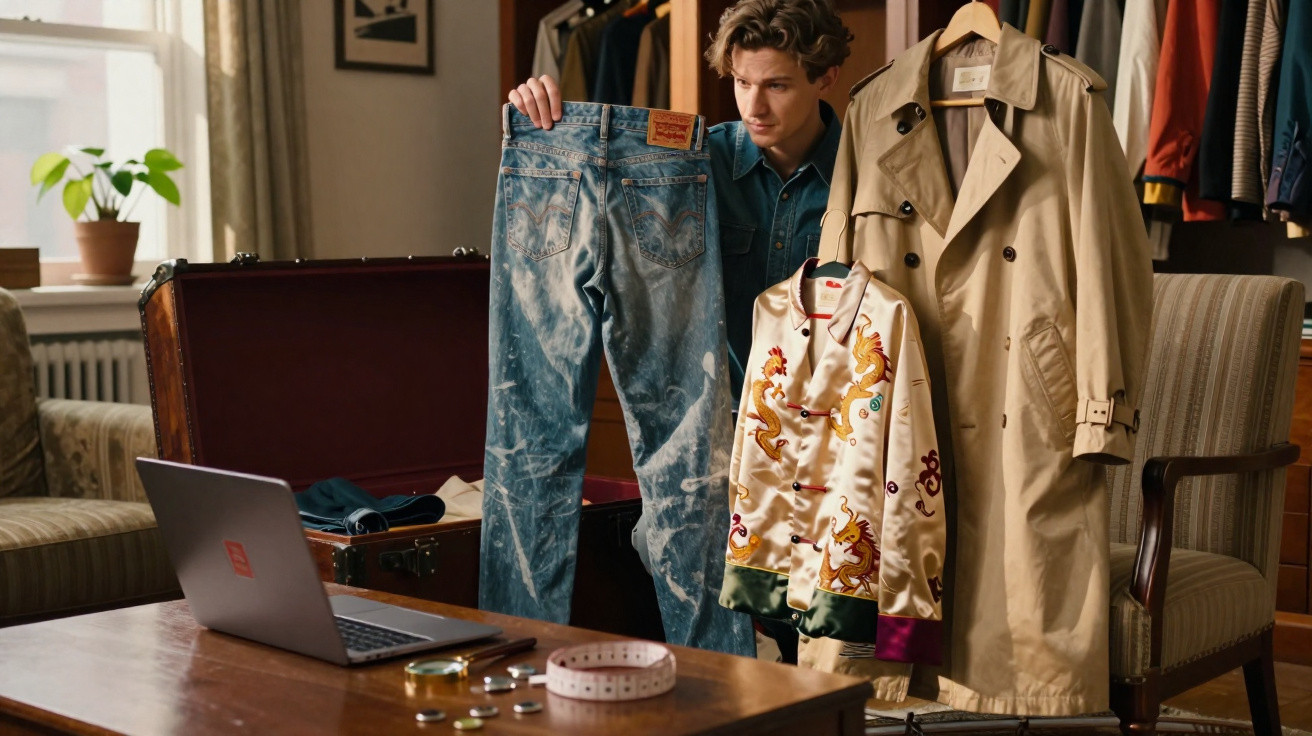
Many households across German-speaking countries resemble small fashion archives. Old jeans, coats and satin jackets sit forgotten in boxes, lofts and cellars. Pieces that nearly ended up in a clothing donation during the last clear-out can command three-figure sums from collectors and vintage enthusiasts in 2026.
Vintage boom: why old clothes are suddenly valuable again
The market for pre-owned fashion has been expanding noticeably faster than the conventional new-goods sector for years. Globally, vintage fashion was estimated at about €40 billion in 2024, and that figure is expected to roughly triple by 2034. In other words, the trend is not fading; it is gathering pace.
There are several explanations. Young shoppers are looking for original garments from the 1970s, 1980s and 1990s to distinguish themselves from mass-produced clothing. At the same time, premium new clothing is becoming more expensive, while older items are often far better made, with dense denim, genuine wool and pure silk. What was once dismissed as “old stuff” is now seen as high-quality and sustainable.
Before the next bag of clothes goes to charity, it is worth taking a closer look – some items are quite literally covered in banknotes.
Attention is currently centred on three types of garment that many people genuinely still have in wardrobes or lofts. Depending on their condition, they can bring in up to €500 – and sometimes more when several pieces are sold together.
These three garments can make particularly good money in 2026
1. Old Levi’s 501: classics from before 1985
Perhaps the best-known money-maker in the wardrobe is an older pair of Levi’s 501s. Versions made before the mid-1980s are especially sought after. Collectors pay between €150 and €500 for examples in good condition.
Features that can push up the value include:
- manufacture before 1985, ideally marked “Made in USA”
- firm, heavyweight denim with a visible selvedge edge
- a small red tab on the edge of the back pocket, with a large “E” on very old versions
- original buttons and rivets, with no amateur alterations to the waistband
The less the jeans have been altered or restitched, the more desirable they tend to be. Minor wear or authentic fading is rarely a problem; indeed, it can be appealing, provided the denim is not torn in key areas.
2. Designer trenchcoats made before 1990
Classic trenchcoats from leading fashion houses are fetching steady prices in 2026. Coats produced before 1990 can easily achieve €300 or more when in good condition. Prices rise further when the coat is sold with matching knitwear or accessories.
What collectors look for:
- older labels showing countries of origin such as the United Kingdom, Italy or France
- characteristic check patterns or distinctive linings that indicate the brand
- quality buttons, neat stitching and firm shoulder pads
- as little discolouration as possible around the collar and sleeves
A coat made from cotton gabardine or a dense wool blend can last for decades if it has been stored dry. It is precisely this durable quality that now produces high resale prices.
3. Satin jackets in traditional Chinese style
One unexpected success story in the current vintage craze is the satin jacket in a Chinese-inspired cut, featuring a stand-up collar and knotted fastenings. For a long time, these jackets were sold off cheaply at flea markets and in second-hand shops, but in 2026 they are in enormous demand, especially on platforms such as Vinted and Depop.
Desirable versions feature:
- a stand-up collar (“Mandarin collar”)
- characteristic knotted buttons
- lustrous satin, preferably pure silk
- elaborate embroidery that does not look machine-made
These jackets work well with modern basics: worn open over a white T-shirt, paired with straight-leg jeans or relaxed-fit cargo trousers. This contrast in styling is exactly what appeals to the fashion community – and drives prices upwards.
How to tell whether your vintage item is genuinely valuable
Anyone going through old boxes quickly faces the same question: a real treasure or simply nostalgia? A few straightforward checks can help you assess it.
Details collectors inspect immediately
- Labels: Older logos, country details and care symbols can reveal an item’s age.
- Material: Pure wool, silk or very heavyweight denim are clear advantages.
- Construction: Neat stitching, robust hems and intact linings matter.
- Fastenings: Branded zips and original buttons add value.
If you are unsure about a wool item, you can carry out a material test: test a tiny thread from an inconspicuous inner area with a flame. If it smells like burnt hair and the ash breaks down into fine dust, it is usually an animal fibre such as wool. Synthetic material is more likely to melt into hard lumps.
The more you can say about provenance and material, the more trustworthy you appear to buyers – and the higher the bid will often be.
Where to get the best prices for old clothing in 2026
Choosing the right place to sell can often make a difference of several hundred euros. Not every platform suits every garment.
Online platforms at a glance
| Platform | Suitable items | Advantage |
|---|---|---|
| Vinted | Jeans, streetwear, satin jackets | Quick sales, large community |
| Depop | Eye-catching vintage pieces, Y2K looks | International, trend-aware audience |
| eBay | Everything from jeans to trenchcoats | Auctions and the ability to compare sold listings |
| Vestiaire Collective | Designer fashion, high-quality coats | Fashion focus and often strong willingness to pay |
Before creating a listing, check the “sold items” or “successful sales” filters. They show what buyers have actually paid, rather than simply the prices sellers hope to achieve.
When expert advice is worthwhile
For particularly old or potentially rare pieces, it can be worth booking an appointment with a vintage shop or auction house. Experts there can assess the cut, material and age. Their assessment helps prevent unrealistic pricing in either direction. Some garments appear unremarkable at first glance but turn out to be sought-after collectors’ items.
Practical tips: getting more from your finds
Selling old fashion can, at best, become a small side business. A few simple tactics can increase the return considerably.
- Good photographs: Use daylight, a neutral background, and close-ups of labels and seams.
- An honest description: State stains, holes or repairs clearly instead of hiding them.
- Measurements, not just size: Give waist width, length and shoulder width, as vintage sizing differs.
- Add the story: “From the 1980s, one previous owner” can often encourage a sale.
If you own several garments that work together, offer them as sets: for instance, a pair of old designer trousers with a knitted jumper from the same era. Bundles look more appealing, buyers save on postage, and they are more likely to pay a little extra.
What the trend reveals about how we treat fashion
The vintage craze also represents a pushback against disposable fashion. Many people would rather wear a well-made piece from the 1980s than buy several cheap jackets every year. Over time, that is kinder to both budgets and resources.
At the same time, the market carries risks. Not every pair of jeans sold as “vintage” is genuinely old, and some satin jackets are artificially aged. Buyers should therefore examine the details closely. Sellers, meanwhile, should not accept less than an item is worth simply because a quick buyer offers “collection immediately”.
If you are now curious, start with just one box. Check old jeans, feel the fabric of coats and look for shiny satin materials – an afternoon is often enough to identify the first potential treasures. With a little skill in selling, they could comfortably fund a city break, new household appliances or the next major purchase.
















Comments
No comments yet. Be the first to comment!
Leave a Comment