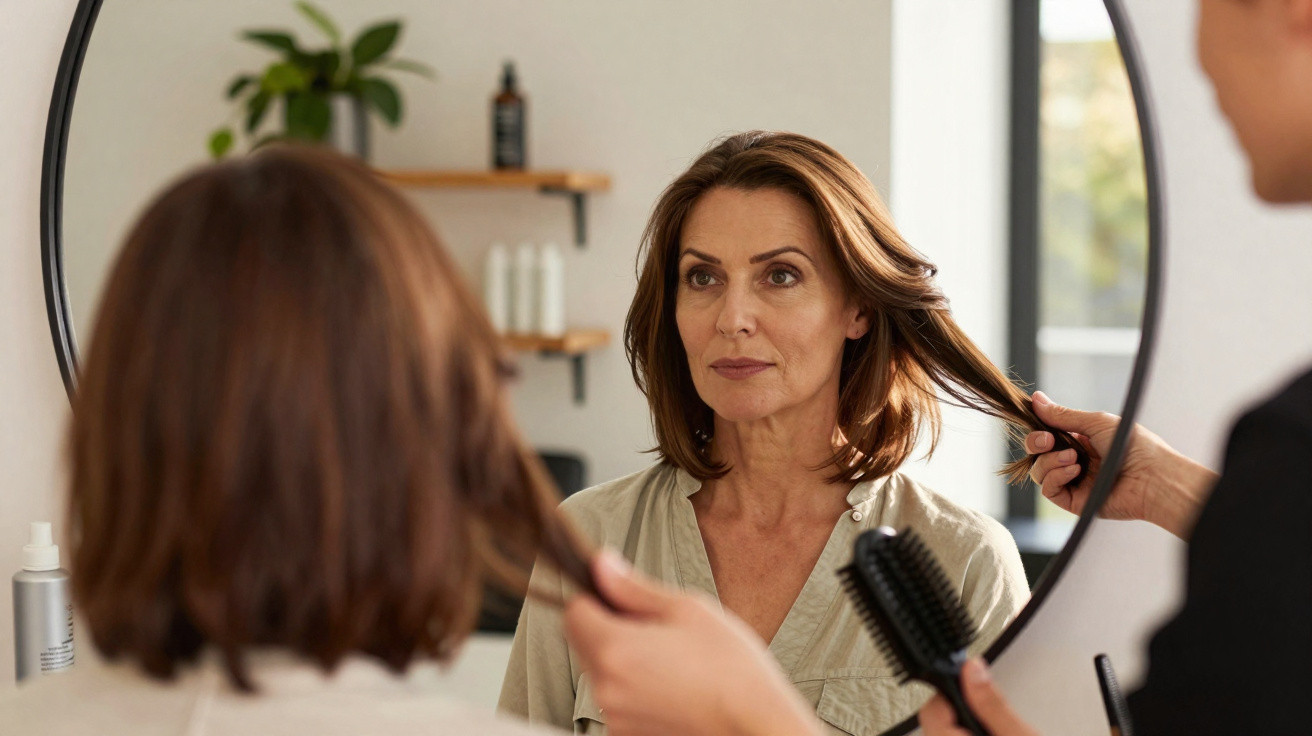
At 43, Sophie found herself looking into the bathroom mirror, a towel draped over her shoulders and her hair hanging in damp, weary-looking clumps.
The smooth brunette waves she once knew had become puffy at the roots and limp through the ends, with unexpected kinks she had never asked for.
Her familiar blow-drying routine? Pointless. The sleek, long style she had enjoyed for years now seemed thin and old-fashioned, as though it belonged to a different chapter of her life.
She had not changed. Her hair had.
That morning, her hairdresser delivered the words that altered everything: “Your texture has shifted. You need a shape that works with your new hair, not against it.” Then came a suggestion Sophie had always insisted she would never consider.
The mid-length layered bob that subtly flatters changing hair after 40
The style repeatedly recommended in salons when women move beyond 40 and their hair begins to behave differently is the mid-length layered bob with soft, face-framing pieces.
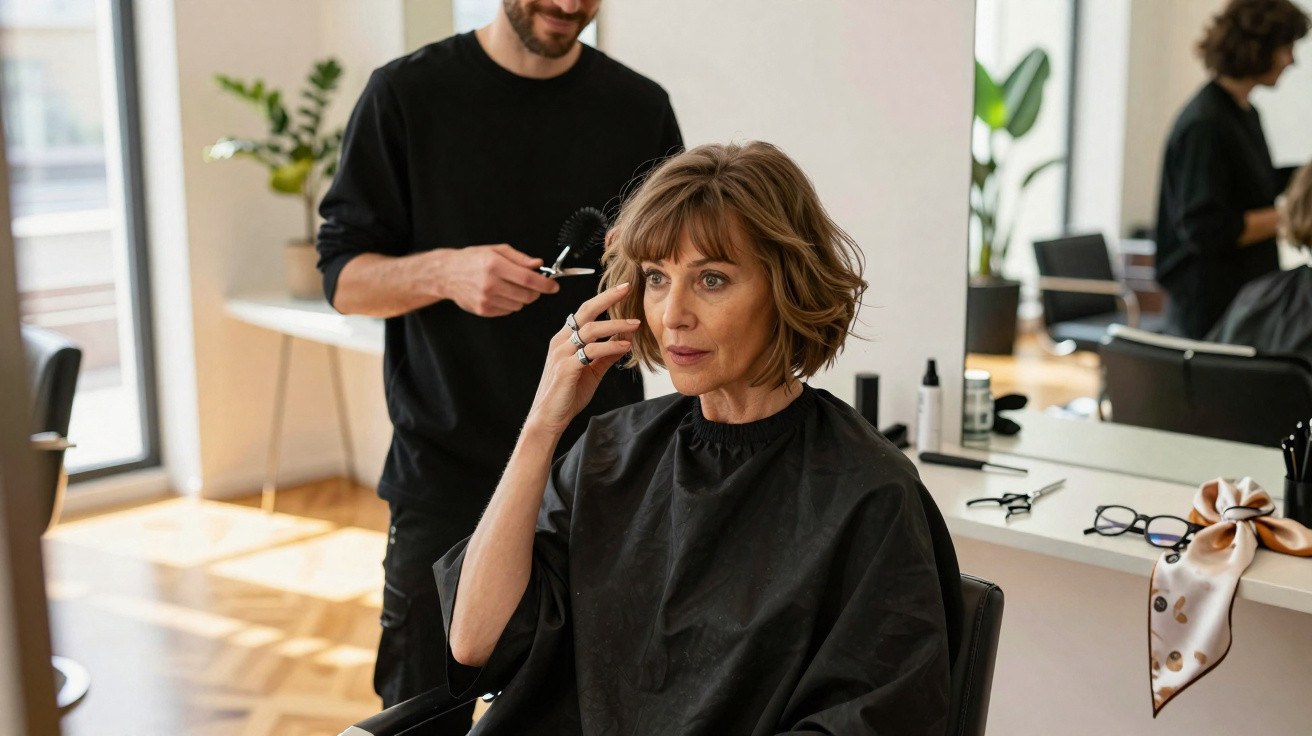
This is not a rigid, sharply defined bob that sits around the jaw like a helmet. It is a softer, more relaxed version that brushes the collarbone and has room to move, bend and be forgiving.
It generally falls somewhere between the shoulders and collarbones. It retains enough length to feel feminine and adaptable, while being short enough to remove heaviness from the ends and bring texture back to life.
This cut offers something many others do not: it allows your changed texture to take centre stage, rather than forcing it into submission. That matters particularly when hair suddenly becomes drier, fuzzier or flatter than it was at 30.
Consider Ana, 47, who had always relied on a long, straight blow-dry. Following perimenopause, her hair became a mixture of frizz and wave, while the strands around her temples grew finer. Each morning, she battled with straighteners, smoothing one side only to find the back puffing out like a dandelion.
Eventually, her stylist proposed a layered bob that skimmed her shoulders, paired with a soft, curtain-like fringe. He kept the overall length close to her collarbones, while adding invisible internal layers to create lift. Rather than pressing her wave out of existence, they made it part of the look.
Two weeks later, Ana confessed that she was spending half as long doing her hair and receiving twice as many compliments. People were not saying, “Nice haircut.” Instead, they asked, “You look rested. Did you go away somewhere?”
There is a practical reason why this mid-length layered bob works so well for women over 40 whose hair has changed. As hormones alter, the hair-growth cycle becomes shorter, individual strands may become finer, and the hair fibre can feel more porous. Long, weighty styles pull the hair down, highlighting sparse-looking roots and split ends.
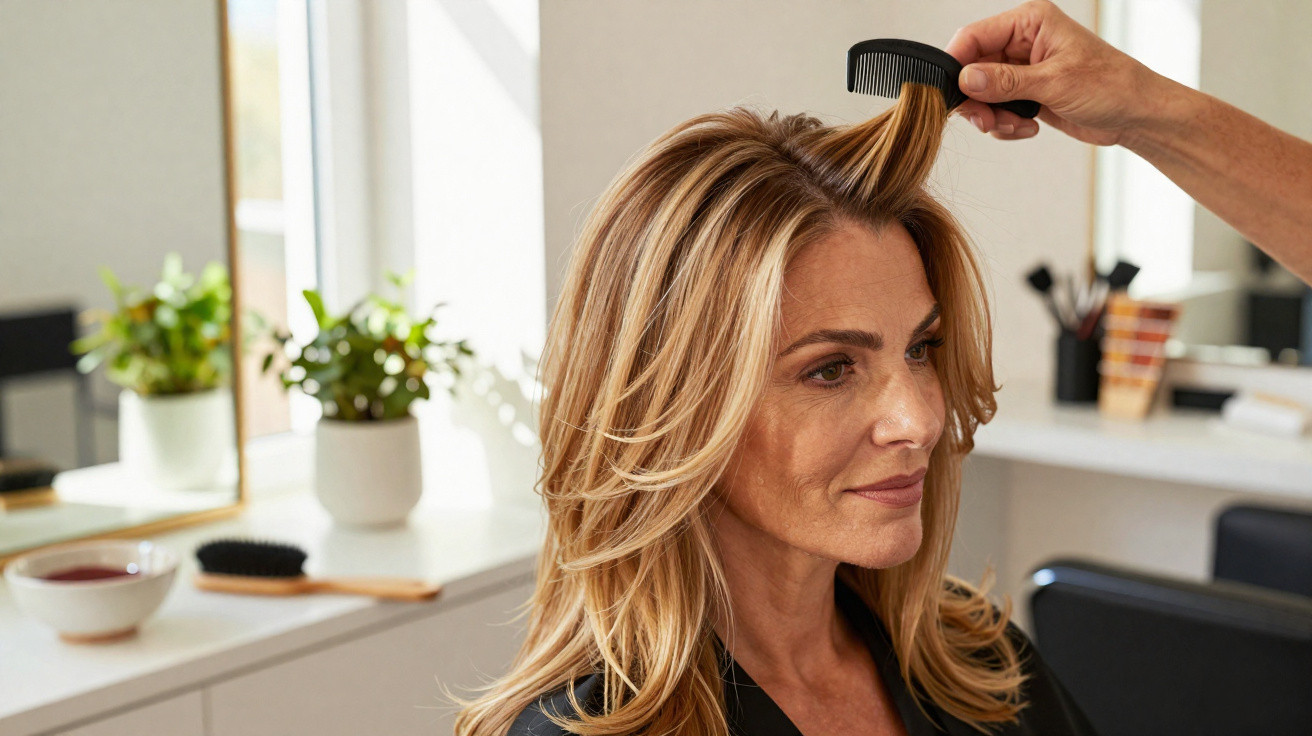
Taking the hair to around collarbone level and incorporating gentle layers removes that dull, lifeless weight. The hair is then able to bounce back into shape and reveal whatever natural bend or wave remains. Even naturally straight hair can gain some movement once excess bulk has been lifted.
The face-framing pieces play their part too. Lightly grazing the cheekbones or jaw, they soften the features and guide attention upwards rather than down towards the ends. It is straightforward geometry for everyday life.
How to request - and maintain - this flattering cut
To get this hairstyle right, arrive at the salon with wording a busy stylist can immediately interpret. Rather than saying “Just do whatever you think”, use a direct description such as:
“I’d like a collarbone-length bob with soft layers and pieces that frame my face. I want it to work with my natural texture.”
Bring one or two photographs on your phone rather than ten. Explain the specific details you prefer: “I like how her ends aren’t too blunt” or “I like how it moves, not poker-straight.”
Where possible, ask your stylist to establish the length when your hair is dry or nearly dry. Your current texture may shrink or expand unpredictably, so finishing the cut dry can limit unwelcome surprises when you return home.
Once the cut is in place, the day-to-day routine is remarkably manageable. Most days, allow your hair to air-dry to around 60%, then scrunch a lightweight cream or mousse through the mid-lengths and ends. Curl a few front sections around a wide-barrel curling iron for two seconds each, simply to create the suggestion of a shape.
Let’s be honest: nobody really does an entire salon-style blowout every single day. This cut doesn’t require that.
What should be avoided is weighing the hair down with rich oils or dense serums. These can transform a fresh, contemporary bob into a flat, separated curtain. Lightweight products that can be built up gradually, together with a soft finish that is not too polished, are your most useful allies.
“I stopped trying to get my 32-year-old hair back,” says Laura, 51. “The day my stylist cut it to my collarbones and added soft layers, I suddenly looked like the 51-year-old I actually am - but in a good way. Not older, just more aligned with myself.”
Keep the length grazing the collarbone
Going too short can appear severe, while extra length can pull the face downwards. This in-between length brightens the entire silhouette.Ask for internal layers, not choppy shelves
A stylist can remove weight from within the hair so the shape moves freely, without losing fullness at the ends.Use a round brush only on the front
If you blow-dry, concentrate on the face-framing hair to add smoothness and lift, leaving the rest with a looser feel.Refresh the cut every 8–10 weeks
Texture-led styles lose their effect when the ends become uneven. Small, regular trims preserve the flattering structure.Accept an imperfect finish
A slightly undone, lived-in edge is what makes this style contemporary and flattering rather than stiff or “set.”
Allowing your new texture to tell its own story
What feels quietly radical about this hairstyle is not only its length or layers. It is also the change in perspective it encourages. Rather than pursuing the hair you had at 25 with extra tools, more products and mounting frustration, you begin to ask: “What does my hair want to do now?”
The collarbone bob with soft, face-framing layers offers a gentle answer. It acknowledges that your hair may now be drier, lighter or curlier, and uses those shifts instead of concealing them. The style says that you are allowed to evolve - and that your appearance can evolve alongside you.
If you have felt that subtle pull, the sense that your former cut no longer suits your face, routine or energy, this could be your cue. It is not a dramatic chop “to feel something”, but a thoughtful move towards balance.
Ask your hairdresser what your texture is trying to communicate now. You may find that the style you have resisted for years is precisely the one that finally feels like you. And perhaps your next favourite photograph of yourself will be taken immediately after that first, slightly nervous salon appointment.
| Key point | Detail | Value for the reader |
|---|---|---|
| Ideal cut | Mid-length, collarbone-grazing bob with soft layers and face-framing pieces | Creates movement, softness and lift for texture changes after 40 |
| Maintenance | Light styling, air-drying, small amount of product, trims every 8–10 weeks | Cuts down daily effort while keeping hair polished rather than overworked |
| Mindset shift | Work with new texture instead of forcing old routines | Less frustration, greater confidence and a style that reflects who you are now |














Comments
No comments yet. Be the first to comment!
Leave a Comment