A simple kitchen ingredient has even professionals scratching their heads: how can such an inexpensive, unremarkable liquid leave hair smoother, shinier and easier to comb than many much-praised salon products? This personal account explores precisely that question - and why this old grandmother’s trick is now making a comeback.
When the hairdresser mistook my hair for luxury care
Many people know the feeling: you sit down at the backwash basin, already expecting a verdict on dry ends, brittle lengths and lacklustre strands. Months of central heating, scarves and hats leave their mark. This time, though, things unfolded differently. The hairdresser ran their hands through the hair, stopped halfway through and looked genuinely puzzled.
The texture felt unusually smooth. A brush moved through the lengths without catching, while the surface appeared almost polished. It reflected the light so strongly that it could easily have been mistaken for a newly applied salon gloss treatment. With that in mind, the professional asked which costly brand - some kind of “high-end product” - was responsible for the result.
What looks like luxury haircare may actually be a kitchen staple - when used correctly, the price barely matters.
The real surprise was that no specialist mask or fashionable new range was behind the effect. Instead, it came from a drastically simplified routine using one very ordinary product - alongside a deliberate decision to stop using conventional conditioners.
Why conventional conditioners left my hair looking tired
Before making the change, the routine was entirely familiar: shampoo, a rich conditioner, an occasional mask and sometimes a serum on the ends. The hair initially felt soft, but over the medium and longer term a different pattern emerged: weighed-down lengths, a dulling film and very little volume.
The explanation lies in many high-street formulations. They contain silicones or other film-forming ingredients that coat each hair in a thin, plastic-like layer. At first, this gives a pleasing appearance: the surface seems smoother and the hair is easier to comb.
However, every wash can add further residue to the fibre. Gradually, this creates build-up: an invisible layer of leftover product. Hair then absorbs moisture and conditioning ingredients less effectively, becoming dull and unresponsive. Washing more often and applying even more care products only intensifies the cycle:
- Roots become greasy more quickly because they are repeatedly cleansed.
- Lengths dry out further as the natural balance is disrupted.
- Styling holds less well because the surface feels coated.
That very spiral prompted the search for an alternative that could dissolve residue, give hair room to breathe and still remain gentle.
The forgotten apple cider vinegar classic from Grandma’s kitchen
The unexpected answer can be found in many kitchen cupboards: apple cider vinegar. Used in salads for decades and long overlooked in haircare, it is currently enjoying a quiet revival. Anyone interested in minimalist cosmetics is likely to come across it sooner or later.
Apple cider vinegar is made from fermented apple juice. The process produces organic acids, trace elements and minerals. Its acetic acid content, combined with a mildly acidic pH, is what matters most. Unlike many “deep-cleansing” shampoos, apple cider vinegar does not act like sandpaper on the scalp; it is more like a gentle descaler for hair and mineral residue from water.
Apple cider vinegar works like a natural reset button: it frees hair from unwanted weight without stripping it.
Choosing an organic product with a naturally cloudy appearance also provides additional compounds created during fermentation. These are said to support the scalp’s flora and soothe irritation, which may be particularly relevant for people with sensitive skin.
What really creates the extra shine
Tackling limescale from tap water
Tap water is hard, meaning rich in limescale, in many areas. Every hair wash can leave tiny mineral particles behind on the surface. This produces a dull veil that sits on hair like a layer of dust. While shampoos remove dirt and oil, they often struggle with these mineral deposits.
The acidity of apple cider vinegar breaks down the limescale residue. Hair not only feels lighter afterwards, but its ability to reflect light improves noticeably. Shine does not come from a thick layer of care product; it comes from a surface that is as smooth and clean as possible.
The right pH for sealed cuticle layers
Healthy hair and a balanced scalp sit within a slightly acidic range. Water and many cleansing products are more neutral or slightly alkaline. This can cause the cuticle layers along the hair shaft to lift. Hair becomes rough, picks up dirt more readily and tangles more easily.
An acidic apple cider vinegar rinse lowers the pH again. The cuticles lie flatter against the shaft and the surface appears more sealed. Light reflects more effectively, hair shines and becomes easier to comb. This is exactly the effect hairdressers notice when their fingers glide through such lengths.
The easy “1-to-4” apple cider vinegar method at home
Anyone wishing to try apple cider vinegar should not simply apply it straight from the bottle. Concentrated acid may irritate both the scalp and hair too strongly. A diluted rinse, used after shampooing, is the better option.
The tried-and-tested ratio is:
- 1 part apple cider vinegar, preferably naturally cloudy and organic
- 4 parts cool water
Use it as follows:
- Wash the hair as usual with shampoo, then rinse thoroughly with water.
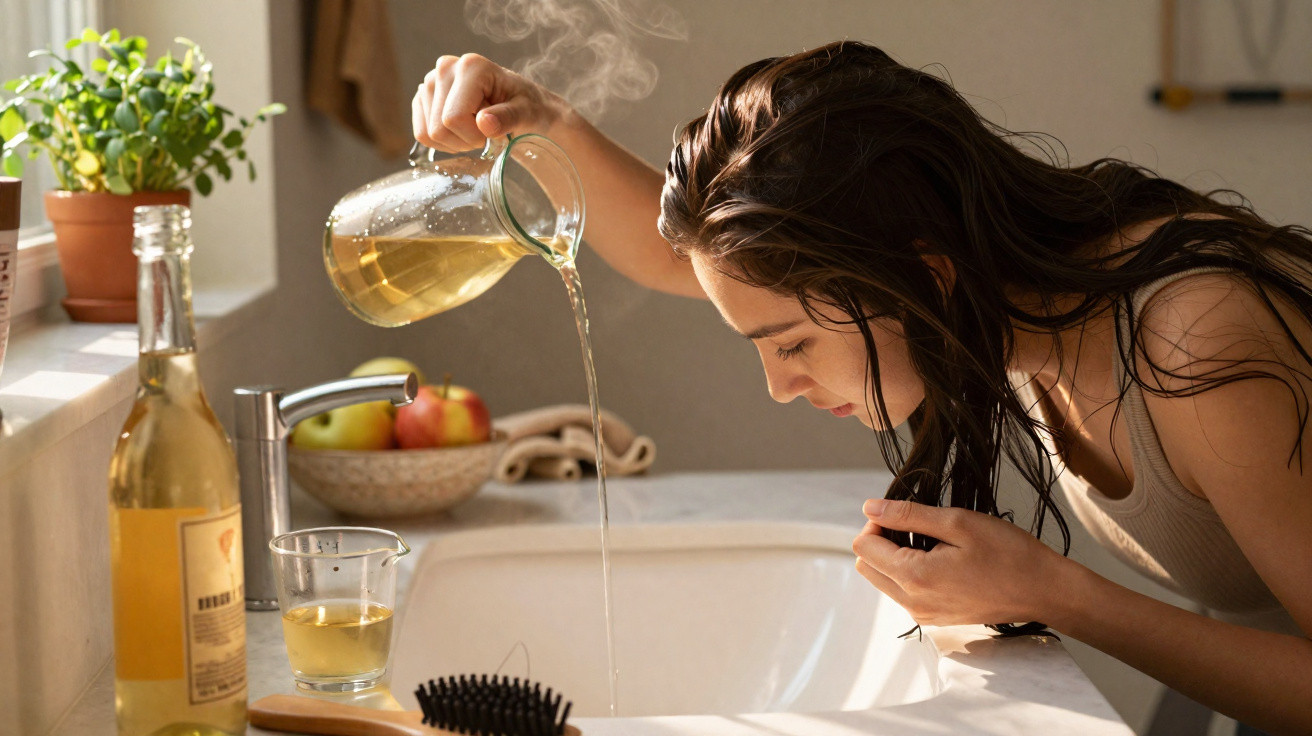
- Slowly pour the prepared apple cider vinegar mixture over the scalp and lengths.
- Massage it in gently, concentrating especially on areas that usually develop many knots.
- Leave it on for around two minutes so that the acid and minerals can work.
- Finish by rinsing with clean, preferably cool water.
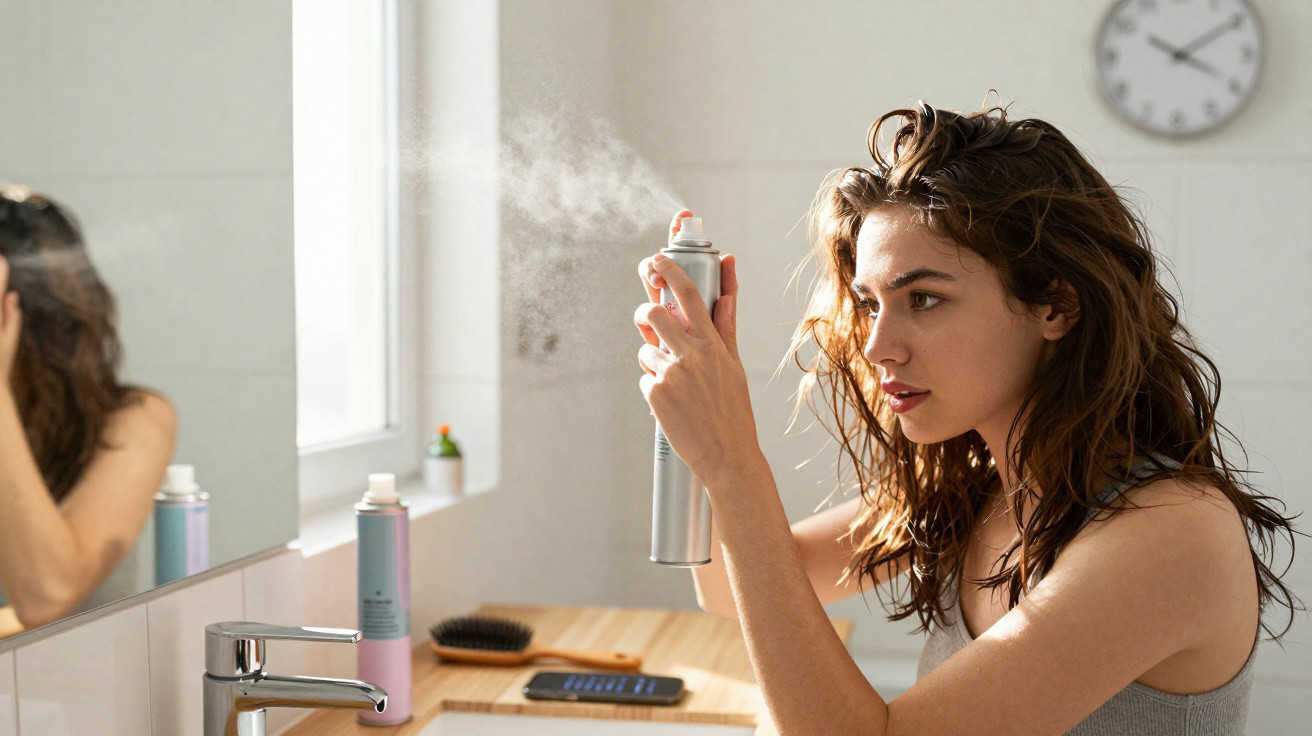
Cool water enhances the effect by acting like a small temperature shock that smooths the hair structure further. The characteristic vinegar smell disappears once the hair has dried. Those who wish can apply a light, silicone-free spray to the ends, although the rinse alone is often sufficient.
How often is useful - and who is it suitable for?
For many people, one treatment a week is entirely enough. Greasy roots, flaky scalps or an itchy scalp often benefit from slightly more frequent use, such as every four to five days. Extremely dry or heavily coloured hair can sometimes react more sensitively, so a cautious patch test and, if necessary, a greater proportion of water in the mixture are advisable.
Children’s hair usually tolerates this type of rinse well too, provided there is no stinging and the dilution is correct. Anyone prone to allergies or with broken skin on the scalp should begin with a very low concentration.
Noticeable benefits for the wallet and the bin
There is another advantage: people who add apple cider vinegar to their routine need far fewer conventional conditioners and masks. Many users report abandoning them completely or reaching for an extra care product only occasionally. This can noticeably reduce the number of plastic bottles used each year.
At the same time, a litre of apple cider vinegar costs only a fraction of the price charged for salon cosmetics or on-trend serums. Since it is diluted, one bottle lasts a long time. The bathroom becomes less cluttered, shelves become clearer and the focus returns to a small number of carefully considered steps.
Fewer bottles, fewer ingredients, more effect - apple cider vinegar is ideally suited to a minimalist haircare approach.
What to consider when using apple cider vinegar for haircare
As straightforward as the trick sounds, several points are worth noting. Highly sensitive scalps or freshly coloured hair may react more strongly. Mild itching or a feeling of tightness suggests either that the concentration is too high or that the rinse is being used too often. In these cases, adjust the ratio, for example to one part vinegar and six to eight parts water.
Quality matters too. A cheap, heavily filtered vinegar from a large container may not provide the same accompanying compounds as a naturally cloudy product. Anyone who already enjoys using apple cider vinegar in salads can choose a variety suitable for both kitchen and bathroom.
How the trick changes the rest of the haircare routine
The longer-term impact is particularly interesting. People who regularly remove limescale and product residue from their hair often find that many other steps become unnecessary. Styling mousse holds better because the hair is no longer coated. Air-drying is easier because strands do not catch on one another as much. Even heat styling looks more defined when the foundation is right.
At the same time, attitudes towards new products can change. Rather than following every trend, many people start asking about ingredients, film-formers and genuine benefits. Discovering that a simple home remedy can match the effects of expensive haircare encourages a more critical - and more confident - approach to looking after one’s own hair.















Comments
No comments yet. Be the first to comment!
Leave a Comment