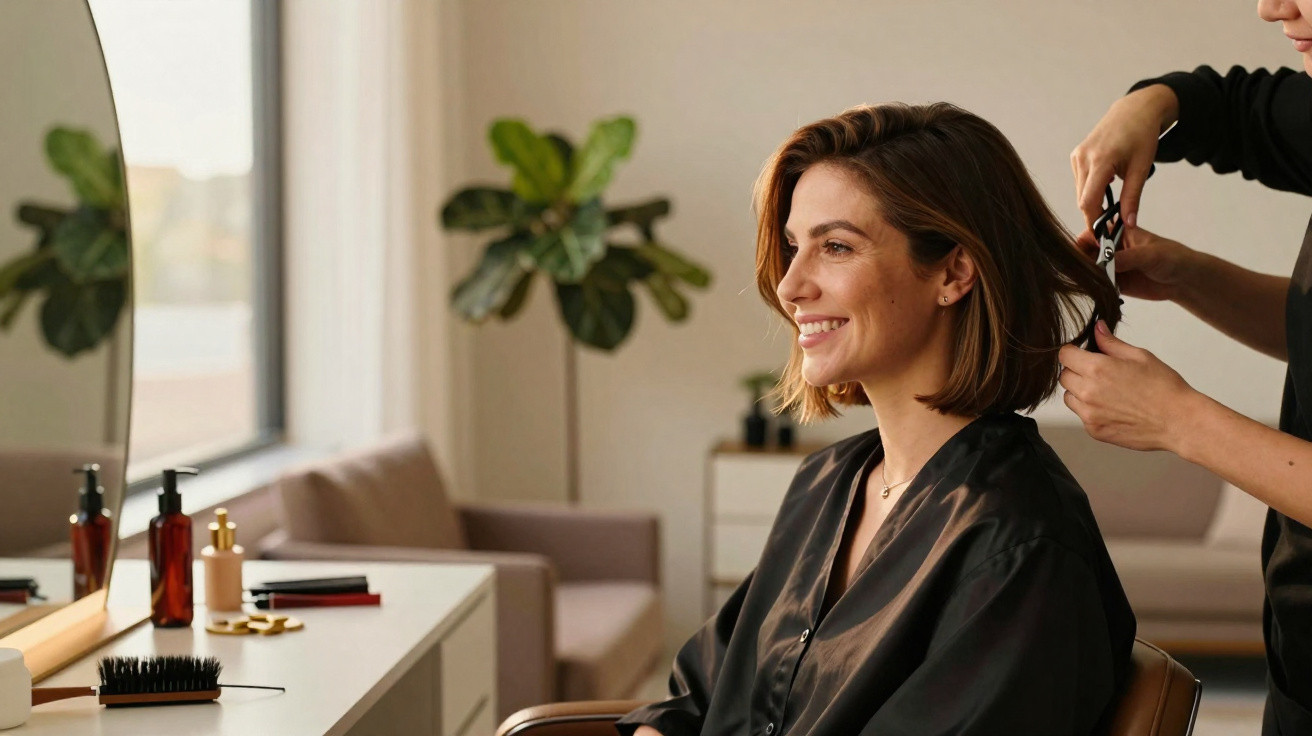
The hairdresser’s cape whispered as 67-year-old Margaret settled into the chair, releasing the kind of sigh reserved for someone who has repeated the same haircut request for three decades. “Just the usual,” she said, almost as though she were sorry to ask. Her stylist stopped for a moment. The usual was that familiar, rigid cap of short curls she had worn since the late 90s: the style Margaret described as “practical” and her granddaughter discreetly labelled “old lady hair.”
The stylist gently raised Margaret’s chin towards the mirror. For a moment, neither spoke. Her face looked lively, inquisitive and full of life. Her hairstyle, meanwhile, belonged to another era.
“You know,” the stylist said gently, “you don’t actually have to look older than you are.”
What followed revealed something many women over 60 feel privately, but seldom voice.
The “old lady” haircut is not a destiny, it’s a decision
Visit a suburban salon on a Tuesday morning and the waiting area will often reveal the same style on a series of different faces. It is short and rounded, thinned at the nape, then set into tight curls or fixed firmly with hairspray. It is the safe haircut: the one stylists can create automatically and women accept because “that’s just what you do at my age.”
Hairdressers who focus on women over 60 are increasingly challenging that assumption. They argue that one of the quickest ways to make the entire face appear a decade older is to hold on to a style that announces, “I stopped updating myself in 2003.” Hair is not simply something that sits on your head. It communicates something before you say a word. At times, that message can be: I gave up.
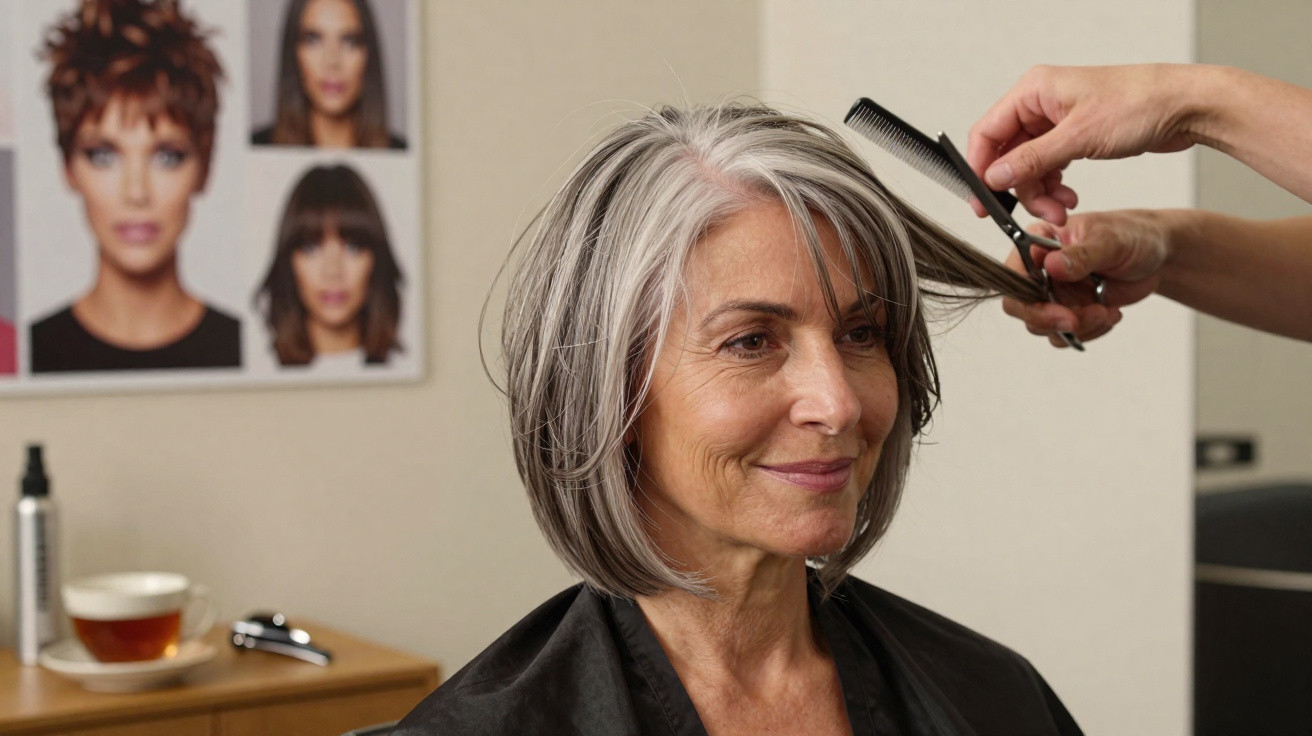
A London stylist told me about a 72-year-old client who arrived carrying a 2005 passport photograph. “Cut it like this, dear, it was my best era,” the woman insisted. In the picture was the familiar short permed bubble: easy to manage, but not especially easy to love. Instead, the stylist carefully suggested a blunt bob at chin level with a soft fringe, retaining the silver colour while giving the shape more definition.
The client paused before agreeing “just this once.” Three weeks later, according to the stylist, she returned with an update: strangers on the bus had praised her hair, her daughter wondered whether she had had “work done,” and the woman finally felt that her reflection matched the energy she still felt inside. What had changed? Only the outline of her haircut.
Stylists are direct about the reason this happens. Very layered, excessively short and heavily texturised styles can strip away the limited density left in fine, ageing hair. The result is frizz, limpness and the inflated “helmet” effect. Strong, severe shapes can also visually pull the face downwards.
A neat, purposeful outline, on the other hand, creates lift. A defined line at the jaw can make sagging less apparent. A fringe may soften lines across the forehead. Leaving some length around the face frames your features rather than highlighting every shadow. The “old lady look” is not caused by grey hair or wrinkles. It comes from a haircut that works against your face rather than supporting it.
The one cut stylists say changes everything after 60
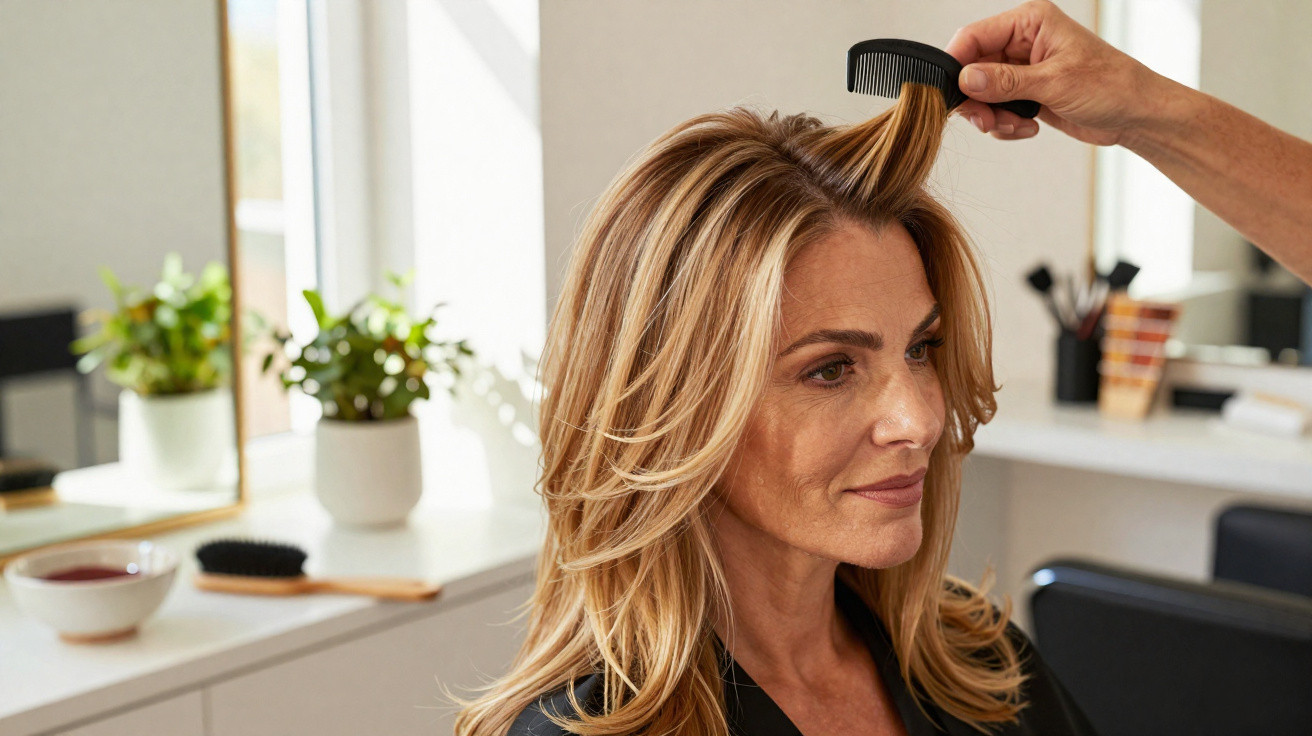
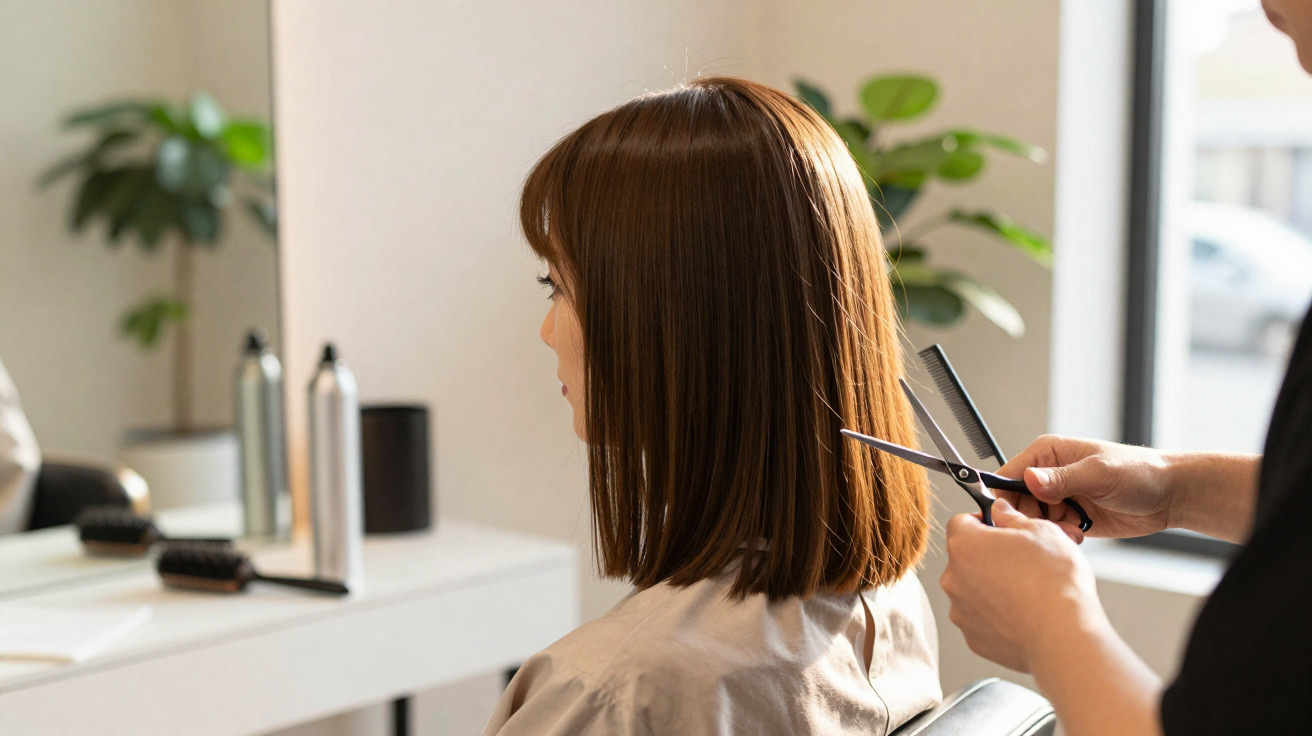
Ask five professional stylists what they would first suggest for a woman over 60 trapped in an ageing hairstyle, and most will mention a similar answer: a blunt or gently blunt bob, sitting anywhere from lip level to the collarbone, with sections that frame the face. Not choppy layers throughout. Not a teased-up crown. Instead, it is a distinct, substantial shape that restores weight to the hair.
The key is to adapt the length to the neck and jawline. Go shorter if you are petite or prefer a sharper effect. Choose a longer version if you enjoy tucking your hair behind your ears or want softness around the collarbone. The perimeter remains crisp, the ends appear thicker, and the overall result looks current without appearing overworked. It is timeless, without being trapped in the past.
Women who make this change often describe it as more than a haircut; they describe a shift in mood. A retired teacher I spoke to in Chicago had kept the same cropped, curled look from her early forties onwards. Eventually, she agreed to a blunt cut that brushed her shoulders, finished with light bangs. On the first day, she said she felt “too seen,” as if everyone were watching her. In the second week, she spotted herself in a shop window and thought, “Oh, right, I’m still me.”
By the third month, she was trying a low, loose ponytail for walks, a smooth blow-dry for dinners and lightly waved texture when visiting friends. She was the same person, living the same life, but with a different energy. One haircut revealed how much she had been concealing herself behind a style she had never truly liked.
There is a straightforward reason this particular shape works so well after 60. Ageing hair commonly becomes finer, particularly around the temples and crown. Adding too many layers in those areas removes essential bulk, causing the hair to collapse. A blunt or nearly blunt foundation keeps the outer edge strong, immediately making the hair seem fuller.
That fuller outline also has a useful visual effect: it balances jawlines and necks as they soften, meaning the eye sees “structure” rather than “sag.” A small number of delicate layers, placed only where required, add movement without destroying density. You’re not chasing volume with teasing and spray, you’re building it into the architecture of the cut. Stylists say this is often when clients realise that age was never the issue - the shape was.
How to talk to your stylist when you’re done looking older than you feel
If the word “bob” brings to mind the stiff librarian styles of the 70s, you have probably encountered only poor examples. A modern bob that works across ages relies on soft edges and a deliberate outline. When you take your seat, do not merely say “I want a change.” Instead, say, “I want a cut that doesn’t age me faster than I’m aging.” That one sentence can transform the discussion.
Take one or two photographs rather than ten. Show the length that appeals to you, the type of fringe you would like to explore, and how you like hair to follow the jaw or rest on the shoulders. Then be direct: “I don’t want heavy layers that thin my hair out.” This is not asking for magic. You are asking for a strong foundation and face-framing tailored to your own texture.
Many women quietly tell stylists, “I don’t want to look like I’m trying to be 30.” That worry can keep them tied to dated, supposedly safe cuts that achieve precisely the opposite effect. Choosing a modern shape is not an attempt to pretend you are younger. It is a refusal to let your style expire at 59.
The first major mistake is surrendering every decision and simply hoping for the best. The second is insisting that a haircut from your forties should be replicated on hair in your seventies. The strongest outcomes come from explaining how you actually live: do you blow-dry, let it air-dry, or tie it back? Honestly, nobody does all of these things every day. Base the style on the reality of your routine, not an imagined version of it.
“Age isn’t the problem,” says Ana, a Paris-based stylist who works mostly with women over 60. “The problem is when the haircut tells a sad story. A strong, simple shape with the right length instantly updates the story people read on your face.”
- Ask for a strong outline: Use terms such as “solid edge” or “blunt base with soft movement on top” so your stylist understands that preserving density matters to you.
- Keep some length around the face: A few longer strands around the cheekbones or jaw can soften lines and keep the result feminine rather than severe.
- Decide your fringe strategy: Side-swept, curtain or light micro-bangs can all suit women over 60, but they should be feathered rather than heavy so they do not make the face appear smaller.
The real question isn’t your age - it’s your reflection
At some stage, often while standing under unforgiving bathroom lighting with a wet brush in hand, every woman experiences that small, private shock: “When did I start looking like somebody’s grandma who doesn’t belong in her own life?” It is not about the passing years. It is about the gap between how you feel and the person looking back at you.
Stylists who speak honestly - occasionally with brutal honesty - say remaining in an “old lady” hairstyle is a subtle way to accelerate that sense of disconnection. You begin choosing clothes to suit the hair. You avoid photographs. In pictures, you only partly recognise yourself. And it can all stem from a shape that could be altered in a single appointment. That is the simple truth few people tell you at the shampoo basin.
| Key point | Detail | Value for the reader |
|---|---|---|
| Old lady hair is a choice | Dated, over-layered, ultra-short cuts exaggerate thinning and drag the face down | Helps you recognise which styles are ageing you faster than time itself |
| The blunt-ish bob is a game changer | A solid base between lip and collarbone with face-framing pieces restores structure | Offers a concrete, realistic option to look fresher without chasing youth |
| The right conversation with your stylist | Clear phrases about density, length, and lifestyle lead to a custom, modern cut | Gives you language to stop leaving the salon with a haircut you secretly hate |
FAQ:
- Question 1: Am I “too old” for a bob or longer hair after 60? No. Hair length is not determined by age; it depends on condition and shape. When the ends are healthy and the outline is intentional, a bob or even longer hair can look crisper and more contemporary than a very short, dated style.
- Question 2: What if my hair is very fine and thinning? That is exactly when a blunt foundation is most helpful. Request minimal layering and a length that does not pull the hair down - often between the chin and collarbone - so it appears fuller rather than wispy.
- Question 3: Does going grey automatically make me look older? Not necessarily. A contemporary haircut paired with a cool or slightly warm silver shade can look chic. Usually, it is the combination of grey hair and a dated silhouette that screams “old,” rather than the colour by itself.
- Question 4: How often should I trim to keep the shape fresh? Most stylists recommend every 6–8 weeks for shorter bobs and 8–10 for longer versions. This preserves a clean line, preventing it from slipping into a tired, overgrown appearance.
- Question 5: What do I tell my stylist if I’m nervous about a big change? Say, “Let’s update my cut in stages. I want to avoid anything that makes my hair look thinner or my face look dragged down.” Small, well-shaped changes can still create a noticeable shift that builds confidence.











Comments
No comments yet. Be the first to comment!
Leave a Comment