
You usually spot it first beneath the bathroom lights: a little more scalp visible when you sweep your hair back. A few months on, the ponytail that once felt thick needs three turns of the hair tie rather than two. Another shampoo advert appears as you scroll on your phone, and your reflection catches your eye in the dark screen. You look closer. You compare it with older photographs. You insist it is probably nothing, yet your fingers keep returning to that same sparse area at the crown.
Then, one day, a friend says casually, “Did you cut your hair? It looks…different.”
That slight hesitation lands more heavily than you would expect.
So you begin looking for answers. Beyond the claims printed on bottles, what genuinely works to make hair thicker?
Why your hair is thinning and what it really means
For most people, hair loss appears gradually rather than all at once. A little more hair collects in the shower plughole, your parting seems marginally broader, and photographs begin to show what the mirror had disguised. Your hair feels lighter in an almost…quiet way.
We often picture bald spots or handfuls of shed hair, but thinning for many people is more like someone slowly lowering the volume. There is less root density and the individual hairs become finer. Hairdressers refer to this as “diffuse thinning”, and it may develop over months or even years.
Then, seemingly without warning, the style you have always relied on just…no longer works.
Consider Anna, 34, who believed her hairline was “just changing with age”. She changed her parting, purchased a wider headband and put it down to demanding work deadlines. It was only when outdoor selfies showed more scalp than hair that she arranged an appointment with a dermatologist.
Her diagnosis was androgenetic alopecia: common inherited thinning that affects women and men alike. It was neither unusual nor dramatic, merely the same gradual miniaturisation affecting millions of people, often concealed by hats and skilful blow-dries.
Anna is far from the only one. Some estimates indicate that noticeable thinning affects up to 50% of women and 80% of men by the age of 50. Most quietly alter their routines and hope that no one else will see the difference.
The process taking place on the scalp is relatively straightforward. Hair grows in cycles, and with androgenetic alopecia each new cycle produces hair that is a little shorter and finer. At first, follicles do not vanish; instead, they become less effective, rather like a factory operating at half capacity.
Hormones, genetics, ageing, iron levels, thyroid conditions, crash dieting and childbirth can all move more hairs into the shedding phase. Tight ponytails, harsh brushing and damaging styling practices can create additional problems on top of this.
The straightforward reality is that most seemingly “mysterious” hair loss has an understandable explanation. The difficult part is recognising that a more powerful shampoo is unlikely to be the whole answer.
The treatments that actually thicken hair
If you want hair to appear and feel fuller, the first meaningful step is not buying a product but getting a diagnosis. A dermatologist or trichologist can inspect your scalp, possibly request blood tests and identify the type of hair loss involved. That diagnosis is more important than any brand sitting on your bathroom shelf.
For many people, topical minoxidil is the foundation treatment. Sold as a foam or solution, it can prolong the growth phase and gradually improve hair thickness. It is not a quick fix: allow 3 to 6 months before you are likely to notice a change in the mirror.
Alongside it, a mild sulphate-free shampoo, a lightweight volumising conditioner and a leave-in thickening spray can make existing hair look fuller immediately while the treatment does its work in the background.
Many people fall into the trap of “product hopping”. One week they use caffeine shampoo, the following week castor oil, followed by a rosemary tonic that has gone viral. Nothing gets enough time to show results because anxiety overtakes patience.
A more useful approach is one medically supported treatment, one cosmetic thickening routine and one lifestyle change. This might mean minoxidil twice daily, a keratin-based thickening spray before blow-drying and a diet focused on protein and iron.
Well-formulated hair supplements containing biotin, vitamin D, zinc and iron, where you are genuinely deficient, may help support growth. However, they are a supporting measure rather than the main treatment. No gummy vitamin can override genetics on its own.
“People expect hair to regrow overnight,” says Dr. Léa Martin, dermatologist specializing in hair disorders. “But scalp treatments are more like gardening than painting a wall. You nurture the soil, wait through seasons, and protect every new shoot. The worst thing you can do is stop just when it’s about to work.”
Clinically proven actives
Seek treatments that contain minoxidil, low-dose oral minoxidil prescribed by a doctor, or oral finasteride for men under medical supervision. These treatments act directly on the hair cycle.A scalp-focused routine
Apply gentle exfoliating tonics once a week, massage your scalp with your fingertips for several minutes each day and avoid heavy oils that may block follicles. A clean, stimulated scalp offers a better environment for growth.Instant-thickening allies
Root-lifting sprays, texturising powders and coloured hair fibres can create the appearance of greater density. These don’t regrow hair, but they can restore confidence while longer-term treatments kick in.
Living with thinner hair while you thicken it
There is a psychological element to hair loss that product advertising rarely acknowledges. Losing density can feel unexpectedly personal, as though part of your identity is disappearing one strand at a time. You may avoid windy terraces, gym mirrors or swimming pools. Some people alter their parting as frequently as others change passwords.
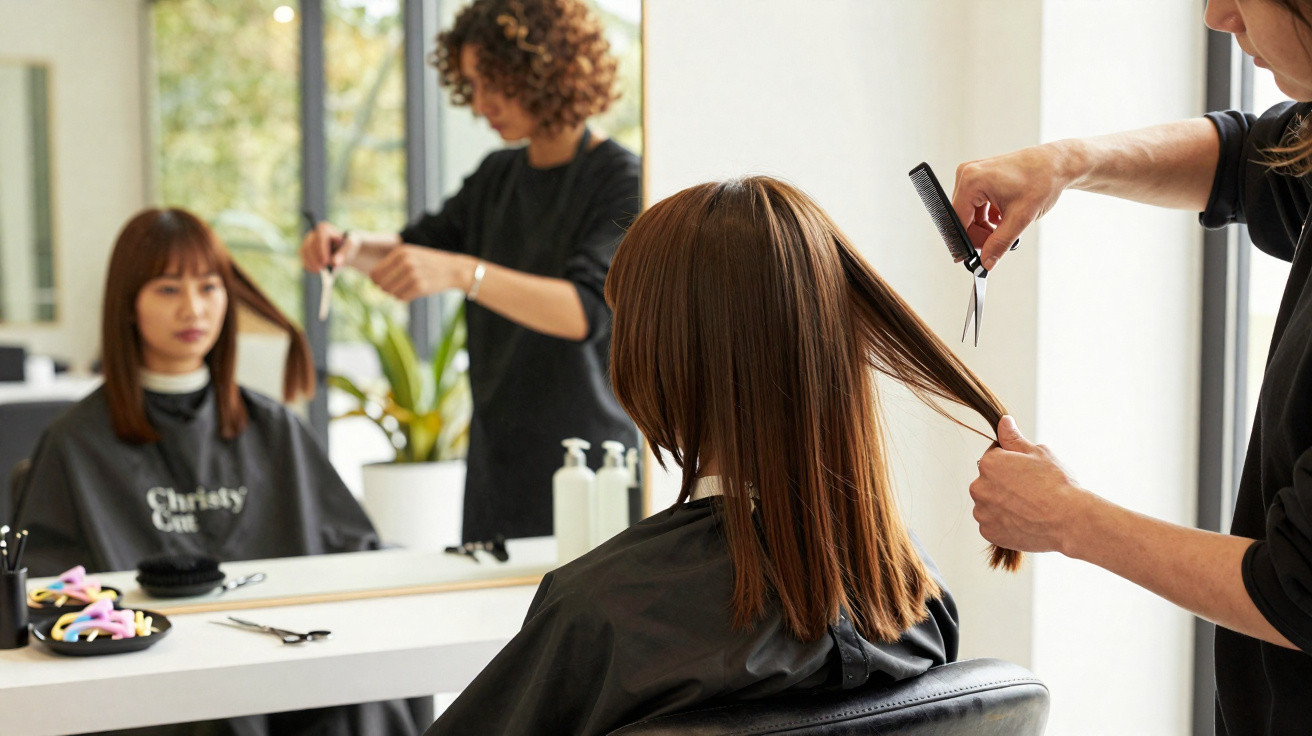
This is where practical choices and self-compassion come together. A well-cut style that creates movement and removes heavy, wispy ends can immediately transform how you feel. Face-framing layers, slightly shorter hair and a softer parting can create the impression of thickness in ways that no bottle can achieve.
To be realistic, hardly anyone massages their scalp for 10 minutes every day without fail. Set yourself manageable habits rather than chasing perfection.
Colour may help as well. Delicate highlights bring dimension and make hair appear more abundant, while roots that are slightly darker than the lengths can visually increase scalp density. Excessive bleaching, however, is like putting already fragile hair through military training without preparation.
Heat styling also has two sides. A round brush and a controlled blow-dry can deliver excellent lift at the roots, but using high heat every day can gradually weaken ends that are already vulnerable. Consider saving a full styling session for important days, and air-drying with a lightweight mousse or foam at other times.
If you feel isolated by it, remember that you are not. People are often reluctant to say they use hair fibres, extensions or medication, but many do.
Beneath all these methods sits a quiet question: how much of your identity is tied to your hair? Some people find liberation in shaving it all off and beginning again. Others are strengthened by using every option science offers to preserve what they have. There is no “right” approach, only the one that helps you face the mirror and breathe more easily.
Thicker hair involves biology, visual illusion and acceptance in equal measure. The most effective routine generally combines all three.
What others rarely witness are the small private wins: the first time fewer hairs appear in the shower drain, the first photograph in which you do not instinctively enlarge your parting, or the moment a stranger praises your “great hair day” when you had nearly stopped believing you would hear that again.
| Key point | Detail | Value for the reader |
|---|---|---|
| Identify the cause | See a dermatologist, check hormones, iron and thyroid function, and obtain a clear hair loss diagnosis | Prevents random product trials and directs effort towards what truly works |
| Use proven treatments | Depend on minoxidil, prescribed medicines and consistent routines over months rather than weeks | Maximises genuine regrowth potential and protects existing follicles |
| Style smarter, not harsher | Use gentle products, considered cuts, colour for dimension, moderate heat and instant-thickening aids | Improves visible density and confidence while medical treatments begin to work |















Comments
No comments yet. Be the first to comment!
Leave a Comment