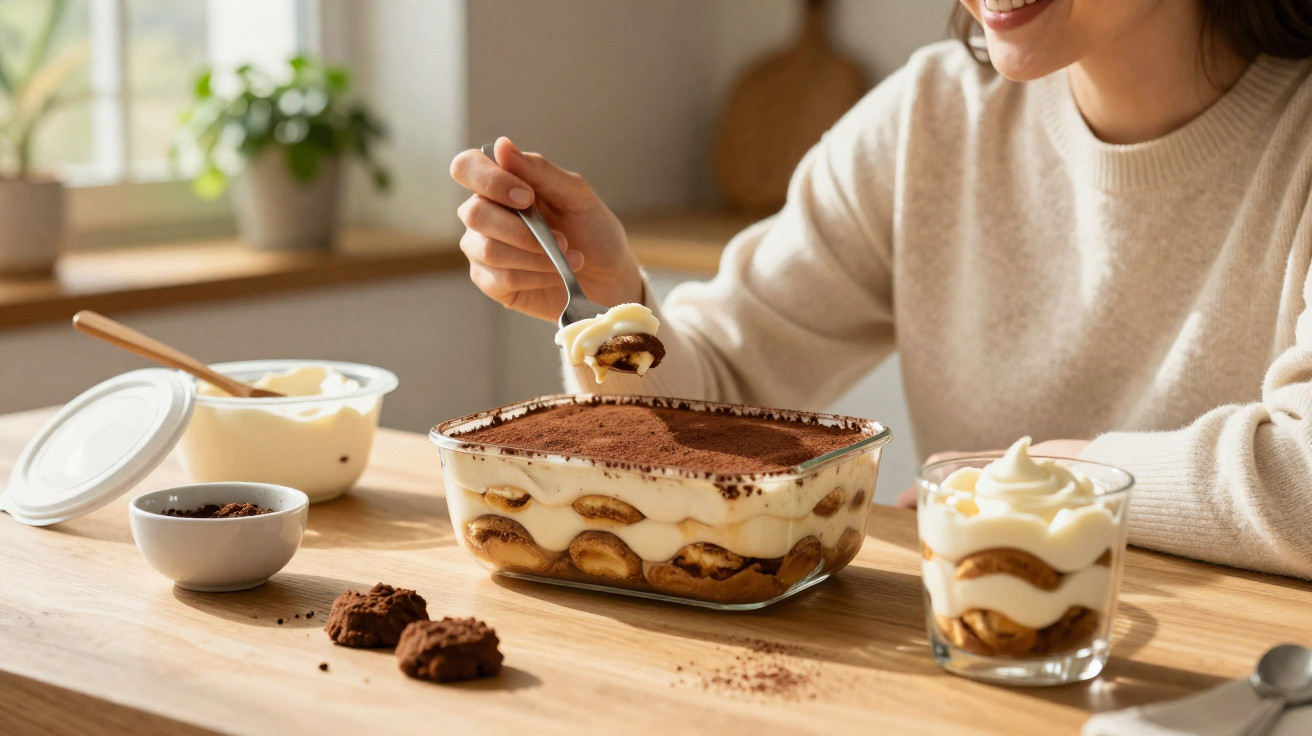
Many people love tiramisu, yet many feel guilty afterwards. The reason is not the coffee or the sponge fingers, but the rich cream. That particular element can be made deliberately lighter with one specific dairy product, while remaining surprisingly close to the original in both appearance and flavour.
Why classic tiramisu is so calorie-dense
In the traditional recipe, mascarpone creates its famous buttery melt-in-the-mouth texture. However, this Italian soft cheese contains more than 400 kilocalories per 100 grams on average and is high in fat. A family-sized tiramisu can easily contain several hundred grams of it.
As a result, even a small serving can contain around 240 kilocalories – and often feels every bit as heavy as that suggests. This can be an issue for anyone watching their weight or preferring not to eat such a substantial dessert in the evening. Even so, hardly anyone wants to give up tiramisu altogether.
“The good news is that the characteristic tiramisu flavour comes chiefly from the coffee, cocoa and texture – mascarpone is not essential.”
That is precisely where the lighter version comes in: the cream retains its structure, while much of the fat is removed from the recipe.
Skyr as the key ingredient: less fat, more protein and the same creamy feel
Originally from Iceland, skyr is now firmly established in German supermarkets. Its consistency sits somewhere between thick yoghurt and soft cheese, yet it contains considerably less fat. It typically provides around 60 to 70 kilocalories per 100 grams; compared with mascarpone, this can reduce the energy density by 40 to 60 per cent.
Its key advantage is that the high protein content produces a remarkably stable, creamy mixture. Rather than sinking into runny yoghurt, the spoon goes into a thick, airy cream that feels almost like the original.
- Calories: around 60–70 kcal per 100 g (skyr), rather than more than 400 kcal (mascarpone)
- Fat: substantially lower, often below 1%
- Protein: high, helping you stay full for longer and supporting muscle maintenance
- Texture: thick, spoonable and ideal for layering
Using skyr instead of mascarpone in tiramisu cream can bring a serving down from around 240 to approximately 128 kilocalories – nearly half as much, without making the dessert taste like diet food.
Tiramisu with skyr: the lighter recipe variation in detail
The ingredient list remains pleasingly simple. For a dessert serving six people, you essentially need everyday items available from any supermarket.
Ingredients for a tiramisu with skyr
- 250 g plain skyr (alternatively, low-fat quark or reduced-fat soft cheese)
- 4 eggs
- 30 g sugar (slightly more or less, to taste)
- 12 sponge fingers
- 200 ml strong, cooled coffee
- 200 ml unsweetened almond milk (or low-fat cow’s milk)
- Unsweetened cocoa powder
- A little vanilla flavouring or vanilla seeds
Anyone carefully limiting sugar can replace part of the sweetness with erythritol or xylitol, although these substitutes often taste slightly different.
Step-by-step method: making the light cream
The process is very similar to that for classic tiramisu; only the cream base changes.
- Separate the eggs: Carefully divide the yolks and whites between two bowls.
- Whisk the yolks: Beat the egg yolks vigorously with the sugar until the mixture becomes noticeably paler and creamy.
- Add vanilla and skyr: Stir in the vanilla, then incorporate the skyr. For an especially firm cream, allow the skyr to drain in a sieve for one hour beforehand.
- Whisk the whites: In a clean bowl, beat the egg whites until they form firm peaks.
- Fold in the egg whites: Gently fold the whipped whites into the skyr mixture in several batches. Do not stir; use a spatula to fold them through so the cream stays airy.
“Gently folding in the egg whites is crucial – it determines how light the cream will feel later.”
Layer, chill and allow to set
All that remains for the characteristic tiramisu appearance is assembling it in glasses or a dish.
- Prepare the coffee mixture: Combine the cooled coffee and almond milk in a shallow dish.
- Briefly dip the sponge fingers: Dip each finger in the liquid for only a moment. It should absorb the mixture without falling apart.
- Create the first layer: Arrange a layer of soaked sponge fingers in the dish.
- Spread over the cream: Smooth a layer of skyr cream on top.
- Repeat: Alternate sponge fingers and cream, making two or three layers depending on the depth of the dish.
- Dust with cocoa: Finish by sifting unsweetened cocoa powder over the top.
- Chill: Leave in the fridge for at least eight hours, ideally overnight, to set.
The resting time is particularly important for creating the familiar tiramisu experience. The flavours meld together, the cream firms up, and the sponge fingers soften while still holding their shape.
Flavour, texture and appearance: how close is the light version to the original?
Anyone who has loved mascarpone tiramisu for years will notice subtle differences. The skyr version tastes distinctly fresher, less buttery and somewhat lighter on the palate. Many people find this change pleasant, especially after a rich main course.
When prepared correctly, its structure remains remarkably close to the classic dessert: the sponge fingers make a soft base, the cream can be lifted neatly with a spoon, and the coffee-and-cocoa combination remains just as intense.
- Pros: considerably fewer calories, more protein and a less fatty mouthfeel
- Cons: a slightly tangy note from the skyr and a somewhat less buttery flavour
If you dislike skyr’s acidity, you can counterbalance it with a teaspoon of honey, a little extra vanilla or a hint of amaretto in the cream.
Practical tips for variations and common pitfalls
The skyr base offers plenty of scope. Anyone who enjoys experimenting can easily adapt the basic recipe to suit everyday preferences:
- Without alcohol: Simply leave liqueur out of the coffee – espresso and cocoa alone provide all the flavour the dessert needs.
- With berries: Add a thin layer of fresh raspberries or strawberries between the sponge fingers and cream for freshness and a lighter feel.
- With nuts: Scatter a few chopped hazelnuts or almonds over the top cream layer before adding the cocoa.
- Without refined sugar: Sweeten solely with sugar alternatives, while keeping personal tolerance in mind.
For the best result, remember that skyr is less likely to become runny than yoghurt, but the cream can still soften if too much liquid is added. Using the coffee-and-almond-milk mixture too generously, or soaking the sponge fingers for too long, can result in a soggy texture.
Skyr, quark and yoghurt – what are the differences?
These products are often treated as interchangeable in everyday cooking, but they do not behave in the same way in recipes.
| Product | Consistency | Fat content | Typical use |
|---|---|---|---|
| Skyr | Very thick, creamy | Usually very low-fat | Desserts, bowls, eating with a spoon |
| Low-fat quark | Firm, slightly grainy | Very low-fat | Baking, protein snacks |
| Yoghurt | More liquid, depending on fat level | Variable | Cereal, drinks, sauces |
Skyr is particularly suited to tiramisu because it creates a thick, spoonable structure without additional setting agents. Low-fat quark can also work, but it often needs smoothing with a splash of milk or yoghurt and can quickly feel slightly grainy in the mouth.
Who benefits most from lighter tiramisu with skyr?
The skyr version is not aimed only at fitness enthusiasts or people on a diet. Families can benefit too, especially when children are eating with them or dessert is served more often. Anyone who regularly includes puddings in their meals can save a meaningful amount over time with the lower-calorie cream, without missing out on enjoyment.
People with sensitive stomachs often find the lower-fat option easier to digest, particularly in the evening. Its high protein content also fits well into a more mindful diet, whether as part of a fitness programme or when trying to gain greater fullness from less energy.
Ultimately, this straightforward swap shows that changing just one key ingredient is enough to make a rich classic dessert much more suitable for everyday eating – without having to put the spoon back in the bowl with a sigh.

















Comments
No comments yet. Be the first to comment!
Leave a Comment