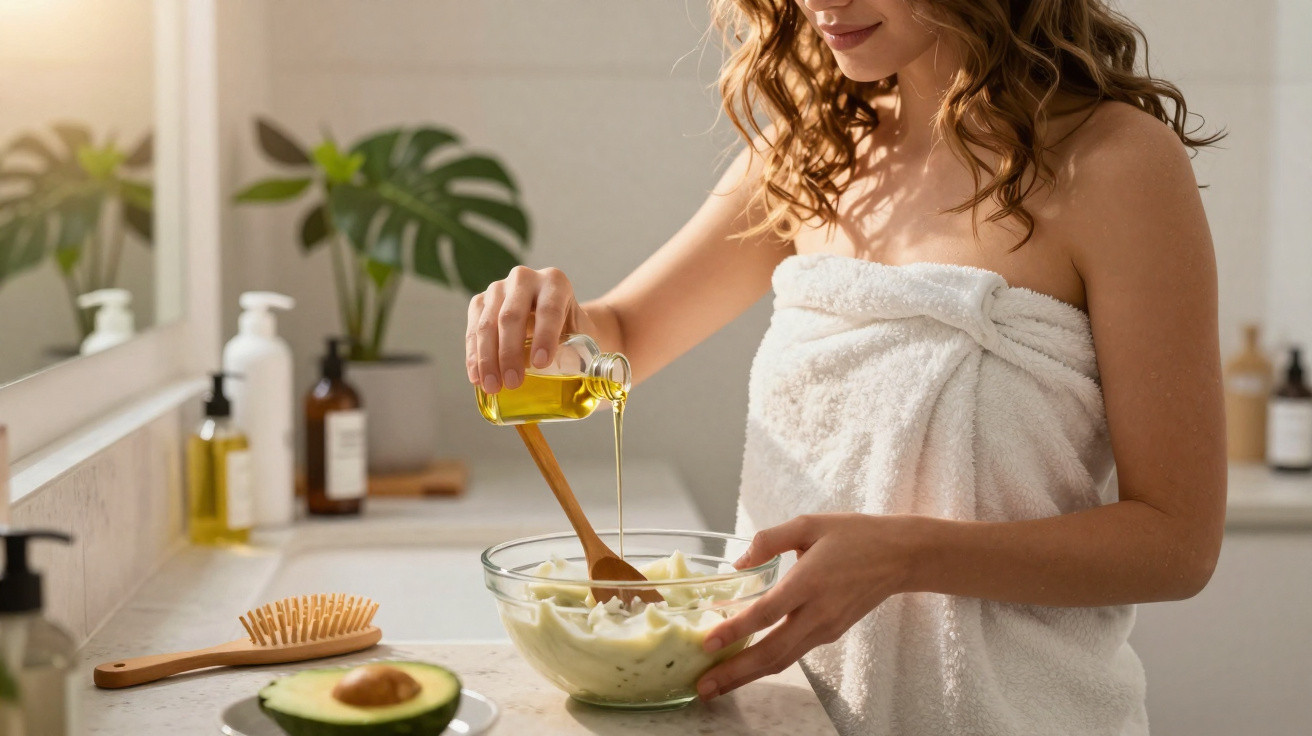
Hair can suddenly feel rough and look dull, particularly after exposure to sun, wind, hot water or frequent blow-drying. An easy way to improve how the strands feel is to boost a regular conditioning treatment with a few drops of vegetable oil, making a simple blend at home.
Why add vegetable oil to a hair mask?
A hair mask helps restore moisture and conditioning ingredients, while vegetable oil may help lessen the feeling of roughness and improve the appearance of the lengths. Together, they provide an additional treatment for hair that lacks movement, has dry ends or is difficult to detangle.
Vegetable oils such as coconut, argan, avocado and jojoba are well-known options for this type of care. The key is the amount: just a few drops are usually enough. Using too much can leave hair weighed down, greasy or lacking volume, especially if the strands are fine.
How do you make this homemade conditioning treatment?
Prepare only the amount of mixture you intend to use straight away. Put a portion of your usual hair mask into a clean container, then add around two to four drops of vegetable oil. Stir thoroughly until the texture is even before applying it to the hair.
- Wash your hair as usual and gently towel away excess water.
- Combine a portion of hair mask with a few drops of your chosen vegetable oil.
- Apply the blend through the lengths and ends, keeping it away from the roots.
- Rinse thoroughly after the stated processing time to prevent residue from being left behind.
Avoid adding oil directly to the full tub of hair mask, as this changes its original formula and makes it harder to control the amount used in each application. Mixing it separately also lets you alter the number of drops according to your hair’s length, thickness and needs.
How long should the mixture stay on the hair?
The safest approach is to follow the directions on the hair mask packaging, as the timing usually differs according to the formula. Leaving it on for much longer does not mean better conditioning; it may simply make the process take longer or increase the feeling of heavy strands.
While applying it, work the cream through the lengths section by section, focusing slightly more on dry ends. Once the recommended time has passed, rinse carefully with water, making sure no excess product remains between the strands.
Watch the video shared by the YouTube channel RODRIGO CINTRA, which offers tips for naturally conditioning hair at home.
Which hair types may benefit most from this tip?
The combination is likely to be particularly useful for dry, dehydrated, curly, coily or rough-ended hair, as well as strands frequently exposed to heat from a blow-dryer or hair straighteners. Bleached or chemically treated hair may also respond well to the softness this treatment can provide.
Those with very fine, straight or naturally oily hair should begin with the smallest amount of oil and assess the result. If the hair loses volume or looks greasy after washing, it is worth using fewer drops or sticking to the regular hair mask alone in future applications.
What should you look for after conditioning?
The most noticeable result is usually in the feel and finish: hair that responds well to the mixture may be easier to comb, look less rough and have ends that appear more neatly aligned. However, this homemade conditioning treatment is not a replacement for targeted care where there is severe breakage or scalp changes.
If your hair has woken up crying out for help, try the mixture in moderation and pay attention to how it responds. Do not wait for dryness to become even more noticeable: adjusting your routine now may help retain softness and prevent the ends from taking on an increasingly rough appearance.















Comments
No comments yet. Be the first to comment!
Leave a Comment