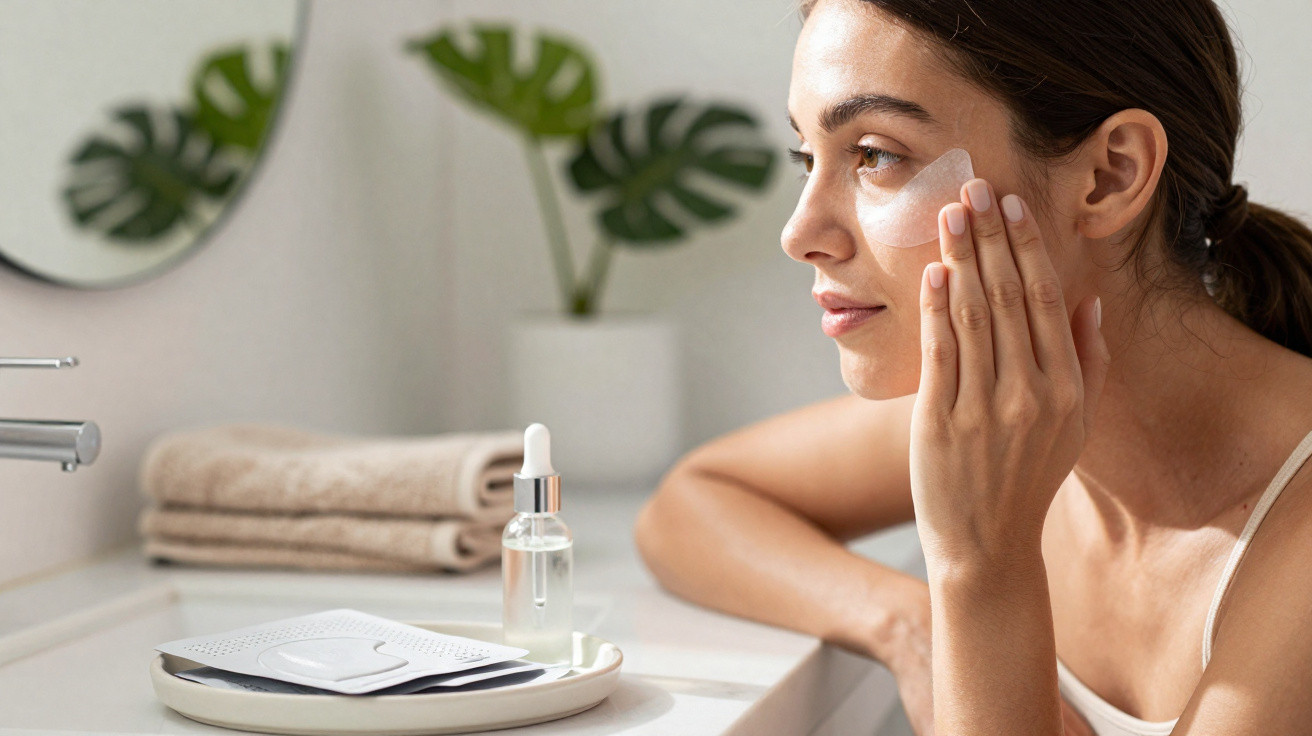
Between video calls, childcare stress and evening commitments, there is rarely time for an extensive skincare routine. Yet many people still want a face that looks more awake, smoother and less stressed. This is exactly where dedicated wrinkle patches come in: small applications designed to visibly smooth the skin in a short time – without a salon appointment or much effort in the bathroom.
What wrinkle patches actually do
Wrinkle patches are small pads made from fabric, hydrogel or silicone that are placed directly on the target area: the forehead, eye area, nasolabial folds or lip contour. They act like a second skin.
“The patches limit facial movements, lightly seal the skin’s surface and deliver concentrated active ingredients directly to the areas where fine lines are bothersome.”
Ideally, this achieves two things at once: the skin receives intensive hydration and fine lines appear less pronounced. A quick result is particularly common with dehydration lines.
Typical ingredients and what they do
Many brands rely on a combination of established anti-ageing ingredients:
- Hyaluronic acid: binds water, plumps the skin from within and helps it look smoother.
- Peptides: can support the skin’s structure and contribute to a firmer-looking appearance.
- Collagen: supports the feeling of tautness at the skin’s surface, making it appear firmer.
- Vitamin C: adds radiance and can make tired skin look fresher.
The effects tend to appear fairly quickly, but they are not permanent: in most cases, the skin looks fresher for 24 to 48 hours before gradually returning to its usual state.
Types of wrinkle patches and what they are suited to
Different versions may be suitable depending on your routine, skin type and target area. Here is an overview of the main types:
| Patch type | Wearing time | Particularly suitable for |
|---|---|---|
| Fabric / hydrogel patches | 15–30 minutes | Eye area, a short-term freshness boost |
| Silicone patches | Several hours to overnight | Forehead, frown lines, mouth area |
| Micro-needle patches | 4–8 hours | Targeted fine lines, specific problem areas |
Fabric and hydrogel patches: a rapid freshness boost
These options are soaked in a liquid serum. Applied to cleansed skin, they adhere gently and release plenty of active ingredients in a short period. They are especially popular around the eyes: they smooth small lines, reduce some puffiness and help the eyes look more alert. They are ideal before a meeting or an evening out.
Silicone patches: overnight care for the forehead
Silicone patches are generally made from a slightly thicker, soft material that sits airtight against the skin. This creates a moist environment that reduces moisture loss and leaves the skin looking smoother. Many versions can be reused if they are cleaned carefully and placed back onto their protective backing.
They are particularly suited to clearly defined areas:
- Foreheads with horizontal lines
- Frown lines between the eyebrows
- The area around the mouth
Micro-needle patches: high-tech treatment at home
These patches contain tiny, water-soluble “spikes”, usually made from hyaluronic acid or similar substances. When applied, they create a slight prickling sensation; the needles then slowly dissolve and gradually release their active ingredients into the upper layer of skin. Treatment often lasts several hours, making them ideal for overnight use.
How to use wrinkle patches correctly
A few straightforward habits can make all the difference if you want to see an effect.
Preparing the skin
The skin should be clean and dry. Make-up, excess sebum or residue from creams can mean that patches adhere less well or that active ingredients are not absorbed as effectively. Anyone prone to sensitive skin should first test a new product on a small area, such as the neck.
Choosing the right patch for the right area
Every part of the face has its own requirements. A patch that is too large may slip, while one that is too small will not cover the fine lines fully. Special shapes for the eyes, nasolabial folds or forehead help deliver active ingredients precisely where they are intended to work.
“Those who match the shape to the wrinkle zone and follow the recommended application time will get considerably more from the product.”
How often should they be used?
For most people, fabric and hydrogel patches are sufficient once or twice a week – or as needed before important occasions. Depending on the manufacturer’s instructions, silicone versions and micro-needle patches can be used more frequently or as a course of treatment, for example on several consecutive evenings.
What wrinkle patches can – and cannot – do
Wrinkle patches are not a replacement for a long-term anti-ageing strategy. They can bridge a minor skincare slump, help before a photoshoot or quickly improve the appearance of stressed skin. Permanent wrinkles that are deeply established in the skin will not disappear after one application.
Even so, they can make a noticeable difference:
- Skin can look smoother and better hydrated.
- Morning pillow creases are less noticeable.
- The face looks more awake and make-up appears more even.
- They provide a small skincare ritual that is easy to fit into everyday life.
Who are wrinkle patches for, and what are the risks?
They are particularly suitable for people with little time or those who do not want to turn immediately to methods such as injections. People who spend a great deal of time on camera or give presentations regularly often use them as a quick beauty aid.
Potential pitfalls include:
- Sensitive skin: fragrances, preservatives or highly concentrated active ingredients can trigger redness.
- Allergies: always check the INCI list if you have a known intolerance.
- Incorrect use: leaving a patch on for too long or pulling it off forcefully can irritate the skin unnecessarily.
Anyone prone to eczema, rosacea or severe irritation should speak to a dermatologist before making new products a permanent part of their routine.
How to combine patches effectively with other skincare
Wrinkle patches work best when the rest of your skincare routine complements them. One example: use a gentle cleanser in the evening, then apply a light toner and allow it to dry before placing the patch. Once the application time has passed, a rich cream can help maintain the plumped-up feeling.
Patches can also be useful alongside retinol, niacinamide or antioxidant serums – but these should be used at different times to avoid overwhelming the skin. Anyone using retinol is better off applying patches on alternate days, or choosing particularly mild versions without additional irritating ingredients.
What makes hyaluronic acid and similar patch ingredients different from ordinary cream
With a standard cream, the layer of active ingredients is spread across the whole face and some of it evaporates relatively quickly. A patch, by contrast, shields the area, prevents the ingredients from dispersing immediately and effectively presses them into the upper layers of skin. This makes it possible to achieve a visible result quickly with the same amount of active ingredient.
There is also a mechanical aspect: silicone patches in particular slightly restrict unconscious facial movements. For instance, someone who constantly furrows their forehead while scrolling or working will automatically relax that area while wearing the patch – a small but noticeable training effect.















Comments
No comments yet. Be the first to comment!
Leave a Comment