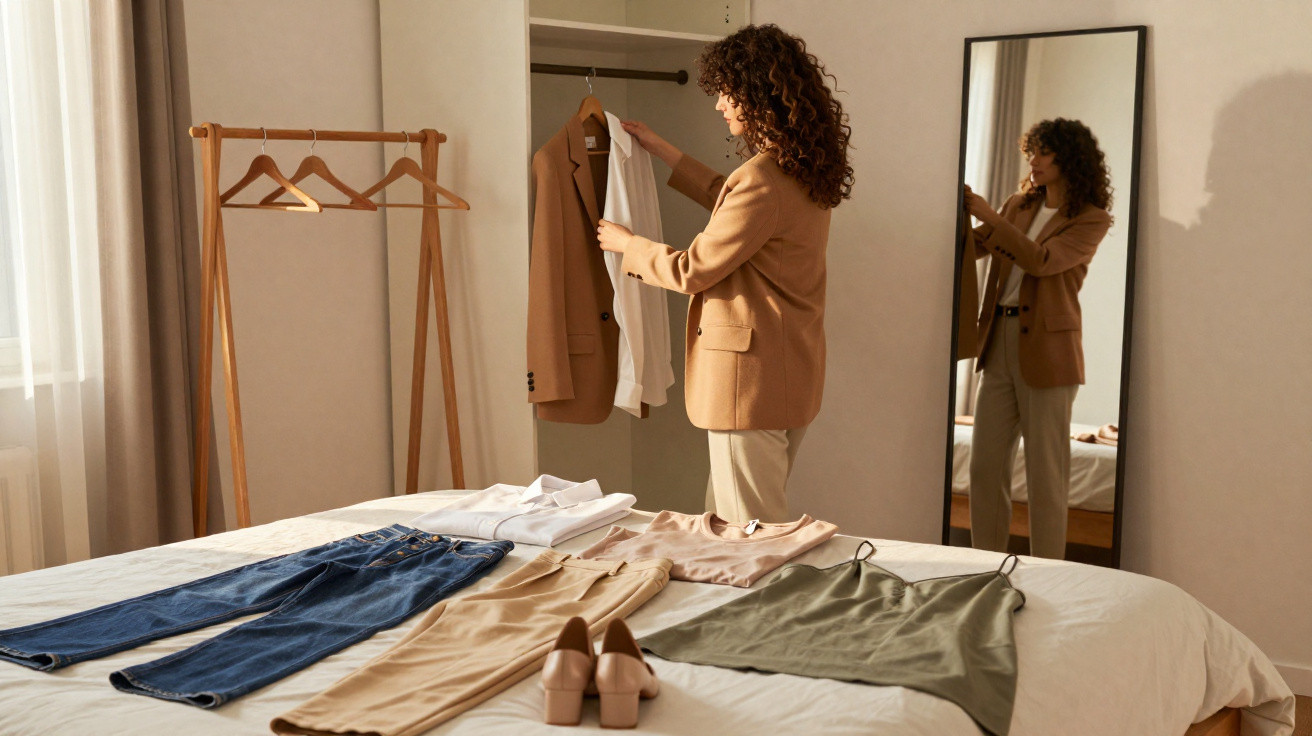
A smart approach using just seven pieces can solve that exact problem.
Every day, many people face a packed wardrobe with no idea what to wear, only to reach for the same items yet again. Rather than continually buying more, stylists are increasingly relying on a concept that saves space, money and mental energy: a small selection of high-quality favourites that can be combined in countless ways. The principle is simple: seven carefully chosen basics can create dozens of outfits in seconds, from working from home and office days to date night.
Why fewer clothes can mean more style
Fashion psychologists refer to the “paradox of choice”: the more garments there are in a wardrobe, the harder it becomes to decide. Many people feel overwhelmed, settle for a fallback outfit and still end up feeling poorly dressed.
A small, clearly organised wardrobe produces good outfits faster than an overcrowded rail full of impulse purchases.
The answer is a compact seven-piece framework whose items work together, remain timeless and suit different parts of everyday life. It follows the basic thinking of a capsule wardrobe, but is designed to be much simpler and more practical for daily wear.
Piece 1: The structured blazer, your style saver
The blazer is the centrepiece of this system. It instantly brings structure, poise and a hint of “I planned this” to any combination, even when worn over a plain T-shirt.
From a slouchy look to a meeting outfit in seconds
A well-fitting blazer shapes the shoulders, elongates the silhouette and makes even jeans and a T-shirt look polished. Push the sleeves up slightly and perhaps add a belt at the waist, and the outfit looks intentional rather than accidental.
A lightly tailored cut that is not too tight is ideal. The shoulders should look defined without appearing rigid. If in doubt, choose a straight, slightly relaxed fit that will also sit comfortably over jumpers.
The best colours for maximum versatility
Instead of prints and trend-led shades, neutral colours are the reliable choice:
- Black: ideal for evenings, the office and events
- Dark navy: softer and more contemporary-looking than black
- Beige or camel: makes any pair of jeans look more refined and flatters many skin tones
Most importantly, the blazer should work with as many clothes you already own as possible, rather than requiring everything else to work around it.
Pieces 2 and 3: Two pairs of trousers as a dependable base
You need fewer options on the bottom half than many people assume. Two distinct pairs of trousers can cover almost every everyday setting: a well-cut pair of jeans and smart tailored trousers.
Straight-leg or subtly flared jeans
Simple straight-leg jeans with no rips or excessive fading, in a mid to dark wash, work equally well for a trip into town and after-work drinks. A gently flared leg can make the legs appear longer, particularly with a low heel.
Avoid extreme trends that only work on Instagram. The aim is a style that will still look good in two years’ time while matching everything today.
Tailored trousers for more formal days
Black or beige tailored trousers can replace a suit in everyday life without looking stiff. Whether you choose a slim cigarette cut ending at the ankle or a wide, fluid shape, the key is for the fabric to fall easily over the leg rather than pinch.
Paired with a blazer and shirt, they look professional; worn with a T-shirt and trainers, they feel relaxed. This range is exactly what makes them so valuable in a wardrobe.
Pieces 4 and 5: The white shirt and plain T-shirt
For the top half, a duo of seemingly simple items is enough, although both are genuinely versatile: a white shirt and a high-quality basic T-shirt.
The white shirt as a light-reflecting piece for the face
A nicely cut white shirt brightens the complexion, looks well put together and never feels overdressed. Try it in different ways:
- fully buttoned for a sharp, almost preppy look
- with one or two buttons undone and sleeves rolled up for everyday wear and leisure time
- tied at the waist with high-waisted jeans at the weekend
Cotton poplin looks crisp and structured, while fluid fabrics such as viscose or silk add more movement to an outfit.
The neutral T-shirt: the understated star
A densely woven white or grey T-shirt with a neat neckline is the quiet hero behind many outfits. It softens the formality of a blazer, makes tailored trousers suitable for everyday wear and can even provide an extra layer beneath a shirt.
Anyone prioritising sustainability should look for organic cotton or durable blended fabrics. A genuinely good T-shirt keeps its shape and colour, and can replace three cheaper alternatives when needed.
Piece 6: The easy dress as a wildcard
When every top seems wrong with every pair of trousers, a dress can save the day. Chosen wisely, one style can take you from a summer party to the office.
One piece, on in seconds
A simple knee- or mid-calf-length dress in black or another neutral shade is ideal. It should be neither too fitted nor too loose and free from excessive detailing, making it easier to style. A wrap cut, softly defined A-line or straight shape works for most body shapes.
Worn over a T-shirt or shirt, the dress feels more fashion-forward; add a blazer and it immediately becomes appropriate for business.
From desk to bar with a few adjustments
During the day, style the dress with flat shoes and a cardigan. In the evening, heeled shoes, statement jewellery and lipstick are enough to completely change the look. This is where simple cuts shine: they can carry bold accessories without appearing overdone.
Piece 7: One all-round shoe choice instead of 20 pairs in the hallway
The seventh component is a quality shoe option that is comfortable enough for long days yet smart enough for appointments.
Which style is really worth choosing?
Possible options include:
- Loafers: relaxed, slightly masculine and ideal with jeans or tailored trousers
- Slingback shoes with a low heel: feminine and equally suited to dresses and skirts
- Ankle boots: especially useful in cooler months
In every case, fit matters more than the brand name. Uncomfortable shoes inevitably get left behind, which goes against the whole idea of a functional wardrobe.
Colours that go with almost everything
Neutral shades offer the greatest freedom to combine outfits: black, cognac, dark brown or a light nude tone work with nearly any look. Lighter colours can make the leg appear longer, especially with bare skin or sheer tights.
How 7 pieces create dozens of outfits
The secret lies in mixing items and making small changes, rather than constantly adding new clothes. A quick look at the combinations shows just how much is possible.
Examples of possible combinations
| Look | Pieces | Occasion |
|---|---|---|
| Office classic | Blazer + tailored trousers + shirt + all-round shoes | Meeting, presentation |
| Smart casual | Blazer + jeans + T-shirt + all-round shoes | Office without a dress code, trip into town |
| After-work look | Dress + blazer + all-round shoes | Date, restaurant |
| Weekend style | Jeans + T-shirt + open shirt + all-round shoes | Leisure time, family |
| Minimal business | Dress + shirt underneath + all-round shoes | Summer office, events |
Even these few examples make the point clear: there is plenty of scope, despite the small number of pieces.
Layering, styling tricks and accessories
For more variety, experiment with lengths and layers: wear a shirt open over a T-shirt, layer a blazer over a shirt, or put a dress over a T-shirt. Belts, rolled-up trouser hems, a scarf or a statement bag alter the effect without taking up more wardrobe space.
Real style comes from details and repetition – not from continually buying new things.
How to start your own 7-piece system
A practical approach makes it easier to begin:
- Take out everything from your wardrobe that you have not worn at all in the past three months.
- Identify the pieces you repeatedly reach for: colours, cuts and fabrics.
- Check whether you already own a blazer, two pairs of trousers, a white shirt, a good T-shirt, a simple dress and one pair of all-round shoes.
- Fill only the gaps with quality basics instead of making impulse purchases.
Beyond the financial benefits, a system like this also reduces decision fatigue. Many people say they get out of the door much faster in the morning and feel “properly dressed” more often in everyday life.
The sustainability aspect is compelling too: fewer poor purchases, better quality and longer wear. Choosing hard-wearing fabrics and paying attention to good construction saves money over time and helps prevent frustration-driven purchases.
Ultimately, it does not matter whether there are exactly seven pieces. The number simply helps bring the focus into sharper view: which items genuinely support your life? Answer that honestly, and you move away from a chaotic clothes rail towards a wardrobe that works every day, rather than only looking good in photographs.










Comments
No comments yet. Be the first to comment!
Leave a Comment