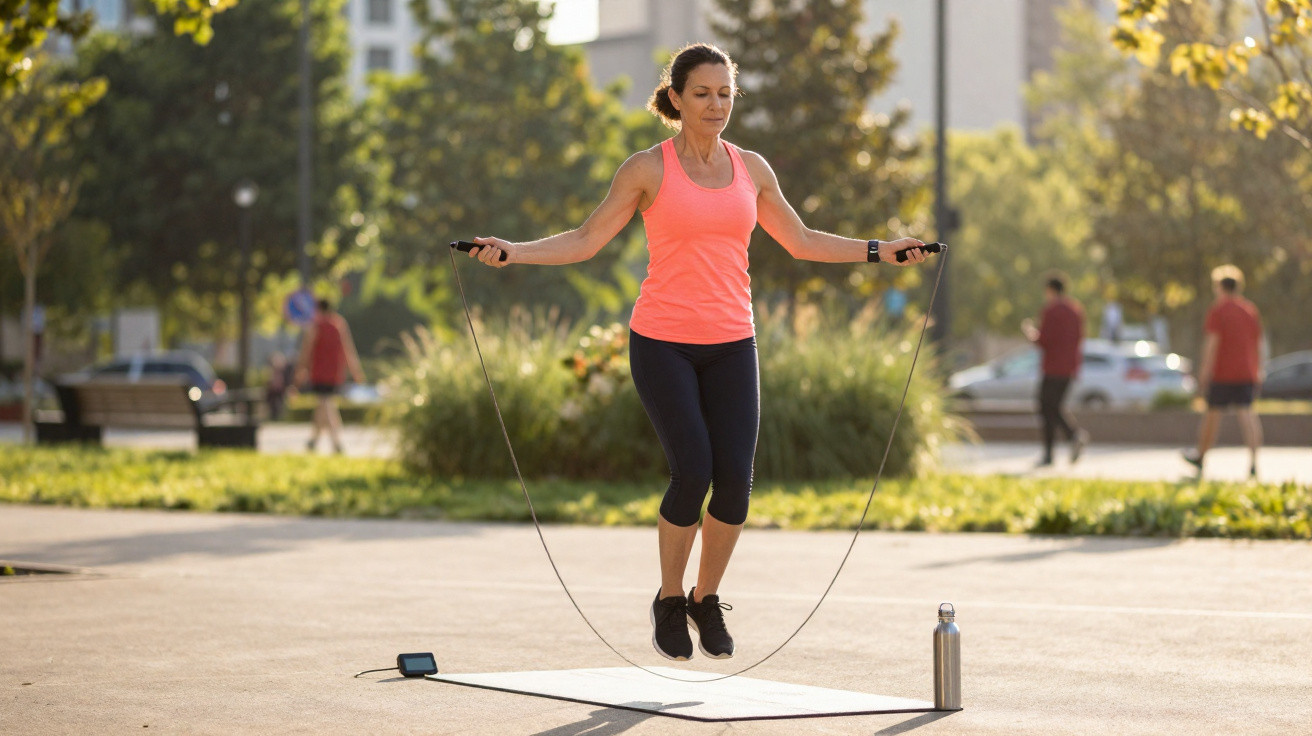
For many people over 50, looking in the mirror can reveal upper arms that have become softer. The body gradually loses muscle, fat deposits become more persistent and the skin loses firmness. One US fitness trainer swears by a brief but demanding skipping-rope routine that takes little longer than an advert break - while giving the upper arms a serious workout.
Why firm arms become harder after 50
From around the age of 40, muscle mass naturally starts to decline unless action is taken to counter it. Metabolism slows down, the body uses less energy and fat deposits can be more difficult to shift. This is particularly noticeable on the upper arms: the back of the arm, where the triceps are located, loses definition and may begin to wobble.
There is another factor too: many everyday forms of exercise focus on the legs and buttocks. Walking, cycling and gardening are all beneficial, but the upper arms often receive too little targeted stimulation. This is where skipping comes in.
“When you use a skipping rope correctly, you are not only training your legs, but also working your shoulders, biceps, triceps and entire core very intensely.”
Skipping: more than a childhood game - especially for the arms
Coach Amanda Kloots says that regular skipping-rope training has noticeably changed both her upper arms and abdominal muscles. That may surprise many people, as skipping is usually associated mainly with leg work. In reality, the arms are active throughout:
- The shoulders keep the arms stable and in position.
- The forearms and hands create the rotating movement of the rope.
- The biceps and triceps gently contract with every rotation.
- The upper back supports and stabilises posture.
There is also the high calorie expenditure to consider: skipping is a highly intensive cardio workout. Heart rate rises quickly, and the body draws on its energy reserves, which may reduce body-fat percentage over the medium to long term - including on the arms.
The 15-minute circuit workout for firm arms
The trainer recommends a three-part routine that can be completed in around 15 minutes. Important: adjust the pace to your own fitness level and take breaks whenever necessary.
First block: warming up and core strength
This section alternates skipping with a core exercise. The aim is to raise your heart rate, activate the shoulders and arms, and bring the abdominal muscles into the workout.
- 60 seconds of skipping at a regular pace
- 30 repetitions of “Plank Jacks” (from a forearm plank or press-up position, jump the feet out to the sides and back in)
- 60 seconds of skipping
- 30 repetitions of “Plank Jacks”
- 60 seconds of skipping
Anyone starting from scratch can swap the Plank Jacks for a static forearm plank hold and initially aim for only 10 to 15 repetitions.
Second block: variations for greater impact
Now the skipping becomes more playful. Different jumping patterns challenge different muscle chains, while the arms continue working all the time.
- 8 regular jumps with the rope
- 8 jumps opening and closing the feet sideways (like jumping-jack legs) - repeat the full sequence 3 times
- 8 regular jumps with the rope
- 8 high-knee jumps (lift the knees up) - again, repeat 3 times
- 8 high-knee jumps
- 8 jumps in a lunge variation (Jump Lunges, 4 per side) - 3 rounds
This combination works not only the arms, but also the legs, buttocks and deep core muscles. If you are unsure, replace the jumping lunges with regular lunges without jumping at first.
Third block: brief, tough and intense
The final section is all about speed. Alternate between a regular rhythm and a short sprint phase.
- 15 seconds of skipping at a regular pace
- 15 seconds of jumping as fast as possible
You can repeat this switch 4 to 6 times. After only a few rounds, you will clearly feel your upper body and arms working, even though the legs are doing the jumping.
How beginners over 50 can start skipping safely
Anyone who has not exercised for a long time, or who has joint problems, should start particularly cautiously. A few basic rules can significantly reduce the risk.
- Start with a warm-up: Walk gently for 5–10 minutes, circle the arms, mobilise the shoulders and rotate the ankles.
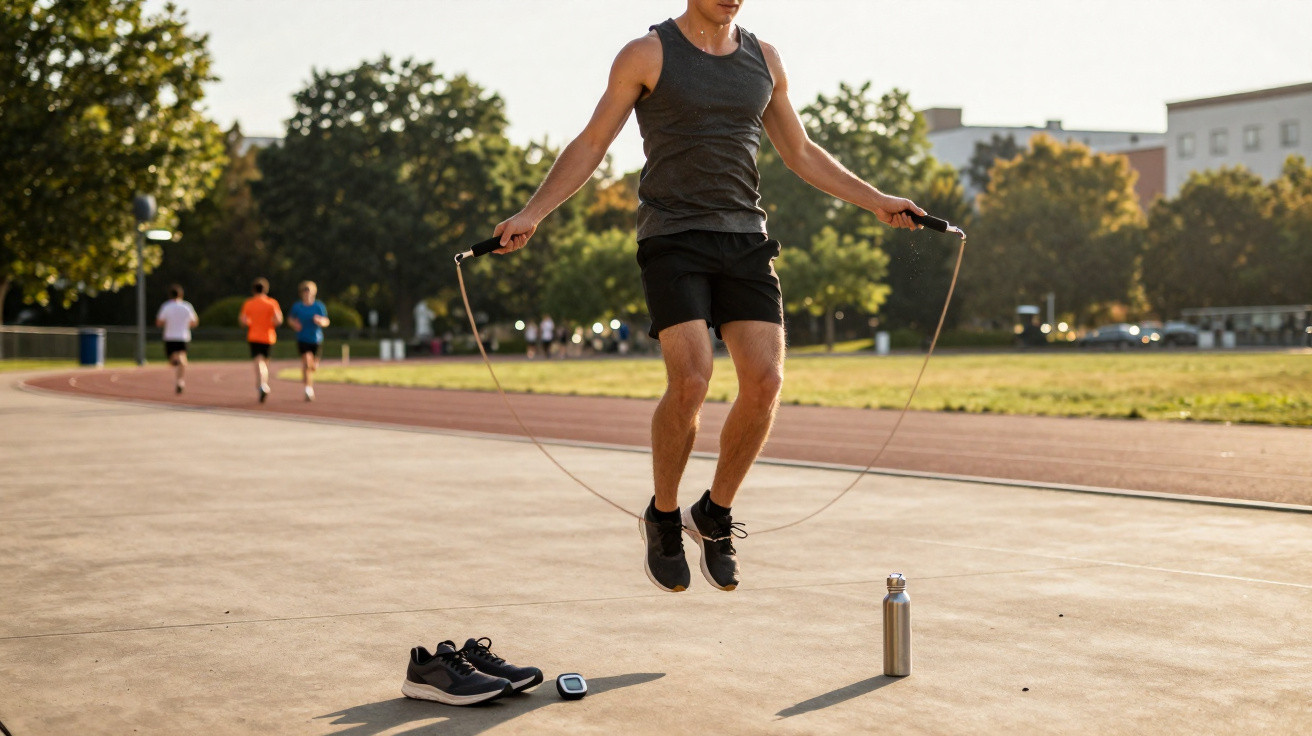
- Use the correct rope length: Stand on the rope with both feet; the handles should reach roughly to your armpits.
- Wear suitable footwear: Choose trainers with stable cushioning, particularly if your knees or back are sensitive.
- Pick an appropriate surface: A wooden floor, sports hall or soft mat is ideal. Hard concrete places greater strain on the joints.
- Keep jumps small: Lift only a few centimetres off the floor, keeping your heels relatively close to the ground.
“Many injuries do not happen on the first jump, but from doing too much, too quickly and too often - especially at the beginning, less is often more.”
Training volume: how to progress sensibly
If you are completely new to skipping, there is no need to start with 15 minutes straight away. A gradual approach is better:
- Days 1–7: 5 minutes in total, for example 30 seconds of jumping followed by 30 seconds of rest.
- Days 8–14: 8–10 minutes, extending breaks as needed.
- From week 3: Gradually work towards 15 minutes using the blocks described above.
Allow at least one rest day between skipping sessions so that tendons, muscles and joints can adapt to the demands. Mild muscle tightness is normal, but sharp or persistent pain is a warning sign.
When skipping may be unsuitable
Despite its benefits, skipping is not right for everyone. People with certain pre-existing health conditions should be cautious or consult a doctor, for example if they have:
- severe knee or hip osteoarthritis
- pronounced back problems
- recent operations or injuries affecting the musculoskeletal system
- untreated high blood pressure or heart rhythm disorders
In many cases, the workout can be adapted - for example, through fewer jumps, lower intensity or alternative exercises without impact. Professional guidance can help you understand your personal limits.
Why the arms benefit so much from skipping
Many people assume they need to do endless triceps dips or biceps curls to shape their upper arms. Skipping works in a more subtle but continuous way: the arms remain in a partially bent position, the rope keeps turning and the muscles stay under tension. Combined with the high energy expenditure, this may gradually make the fat layer thinner and the muscle underneath more visible.
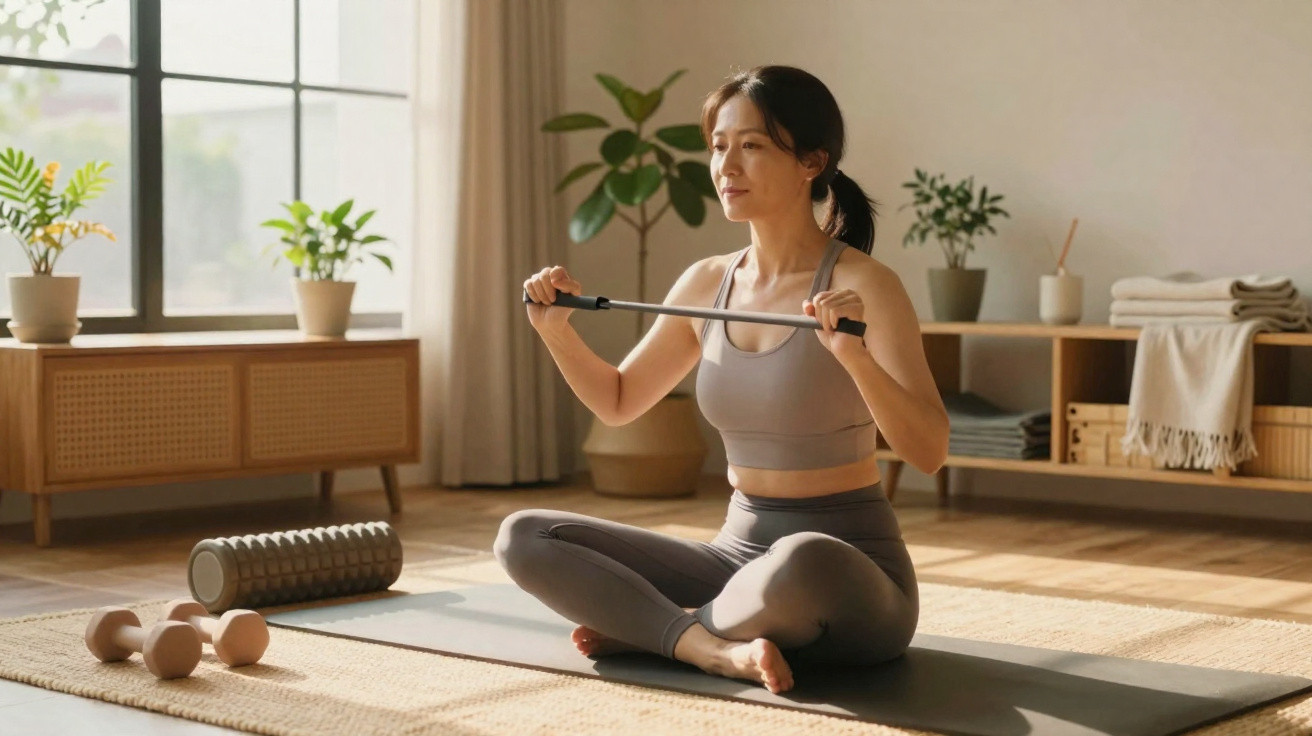
Anyone wanting to enhance the effect can work with light dumbbells, water bottles or a resistance band on days without skipping. Simple exercises such as shoulder presses, biceps curls and triceps extensions can easily be done at home and complement skipping perfectly.
Practical tips for everyday life
The appeal of this workout is the small time commitment. It is usually possible to fit 15 minutes somewhere into the day. A few options include:
- in the living room before breakfast
- after work as a quick reset in the garden or on the balcony
- on holiday as a minimal routine, since a rope takes up very little space
One further benefit is often underestimated: skipping improves coordination and reaction time. As people get older, it can act as a small form of fall-prevention training because the brain learns to control movement and rhythm more precisely. That not only makes the arms firmer, but can also provide greater confidence in everyday life.












Comments
No comments yet. Be the first to comment!
Leave a Comment