
Not because she is especially fast, but because she simply keeps going. It is 8.30 am in the town park: dogs are charging about and several e-bikes whirr past. She is 68, she later tells me, and since retiring she has walked a circuit every morning. “I used to think exercise meant sweating until you dropped,” she says with a laugh. “Now I just want my knees not to give up on me.”
Nearby, three men of roughly the same age stand at the edge of the park. They talk about gyms, bad backs and how they really ought to do something. None of them moves. The woman in the red windbreaker completes her second lap. At some point, a quiet little thought emerges: perhaps, in later life, the winners are not those who train hardest, but those who simply do not stop moving.
Why daily movement after 60 achieves more than heroic workouts
Anyone over 60 who gives everything once a week will know the pattern: you throw yourself into a circuit class, push hard and feel your pulse in your throat – then spend the next two days completely wiped out. Your muscles ache, your knees complain and your back sends formal letters of protest. In the name of “rest”, you then remain on the sofa for days. Above all, your body learns that movement hurts.
The picture changes completely when intensity comes down and frequency goes up. Gentle activity every day gets the circulation going like an old diesel engine: slowly, yet dependably. Joints remain lubricated and muscles remember what they were meant to do. It is neither spectacular nor Instagram-worthy, but it works quietly. And after 60, that calm, unshowy approach is often what makes the difference.
One striking figure comes from a large long-term study of older adults: just 15 minutes of light activity each day was enough to measurably reduce the risk of death. Not 15 minutes of HIIT or 15 minutes on a spin bike. Simply walking, taking the stairs, light housework or a little gardening. A 72-year-old told me how he regained everyday fitness: “I made a rule that I’m not allowed to combine jobs. Rather than taking all the laundry baskets upstairs at once, I go three times. That’s my workout.”
His doctor had previously suggested joining a gym. He lasted exactly two weeks on the cross-trainer, always feeling as though he were fighting his age. Then came the first strain, followed by fear of the next one. Today, he simply counts his steps during the day and stays curiously active. Suddenly, exercise is no longer an extra appointment that can be cancelled. Movement becomes part of the day, like brushing your teeth or making coffee.
Here is the plain truth: after 60, our bodies respond more slowly to hard physical demands. Intense workouts can create powerful training stimuli, but they also leave tiny injuries in muscles and tendons. Younger bodies repair them overnight. Older bodies need longer – and during that recovery period, they often lose some of what they had built. Gentle movement every day changes that balance.
Instead of major waves of stress, the body receives lots of small signals: increased blood flow, a modestly raised heart rate and repeated joint movement. The nervous system stays calm, sleep often improves, and that much-mentioned everyday strength – carrying bags, climbing stairs and standing for long periods – develops gradually but steadily. Essentially, we are not training for one big occasion, but for simply getting up on a Monday morning.
What daily movement looks like without fitness obsession
The simplest rule of thumb is this: for every hour you are awake, move briefly at least once. It sounds obvious, yet it can change everything. Rather than doing one 45-minute workout, you might combine a ten-minute brisk walk after breakfast, five minutes of mobility work while brushing your teeth, a few squats as the coffee brews and two circuits of the house after lunch.
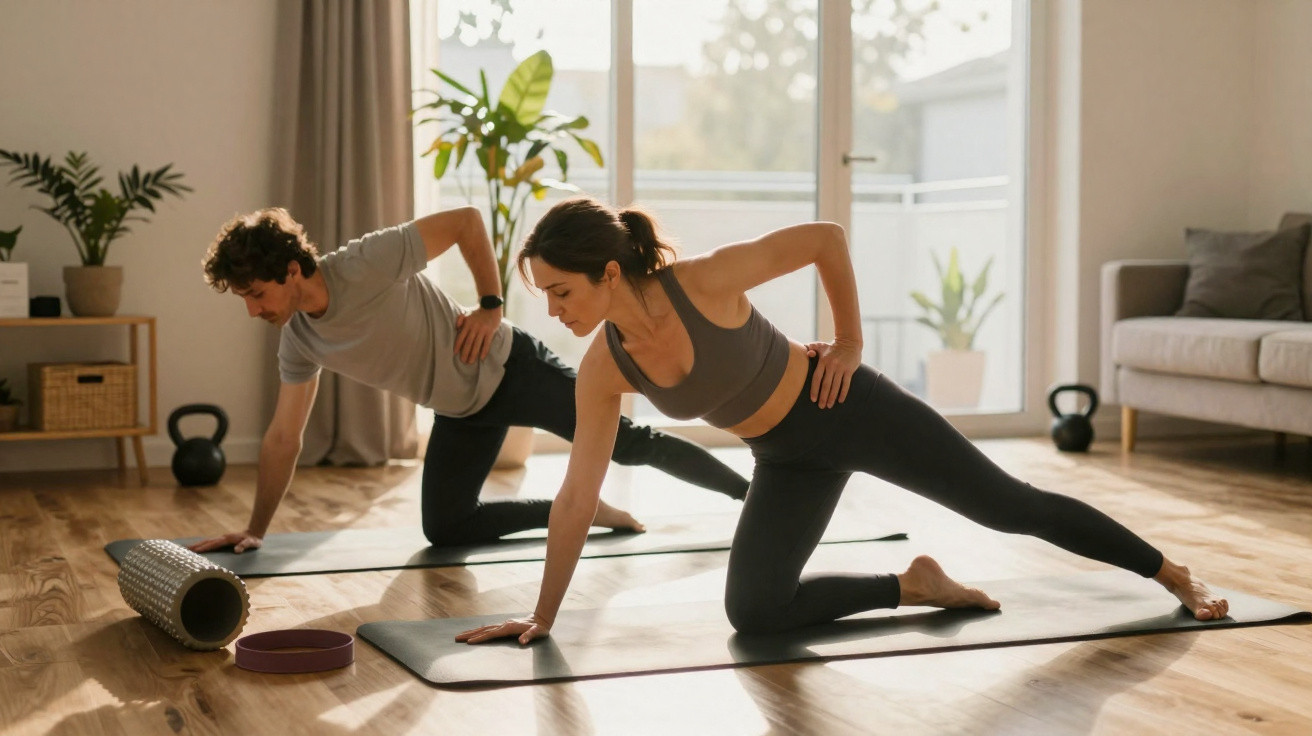
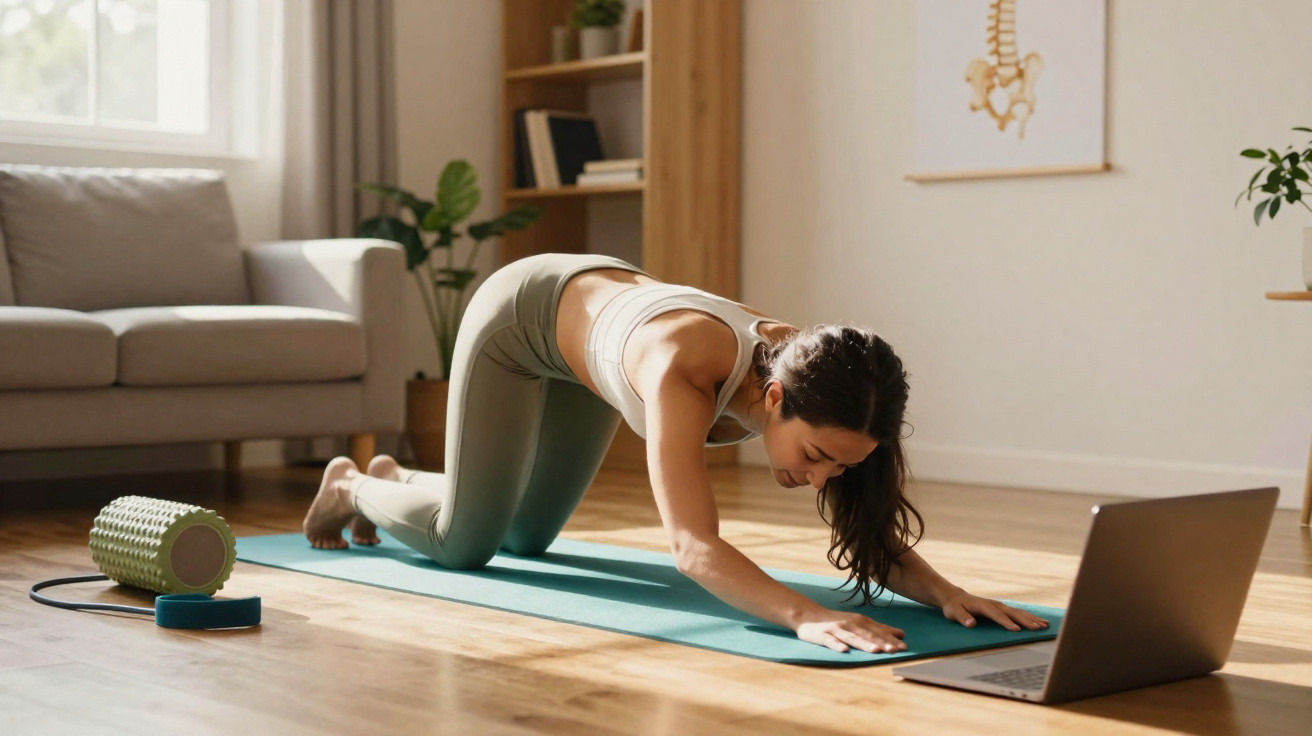
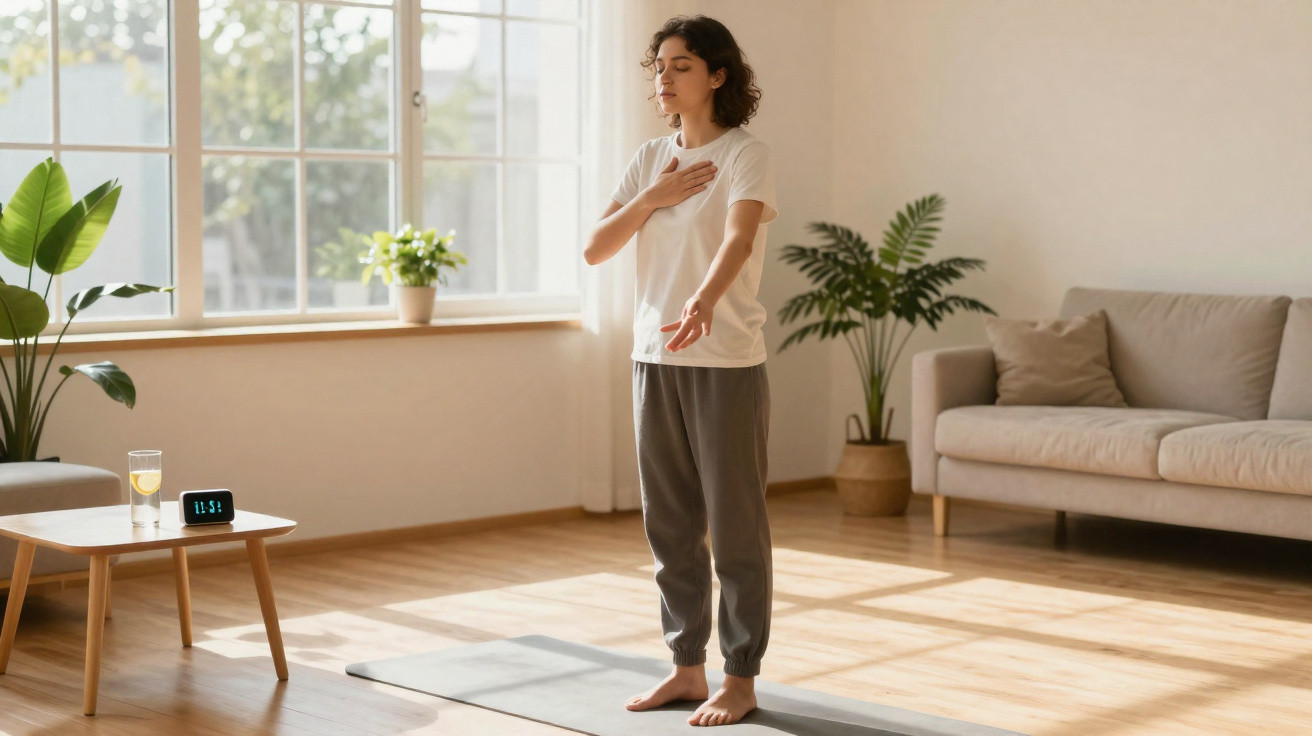
Three fixed movement anchors each day make a good starting point: morning, midday and evening. In the morning, spend five to ten minutes doing gentle stretches in the living room, balancing on one leg and taking a few deliberate deep breaths by an open window. At lunchtime, walk around the block, whatever the weather. In the evening, do light stretches for your back and hips in front of the television. This creates a rhythm that does not look like an exercise plan, yet acts like a quiet training programme.
For many people over 60, movement itself is not the problem; the mental picture of exercise is. They imagine six-packs, Lycra and “No Pain, No Gain”, and immediately feel out of place. Or, full of motivation, they commit to some miracle regime: 30 days of planks, 10,000 steps every day and never using a lift again. Let us be honest: nobody genuinely does that every single day.
A far more useful question is: what could I still manage on a miserable, grey Tuesday? Perhaps a 5-minute walk outside the front door. If that is your lower limit – something you can do even when tired, stressed or fed up – it becomes your new minimum. There is no pressure and no failure if you do “only” that. This minimum keeps the door to movement open, so that better days naturally bring longer walks in time.
A 63-year-old reader once wrote to me: “Only when I stopped comparing myself with my 30-year-old self did exercise become my ally again.”
“The best exercise after 60 is the one you will still want to do next week – not the one that impresses someone today.”
Small, highly practical building blocks can help:
- 3 x per week: 15–20 minutes of brisk walking, at a pace where you can still talk but no longer sing
- Daily: 2–3 balance exercises, such as standing on one leg or raising and lowering your heels while brushing your teeth
- Several times per week: light strength training using your own body weight – for example, leaning against a wall and standing up from a chair without momentum
- As often as possible: travel everyday routes on foot or by bike, get off one stop earlier and choose stairs over escalators
- At least once a day: consciously move your joints through their range – circle your shoulders, rotate your ankles and make gentle circles with your hips
How movement after 60 changes self-image, confidence and everyday life
At some point, something shifts when you keep moving regularly. At first, it can feel like an obligation: “I still need to go out.” After a few weeks, it often becomes a familiar moment: your own footsteps on the pavement, your breathing in the cold air and a brief nod to the same familiar faces in the neighbourhood. Movement establishes routines, and routines quietly rebuild trust in your own body.
What is interesting is how strongly this affects the rest of life. Someone who walks every day may suddenly feel more willing to try a new group activity. Someone who notices that stairs have become easier might finally sign up for that weekend trip they had already written off internally. Their range expands and the world becomes a little wider again. With every step comes the quiet realisation: I can still take action. I can shape things.
Movement is also a remarkably honest mirror. There are good days when your legs feel as though they could fly, and slow days when every metre takes effort. Anyone who accepts these ups and downs removes the pressure to be “capable” all the time. You are allowed to walk slowly. You are allowed to pause. You are allowed to stop. The only thing that matters is that the thread does not break – that tomorrow brings another small step. Daily movement is not a competition; it is a promise to your future self.
Perhaps that is the real revolution after 60: moving away from asking, “How can I get my old sporty self back?” and towards, “How do I want to feel in everyday life at 70, 75 or 80?” The answer is rarely “like a marathon runner”. Far more often, it is: without fearing stairs; without panicking when the bus driver will not wait; without endlessly wondering whether the sofa might be safer than the rest of the world. Movement can open that door again – quietly, without fuss, day after day.
| Key point | Detail | Benefit for the reader |
|---|---|---|
| Daily light movement beats occasional intense workouts | Lots of small impulses are kinder to joints and circulation, and easier to fit into everyday life | A realistic way to stay active long term rather than swinging between overload and inactivity |
| Use everyday life as your training space | Stairs, short walks, housework and mini-exercises are consciously set as movement anchors | No additional time pressure; movement becomes part of the daily rhythm and is therefore more sustainable |
| Self-image and confidence grow through routine | Regular movement builds trust in your own body and expands your personal range | Better quality of life, greater social participation and less fear of physical strain in later life |







Comments
No comments yet. Be the first to comment!
Leave a Comment