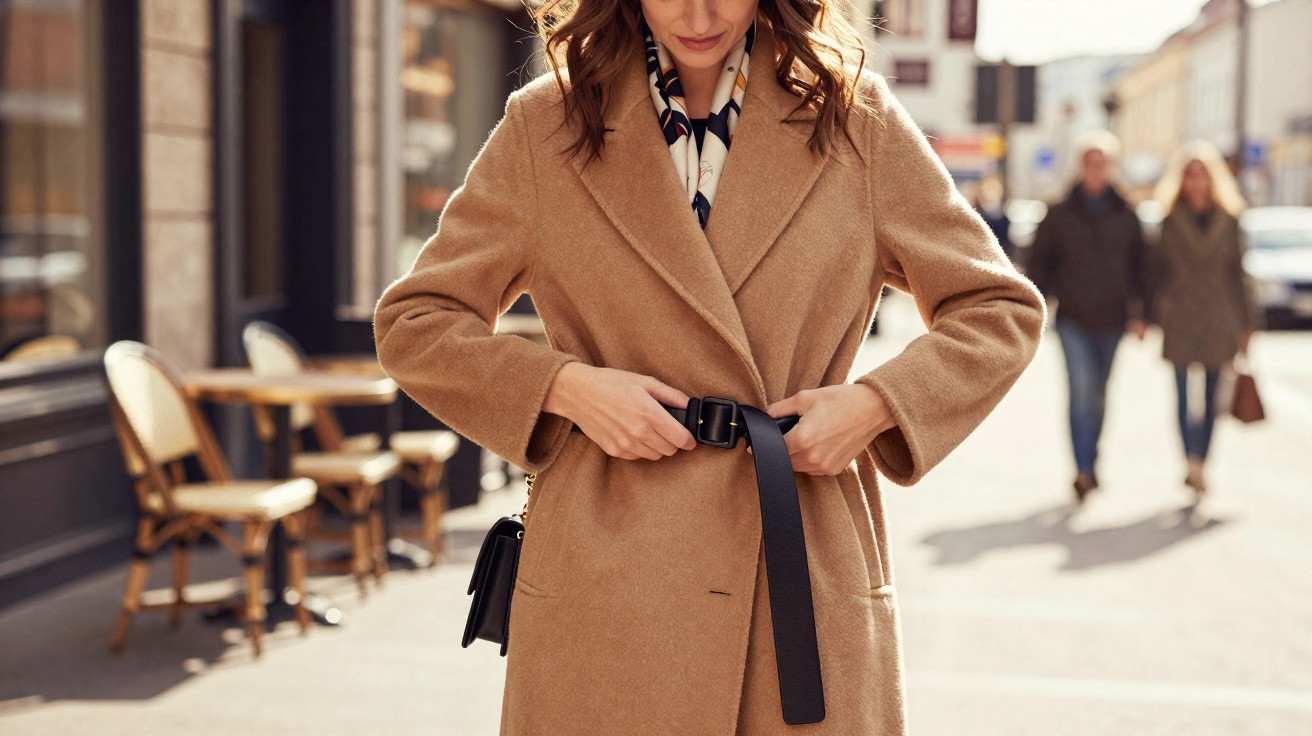
Many people throw on their coat in the morning, button it neatly right to the top, pull up their shoulders – done. The matching fabric belt is then either tightened somehow or simply left dangling. Yet this very routine can make us look more severe and older than we are. Using belts differently, on the other hand, can visibly refresh your overall appearance – without buying any new clothes.
Why a “neatly fastened” coat can make you look older
A straight coat buttoned all the way up quickly becomes one rigid block. Your figure disappears beneath the fabric, making the body look wrapped up rather than dressed. Natural movement is barely visible, your walk seems heavier and your silhouette shorter.
The usual mistake with an integrated fabric belt adds to the effect: it either hangs limply from its belt loops or is pulled tightly at the centre, around navel height. This creates a strict, almost bureaucratic impression. Nothing moves and nothing feels lively. The result is an unintentionally dated look, reminiscent of old passport photos – proper, but entirely lacking in ease.
Rigid coat front + tightly pulled fabric belt = an ageing filter for your silhouette.
The real trick: use a belt as a style tool, not merely a fastening
The change happens when you stop viewing the belt as purely functional and start treating it as an accessory. Its role is not simply to close the coat, but to shape the figure and disrupt the overall look.
Instead of concealing the waist beneath the coat front, highlight it over the top. The fabric can retain a little volume; the belt only needs to gather that volume loosely. An implied hourglass shape appears at once: shoulders, waist and hips all look more clearly defined without feeling restricted. This play with proportions makes your appearance seem more dynamic, acting like a natural “freshness filter” for the whole outfit.
Restyle an old coat: swap the belt
The quickest style boost is to replace a coat’s original belt with a more distinctive one. Most people have old leather or waist belts tucked away somewhere in their wardrobe. This is exactly their moment to shine.
Play with contrasts
A beige trench coat can look rather dutiful, even frumpy, with its own fabric belt. Pair it with a dark leather belt and a striking buckle, however, and the entire effect shifts towards modern and self-assured.
- Beige coat + cognac leather belt
- Black wool coat + wide belt with a gold buckle
- Grey coat + animal-print belt
This creates a clear visual break: a calm coat with a belt full of character. The contrast deliberately draws the eye towards the middle of the body, shapes the silhouette and removes the coat’s severity.
A replacement belt can make a coat feel completely new – at a much lower cost.
Choose structure instead of a fabric tie
Standard fabric belts are generally made from the same material as the coat, so they disappear into the overall surface. A belt in leather, suede or embossed material, by contrast, creates distinct lines. This structured element brings order to the whole outfit without making it look stiff.
Anyone who loves vintage pieces will quickly find suitable options in second-hand shops: weathered leather belts give classic coats an individual touch that does not look mass-produced.
How to tie a belt for a more youthful effect
The tying technique matters at least as much as the belt itself. Pulling it tightly through the buckle in the traditional way can look overly proper. A so-called “false knot”, which holds without using a belt hole, gives a more relaxed result.
The relaxed knot technique
- Place the belt around the coat and bring both ends to the front.
- Hold the buckle end slightly downwards.
- Pass the other end behind the buckle.
- Feed it back through the loop that has formed, from the inside.
- Pull it gently until it creates a flat, partially draped knot.
The knot stays secure but looks as though it was tied in a moment. This deliberately imperfect finish makes the entire outfit feel more relaxed and modern – much like a hairstyle that has not been styled too precisely.
The belt should look as though you have not spent three minutes in front of the mirror – that is exactly what makes it interesting.
The right belt position for your body shape
Where the belt sits determines whether the look lengthens or shortens your proportions. A few basic guidelines can help you find your ideal height.
- Petite people: Wear the belt slightly higher, close to the natural waist. This elongates both the legs and the body overall.
- Long torso: Position the belt higher to make the torso appear shorter and the legs longer.
- Shorter torso: Wear the belt a little lower on the hips to create more apparent length through the torso.
- A fuller tummy: Gather the coat fabric slightly at the back, while allowing it to fall more smoothly at the front. This stops the belt sitting directly around the fullest part of the tummy.
One small adjustment helps: before tying the knot, gather the coat slightly at the back and smooth it at the front. From the front, the body appears calmer; from the side, it looks slimmer because the fabric does not bunch at the least flattering point.
The trick works beyond coats
Once you have seen the effect, you may want to use it everywhere. And it works surprisingly well.
Reinterpret an oversized blazer
A slightly oversized blazer can quickly look as if it has been borrowed. Add a belt at the waist and it becomes a stylish statement piece. The shoulders gain structure, the waist looks narrower, and the outfit suddenly feels more street style than boardroom.
Shape chunky knitwear and cardigans
Long cardigans and thick jumpers keep you warm, but they can hide every trace of shape. A slim leather belt worn loosely over them redefines the centre of the body. Even an XXL cardigan then looks less like a cosy blanket and more like a considered outfit.
Why this styling move can make you look younger
Younger-looking outfits usually share one quality: they convey movement and ease. That is precisely what this new approach to belts creates. The figure looks less bundled up and more defined. The body regains recognisable lines, posture seems more upright and your walk more animated.
There is also a psychological effect: when you see a more modern, clearly proportioned version of yourself in the mirror, you automatically move with greater confidence. That confidence shows outwardly – and people around you will often say, “You somehow look younger,” without being able to explain exactly why.
Practical tips for everyday wear
A few practical points will ensure that this new belt trick remains suitable for everyday life:
- Do a movement test: After tying it, sit down, stand up and walk up some stairs. If the knot stays put and nothing digs in, the placement is right.
- Consider the material: Soft leather or lightly textured belts slip less than highly smooth designs.
- Leave the coat open: On milder days, wear the coat open and loosen the belt only at the back – it looks especially effortless.
- Choose a simple coat: The plainer the coat, the more your belt can stand out.
If you fancy some variety, you can even change belts with the seasons: lighter, slimmer belts in spring and wider styles with a prominent buckle in winter. That keeps the effect fresh without becoming boring.
This small styling trick makes one thing clear: not every change requires a shopping marathon. Sometimes an old belt, a new knot and two minutes in front of the mirror are enough – and suddenly someone asks: “Have you done something different? You somehow look much younger.”









Comments
No comments yet. Be the first to comment!
Leave a Comment