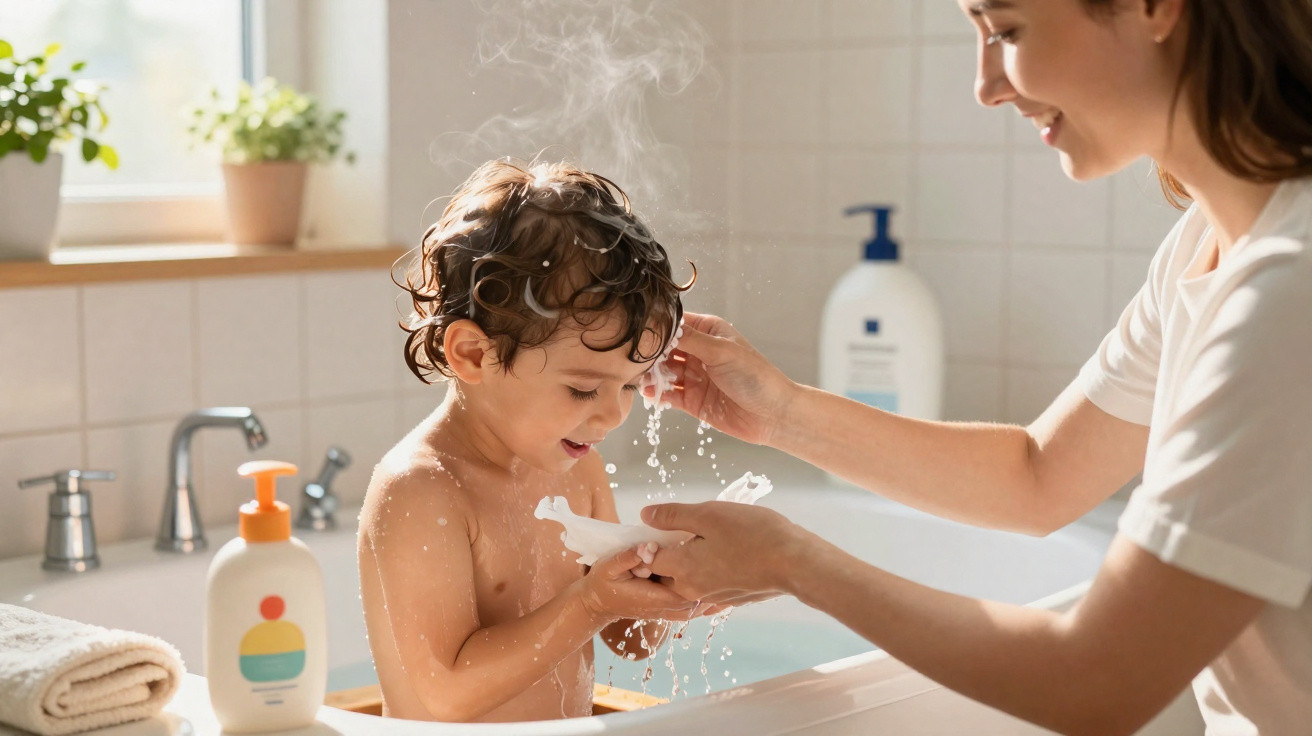
His mum chuckles, takes a quick picture for the family chat and reaches for the sole bottle on the bath edge: her minty, salon-brand shampoo. One generous squeeze brings a fresh burst of fragrance and that pleasing sense of being “really clean”. Ten minutes later, the scene has passed. The photo remains, and so does the routine.
The weeks roll on: the same bath, the same shampoo and the same “clean hair” joke. Gradually, the boy begins scratching his head after nursery. Fine flakes show up on his navy T-shirt. At bedtime, he rubs his scalp against the pillow until it goes pink. Mum wonders whether it is “just dry skin”, or perhaps the central heating. Nothing about the shower bottle seems concerning. It was costly, smells lovely and claims to be “for dry, damaged hair”.
The scalp does not shout. It whispers.
When “clean” hair quietly hurts a child’s scalp
The earliest clue is often so minor that parents barely register it: a little flaking on the shoulders, a red area behind one small ear, or a toddler who suddenly dreads having their hair rinsed because it “stings”. Their hair may still appear glossy from the outside, and bath-time pictures can still look flawless on Instagram. Beneath the hair, however, the scalp’s delicate lipid layer is beginning to wear away.
This fine, unseen coating of natural oils acts as a baby’s first line of defence. It retains moisture, helps keep bacteria out and soothes the nerves. Adult shampoos are formulated to remove oil, styling residue and pollution. On a child’s scalp, they can do this job too effectively. Repeatedly, they wash away that vulnerable protection, leaving the skin dry, exposed and irritated.
One London dermatologist compares it to “giving a toddler’s scalp the same treatment you’d give a greasy commuter’s hair after a long city day”. In response, the skin becomes dry and develops micro-fissures, sometimes shedding additional flaky cells in a hurried effort to mend itself. Parents may see “dandruff” or “sensitive skin”. The scalp experiences ongoing stress.
On a wet Tuesday in Manchester, 32-year-old Emma looks through photographs of her daughter when she was two. In several images, little Isla is scratching her head. It had become a familiar family joke. “She’s thinking hard,” Emma’s dad would say. No one connected it with the glossy silver bottle of “deep cleansing” shampoo displayed on the side of the bath.
By the age of three, Isla had small red patches on her scalp and a persistent band of dry skin around her hairline. The GP raised the possibility of dermatitis, prescribed a steroid lotion and advised using a gentle children’s product. Yet habits are difficult to change. The adult shampoo had a nicer scent, felt more luxurious and was already within reach. “We’d use the baby one when I remembered,” Emma says. “Then I’d be in a rush and just grab mine. It felt harmless.”
Over the following months, Isla came to dread hair-washing evenings. She cried whenever water reached her head, saying it “burned” and “pulled”. Her hair became slightly thinner at the temples, something only the hairdresser spotted. At four and a half, a paediatric dermatologist eventually asked one straightforward question: “What shampoo are you using on her?” It was the first occasion on which Emma understood that the product she trusted for her own hair might be quietly damaging her child’s protective lipid barrier.
Adult shampoo is designed around the needs of an adult scalp: skin that is thicker, a stronger barrier, greater oil production and more exposure to styling products. Such formulas commonly use surfactants that are highly effective at breaking down sebum and build-up. For a toddler, whose lipid layer is still developing, that is not simply “deep cleaning”. It is excessive cleansing.
Repeated removal of this layer triggers a knock-on effect. When lipids are insufficient, the scalp’s outer cells lose the substance that binds them together. Moisture escapes more quickly, while irritants from hard water, fragrance and pollution can enter more readily. Nerve endings, which sit nearer the surface in young skin, begin to react more frequently. A child can feel itching, tightness or sometimes pain long before there is any striking visible change.
Persistent dryness means more than occasional flakes. With time, the scalp may enter a low-level inflammatory state, bringing redness, a rough feel, recurring “cradle cap-like” areas in older toddlers and even an unwillingness to have the hair touched. In certain cases, the skin reacts by scaling more and renewing cells faster, which many parents mistake for ordinary dandruff. The underlying issue remains unchanged: a barrier made for babyhood is being expected to cope with adult shampoo chemistry.
Gentle routines that actually protect a child’s scalp
The first small adjustment begins with the bottle. A genuine baby or toddler shampoo-lightly fragranced, pH-balanced and labelled for sensitive skin-alters what comes into contact with that lipid layer. Seek terms such as “tear-free”, “soap-free” and “for delicate skin”, rather than marketing promises about shine or volume. The aim is not glamorous-looking hair, but a settled, protected scalp.
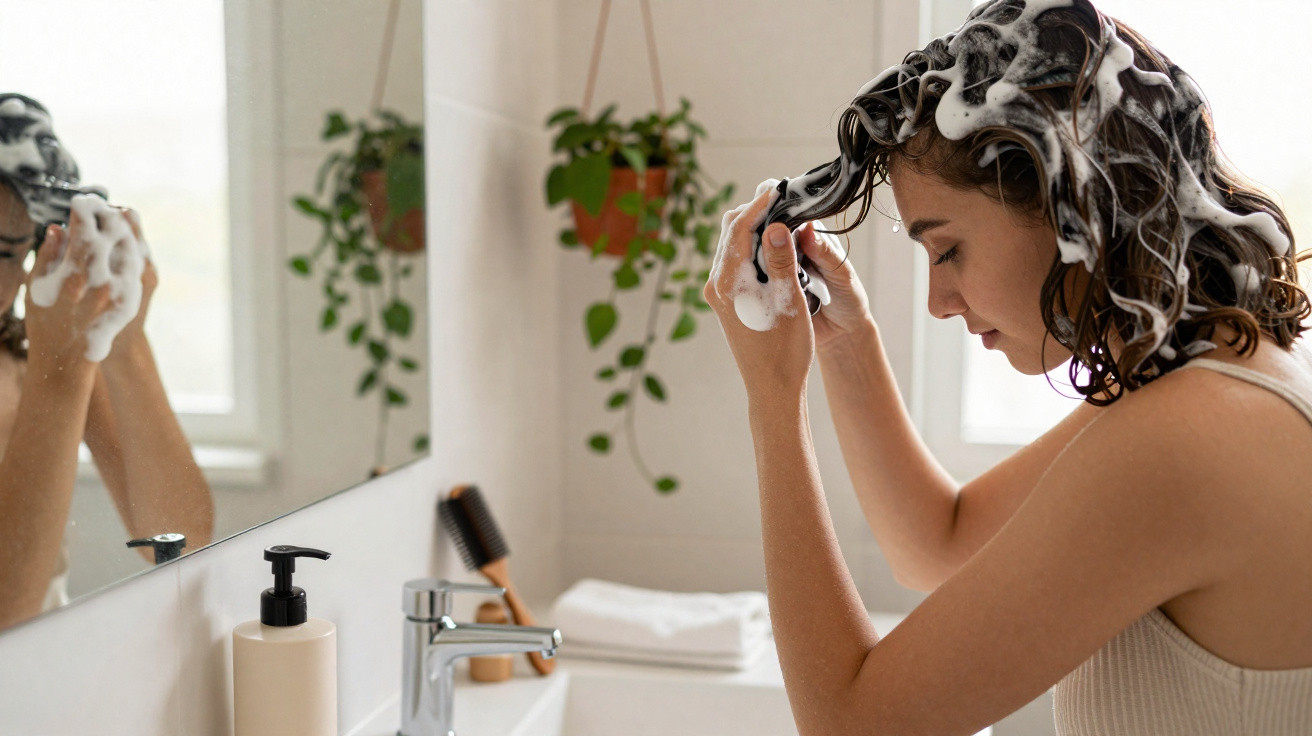
Washing frequency matters next. Daily hair washing is unnecessary for most toddlers. For many, two or three washes weekly are sufficient, unless there has been a sandpit mishap or a yoghurt catastrophe. On the days in between, plain lukewarm water is enough. When shampoo is needed, a pea-sized amount will usually cover short hair. Lather it between your hands before applying it, then massage the scalp gently with fingertips rather than nails.
Rinsing also makes a difference. Powerful streams of hot water remove even more lipids. A gentle lukewarm flow, directed mainly through the hair rather than straight at the scalp, is kinder. Dab the hair dry with a towel instead of rubbing it. For children already experiencing dry areas, a very small drop of a light oil-such as sunflower or squalane-rubbed between your fingers and then massaged onto the scalp after bathing may support the skin as it rebuilds its barrier.
Parents often feel guilty for not understanding this sooner. It is worth saying plainly: no one explains the lipid layer at antenatal classes. Most people take the closest bottle during bath time, particularly when one child is singing, the baby is crying and dinner is burning downstairs. On a difficult day, your own shampoo can seem like an easy option: quick, familiar and finished.
Everyday life seldom resembles the gentle routines presented in parenting books. Some children dislike water near their face, meaning hair washing becomes hurried. Others have sensory difficulties and scream as soon as they feel foam. Amid that chaos, one small red patch does not seem significant. You simply want bath time to end. Parents are not failing; they’re improvising. Using an unsuitable product while improvising is an entirely human error.
The shift usually does not occur in a single night. It comes through individual choices: placing adult shampoo out of reach, buying a separate bottle exclusively for the children and accepting that a quick gentle wash is “good enough” rather than giving the scalp a vigorous scrub. Let’s be honest: no one truly manages this every day. You will forget and occasionally pick up the wrong bottle. The important thing is the new normal, not flawless consistency.
“When we switched to a true baby shampoo and cut back washing to twice a week, the difference was shocking,” says Dr. Lena Morris, a paediatric dermatologist. “Within three weeks, the flaking was almost gone and the child wasn’t scratching at night. We hadn’t added anything fancy. We’d simply stopped stripping away her natural protection.”
Parents frequently ask what a “protective routine” looks like in everyday terms. It depends less on buying products and more on maintaining several steady habits. Think of it as allowing your child’s scalp enough time to breathe and recover between washes, instead of returning it to square one each time. An easy rule is to regard the scalp as skin first and hair second.
- Choose one mild, child-specific shampoo and continue using it for at least a month.
- Wash hair 1–3 times weekly, according to actual dirt rather than routine.
- Use lukewarm water and gentle fingertip pressure; never scrub with nails.
- Look out for early warning signs: flakes, redness, scratching, or complaints of “sting” or “burn”.
- If dryness continues, ask a GP or dermatologist for advice before adding more products.
Rethinking what “clean” means for children’s hair
Once you become aware of it, it seems to be everywhere: the toddler in a supermarket trolley absent-mindedly scratching their head; the preschooler in the park with a faint red ring at the hairline; the parent in the changing room spraying leave-in conditioner intended for coloured hair onto soft baby curls because “that’s what we have at home”. Our definition of “clean” has shifted towards something squeaky, scented and almost artificial.
For children, genuinely clean can mean something else. It may mean hair with no scent at all, a scalp that seldom calls attention to itself and bath nights that are calm rather than tearful. It can mean recognising that a little oil on the third day is not unclean, but simply human. In a world of glossy packaging and “miracle” hair products, choosing the plainest bottle on the shelf is quietly radical.
The issue of adult shampoo on toddler heads is ultimately about small daily choices accumulating over time. It shows how the pursuit of fresh, fragrant, “perfect” children can clash with biology that remains under development. It also reminds us that children’s bodies do not require premium salon formulas to stay healthy. They need time, gentleness and an opportunity for their natural systems to do the job they were made to do.
The next time you fill the bath and reach for a bottle, there is a brief moment when a different habit can begin. Put the adult shampoo slightly higher up. Spend an extra three seconds finding the gentle bottle. Ask your child, “Does your head still feel itchy after we wash it?” These small questions reach far beneath the hairline. They reach the quiet, overworked lipid layer, offering it something uncommon in modern parenting: a little protection and a little peace.
| Key point | Detail | Why it matters to the reader |
|---|---|---|
| Adult shampoos strip the lipid layer | Formulas intended for oily, styled adult hair break down natural oils on a toddler’s delicate scalp. | Helps explain why a child’s “random dryness” or flaking repeatedly returns. |
| Gentle routines are better than frequent washing | Using mild children’s shampoo 1–3 times weekly supports the scalp’s own barrier repair. | Provides a specific, realistic routine that parents can try straight away. |
| Early signs are subtle rather than dramatic | Scratching, slight redness and reports of stinging commonly occur well before severe dermatitis. | Encourages parents to respond early, before long-term dryness develops. |











Comments
No comments yet. Be the first to comment!
Leave a Comment