In a busy gym changing room, a woman in an oversized university hoodie let her hair tie fall, then shook loose a perfectly swinging bob that rested just below her jaw. Her friend, sounding equally envious and impressed, said: “Ugh, that varsity bob is so unfair.”
She laughed, yet the reaction was obvious: every woman facing that row of mirrors glanced back at her own hair. Suddenly, the era of weighty, layered bobs seemed dated - overly styled and a little too deliberate. Her cut looked equally at home on a university lawn, during a 6 a.m. commute or in the front row of a fashion show.
The same effortless, sporty-but-polished style is appearing across TikTok, Reels and slightly blurry brunch snapshots. It is quietly becoming everywhere. And owning a letterman jacket has nothing to do with it.
What exactly is the “varsity bob” and why is it everywhere?
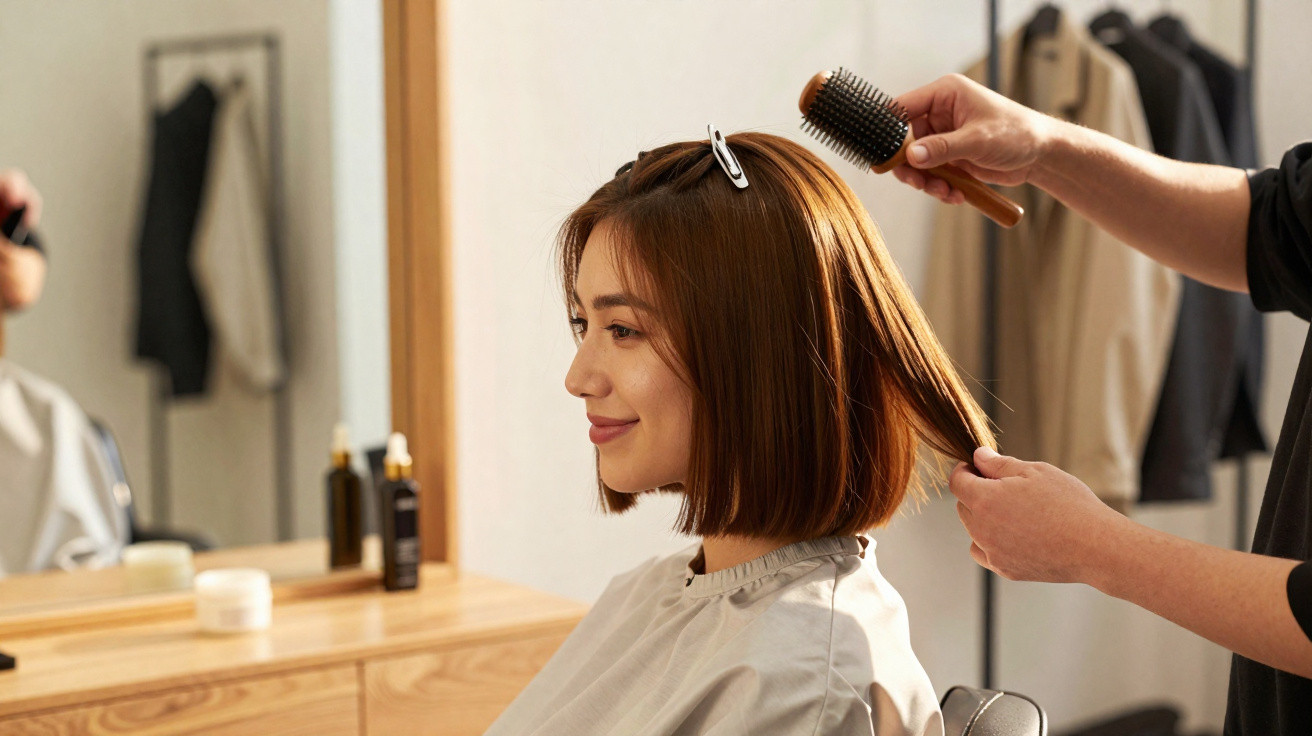
The varsity bob occupies the ideal middle ground between athletic and refined. Usually falling somewhere between the cheekbones and collarbone, it has relatively blunt ends and enough natural motion to prevent it looking static. Think less “architectural salon sculpture” and more “I woke up like this, but my hair still means business”.
It does have shape, but without the meticulous stacking and razor-cut layers associated with the layered bob of the 2020s. A varsity bob retains a crisp outline, using soft internal layers or a discreet undercut to ensure it moves when you walk or run for the bus. It frames the face much as a university sweatshirt frames the shoulders: easy-going, assured and unfazed.
Many hairdressers compare it with the haircut equivalent of a varsity jacket: a traditional outline, youthful spirit and no sense of trying too hard. It works with just concealer and lip balm, or alongside a full glam eye and a tailored blazer. Rather than transforming your identity, it gives your overall look a cleaner edge.
Look through university feeds and office loo selfies and a trend begins to emerge. The substantial, feathered layered bob that dominated 2023–2025 is steadily disappearing from Explore pages. In its place are bobs that are straighter along the bottom, marginally shorter and somehow… quicker. They seem made for people who genuinely have places to go.
One midtown New York stylist told me that, since late 2025, requests for a “varsity-style” bob have risen from “almost never” to roughly 4 in 10 bob appointments. A London colourist calls it “the only bob I can blow-dry in 8 minutes flat that still looks cool two days later.” Meanwhile, TikTok views for #varsitybob have been quietly doubling month after month, helped by creators filming “day-to-night” hair without altering a thing.
A marketing assistant I spoke with described replacing her layered bob with a varsity bob as “like getting my time back.” She cycles to work, attends a Pilates class twice weekly at lunchtime, then meets colleagues for drinks. Her former layered bob expanded, developed strange kinks and required constant applications of smoothing cream. With the varsity version, she towel-dries it, roughly dries it for five minutes, tucks one side behind her ear and it simply… behaves.
The reasoning behind the move is brutally straightforward. Cuts that need continual styling do not suit the way many of us now live. There is hybrid working, spontaneous plans, a greater focus on moving our bodies and, naturally, the ongoing battle with city pollution and humidity. A layered bob may look brilliant on the first day, then somewhat beaten by the third.
By creating cleaner ends closer to a single length, the varsity bob limits the surface area available to frizz. That blunt foundation helps the shape remain intact even as the hair’s texture changes. Any internal layers are concealed, functioning as hidden support rather than a prominent feature. The result is movement and bounce without a fluffy, overworked finish.
In trend terms, the varsity bob sits between “clean girl” minimalism and the relaxed nostalgia of 1990s university films. It is understated enough to seem enduring, yet recognisable enough to stand out in your feed. It complements an extraordinary range of face shapes and suits straight, wavy and softly curly hair. That flexibility is its appeal: it adapts rather than making demands.
How to ask for - and live with - a varsity bob in real life
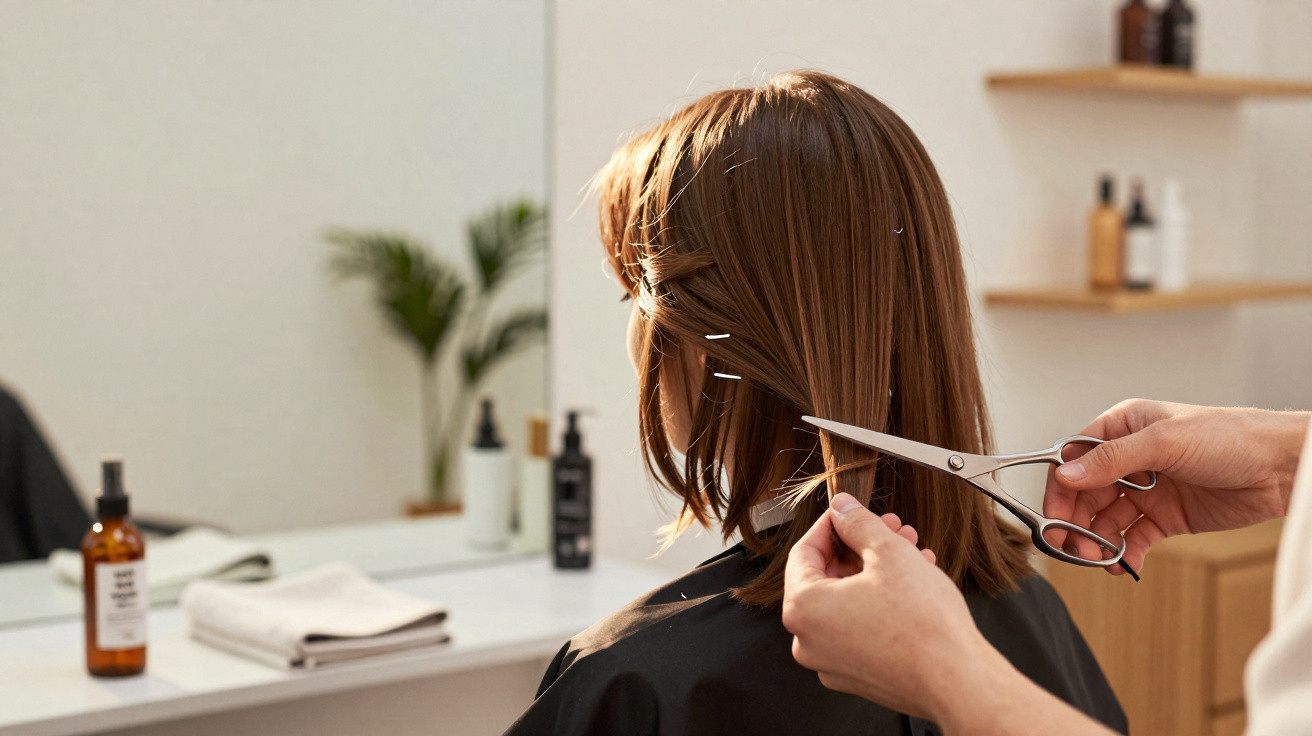
Getting an authentic varsity bob, rather than a random blunt short cut, begins with the conversation in the salon chair. Take along two or three images, but explain precisely what appeals to you: “I want the ends to look straight and clean like this, but keep some softness around the face.” Describe your actual routine rather than an imagined one. Let your stylist know whether you run, sweat, sleep with wet hair or never blow-dry it.
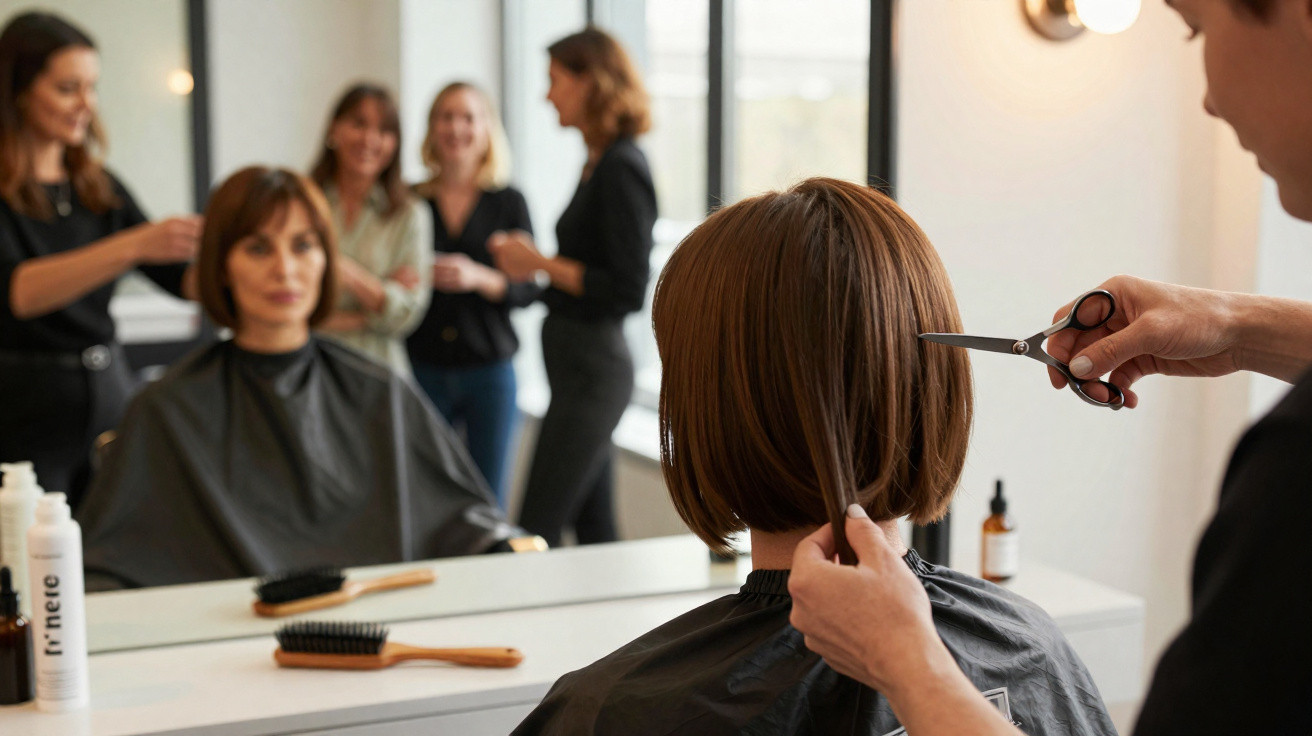
A traditional varsity bob generally falls from the nape of the neck to just beneath the jaw. Request a strong baseline - a distinct, clearly defined edge - with texture or fine internal layers within the cut, instead of visible, thick layers over the top. If you would like a fringe, opt for soft, slightly grown-out bangs or a long, side-swept front section that can be pushed back with a headband.
The length is important. A genuine varsity bob needs to be long enough to slip behind the ears or be pinned back using two hair clips. That flexibility is integral to its “I have practice in 10 minutes” character. Go too short and it enters French bob territory: charming, certainly, but less accommodating of sweaty days and cowlicks.
On a grey Tuesday morning in Paris, I watched a 27-year-old graphic designer persuade herself to take the plunge while standing before the salon mirror. She had brought a screenshot of an American influencer, before immediately apologising: “My hair isn’t like hers. I don’t have time to curl it, I’m always on the metro.” Her stylist smiled and adapted the trend to suit her life: a collarbone-skimming varsity bob with a slight forward angle to preserve that brisk, energetic line.
Two weeks afterwards, she sent a photograph taken at a friend’s birthday dinner. Her hair had air-dried, with only a side tuck and large earrings added. It appeared more expensive than the layered bob she had spent twenty minutes styling each morning. That is this silhouette’s understated strength: when it works with your natural texture, it looks purposeful even if you have barely touched it.
The figures reflect the same pattern. In an informal survey of one twenty-something hairdresser’s client list, almost 70% of people who had moved to some form of varsity bob said they usually spent under eight minutes doing their hair. Within that group, more than half reported that they “felt more like themselves” with the shorter, sharper outline. This cut is not merely about appearance; it concerns time, energy and identity.
The maintenance calculation is fairly simple. Most varsity bobs look best when trimmed every six to ten weeks, depending on your hair growth rate. As it grows, the shape softens attractively into a sporty lob rather than losing its form. Add heat protection, a pea-sized amount of styling cream or lightweight mousse, and you are ready to go. Let’s be honest: nobody truly does that every day, but knowing the ideal routine is useful for the days when you can.
Styling secrets, common mistakes and the mental shift behind the cut
An effective varsity bob routine is almost ridiculously uncomplicated. First, rough-dry the roots upside down until they are mostly dry. Raise your head, then either brush the hair down for a polished, near-collegiate result or pinch the ends between your fingers while drying the final 10% to create an undone bend. A flat brush is more suitable than a round one; the aim is swing rather than volume.
If your hair is wavy, make the most of it. Allow the mid-lengths to air-dry with a little curl cream, then straighten only the final two centimetres for that defined varsity edge. For straight hair, a subtle outward flick through the front sections keeps the cut from appearing overly severe. One or two products will do. A varsity bob does not require an entire styling collection; it needs intention during the first five minutes after washing.
For anyone who exercises frequently, there is a useful trick: buy a soft, wide headband or several loose scrunchies. Avoid making a sharp bend in the hair with a tight ponytail. Pull it back low and loosely, then release it as soon as you finish. The less you resist its natural fall, the more generously the cut will perform.
The most common error is attempting to make the varsity bob into something else. People add too many layers, curl it excessively or use so much hairspray that it becomes another high-maintenance style wearing a fashionable label. At its worst, it can look slightly bowl-shaped when cut too evenly without being adjusted for the neck, jawline and hair density. This is where a skilled stylist proves their value: they cut for your head, rather than for a hashtag.
Selecting a length that works against your habits is another regular mistake. A chin-length varsity bob will be frustrating if you habitually put your hair in a high bun. If you cannot stand hair touching your neck in warm weather, a marginally shorter cut that clears the collar may be better. More subtly, some people overlook the emotional effect of giving up ponytail length. On a wet Monday evening, when everything already feels difficult, that loss can hurt.
On a personal level, the trend speaks to something calm and enduring: the wish to look like the most capable, grounded version of ourselves without spending half our lives in front of a mirror.
“It’s the haircut that lets women move,” says one stylist who works mostly with young professionals. “They come in burnt out from constant adjusting - their careers, their expectations, their hair. The varsity bob is like this clean line they draw for themselves.”
There is a reason this haircut feels more like an attitude than a simple silhouette. Rather than shouting, it quietly suggests that you have somewhere to go and things to do.
- Maintain a strong baseline with clean ends and minimal visible layering.
- Create movement rather than stiffness, using your fingers instead of rigid brushes.
- Choose a length that suits your routine, whether you need to tuck it, clip it back or leave it entirely loose.
- Embrace and work with your own texture instead of battling every strand.
The quiet power of a haircut that’s built for real life
Trends arrive and disappear, but every few years a hairstyle feels less like a passing fashion moment and more like a change in how we navigate the world. The varsity bob has that quality. It does not attempt to reinvent you or demand attention. It simply defines the outline of your everyday self, whether you are replying to emails at 11 p.m. or tying your shoes before an early train.
Naturally, it photographs well on social media. Its real appeal, though, appears in the in-between moments that never reach your grid: the school run, a late lecture, the dim walk home when you notice yourself in a shop window and think, “Okay, that’s me. That actually feels like me.” On a good day, hair can create that feeling. On an ordinary one, a good haircut allows you to stop thinking about it and continue living.
We have all experienced a high-maintenance hairstyle beginning to feel like another job. For all its appeal, the layered bob often fell into that category. The varsity bob arrives like a friend who turns up in trainers rather than heels yet still looks polished. It lets you move more quickly, laugh more loudly, sweat, nap, work late and enter a room with hair that appears intentional rather than accidental.
Perhaps that is why so many people are cutting their hair shorter for 2026: not as an act of rebellion, but as a quiet agreement with themselves to choose less fuss and more life. The real question is not whether the varsity bob is “in” or “out”. It is whether you are ready for a cut designed for who you really are between the filters and the scrolling.
| Key point | Detail | Benefit for the reader |
|---|---|---|
| Shape of the varsity bob | A bob between the jaw and collarbone, with a blunt baseline and few visible layers | Helps you picture the right kind of cut to request at the salon |
| “Quick but polished” styling | Rough-drying, minimal products and natural movement rather than a strict blow-dry | Reduces styling time while maintaining a neat everyday finish |
| Made for real life | Holds up better through exercise, commuting and hybrid days than a heavily layered bob | Helps you select a cut that suits an active, changeable lifestyle |












Comments
No comments yet. Be the first to comment!
Leave a Comment