She is far from alone.
Her opening words come before she has even taken a seat: “My hair is useless.”
She says it with a laugh that turns into a sigh, already pulling at the fine, flat strands pressed against her temples. On days like this, the barbershop mirrors feel unforgiving. Daylight catches her parting and makes it look like a bright line running straight across her scalp.
Fine hair brings a low-level frustration, particularly when it will not keep its shape. You style it, and it falls. You backcomb it, and it knots. By lunchtime, it is flat all over again. On the worst days, it is not only the hair that feels lacking in volume; your confidence can feel that way too.
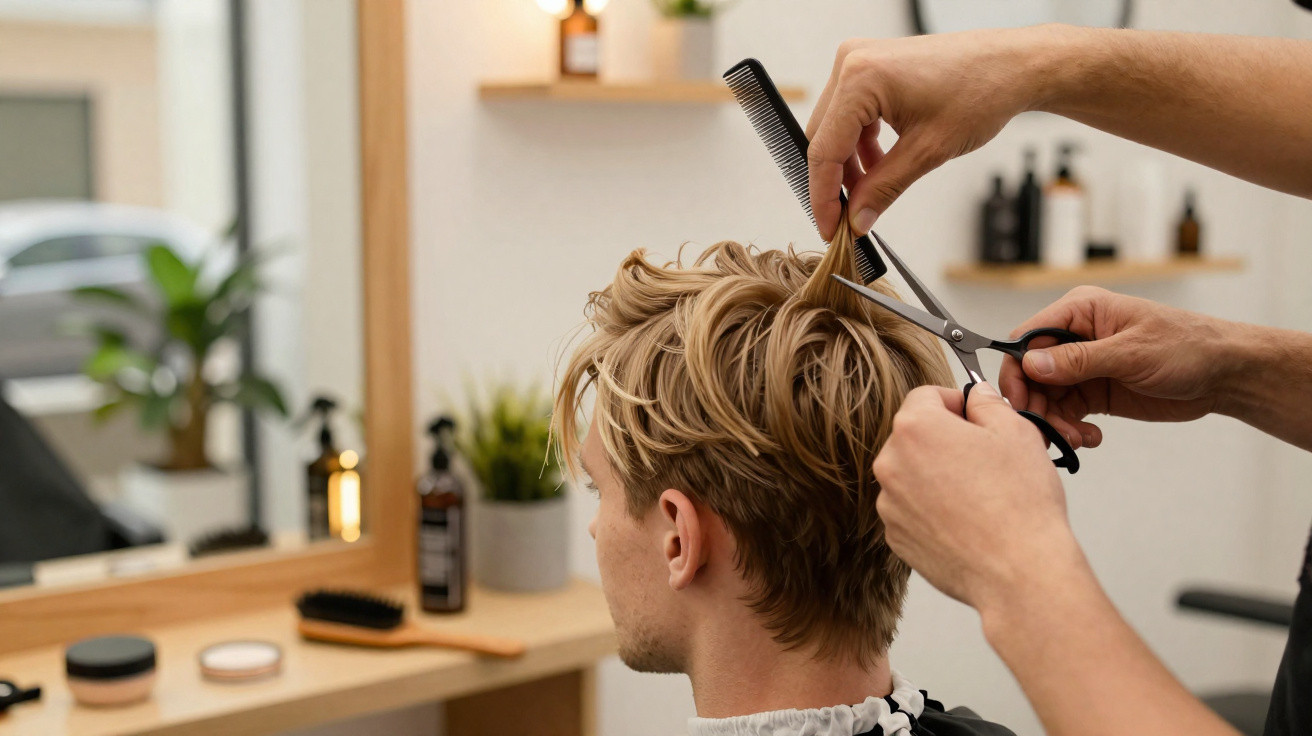
I lift my scissors and angle her head, with the shape already clear in my mind: short, layered and neat at the nape, with texture designed to create lift rather than limpness. No miracle serum and no 12-step regime. Only one precise, straightforward cut.
This is the style that can transform everything in one appointment.
The short layered cut that makes fine hair look thicker
Working behind a barber’s chair, you learn to recognise fine hair from three metres away. It sits close against the head, separates with little effort, and lets the light reach the scalp too readily. For many clients, that first glance in the mirror can already feel like a judgement.
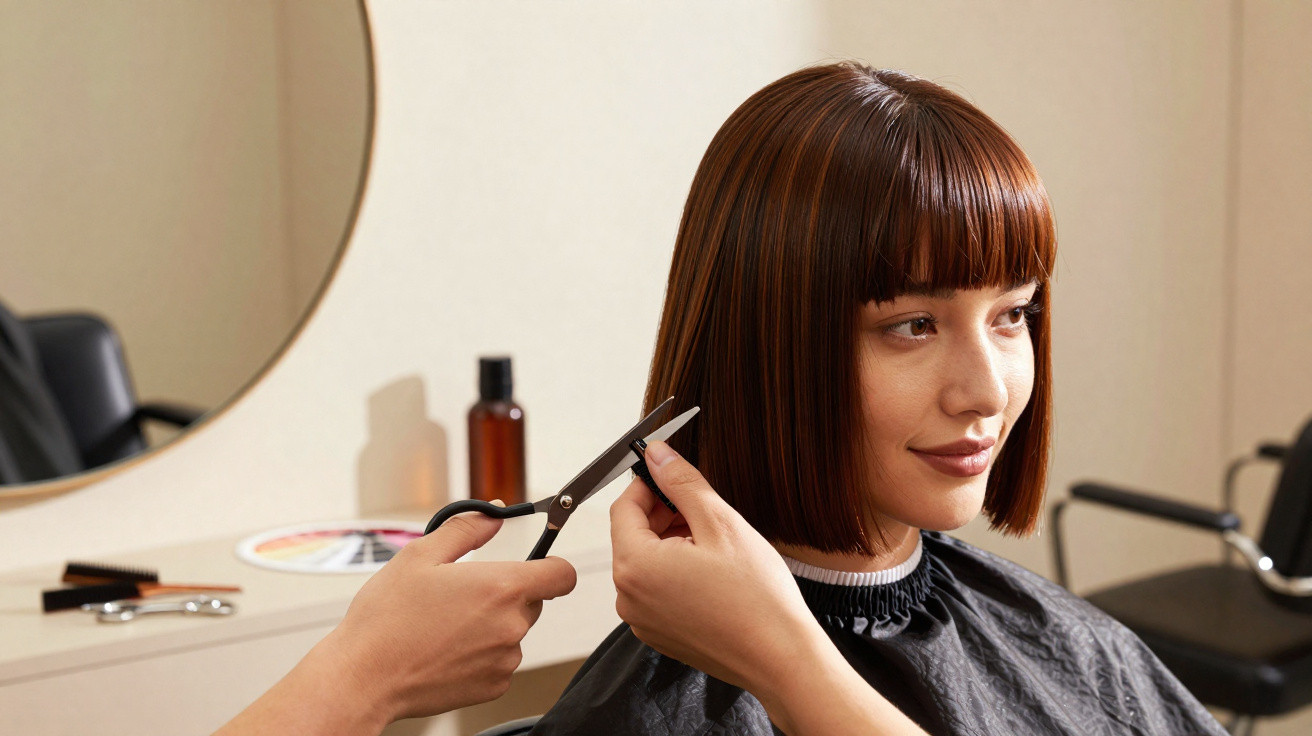
The cut I return to week after week is a short, layered style that falls somewhere between the jaw and nape. The sides remain soft and light, the crown has more elevation, and the silhouette stays tidy without looking severe. Picture a modern, soft crop with movement rather than a rigid helmet-like shape.
The real secret is not the length itself, but the way it is layered and shaped. Properly cut layers stop fine hair gathering into sheer, curtain-like sections. Instead, they leave small spaces of air between the strands. That air is what the eye interprets as volume.
One client in particular stays in my mind. She arrived with long, fine hair tied into what she called her “default bun of shame”. Whenever she let it down, it lay flat to her head, while the ends looked sparse and stringy. She said she had spent years trying to achieve thickness with products and vitamins, yet nobody had ever advised her to go shorter.
We spent ten minutes talking before I cut the first strand. She wanted a look that still felt feminine, rather than a dramatic chop that would leave her shocked when she went to work on Monday. We chose a short, layered bob sitting just below her ears, with gentle texture through the top and slightly more weight around the fringe to frame her face.
Once it was dried, she kept reaching for the back of her head, as though she could not quite believe it. Her hair had not grown, and she did not have extra strands. Still, it appeared twice as full. That is the understated strength of a well-shaped layered cut for fine hair: it does not add hair; it changes the story your hair appears to tell.
Viewed logically, it makes complete sense. Long, fine hair resembles a thin blanket stretched across a large mattress. It covers the surface, but every gap and crease shows. Shorten the blanket and fold it over itself several times, and it immediately seems thicker, despite nothing being added.
Short layers create those folds. Every layer overlaps the one beneath it, producing density where there was previously only length. Rather than noticing individual strands, the eye sees an overall shape. A raised crown creates the impression of stronger growth from the scalp, while a slightly weightier outline around the ears and nape prevents the style from appearing wispy.
The scalp matters as well. Shorter, layered hair does not cling as closely to the head. In place of visible scalp lines, you see small root shadows. The brain reads those shadows as depth, and depth as thickness. That is why the cut can feel like a cheat, even though it comes down to physics and scissors.
How I cut fine hair for instant fullness
When a client with fine hair sits in my chair and quietly says, “I just want it to look like… more,” clippers are not my first choice. I begin by examining the parting. I assess where the hair falls naturally, where it wants to rise, and where it loses volume. Fine hair has its own subtle map, and your fingertips learn how to read it.
For this shape, I generally leave the back a little shorter and taper it softly towards the nape, then build gentle layers up towards the crown. The top needs the closest attention: I create discreet, stacked layers that are never too short, allowing the hair to fall back over itself and give the illusion of thickness. Around the face, I cut fine layered pieces that skim the cheeks instead of pulling the whole look downwards.
I seldom use heavy thinning techniques on fine hair. Instead, I point-cut the ends to form tiny, unseen notches that stop the hair lying completely flat. Those miniature cuts interrupt solid lines and encourage strands to separate, creating natural, undone volume that lasts beyond the walk home.
There is a quiet anxiety when someone with fine hair hears the word “layers”. They imagine early-2000s feathered ends or choppy errors that take months to grow out. I understand. Fine hair does not easily hide a poor cut. This is why the shape needs to be controlled rather than wild. Every layer must have a job.
The mistake I encounter most often is holding onto length at any cost. Clients tell me, “If I cut it short, I’ll have nothing left.” Yet that long, flat hair is often exactly what makes them feel as though they have nothing to work with. A shorter, structured style frequently shows how much hair they truly have.
The other pitfall is depending on styling products alone. Mousse, volumising sprays and root-lifting products can help, certainly. But if the cut is too long and heavy, you are essentially building a house on sand. Let us be honest: nobody really does that every day. That is why I shape this cut to look full even on slightly messy mornings when it has been left to air-dry.
“A good layered cut for fine hair shouldn’t need a ring light and a round brush to look decent. It should look thicker the minute you run your hands through it in your bathroom mirror.”
For clients who prefer clear guidance, I explain it using this simple mental checklist:
- Length - between the jawline and nape: short enough to create lift, yet long enough to remain versatile.
- Layers - soft and stacked, focused around the crown and upper sides, never cut in at random.
- Texture - light point-cutting at the ends, without aggressive thinning that leaves see-through patches.
- Parting - slightly off-centre or adaptable, allowing you to switch sides and create the impression of more root volume.
- Styling - a quick rough-dry with your head tipped forward delivers more volume than ten minutes with a brush.
On a personal level, this cut is less about “looking trendy” and more about feeling that your hair finally reflects the person you picture in your mind. Technically, it is simply an intelligent use of length, layers and light.
Living with short layered fine hair
The best thing about this style is how naturally it suits everyday life. You do not need a bathroom full of tools or a playlist of tutorials. Most of my clients with fine hair follow the same routine: towel-dry, use a little lightweight product, run their fingers through the crown, and finish. On a busy morning, that simplicity can feel luxurious.
Many people are surprised by how versatile it can be. Tuck it behind the ears for a more polished finish. Work in dry shampoo for a relaxed, lived-in weekend texture. With the slightly longer versions, small straighteners can create soft bends that catch the light and suggest even more density. It is one cut with several different moods.
We have all seen a stranger’s hair on Instagram looking impossibly thick, only to zoom in and realise there are probably extensions, filters and a hairdresser just outside the frame. This cut is the opposite. It offers unfiltered volume: your own hair, cleverly arranged and working harder for you than it ever did at shoulder length.
What I remember most are the mirror reactions. There is usually a pause, a blink, and then a hand reaching to the crown as if to check that it really is their own hair. After that comes a small, private smile. It is not about turning into somebody else. It is about recognising yourself at last, without battling your natural hair type.
Some clients return to say that friends have asked whether they did “something different” with their colour or started taking some magical hair supplement. The difference in apparent thickness is that striking. The reality is much simpler, and somehow more rewarding: a short layered cut that works with fine hair rather than against it.
Once you have seen your own hair appear thicker without tricks, it is difficult to go back.
| Key point | Detail | Benefit for the reader |
|---|---|---|
| Short layered length | Hair falls between the jaw and nape, with stacked layers at the crown | Creates immediate visual thickness without requiring extensions |
| Soft, controlled texture | Point-cut ends and gentle shaping rather than heavy thinning | Adds movement and lift without making hair seem sparse |
| Easy daily styling | Rough-dry, light product and finger-styling in minutes | Makes fuller-looking hair achievable on busy everyday mornings |










Comments
No comments yet. Be the first to comment!
Leave a Comment