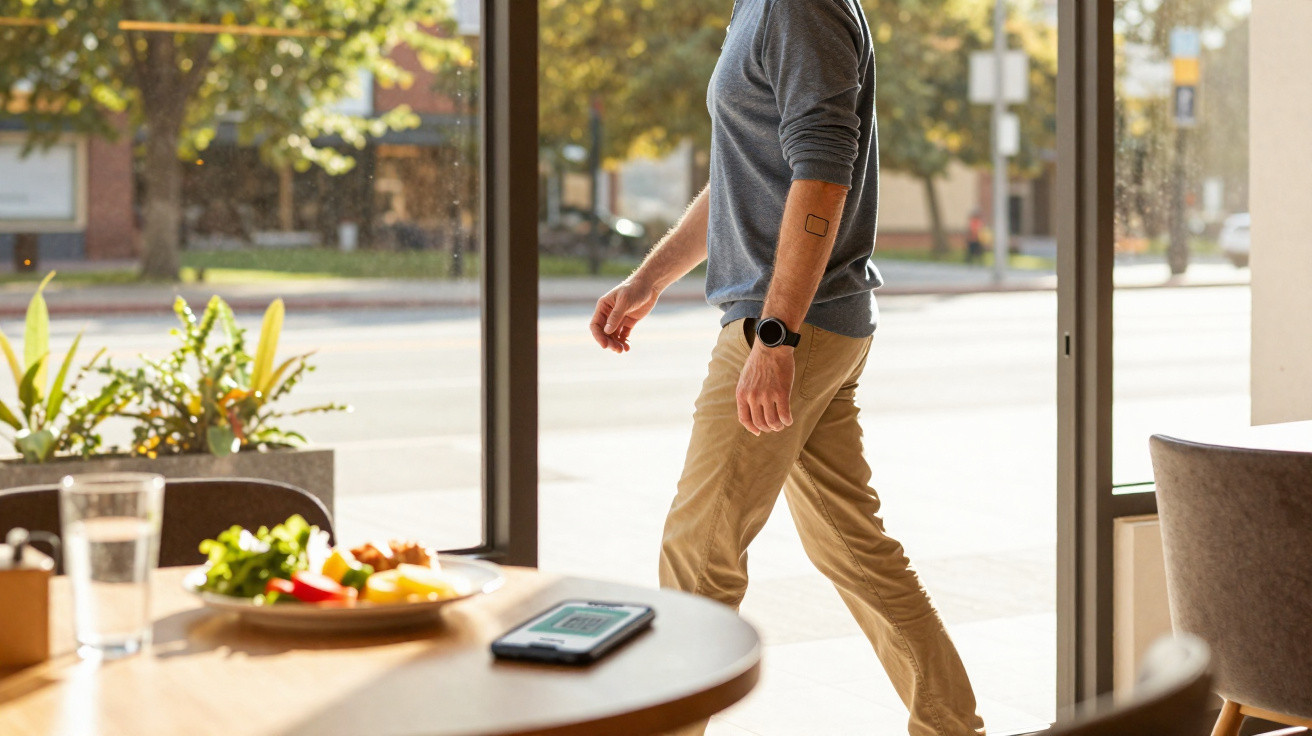
A walk after lunch may reduce the rise in glucose that typically follows a meal, and the timing appears to matter. Studies indicate that getting moving soon after eating, often within the first 15 to 30 minutes, may blunt the blood glucose peak more effectively than waiting for a long time. There is no need to walk for an hour either: shorter sessions can still have an effect.
Why does walking straight after eating reduce the glucose peak?
Following a carbohydrate-containing meal, digestion releases glucose, which moves from the gut into the bloodstream. At this point, muscles can act as major users of fuel. Once they begin working during a walk, they take up more glucose to generate energy.
Muscle activity also has mechanisms that can support this glucose uptake without relying solely on insulin action. As a result, starting to walk while blood glucose is still rising may reduce the height of the post-meal curve.
- Muscles require more energy during a walk;
- Some of the glucose circulating in the blood is used by muscle tissue;
- Exercise takes place while glucose is entering the bloodstream;
- The increase after a meal may be less marked;
- Even light-to-moderate activity can have an effect.
How soon after lunch is it best to start?
There is no single perfect minute for everyone, but research comparing different timings has found favourable results when activity began immediately after a meal or around 15 minutes later. A review of studies also concluded that post-meal exercise tends to reduce glucose excursions more when performed close to eating than after a lengthy delay.
Do you need to walk for 30 minutes to gain any benefit?
No. Studies have already found a reduced glucose response with shorter periods of movement. In some research, a total of 10 to 20 minutes was enough to lessen post-meal blood glucose, while increasing a walk from 30 to 45 minutes did not necessarily produce a proportionately greater reduction.
This makes the approach particularly easy to fit into daily life. Rather than waiting until there is time for a long session, the minutes straight after lunch can be used instead.
- Start with around 10 to 15 minutes if that feels comfortable;
- Walk at a pace that still allows you to hold a conversation;
- There is no need to turn the walk into intense training;
- A walk around the block adds movement to the post-meal period;
- Consistency may be more practical than occasional very long sessions.
Does sitting after lunch produce a different response?
Yes. Remaining completely inactive keeps muscular energy demand lower at precisely the time that postprandial glucose is rising. Getting up and walking adds muscle activity during this window. Even brief breaks in sitting time throughout the day have been studied as a strategy to improve glucose control.
- Get up once you have finished your meal;
- Avoid making the entire period after lunch sedentary whenever possible;
- Choose a comfortable walk rather than intense exercise immediately after eating;
- Slow the pace if you feel overly full or uncomfortable;
- People using medicines that can cause hypoglycaemia need to consider individual guidance.
Timing helps, but walking does not replace wider metabolic care
The effect of a walk after lunch is mainly acute: it may reduce the glucose rise from that particular meal. This does not mean that a few minutes of walking automatically offset an unbalanced diet or replace regular physical activity, adequate sleep and treatment where diabetes is present. Nor is there enough evidence to state that starting immediately will always be better for every person and every meal.
What makes this strategy appealing is its simplicity. Rather than waiting an hour to begin a full workout, getting up from the table and walking for a few minutes takes advantage of the very period when glucose starts to rise. For people able to make it part of their routine, the clock may matter as much as the distance covered: a short walk taken close to a meal may affect the blood sugar peak more than the same movement would if it were postponed for too long.















Comments
No comments yet. Be the first to comment!
Leave a Comment