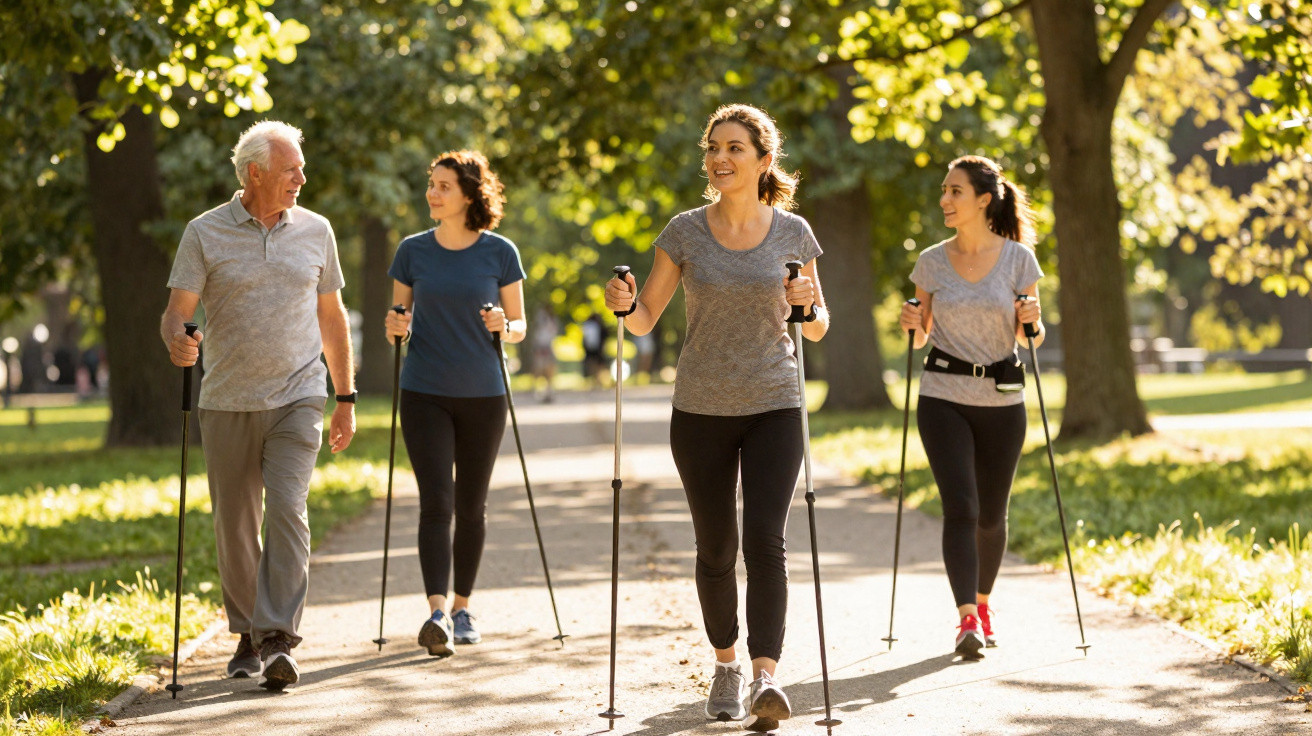
For a long time, Nordic Walking was seen as a fringe activity with an “elderly person’s image”. Studies and personal accounts now show that walking with poles is a remarkably effective full-body workout: it keeps the heart, muscles, joints, balance and even the mind active, without performance pressure or a great deal of effort.
What makes Nordic Walking so special
The activity originated in Scandinavia, where cross-country skiers were looking for a way to train during summer while retaining their familiar arm and leg movements. This led to the exercise now seen everywhere: brisk walking in which the arms work actively and the poles are planted with force.
“Unlike an ordinary walk, Nordic Walking engages up to 90 per cent of the body’s muscles – from the shoulders down to the feet.”
With every stride, the arms give the body a slight forward push. This reduces strain on the joints while increasing energy expenditure. Anyone who has a reasonable grasp of the technique will soon feel their back, core, arms and buttocks working. At the same time, the intensity remains moderate, making the activity appealing to a wide range of people:
- beginners returning after a lengthy break from exercise
- people who are overweight and want to protect their joints
- older people who want to remain active and reduce their risk of falls
- recreational runners looking for a joint-friendly alternative workout
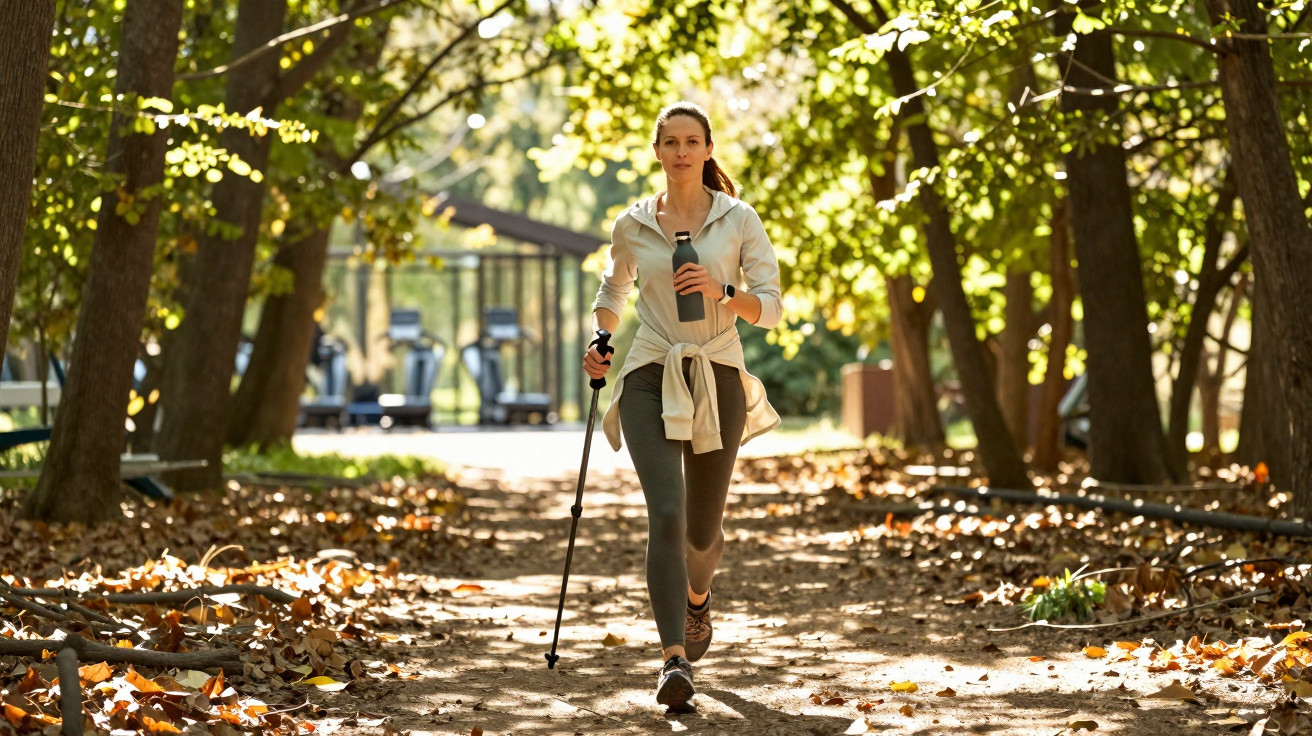
Crucially, neither expensive equipment nor a gym membership is required. Poles, comfortable footwear and weather-appropriate clothing are all that is needed to get started.
A boost for the heart, circulation and endurance
Nordic Walking is traditionally classed as endurance exercise. Its brisk pace and active use of the arms raise the pulse more than ordinary walking, without placing excessive demands on the body. Many trainers advise moving at an intensity that still allows you to speak in short sentences. This helps keep the effort within a healthy range.
With regular practice, several measures improve:
- Heart performance increases, while the resting pulse falls slightly over time.
- The lungs work more efficiently and breathing volume rises.
- Blood pressure and blood sugar levels may become more stable.
- Calorie use rises significantly compared with ordinary walking.
Sports medicine specialists often recommend Nordic Walking as an introduction for people with mildly raised blood pressure or early-stage excess weight. The intensity is easy to manage, and both pace and distance can be increased gradually.
Gentle exercise rather than joint stress
Unlike jogging, walking with poles does not involve harsh impact forces. The push from the arms through the poles cushions each step. As a result, the ankles, knees and hips take fewer knocks, while still being moved and supplied with blood.
“People with osteoarthritis often benefit twice over: more movement and less pain – provided the pace and technique are right.”
The repeated, moderate impacts through the feet and poles stimulate the bones in a beneficial way. They encourage bone metabolism and may therefore counter the loss of bone density – an issue that becomes increasingly important with age, particularly in relation to osteoporosis.
Posture, core and body shape in focus
Nordic Walking practically encourages an upright posture. When the poles are used correctly, the body straightens naturally, the chest opens and the deep core muscles are activated. The gaze is directed forwards rather than at the ground, while the shoulders and neck often relax after a few minutes.
The upper back and side abdominal muscles in particular must stabilise the body as the arms and legs swing. This means the activity works precisely the muscles that are often neglected in office life. After several weeks, many participants report less tension, easier breathing and a more secure stance.
Balance and coordination are developed
At first glance, Nordic Walking looks straightforward. In reality, however, it requires fine coordination: arms and legs move diagonally in opposition, the poles must be planted at the right moment, and the steps should remain even.
This coordination trains the nervous system. Walking across varied surfaces – woodland paths, roots or gentle slopes – places additional demands on balance and reactions. For older people, this can act as a form of fall prevention: the brain learns to correct small stumbles quickly, while the poles provide extra security.
“The combination of conscious movement, rhythmic pole use and varied terrain acts like a small everyday workout for the balance centre.”
How Nordic Walking supports mental wellbeing
For many people, the effect on their mood is the main reason they continue. Those who walk regularly often describe:
- noticeably less inner restlessness
- better sleep
- a clearer head after stressful days
- greater motivation in everyday life
The process behind this is well researched: physical activity releases chemical messengers in the brain, including the so-called happiness hormones. Nordic Walking achieves this without the peak exertion that puts many people off. It also brings the benefits of being outdoors: daylight, fresh air and changing surroundings. This can interrupt cycles of rumination, especially when thoughts feel stuck.
Exercise for the brain and concentration
The activity challenges attention as well as muscles. You watch the ground, maintain your pace and coordinate your arms and legs. Anyone leading a group or walking over slightly uneven terrain must also plan ahead: where should the next step go and which route is best?
All these small decisions engage the brain in a similar way to a light mental puzzle. Particularly in later life, this may help people stay mentally alert. The effect develops quietly: you complete a walk, feel pleasantly exercised and later notice that you can concentrate better.
Walking together: the social benefits of walking with poles
Nordic Walking works very well as a solo activity, but often shows its greatest strengths in a group. Many clubs, adult education providers and health centres offer courses, often at regular times. Exercise then becomes a weekly social occasion.
“People who walk with others usually keep going for longer, laugh more – and cancel less often.”
The atmosphere in these groups is generally relaxed. The aim is not to set personal bests, but to keep moving together. Conversations develop almost naturally: about work, grandchildren, holiday plans or simply a beautiful sunset along a country path. This can give new social contacts to people who otherwise often feel alone.
Starting safely: what beginners should consider
Before beginning serious training, it is worth having a brief check-up with your GP, especially if you have existing conditions such as heart problems, severe excess weight or diabetes. This can clarify an appropriate pace and whether any restrictions apply.
Choosing suitable equipment
When it comes to equipment, function matters more than brand:
- Poles: matched to your height, with straps that fit securely around the wrists.
- Shoes: flexible, well cushioned and fitted with non-slip soles.
- Clothing: breathable, layered and suitable for the weather.
- Visibility: bright or reflective details, especially at dusk.
Ideally, warm up for five to ten minutes before each session with easy walking, shoulder circles and gentle stretches. After exercising, a short stretching routine can relax the muscles and help prevent soreness.
Common mistakes and how to avoid them
Many people begin enthusiastically but lose some of the activity’s potential through small technical errors. Typical pitfalls include:
- dragging the poles rather than using them actively
- keeping the upper body bent forwards
- taking steps that are too short or hesitant
- walking at a pace so fast that speaking becomes difficult
One or two sessions with a qualified trainer can be worthwhile. You will learn the diagonal movement pattern, correct pole technique and a sensible pace. After that, personal motivation is often enough to keep you going.
How often should you train – and what can Nordic Walking be combined with?
For noticeable benefits to the heart, muscles and mental wellbeing, sports doctors generally recommend three sessions a week lasting 30 to 60 minutes each. Newcomers are better off starting twice weekly and increasing duration and pace slowly.
Combining it with other gentle activities is particularly useful:
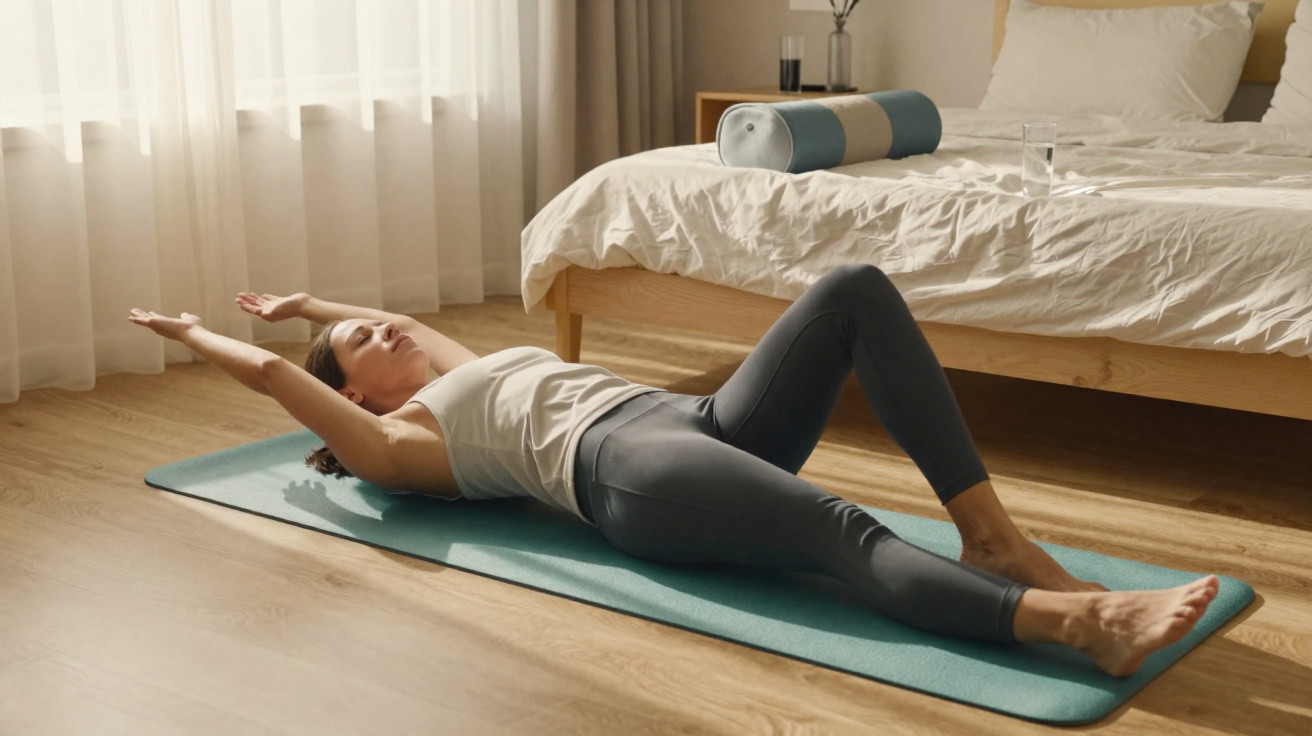
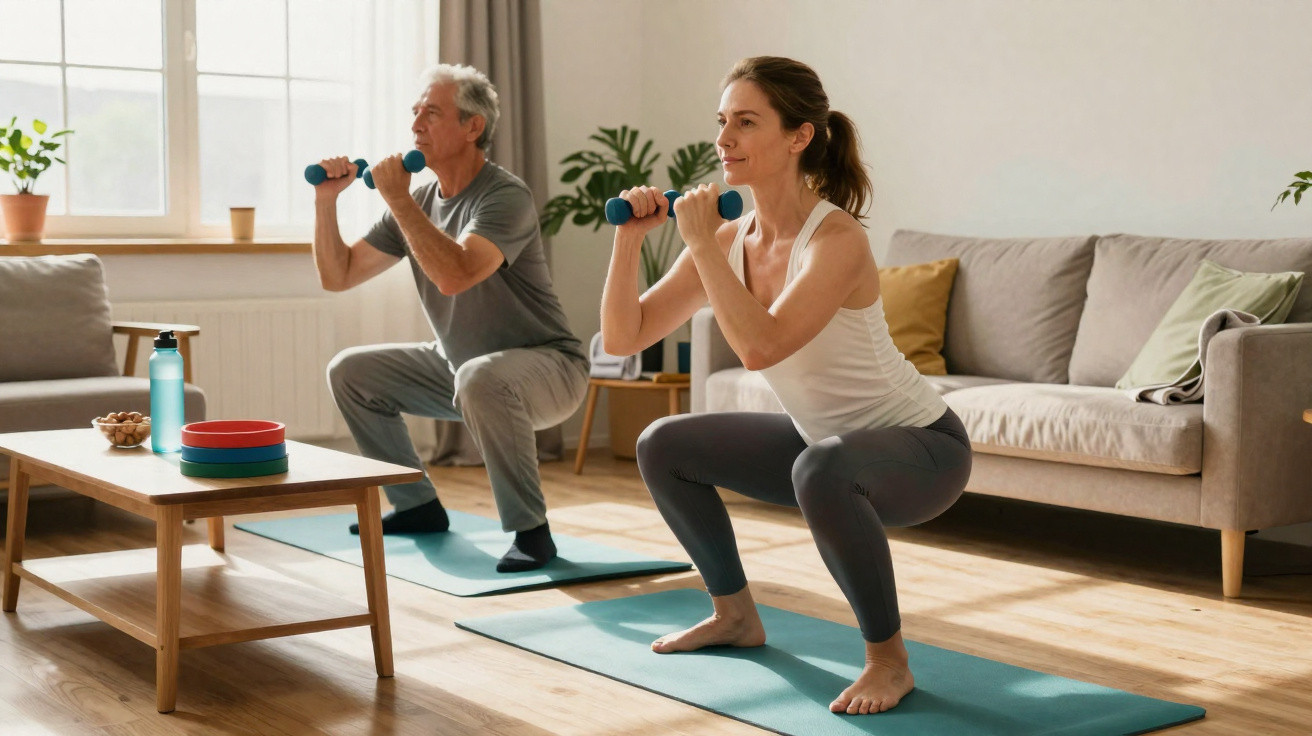
- Strength training: simple bodyweight exercises for the abdomen, back and legs.
- Flexibility sessions: such as yoga, stretching routines or fascia training.
- Everyday movement: taking the stairs instead of the lift, walking short journeys and cycling as part of daily life.
This creates a well-rounded programme that does not require high-performance sport, yet still gets a great deal moving in the body. Once people have experienced how good a walk with poles feels after a long working day, they often make the activity a natural part of their weekly routine.














Comments
No comments yet. Be the first to comment!
Leave a Comment