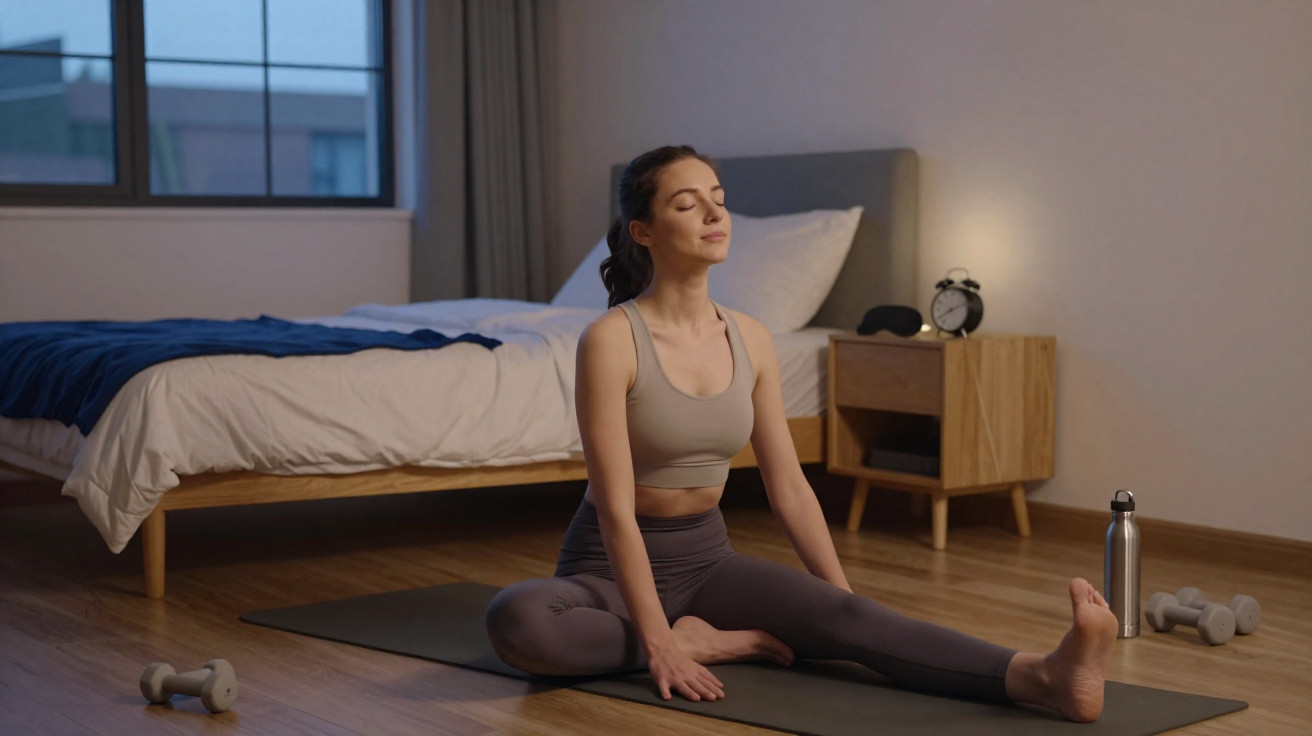
Does exercising late in the evening ruin your night, or could it actually save it?
More and more people only manage to put on their running shoes or get to the gym after 8 pm. Work takes up the day, while family commitments and commuting consume what remains. One worry travels in the sports bag too: am I improving my health through exercise – or taking away my sleep?
Why the evening is the only time many people can exercise
A packed routine forces the body onto a late shift
Anyone with a full-time job, lengthy journeys and personal commitments will recognise the problem: in realistic terms, the only available time for movement is often between 8 pm and 10 pm. Early exercise falls victim to tiredness, lunch breaks are too short or already booked up, and the boss needs you in the afternoon. So training gets pushed into the evening.
This is particularly common in cities, where exercise often takes place after sunset. Parks become quieter while gyms get busier. Many people face an internal dilemma: stay on the sofa and risk the long-term consequences of inactivity, or go and train, then risk lying wide awake in bed later?
Exercise as a release after a day of sitting
After eight or nine hours at a desk, the mind is overloaded while the body has barely been used. Many people feel this imbalance very clearly. Mental exhaustion can feel like physical tiredness, but it is not the same thing. Evening exercise can make a difference here.
Working out in the evening creates a clear boundary between work and private life. It can act like a reset button for the nervous system. When you push yourself physically, you are less likely to take stress from the office into bed. Thoughts tend to go round less because they have already been “worked through” during training.
“The real problem is rarely that we are too tired to exercise – it is that we have spent too long being active only in our heads.”
What happens in your body when you train late
The part body temperature plays in falling asleep
Good sleep requires a fall in body temperature. Your internal temperature gradually drops during the evening, signalling to the brain that it is time to rest. Intensive exercise can disrupt this process: muscles are working, blood circulates faster and the body heats up.
If you complete a tough workout at 9 pm, you noticeably delay this natural temperature drop. It can take one to three hours for the body to cool down again. In the meantime, you may feel surprisingly alert, even if the clock says otherwise.
A hormonal mix of adrenaline and melatonin
Exercise prompts the body to release hormones that enhance performance. Adrenaline and cortisol raise heart rate, alertness and responsiveness. Yet these substances directly compete with melatonin, the hormone that initiates sleep.
When you train late, you are telling your body: alert, activity, performance! That does not sit well with an organism that is actually preparing to rest. The result is that you lie in bed feeling tired but internally wound up at the same time. Your mind is clear and your body feels oddly restless – not an ideal combination for falling asleep quickly.
Intensity matters: when late exercise becomes a problem
Why an all-out workout can wreck your night
Not every workout affects sleep to the same degree. The following are particularly likely to cause problems:
- HIIT workouts with maximum-intensity phases
- fast running intervals or tempo runs
- intensive spinning or demanding cardio sessions at the gym
- highly strenuous ball sports such as squash
- CrossFit-style training with a high heart rate and heavy weights
These sessions greatly increase heart rate, breathing and stress levels. Your metabolism remains in an “overtime mode” for a long while afterwards. Many people experience this very directly: if you leave a demanding class at 9:30 pm, you will often still be awake at midnight.
“The higher your heart rate during training, the later your body returns to rest mode.”
Moderate movement can even improve sleep
The good news is that reducing the intensity means you can exercise in the evening without necessarily putting your night at risk. Light to moderate activity often promotes sleep rather than taking it away.
Suitable options include:
- brisk walking or gentle jogging at a pace where you can still hold a conversation
- relaxed cycling without any pressure to perform
- easy swimming without time targets
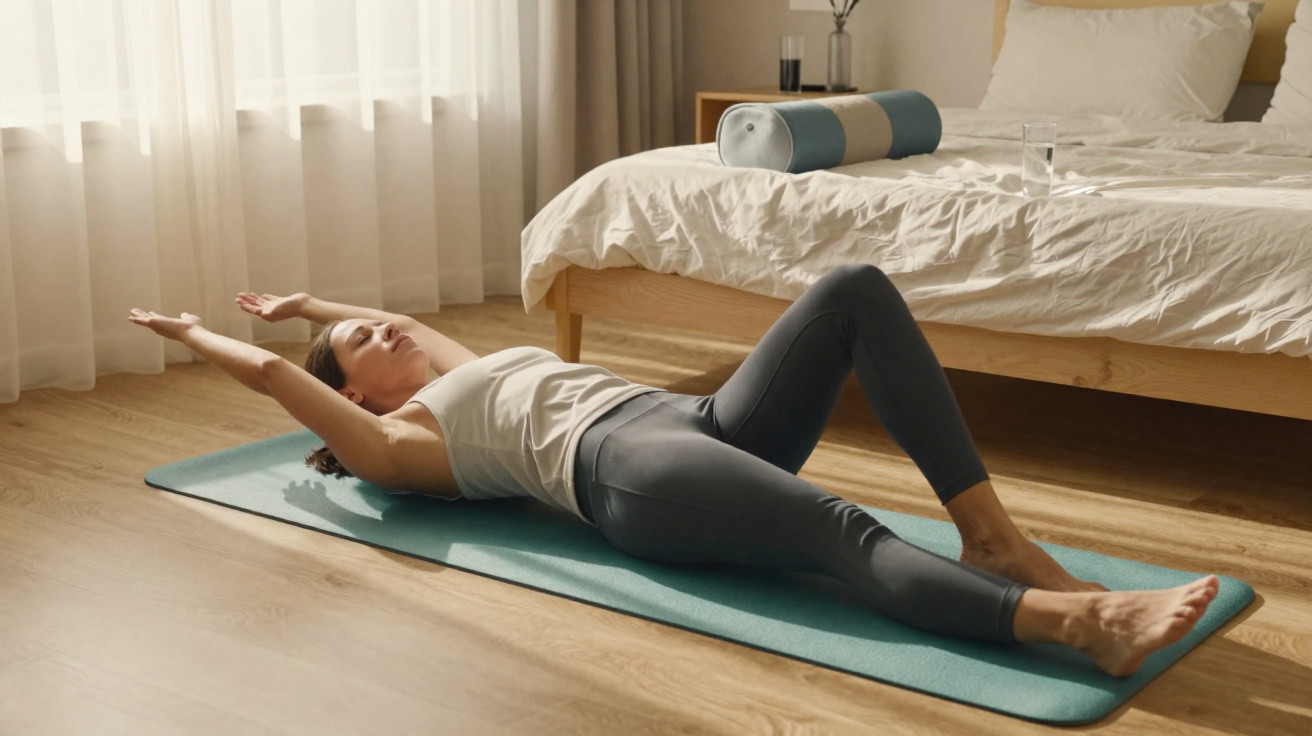
- gentle yoga flows or stretching sessions
- mobility-focused strength training with moderate weights and rests
These types of activity reduce inner tension, create a pleasant sense of tiredness and allow body temperature to drop more quickly after exercise. For many people, this is the ideal combination: a clear mind, a pleasantly worked body and noticeably easier sleep onset.
How much late exercise disrupts you is individual
Chronotype: early risers react differently from night owls
No two bodies work in exactly the same way. Some people can train intensely at 9 pm and fall asleep without difficulty at 11 pm. Others remain internally stimulated for hours after even a moderate evening session.
One reason is your personal chronotype. Early risers, who wake easily in the morning and become tired early in the evening, are often more sensitive to late exertion. “Night owls”, whose natural sleep time is later, usually cope better with late exercise.
If, after several attempts, you notice that even short evening workouts disrupt your night, take that seriously. Your own body is giving you fairly honest feedback.
A small self-test can provide clarity
Rather than clinging to blanket rules, it is worth carrying out a personal test for two to three weeks. A simple record is enough:
| Day | Training time | Type & intensity | Time taken to fall asleep | How you feel in the morning |
|---|---|---|---|---|
| Monday | 20:15–21:00 | easy run | approx. 20 minutes | average |
| Thursday | 21:00–21:45 | HIIT | over 45 minutes | exhausted |
After a few entries, a pattern will quickly emerge: which training times and exercise types come back to haunt you in bed, and which ones suit you well? Often, a small adjustment is enough, for example:
- finishing your workout 30–60 minutes earlier
- moving hard sessions to the morning or early evening
- scheduling only easy sessions late in the evening
Practical tips for evening exercise without sleepless nights
How to make your late workout more sleep-friendly
If you cannot or do not want to give up evening exercise, a few adjustments can make a significant difference:
- Allow at least 90 minutes before bedtime: your body needs time to wind down.
- Cool down for longer: a calm ten-minute cool-down lowers your heart rate and temperature.
- Avoid bright light: reduce phone use and harsh gym lighting after training so melatonin can rise.
- Use the shower: start warm, then finish with a brief cool rinse – this supports a drop in temperature.
- Avoid a late caffeine hit: energy drinks or strong coffee before or after training make the effect even worse.
Many people do well with moderate training on two or three evenings each week, while reserving hard sessions for the weekend or the morning. That keeps movement in everyday life without risking your night every time.
Other factors for particular sports and goals
Weight loss, muscle building and stress: different effects
If your main aim is to reduce stress through exercise, calmer evening sessions are often especially beneficial: yoga, mobility work and light strength training. The priority here is not calorie expenditure, but calming the nervous system.
For weight loss, the timing of a session matters less than many people think. The long-term energy balance remains decisive. However, lack of sleep can disrupt metabolism. If intensive evening workouts leave you sleeping badly, they can undermine your plan over time – even when the training itself is good.
For muscle building, consistency and sufficient recovery are crucial. If you regularly train late and then do not get enough deep sleep, you hinder muscle recovery. In this case, it is particularly worthwhile to adjust your training time or intensity so that sleep becomes more stable again.
When it is better to avoid late-evening exercise altogether
In some situations, it makes sense to severely limit or avoid late exercise:
- if you already have sleep disorders or difficulty falling asleep
- during periods of high pressure at work or in family life
- if you regularly wake during the night and struggle to get back to sleep
- if you have cardiovascular conditions – always seek advice from a medical professional
It may then be more sensible to spread movement across the day in small blocks: short walks during your lunch break, taking the stairs instead of the lift, or doing a few mobility exercises at your desk. Better to exercise less intensely and have a calmer night.
More generally, it is worth looking at your entire daily rhythm. For instance, if you are completely drained straight after work, you may initially need shorter, gentler sessions instead of aiming for late-evening heroics at the gym. Your body rewards a sensible level of movement far more than the heroic package of overtime, a hardcore workout and too little sleep.
















Comments
No comments yet. Be the first to comment!
Leave a Comment