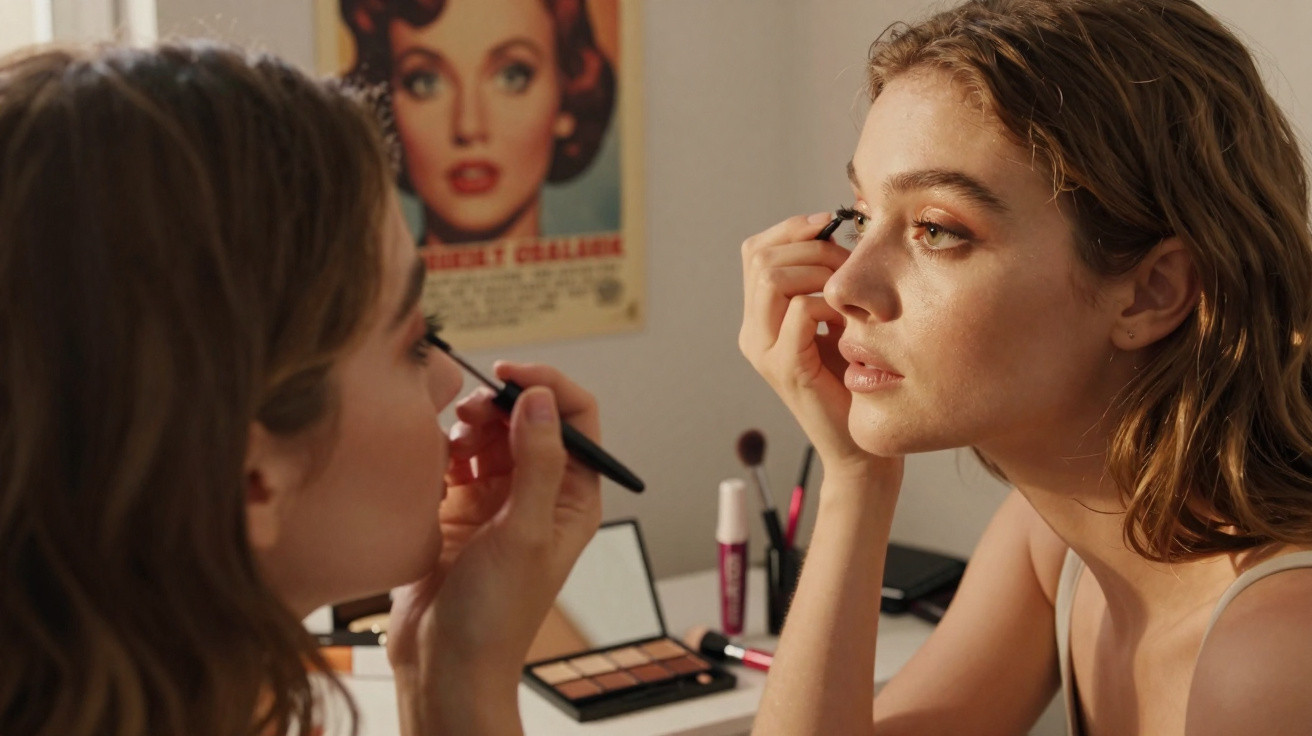
The term appears in romance novels, dating apps and make-up tutorials, yet many people are not entirely sure what it actually means. It refers to far more than simply ‘pretty eyes’. The image of doe eyes carries a long cultural history, a particular beauty ideal and even a clearly defined look that make-up artists deliberately recreate. It is precisely this combination that makes the expression so interesting again today.
What is meant by the expression ‘doe eyes’?
When people refer to doe eyes, they do not simply mean an attractive eye colour. They are describing a very specific type of gaze that brings together several features.
“Doe eyes describe a soft, warm yet highly noticeable gaze that draws others in almost magnetically.”
The most characteristic traits include:
- almond-shaped eyes with a silhouette that extends slightly outwards
- large, open-looking eyes that appear alert and interested
- a gentle, friendly expression with no harshness
- long, emphasised lashes, particularly at the outer corner of the eye
- a gaze that feels alluring without seeming aggressive or pushy
Many people perceive this look as romantic, tender and reassuring. Doe eyes are often associated with femininity, sensitivity and a certain grace. Describing someone this way is generally a very personal compliment: it concerns not only their face, but the impression they create as a whole person.
Where does the image of the doe as a beauty ideal come from?
The delicate image of the doe has featured throughout European culture for centuries. In literature, the animal repeatedly appears as a symbol of gentleness, vulnerability and elegant beauty. Writers of the Enlightenment were already using the comparison when describing a woman’s grace.
The doe was seen as the counterpart to ‘strong’ or ‘rough’ animals such as bears and lions. The emphasis was on:
- its large, gleaming eyes
- its graceful movements
- its slim, delicate face
- its quiet, almost shy manner
This image condensed a particular ideal of femininity: not loud or dominant, but reserved, attractive and slightly unattainable. Someone with doe eyes may therefore seem sensitive, and sometimes even a little dreamy. Such ideas shaped love poetry, operas and novels for decades, before later influencing film characters too.
Why doe eyes are still considered a compliment
The phrase may sound old-fashioned, but its message remains current. It links attractiveness with emotional depth. A person with doe eyes is regarded as not only ‘beautiful’, but also empathetic. That sets the expression apart from more matter-of-fact compliments such as ‘lovely eyes’ or ‘great eyeliner’.
“Doe eyes promise more than aesthetics: they also suggest closeness, warmth and a touch of mystery.”
There is a considerable psychological element involved:
- Large eyes can appear childlike and trigger protective instincts.
- A soft gaze can make someone seem less threatening and more approachable.
- A slightly raised outer eye corner can convey confidence and sensuality.
This is why the term repeatedly appears in dating profiles and song lyrics. It signals that the focus is not solely on appearance, but on a person’s entire presence.
Doe eyes and make-up: how to recreate the look
It is hardly surprising that the beauty industry has long adopted the old image of the doe. Social media is full of tutorials designed to create this ‘Doe Eyes’ effect, or doe-like gaze.
Classic make-up techniques for the doe-eyed look
- Emphasise the almond shape: Eyeshadow is softly blended outwards to make the eye appear longer.
- Fan out the lashes: The outer lashes in particular are coated heavily with mascara or enhanced with individual false lashes.
- Brighten the inner corners: A light shade at the inner corner opens up the eyes and makes them look larger.
- Keep eyeliner soft: Rather than using hard lines, blended kohl creates a gentle, smoky frame.
- Define the upper waterline, keep the lower one light: Dark kohl on the upper waterline and a pale pencil below make the eye look awake and clear.
Many make-up artists advise avoiding extremely sharp edges and very dark smoky eyes for a doe-eyed look. The overall expression should appear as soft as possible, rather than severe.
The cultural message behind doe eyes
It is striking how much such a poetic expression reveals about beauty ideals. Doe eyes are associated with:
| Aspect | Perceived effect |
|---|---|
| Eye size | youthful, innocent, open |
| Shape (almond-shaped) | elegant, harmonious, aesthetically pleasing |
| Direction of gaze | gentle, curious, non-confrontational |
| Emotional interpretation | sensitive, lovable, trustworthy |
At the same time, the image also invites criticism: the ideal of the gentle, almost timid woman does not necessarily fit contemporary ideas of self-determination. Some view such images as outdated gender stereotypes. Others use the expression deliberately and ironically, or challenge it by combining doe eyes with a strong, decisive presence.
How doe eyes appear in films and media
In animated films, classic dramas and romantic comedies, characters with large, shining eyes are almost automatically presented as ‘the good one’ or ‘the lovable one’. Animation studios exaggerate the effect even further, with enormous pupils, exceptionally long lashes and very soft facial features.
In advertising, brands use doe eyes particularly when they want to connect products with closeness, comfort or romance, such as perfume, skincare products or jewellery. The gaze sells a mood: dreamy, emotional and slightly fairy-tale-like.
Everyday use: when the term fits – and when it does not
People often draw on imagery when giving compliments. Doe eyes can sound very charming, but may feel unsuitable or dated in certain situations.
- Suitable in a private setting, within a relationship or in an affectionate message.
- Risky in the workplace, especially when directed at colleagues or managers.
- Open to misunderstanding if it reduces someone to their appearance and fails to take them seriously.
Anyone using the phrase should understand the setting and be able to judge the other person. A romantic compliment can quickly become uncomfortable where there is no closeness or trust.
Related expressions for different kinds of gaze
The German language includes a range of similar images, each highlighting something slightly different:
- ‘Big puppy-dog eyes’ – more playful and childlike, and less sensual.
- ‘A piercing stare’ – sharp, penetrating and associated with power.
- ‘Puppy-dog eyes’ – pleading, touching and slightly self-ironic.
- ‘A seductive flutter of the eyelashes’ – clearly centred on eroticism and flirtation.
Doe eyes occupy a distinctive position among them: sensual without being crude, soft without being weak-willed. That mixture explains why the expression has endured from old poems to TikTok videos.
Anyone wishing to become more aware of their own gaze can experiment with a mirror, a camera and a little make-up: how does the effect change if the eyebrows are raised slightly, the gaze becomes more direct or the eyeliner is made thicker? It soon becomes clear that doe eyes are not only about genetics, but also involve an element of styling, playfulness and personality.










Comments
No comments yet. Be the first to comment!
Leave a Comment