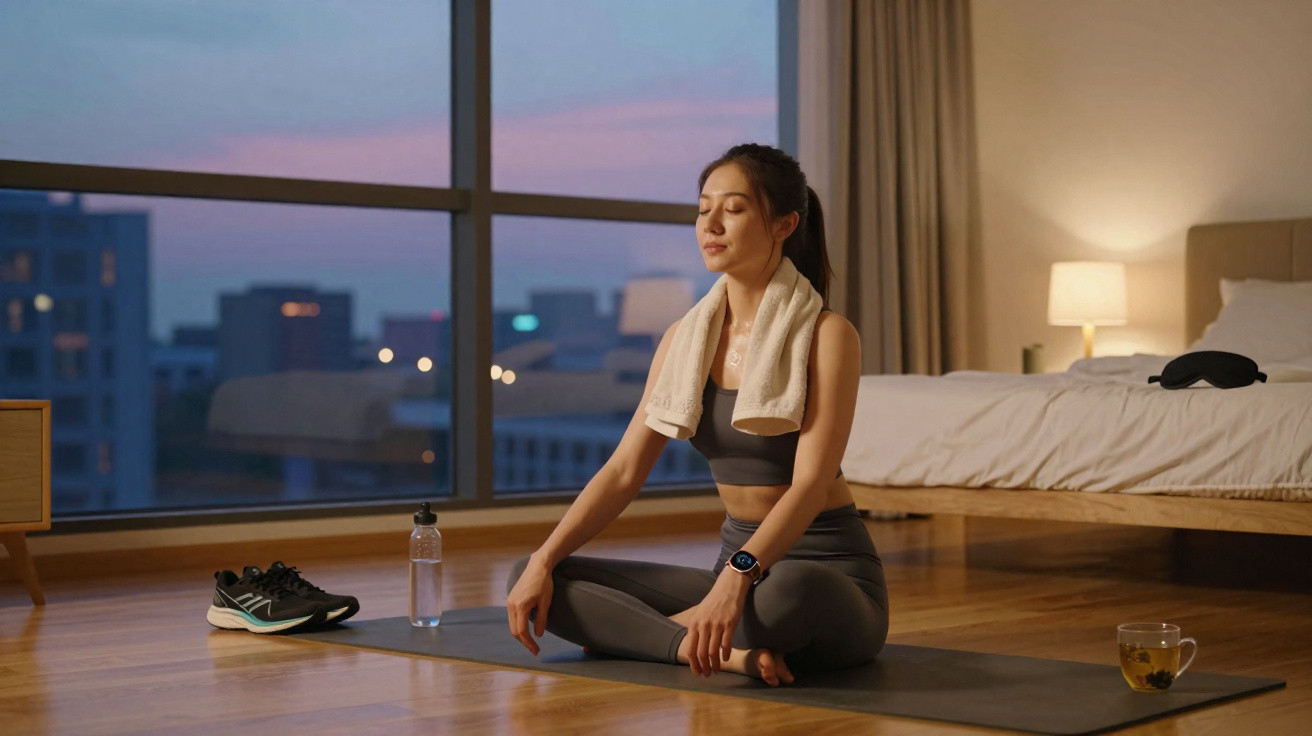
Only the evening left for exercise – but what does that do to sleep?
Many people in full-time work do not get the chance to be active until after 7 or 8 pm. This raises an obvious question: is it better to skip training altogether than do a late workout that costs half the night’s sleep? It is not quite that black and white – but the details matter.
Why so many people only have time for exercise in the evening
Work, family and commuting: evening as the only available window
Day-to-day working life has become noticeably more compressed in recent years. Longer hours, meetings and emails right up to the end of the working day are often combined with lengthy commutes or packed trains. Add children, household tasks or other responsibilities, and there is barely any opportunity to exercise during the day.
For many, the only realistic slot is between roughly 8 pm and 10 pm. Gyms are busy at this time, while parks and running routes become after-work spaces. For this group, evening exercise is less a lifestyle choice than a practical fallback: do it now, or not at all.
City dwellers in particular will recognise the situation: get home quickly after work, grab a bag, and it is already dark outside. The dilemma is whether to stay in work mode and remain physically inactive, or give the body a vigorous late boost and potentially disrupt the body clock.
Exercise as an outlet after a long office day
After eight or nine hours of sitting down, fatigue is often felt more in the mind than in the muscles. Many people describe themselves as “nervously exhausted”: mentally drained but physically restless. This is precisely where evening exercise can help.
Physical activity can act as an outlet. Heart rate up, thoughts off, body engaged. Going for a run or working hard in a training session creates a clear separation between the working day and free time. For many, it is the only way to avoid taking the day’s stress to bed.
Evening exercise can provide emotional relief – or force the body into an alert state that lasts well into the night.
The body is fundamentally designed for movement, not prolonged sitting. Evening tiredness is often the result of mental overload alongside underused muscles. Moderate exercise can resolve this contradiction – provided the timing and intensity are appropriate.
What happens in the body when we exercise late
The temperature cycle versus the need for sleep
Body temperature plays a crucial part in good sleep. Shortly before falling asleep, internal body temperature drops slightly, signalling to the body that it is time to rest.
Exercise does the opposite: the muscles work, circulation speeds up and body temperature rises. This is entirely normal and healthy at first, but it can clash with the body’s natural preparation for sleep when a workout finishes too late.
After an intense session, it often takes two to three hours for heart rate and temperature to settle again. Someone completing their final sprint interval at 9 pm may therefore still be wide awake in bed at 11 pm, even if their eyes feel tired.
Hormonal mix: adrenaline meets melatonin
Exercise activates hormones as well as muscles. During a workout, the body releases adrenaline and cortisol, among other substances – typical “alarm and wake-up hormones”. They sharpen concentration, raise heart rate and prepare the body to perform.
Sleep, in contrast, requires melatonin. This hormone signals darkness, calm and time to switch off. When a strong surge of adrenaline and cortisol is still moving through the body shortly before bedtime, these systems can become misaligned.
The result will be familiar to many: lying in bed while body and mind feel clear and active, thoughts race and falling asleep becomes difficult. The rhythm of daytime and night-time hormones shifts, particularly when intensive training takes place very late several times a week.
The key factor: intensity and duration
Why hard interval training in the evening can become a problem
Not every kind of exercise affects sleep to the same degree. Very intense sessions involving a high heart rate and substantial exertion are particularly problematic. Typical examples include:
- Interval runs with sprints
- HIIT workouts involving burpees, jumps and rapid changes
- Intensive spinning or hard cardio at the gym
- Squash or fast tennis matches with a strong competitive element
These sessions push heart rate very high and place the body under considerable stress. Metabolism also remains elevated after training – often referred to as the “afterburn effect”. The body continues working at full speed to repair muscles and replenish its stores.
Anyone going full throttle at 9 pm should not be surprised if their body is still in alert mode at 11 pm.
These forms of training can certainly be beneficial for fitness and the cardiovascular system. They are simply better suited to mornings or earlier afternoons. In the evening, they should be the exception; otherwise, sleep duration and quality can quickly decline.
Moderate movement can actually improve sleep
In many cases, giving up evening exercise entirely is neither necessary nor sensible. The important thing is to move away from full-throttle training. Reducing the intensity slightly can bring genuine benefits for sleep.
The most suitable activities are those during which it is still easy to hold a conversation without becoming heavily breathless. Examples include:
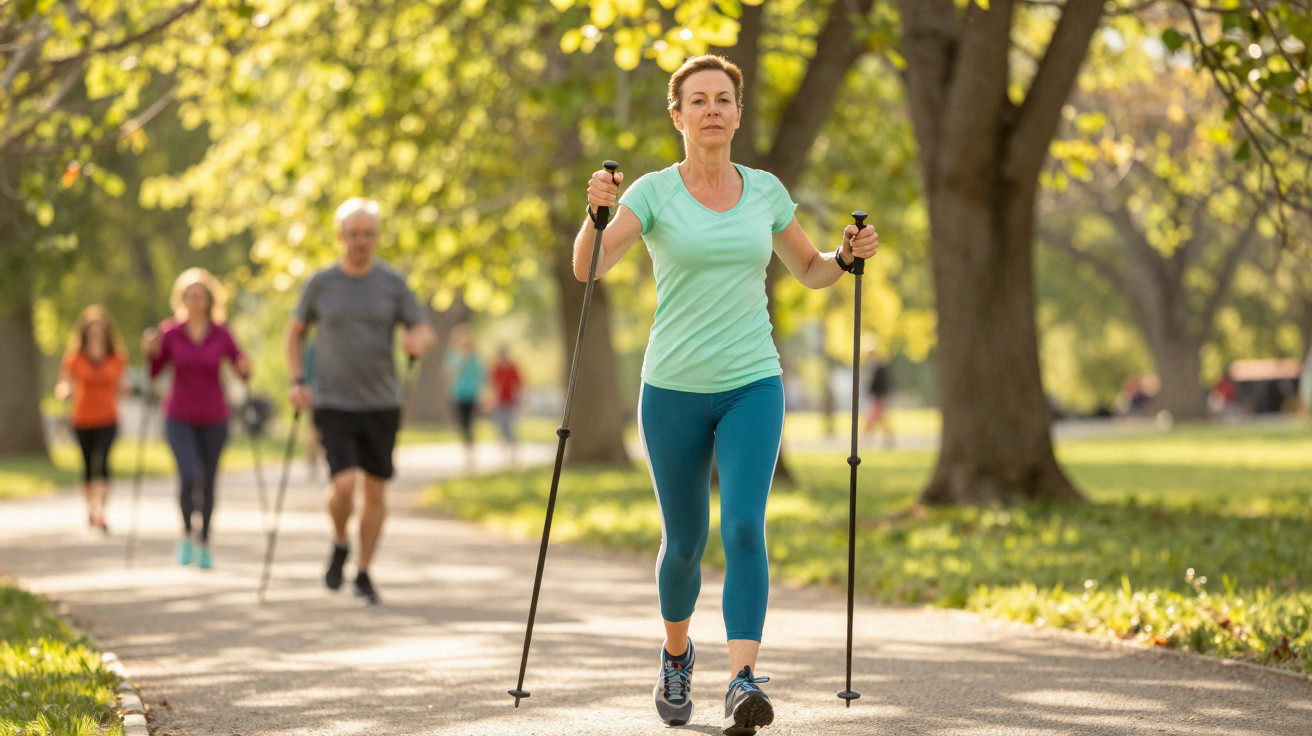
- Brisk walking or an easy jog
- A relaxed bike ride rather than high-speed cycling
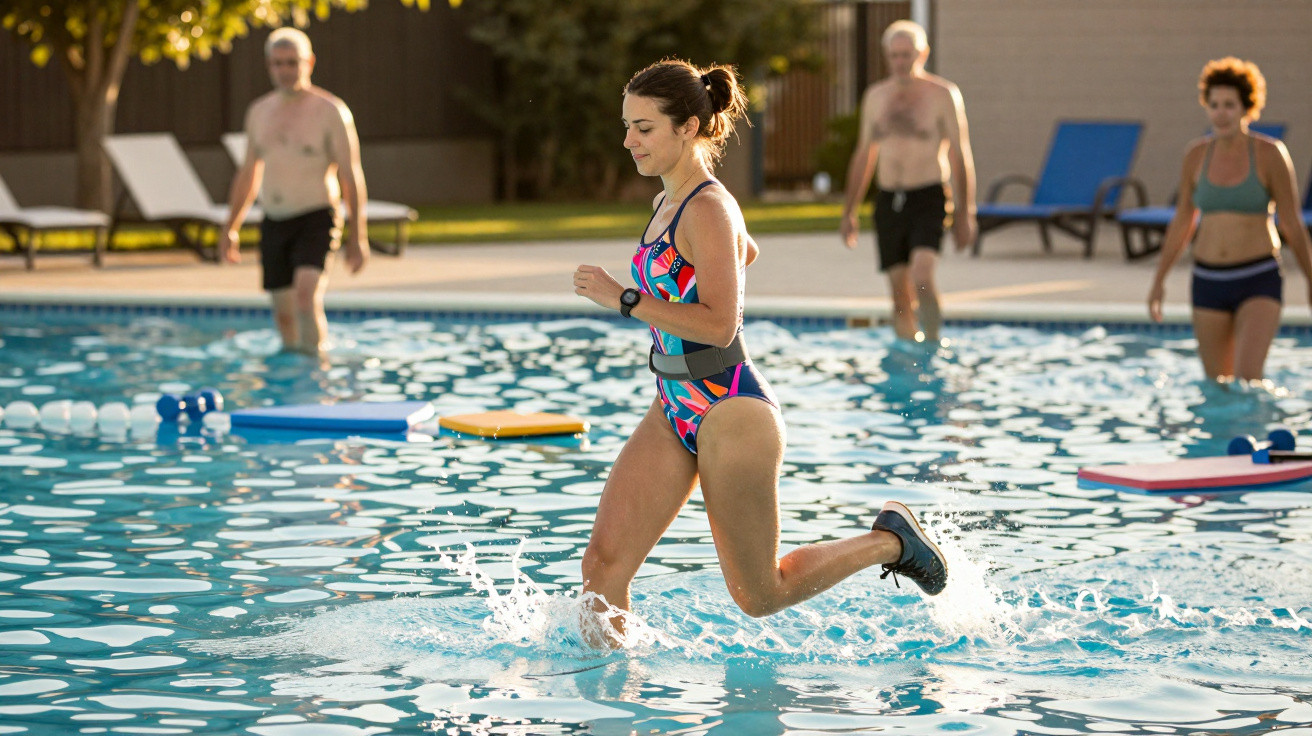
- Gentle lengths in the swimming pool without competitive pressure
- Light strength training with longer rests
- Yoga, stretching or mobility exercises
These activities get circulation going, reduce stress hormones and produce a pleasant physical tiredness. Body temperature rises only moderately and drops again comparatively quickly. Many people actually sleep better after this sort of workout and wake feeling more refreshed.
The body clock: why people do not all respond in the same way
Chronotypes: larks versus owls
People do not all work to the same rhythm. Some wake naturally early and perform best in the morning. Others reach their peak in the evening and would prefer to remain active until late at night. This predisposition is known as a chronotype.
Larks, or pronounced early risers, are often more sensitive to late exercise. Their bodies may already be moving towards sleep mode when a workout begins. For them, intensive evening training can disrupt sleep considerably more.
Owls, or people who typically go to bed late, often cope better with late sessions. Their natural rhythm is already shifted later. They may still be able to perform at 8 pm or 9 pm without necessarily lying awake for hours afterwards.
Self-test: do I tolerate exercise in the evening?
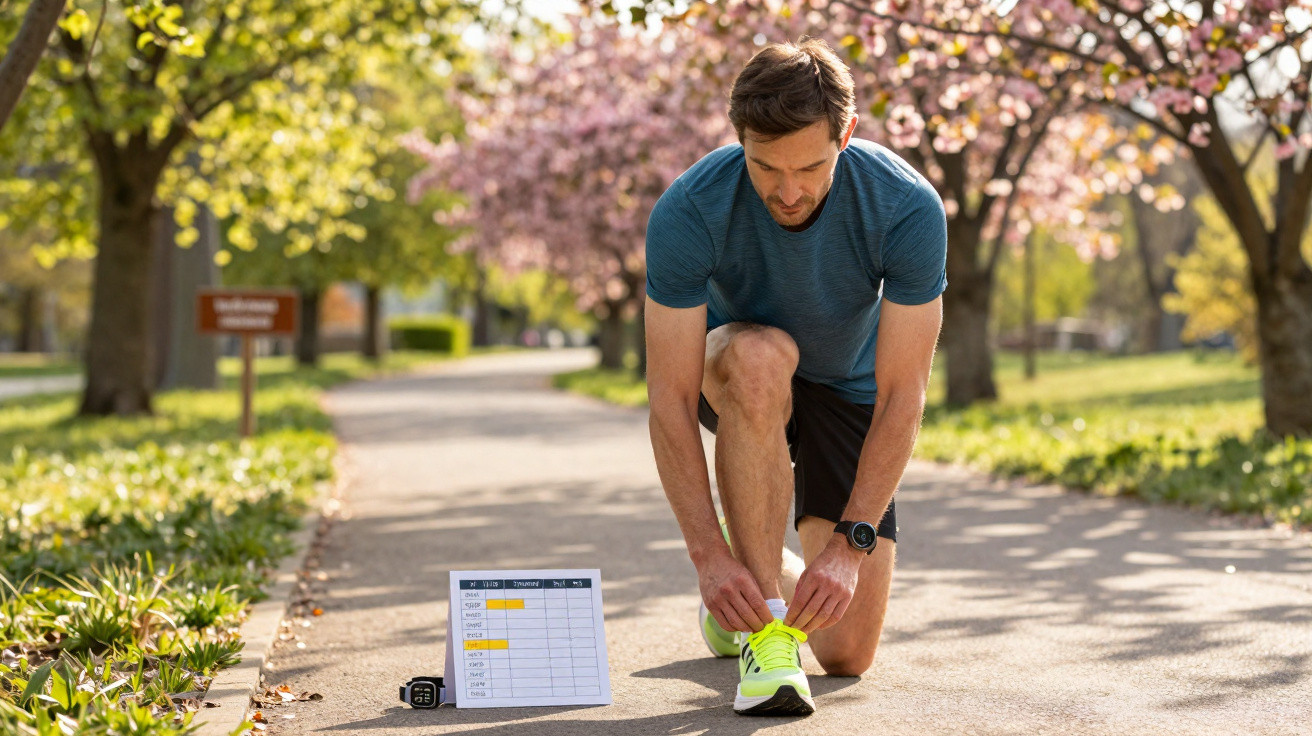
Rather than following blanket rules, it is worth carrying out a brief personal trial over two to three weeks. This makes it possible to assess individual tolerance for evening activity quite reliably. It is useful to note a few points:
| Observation | Questions to consider |
|---|---|
| Training time | When do I start and finish the session? |
| Intensity | Can I still talk, or am I completely out of breath? |
| Time to fall asleep | How long am I awake before I actually fall asleep? |
| During the night | Do I wake up, feel restless or sleep through? |
| How I feel in the morning | Do I feel rested or completely worn out? |
If a clear pattern emerges – for example, difficulty falling asleep after intensive intervals at 9 pm – the adjustment needed is obvious: finish earlier, lower the intensity or choose a calmer activity.
Practical tips: making evening exercise more sleep-friendly
Timing makes the difference
A broad guideline is to leave two to three hours between finishing a session and going to bed, especially after more demanding workouts. Anyone aiming to sleep at 10 pm should ideally plan to finish training by 8 pm at the latest.
Small post-exercise rituals can also help:
- Have a lukewarm shower instead of using cold water to stimulate yourself
- Do a brief stretching routine or breathing exercises to calm down
- Avoid bright, harsh lighting and use dimmer light instead
- Avoid heavy meals very late in the evening
This tells the body that exertion has ended and recovery can begin.
What are my goals – and what suits them?
People whose main aim is to reduce stress, clear their head and sleep better will usually do well with moderate evening sessions. However, if the focus is on maximum performance gains, perhaps for a competition, it is worth reviewing the training plan: the toughest sessions may be better placed at weekends or earlier in the day.
The best training is the kind that fits into everyday life long term – without coming at the expense of sleep.
Over time, lack of sleep undermines many training effects: recovery suffers, injury risk rises and motivation falls. Planning wisely therefore protects not only your nights, but also improves sporting progress.
Additional considerations: particular groups and alternatives
People who already sleep poorly, shift workers and those with higher stress levels are often more sensitive to evening exertion. In these cases, it is worth paying even closer attention to the body’s signals and starting with very gentle activity, such as walking, yoga or light stretching.
A sensible alternative may be to spread movement throughout the day: take the stairs rather than the lift, walk short distances, or do a few squats or mobility exercises while working from home. Those who build more activity into the daytime feel less compelled to fit everything into one late, high-intensity session.
The bottom line is that evening exercise is not inherently bad. Anyone who chooses intensity carefully, leaves enough time before sleep and listens to their own rhythm may even sleep better – despite, or precisely because of, late movement.














Comments
No comments yet. Be the first to comment!
Leave a Comment