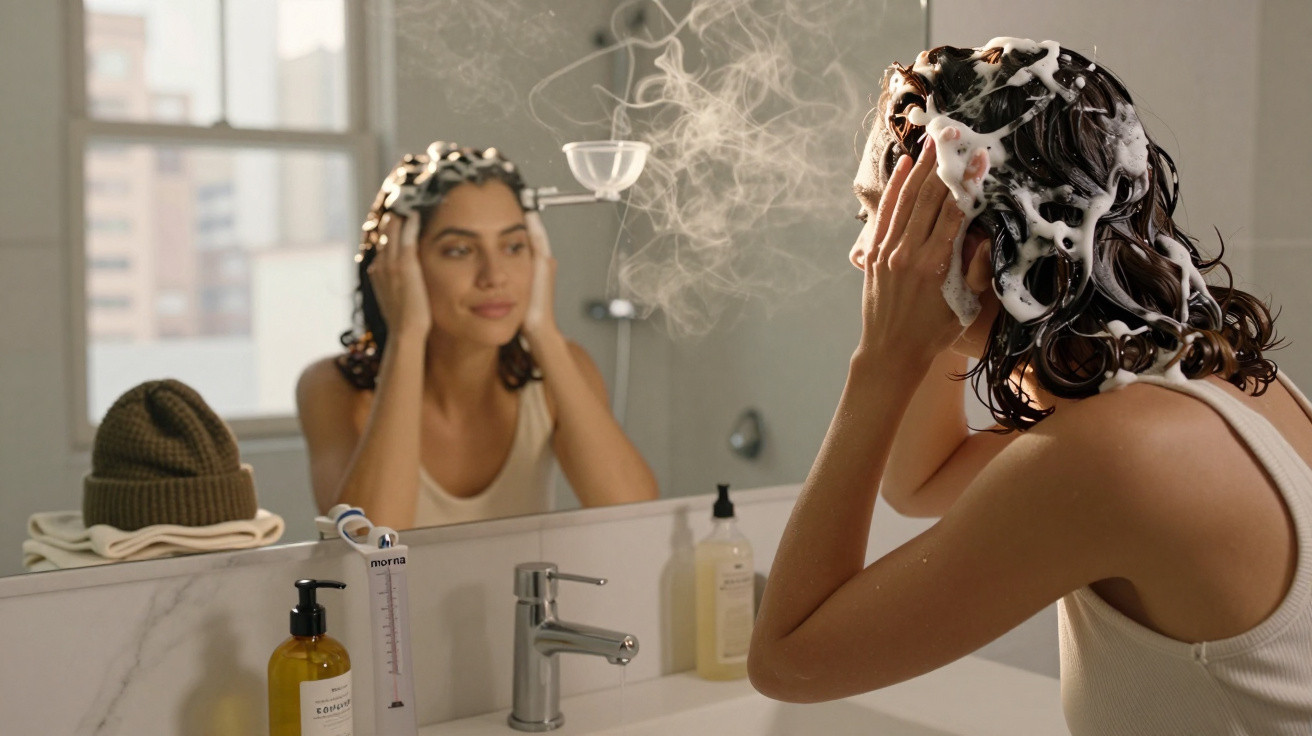
The woman in the café loo fixed her eyes on the mirror, pulling at a section of hair that resembled lifeless rope rather than anything from a shampoo commercial.
Beyond the door, passers-by hurried along in scarves and heavy coats. In the mirror, though, there was only her and this strange, flattened winter hair. She was sure she had washed it that morning: costly shampoo, a steamy shower and a quick high-heat blast from the hairdryer.
Still, there it was: frizz at the ends, greasy roots and colour that somehow appeared faded. She gathered it into a bun, then released it again, wishing it would suddenly come back to life. It did not. It simply had that limp, static, "I’m tired" look.
With a sigh, she looked up the label on her bottle on her phone, as though the ingredients list might reveal the answer. It did not. The issue was not the products she used, but the way she washed her hair during winter.
Why your winter hair looks lifeless even when you “take care” of it
Recall the last time you washed your hair on an icy morning. Chances are, you turned the water up until it was nearly scalding, sank into the steam and scrubbed as if you could wash away the previous day. It is comforting, almost like being hugged by the shower.
The problem begins as soon as you get out. Hair that ought to feel airy suddenly seems weighed down. Your roots become oily within a day, the ends turn straw-like, and even your supposedly “nourishing” shampoo appears to achieve very little. You blame the weather, stress or your pillowcase - anything except your washing habits.
In theory, your routine sounds sensible: shampoo, rinse, perhaps conditioner when you remember, a brisk towel-dry, then on with the day. Yet winter quietly changes the way hair behaves, and most people never realise the rules have shifted.
A London stylist told me he can identify the season simply by inspecting a client’s hair. “Winter is when everyone’s hair lies to them,” he said. It becomes greasy more quickly while the ends break; colour seems faded, curls lose definition and straight hair loses its gloss.
The statistics reflect that experience. As temperatures fall and central heating increases, dermatology clinics see more complaints about dry scalps and lacklustre hair. One European survey found that women wash their hair nearly as regularly in winter as they do in summer, even though the scalp produces less sweat. That disconnect creates a subtle storm of over-washed lengths, insufficiently rinsed products and vulnerable cuticles.
Picture your hair as a winter coat. If you laundered that coat in boiling water every other day with powerful detergent, then dried it with hot air, it would not stay soft for long. Hair is much the same. Its cuticle - the tiny protective outer layer - absorbs most of the damage, which is what you recognise in the mirror as “dullness”.
So what is really going on? Hot water raises the cuticle scales too much. Strong surfactants remove the natural oils that help hair reflect light. Indoor heating draws moisture out of every strand, while woolly hats flatten it into a static-prone helmet. Your hair does not “hate winter”; your normal wash routine is working against the season rather than with it.
The winter wash routine that actually keeps hair shiny
The first subtle adjustment is to turn down the heat - not only on the radiators, but in the shower too. Replace near-boiling water with warm water, close to body temperature. It remains pleasant, but is far less harsh. Your scalp and cuticles will benefit in ways you can visibly notice.
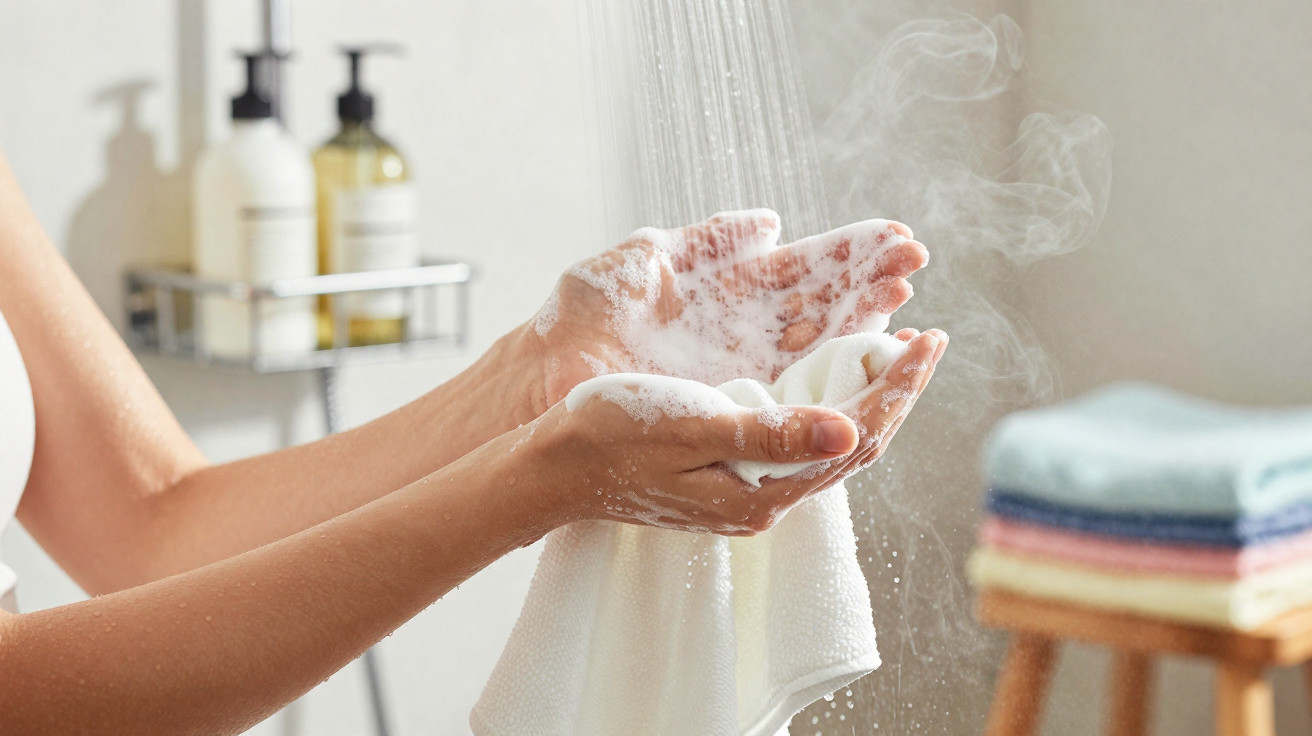
Before shampoo reaches your hair, saturate it completely for a full minute. Those extra 60 seconds allow water to enter the strands and reach the scalp, so shampoo distributes more gently. Next, use a coin-sized amount rather than a large handful. Work it between your palms, then apply it solely to the scalp, not the lengths.
As you rinse, allow the lather to run through the rest of your hair instead of scrubbing the ends yourself. In winter, one slow wash is generally enough unless there is substantial product build-up. Hairdressers say it repeatedly, yet few people alter their habits: your hair lengths are fabric, your scalp is skin - wash them differently.
If you live in a city, this may sound familiar: you wash your hair, head outdoors into a combination of cold air and pollution, and by evening it already looks flat. The following morning, you wash it again, and the pattern continues. This is where winter routines discreetly undermine shine.
Try a different approach. Keep your regular wash days, but extend the gap by one day where possible. On the “off” day, give your scalp a gentle fingertip massage before bed. This redistributes natural oils, which work as your own built-in hair serum. You can also revive the roots with a small amount of dry shampoo: apply it 20 minutes before styling, then brush it through carefully.
Let’s be honest: no one really does this every day. Scalp massages, perfectly scheduled washes and leaving conditioner on for precisely seven minutes can sound like a TikTok fantasy. The aim is not perfection. It is about moving from “washing on autopilot” to “washing with the season in mind”. Even one or two manageable adjustments can make your hair appear less weary in winter light.
A New York colourist captured the point in one memorable sentence:
“Winter doesn’t ruin hair - our winter habits do.”
She highlighted four errors that almost everyone makes when temperatures fall:
- You wash with water that is much too hot, then move immediately into hot, dry air.
- You avoid conditioner at the roots altogether, leaving the scalp tight and the lengths heavy.
- You rub your hair vigorously with a towel, disrupting the cuticle when it is at its most delicate.
- You continue using the shampoo you used in July, despite your scalp and surroundings being completely different in January.
In practical terms, approach winter washing as skincare for your scalp: a gentle cleanser, lukewarm water and something calming or moisturising afterwards. Use a lightweight conditioner or leave-in treatment through the mid-lengths and ends. Choose a microfibre towel or an old T-shirt rather than a conventional rough towel. None of this is glamorous, but it subtly changes the way your hair catches the light.
The quiet shift that makes your winter hair look “expensive”
One small, almost unnoticeable stage can transform everything: the pause after rinsing and before drying. That five-minute interval determines whether your hair retains moisture or gives it away. Most people go straight from the shower to a hairdryer on full power, half-dressed and already late for somewhere.
Instead, slow down that brief stage. Use your hands to gently squeeze water from your hair, then wrap it in a soft towel or T-shirt for 10–15 minutes as you get ready. Do not rub or twist it. Allow the fabric to absorb the surplus water. Your hair will dry more quickly with less heat, while the cuticle stays smoother. That smoothness is what changes “flat” into “shiny” beneath grey winter skies.
This is also the point at which a little leave-in conditioner or lightweight oil can help. Use it only on the lower half of your hair, concentrating on the very tips. Use less than you expect: a pea-sized amount for fine hair or a hazelnut-sized amount for thicker textures. Warm it between your palms and press it into the hair as though you are handling something delicate. You are.
The emotional side is straightforward. Everyone knows the moment of catching their reflection on a dark winter afternoon and thinking, “Wow, I look tired.” Hair contributes more to that feeling than we tend to acknowledge. It does not need to be perfect, but dull, lifeless hair can seem to broadcast exhaustion, even when you are trying your hardest.
The answer is not to throw additional products at the issue, but to redefine what “clean” means in winter. Clean need not mean squeaky, stripped and fluffy for three hours before it falls flat. It can mean balanced, calm roots with hydrated lengths. It can mean hair that still moves on the second or third day without seeming like a compromise.
One trichologist I spoke to described it this way:
“Most people don’t have ‘bad hair’ in winter. They have a routine that’s one season behind.”
You therefore do not need a 20-step ritual. You need modest, season-aware habits:
- Use warm rather than hot water to safeguard your scalp barrier.
- Apply shampoo to the scalp only, without ever scrubbing the ends.
- Treat conditioner or a mask like skincare: apply it, leave it to work, then rinse thoroughly.
- Dry gently with fabric first, followed by minimal medium heat rather than maximum heat.
These small changes may not look exciting on a bathroom shelf. Yet they are the kind people notice in an office lift when they say, “Your hair looks really good lately,” and you cannot quite work out why.
What changes when you treat winter hair like a different season
Once you begin to notice it, winter hair becomes a quiet reflection of how you navigate the darker months. Do you hurry, react, scrub, blast and dash off? Or do you create small moments to slow down, even if it is only for a minute beneath warm water?
Shiny hair in winter is not about pursuing a glossy, filtered ideal. It is largely about balance: between your scalp and the air, heat and moisture, and what you believe “clean” should feel like versus what your hair truly needs when it is cold outdoors and the radiators run all night.
You may spot some unexpected effects: less itching around the hairline, fewer white flakes on your black jumper, reduced static when you take off a beanie, and perhaps even fewer broken strands in the sink. Such changes rarely appear in a dramatic “before and after”. They emerge gradually, like the lengthening days after January.
Some readers will take this in, shrug and continue as they always have. Others will alter one tiny behaviour - lowering the water temperature slightly, or not scrubbing their ends - and suddenly question why their hair colour looks richer or why a basic ponytail feels better. What matters is not the scale of the change, but how rapidly hair responds when you stop battling the season.
So, next time you find yourself tying your hair up merely to disguise how flat or frizzy it looks in winter, stop for a moment. Consider whether your hair is truly the issue, or whether it is simply a summer routine stuck in a winter body. That thought alone quietly makes room for a different approach - and your mirror may tell a gentler story a few weeks from now.
| Key point | Detail | Why it matters to the reader |
|---|---|---|
| Adapt the water temperature | Switch from very hot water to lukewarm water close to skin temperature | Reduces dryness, protects shine and helps limit scalp irritation |
| Wash the scalp, not the lengths | Concentrate shampoo on the roots and let the lather run down to the ends | Protects lengths from wear, keeping the ends supple and less prone to breakage |
| Dry gently | Squeeze out water carefully, use a soft towel or T-shirt, and limit hairdryer heat | Reduces frizz, breakage and dullness, creating the appearance of “healthier hair” |










Comments
No comments yet. Be the first to comment!
Leave a Comment