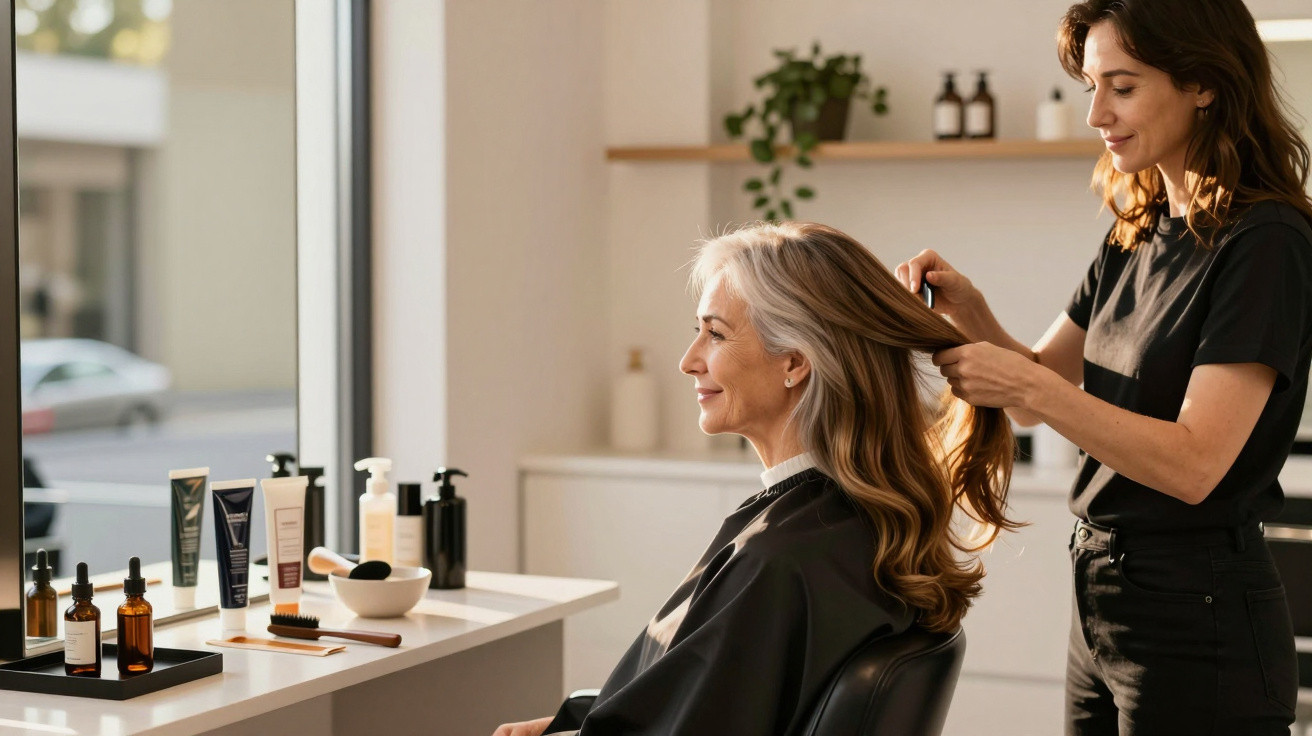
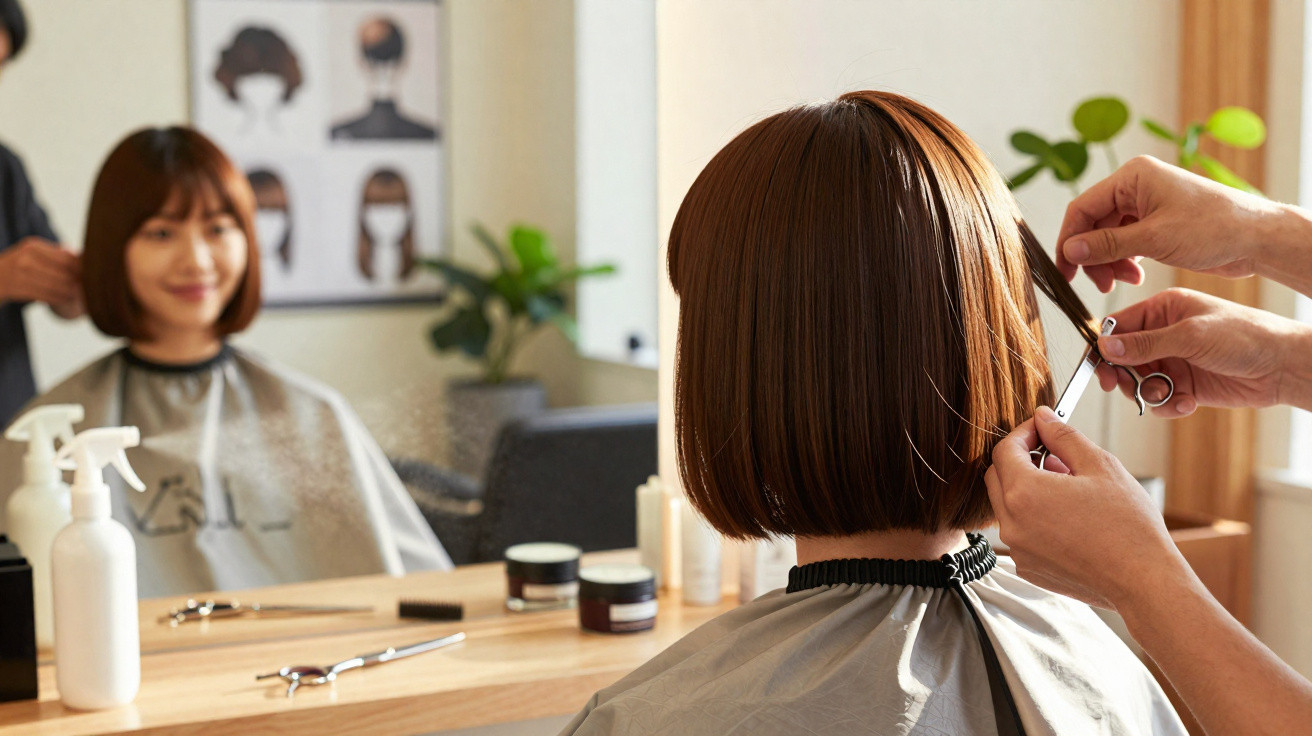
On Tuesday mornings, my salon fills with women in their 50s. They come in carrying shopping bags, laptop cases and trainers, along with a thousand questions about their hair colour. One settles into my chair, removes her scarf and quietly asks the question I hear every week: “Be honest… does this color age me?”
For a moment, the mirror seems to fall silent.
I witness the same situation time and again: beautiful women concealed by dye that is too dark, fragile highlights, or at-home colour that appeared “chocolate” online but proved almost black in daylight.
They are not trying to look twenty. They simply do not want to look worn out.
That is the real meaning behind “anti-aging” colour.
The turning point: when your old hair colour stops working
There is often a point, usually around 50, when the hair colour you have always worn suddenly seems... wrong. The shade you adored in your 30s can begin to look severe, flat or oddly artificial beside your skin.
I notice it most when women sit down and tell me, “I don’t know what changed, but my face looks different.” Their hair may not have changed much on paper, but everything surrounding it has: skin texture, undertones, the brightness of the eyes and even the way light reflects from the face.
The reality is that your 50s are not the time to rigidly hold on to the precise colour you wore in your wedding photographs. They are the time to make careful adjustments.
One client of mine, Claire, arrived with almost-black box dye layered over 60% gray. Her natural shade is light brown, yet years of “saving time” with supermarket colour had left her hair looking like a dark helmet.
She said her friends regularly asked whether she was tired or upset. She was neither. Her colour was simply pulling her entire face down.
Over several appointments, we carefully lifted away the darkness before creating a soft medium brown with warmer, lighter strands around her face. When I turned her towards the mirror, she did not look younger in a clichéd sense.
She simply looked more like herself.
What truly shifts in your 50s is the contrast between your features. Gray hairs soften the natural darkness around the face, brows can become less defined and skin may lose some of its rosy colour.
When hair remains very dark and uniform, it can begin to overpower everything else. Yet going excessively pale or ashy can also drain the complexion, making it appear dull or unwell.
At this stage, colour is about balance. You are not “fighting” your gray; you are negotiating with it.
The best color in your 50s doesn’t shout - it quietly lights up your face.
The method I always come back to in the salon chair
When a woman in her 50s asks for my colour advice, I begin with one principle: soften the line. In practice, that means avoiding stark contrasts and thick blocks of solid dye, while introducing gentler transitions.
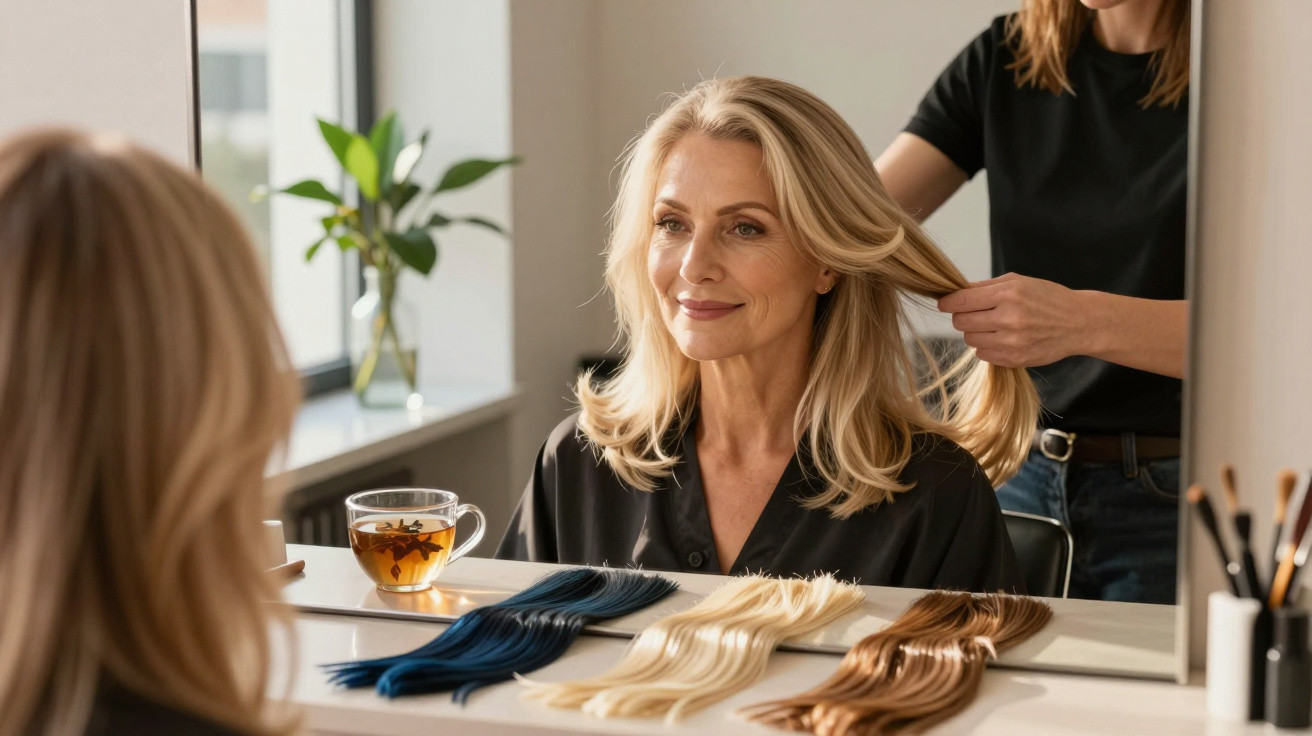
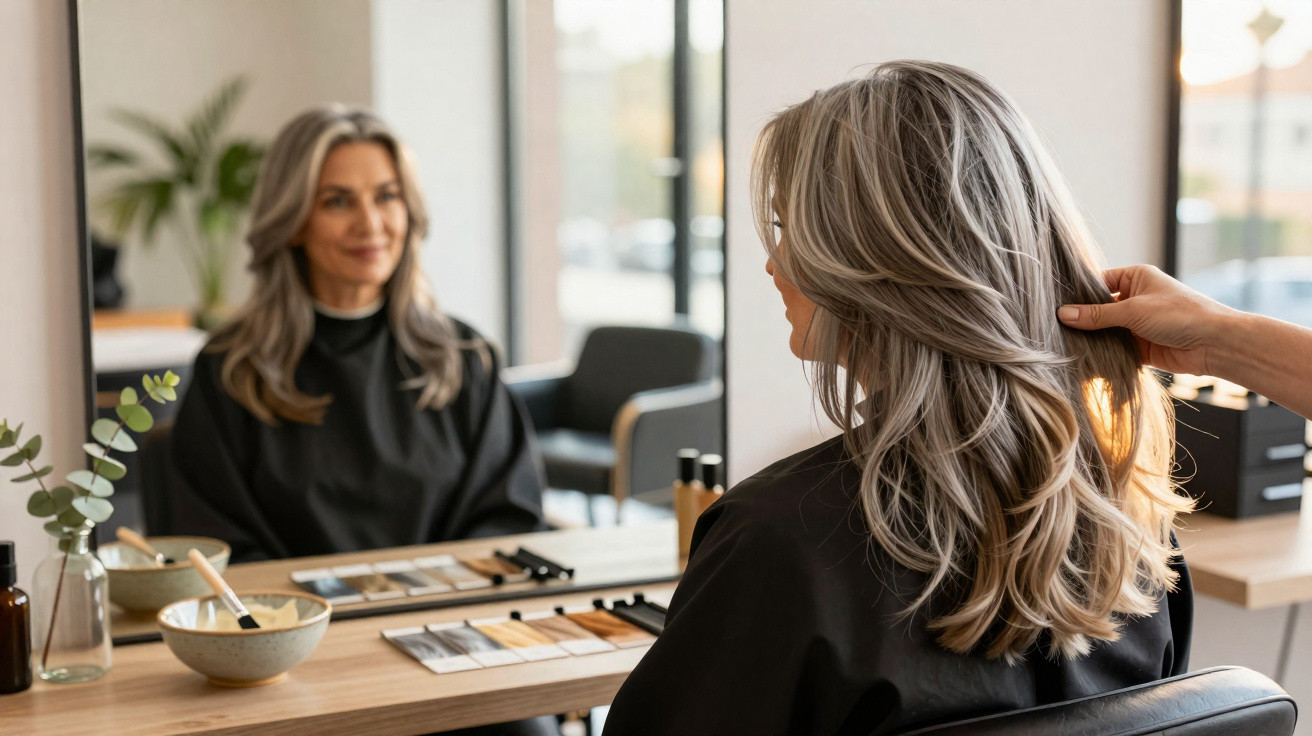
Rather than applying one flat, opaque shade, I choose a base colour within two tones of the natural level. I then add lighter pieces around the face and throughout the lengths, especially in the areas the eye naturally follows.
Think of it as a “veil of light” rather than “chunky highlights”. The aim is for people to notice your eyes before they notice your roots.
We also discuss maintenance openly, without making it dramatic. Complete gray coverage every three weeks is a marathon, not a sprint.
That is why I often recommend approaches such as blurred roots, soft babylights or lowlights woven through the gray rather than trying to fight every individual strand. As the roots grow out, the line is softer, so you do not feel controlled by your next salon appointment.
Let’s be honest: nobody really does this every single day. Women usually nod when I say it, because the expectation of being constantly “perfect” at 53 is exhausting.
Your hair colour should work around your life, not dictate it.
“As your hairdresser, my best advice in your 50s is this,” I tell clients. “Don’t chase the exact color you had at 25. Chase the light on your face when you’re well rested and happy - then we color for that.”
I often present my main advice for women in their 50s as a straightforward list:
- Go one to two tones lighter than your former “default” shade to soften facial features.
- Focus on dimension rather than flat coverage: a blend of tones will always look more natural.
- Respect your natural warmth rather than pushing for ultra-ashy tones that may appear lifeless.
- Use professional products or seek professional guidance, even when colouring at home, to prevent build-up and breakage.
- Plan your maintenance rhythm realistically, so your colour grows out gracefully.
Each small choice contributes to something significant: colour that genuinely suits the woman you are today.
Hair colour as a conversation with who you’re becoming
What affects me most in the salon is not the before-and-after photograph. It is the moment a woman in her 50s looks at herself and says, “This feels like me again,” with a small, surprised smile.
Hair colour at this age is not about removing the evidence of time. It is about changing the story you tell yourself when you look in the mirror.
Perhaps that means accepting 30% of your gray and weaving colour through it. Perhaps it means soft caramel lights over your natural brown. Or perhaps it means remaining dark, but choosing a lighter, glossier finish that is less “helmet”-like.
If you colour your hair in your 50s, the important question is not “What’s the trend?” It is “What energy do I want to project when I walk into a room?”
You have earned the freedom to be bolder, softer, silver, brunette, copper... anything, provided it works with your skin, your lifestyle and your tolerance for maintenance. We have all experienced that moment when bathroom lighting feels like the enemy and you become convinced your colour betrayed you overnight.
The encouraging news is that it is rarely beyond repair. A few considered changes, gentler tones and a less rigid approach to “covering” gray can alter everything.
Your hair stops demanding attention and begins to work with you.
The best advice I offer, and the advice I would give if you were in my chair today, is straightforward. Look at your reflection as though you are seeing yourself for the first time.
Set aside the colour you “always” had. Pay attention to your eyes, your skin and the natural silver coming through. Then select a colour that supports that face, that story and that season of your life.
Your 50s are not a problem that needs correcting at the roots. They are a new palette. And your hair, whether coloured or not, is one of the simplest places to begin painting differently.
| Key point | Detail | Value for the reader |
|---|---|---|
| Soften your colour | Select shades one to two tones lighter, with gentle dimension rather than flat, dark coverage | Brightens the face and reduces the “hard” or tired look |
| Work with gray, not against it | Blend, blur or highlight around natural grays rather than pursuing complete coverage | Less obvious regrowth, fewer salon appointments and a more natural result |
| Match colour to lifestyle | Choose a maintenance plan you can realistically manage, at home or in the salon | Reduces stress, damage and disappointment between appointments |



Comments
No comments yet. Be the first to comment!
Leave a Comment