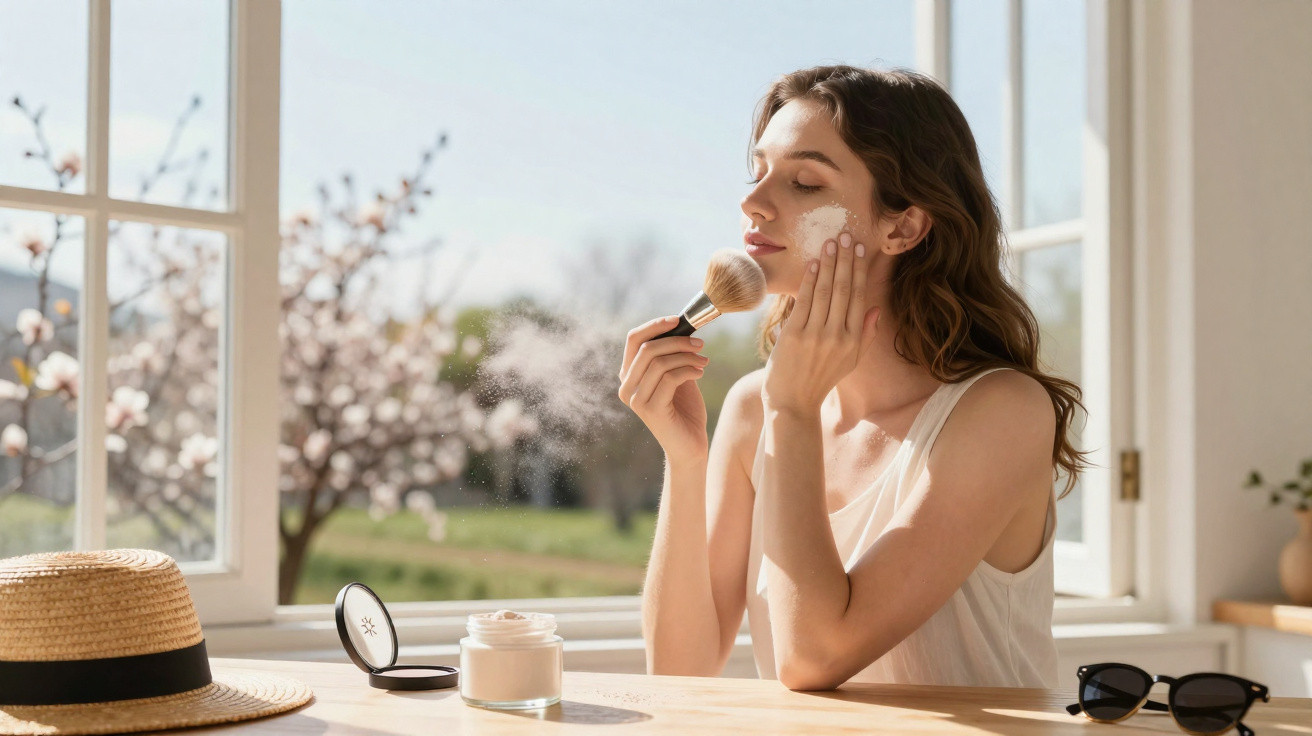
Many people automatically reach for conventional sunscreen in spring. Yet a growing number of dermatologists and researchers are taking a closer look: do we always need a tube from the chemist, or are there alternatives that place less strain on both skin and the environment? One understated white powder option is attracting increasing attention.
Why I take a critical view of sunscreen – especially in spring
In the midday heat on the beach, effective sun protection is not optional; it is essential. The real question is which format to choose. Spring sunshine can still feel gentle, so many people underestimate UV exposure – or cover themselves from head to toe simply out of habit.
There are several aspects of conventional sunscreens worth considering:
- Many products contain chemical filters that may enter the body.
- Some filters are suspected of harming coral reefs and aquatic organisms.
- Creams often leave skin feeling sticky and can cause white marks on clothing.
- Applying too little usually means failing to achieve the labelled sun protection factor.
“At the start of the season in particular, when radiation levels are moderate, it is worth looking more closely: do I really need the full chemical load, or is a simple mineral protection enough?”
This is where a white protective powder formula comes in: it has been well researched scientifically and has long ceased to be an insider tip in specialist circles.
The “white powder” researchers have relied on for years
The idea is not based on magic dust, but on familiar ingredients: mineral filters such as zinc oxide or titanium dioxide, finely milled into powder form. These substances have been established in dermatology for a long time and are used, among other things, for sensitive baby skin and for people with skin conditions.
The key distinction from many standard creams is that mineral filters work physically. They form a fine layer over the skin, reflecting or scattering part of the UV radiation.
Why the powder is particularly useful for the first spring sunshine
When the spring sun is still low in the sky, the issue is often not spending hours at the beach, but rather:
- having coffee on the terrace during a lunch break;
- taking the first bike ride of the weekend;
- gardening after work.
For situations like these, mineral protective powder can be applied precisely to the areas that are genuinely exposed to sunlight: the face, neck, hands and perhaps the décolletage. Depending on skin type and the length of exposure, arms and legs can sometimes receive a little sunlight without product to support vitamin D production.
“Mineral powders mainly protect the especially sensitive areas – without having to cover the entire body in product or load it with fragrances or problematic filters.”
How mineral sunscreen in powder form works
Fundamentally, this approach consists of three elements:
- Mineral UV filters, such as zinc oxide, create the protective layer itself.
- Neutral carrier ingredients – for example rice or maize starch – make the product easy to spread.
- A fine particle size ensures that the powder is distributed evenly and does not leave too much of a white cast.
Many dermatological sources emphasise that zinc oxide covers both UVB radiation and a large portion of the UVA spectrum – the radiation responsible for sunburn, premature skin ageing and long-term damage.
Advantages over conventional cream
For many users, the powder format offers several benefits:
- No greasy layer that shines or blocks pores.
- Easy to reapply without needing to cream the whole face again.
- Often made with a very short ingredient list, which can suit sensitive skin.
- Compact, leak-proof and convenient for travel or a handbag.
“Anyone who already uses face powder can kill two birds with one stone with a mineral protective version: mattifying and sun protection in a single step.”
What research says about zinc oxide and similar filters
A number of studies have examined mineral filters more closely in recent years. One key finding is that zinc oxide in non-nano form largely remains on the skin’s surface and barely penetrates into deeper layers. As a result, many dermatological guidelines regard it as comparatively well tolerated.
In addition, mineral filters do not break down under UV radiation as rapidly as some organic filters. Rather than reacting chemically, they act more like tiny mirrors that reflect rays. This makes them stable, particularly during longer periods of exposure.
However, not every powder is automatically a sensible choice. The decisive factors are:
- A clearly stated sun protection factor, ideally at least 30.
- Broad-spectrum protection against both UVA and UVB radiation.
- Clear information on whether nano-particles are included.
When I use powder – and when I do not
As useful as a white powder formula can be on the first mild days, it cannot replace every other product in all situations. In some scenarios, a conventional, well-formulated sunscreen still makes sense.
Suitable uses for mineral protective powder:
- Spring walks and short periods outdoors.
- Everyday life in town, moving between indoor and outdoor settings.
- Sensitive facial skin that reacts to fragrances or products containing alcohol.
- Topping up and refreshing protection while out and about.
Where powder solutions reach their limits:
- Long beach days with intense sun exposure.
- Water sports, heavy perspiration or extreme outdoor sports.
- Children’s skin, which needs reliable protection over larger areas.
“For everyday life in town, a good mineral powder is entirely sufficient for many people – but by the sea or in the mountains, a tube of water-resistant cream should still come along.”
How to apply the powder version properly
Even the best filter offers little benefit if it is applied only in a barely visible layer. A few simple rules help mineral protection in powder form work effectively:
- Skin should be dry and ideally moisturised first, for example with a light day cream.
- Pick up a generous amount of powder using a brush or sponge.
- Apply in circular motions to the face, ears, neck and, where needed, hands.
- Reapply at least every two hours when spending an extended time outdoors.
Those who wear make-up can use the protective powder as the final step. This shifts the focus away from a “thick layer of sunscreen” towards an everyday routine that fits better with an individual skincare approach.
What dermatologists advise – and the risks that remain
Dermatologists regularly point to one simple fact: no product can replace common sense. Even with a good powder formula, the basic rules still apply:
- Avoid the midday sun when it is at its strongest.
- Seek shade, particularly for children and people with very fair skin.
- Use protective clothing, sunglasses and headwear.
There is also one continuing concern: applying the powder too sparingly makes it easy to underestimate the actual dose. The stated sun protection factor is always based on laboratory conditions using an exact specified amount. In everyday use, that often remains theoretical.
People with extremely sensitive skin, a history of skin cancer or certain medical conditions should seek individual advice. In some cases, doctors recommend consistently using specialist medical products, for which dosage and protection factor are precisely matched.
What the terms mean – and what to look for when buying
Anyone browsing in shops or online will quickly encounter technical terms. Three appear especially often:
| Term | Meaning |
|---|---|
| UVA | Long-wave radiation that penetrates deeper into the skin and contributes to wrinkles and certain cancers. |
| UVB | Shorter-wavelength radiation, the main cause of sunburn, which also contributes to skin cancer. |
| Broad-spectrum protection | A product covers both UVA and UVB ranges – essential for serious sun protection. |
In principle, protective powder should meet the same criteria as any sunscreen:
- a clearly visible sun protection factor and UVA marking;
- a complete ingredients list;
- as few fragrances and irritating additives as possible.
Those who prioritise environmental considerations should also look for information on marine compatibility and microplastics. Many manufacturers now promote relevant certifications and testing prominently.
More than a trend: a different view of sun protection
The white powder formula is not a magic trick that solves every problem. Instead, it represents a shift in perspective: away from automatically coating the whole body at the first warm rays, towards a considered combination of behaviour, clothing and targeted product use.
Using spring sunshine consciously delivers two benefits at once: the skin receives a controlled amount of light to produce vitamin D while remaining protected from critical exposure levels. Mineral powders can help maintain that balance – practical, suitable for daily life and without creating unnecessary drama in the bathroom cabinet.









Comments
No comments yet. Be the first to comment!
Leave a Comment