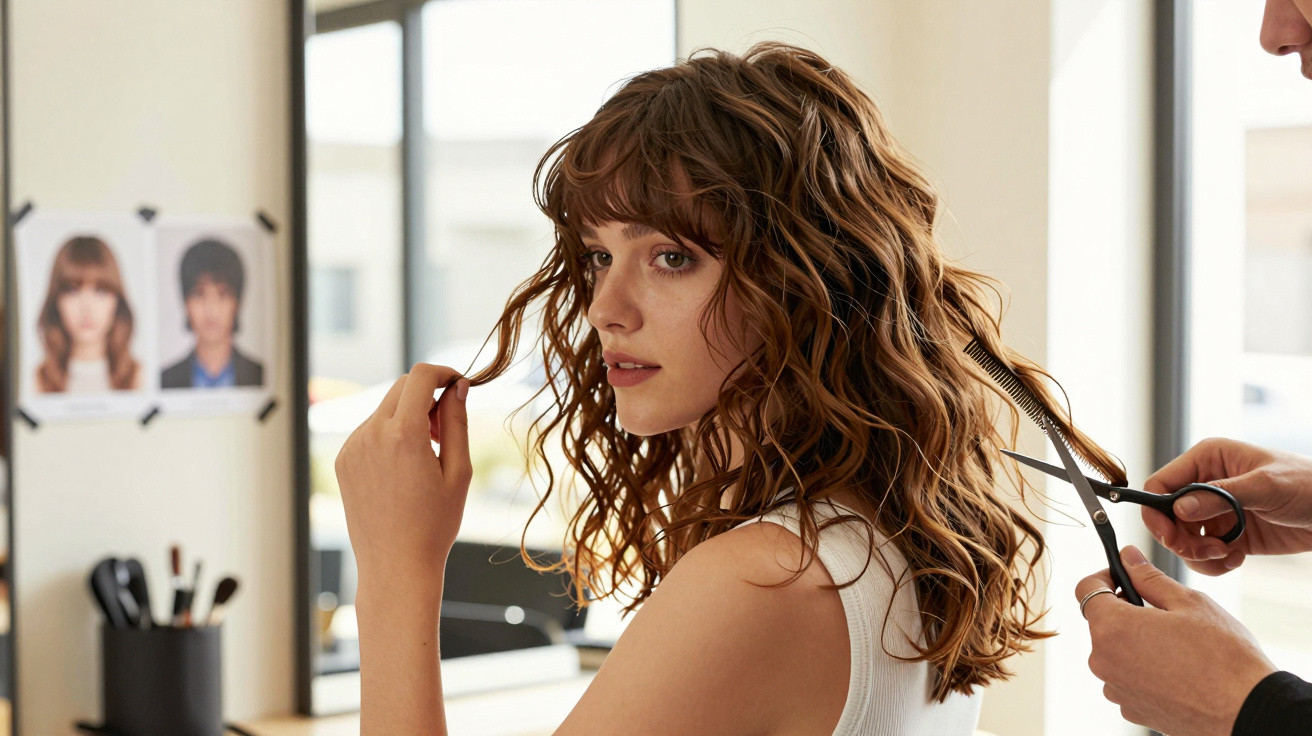
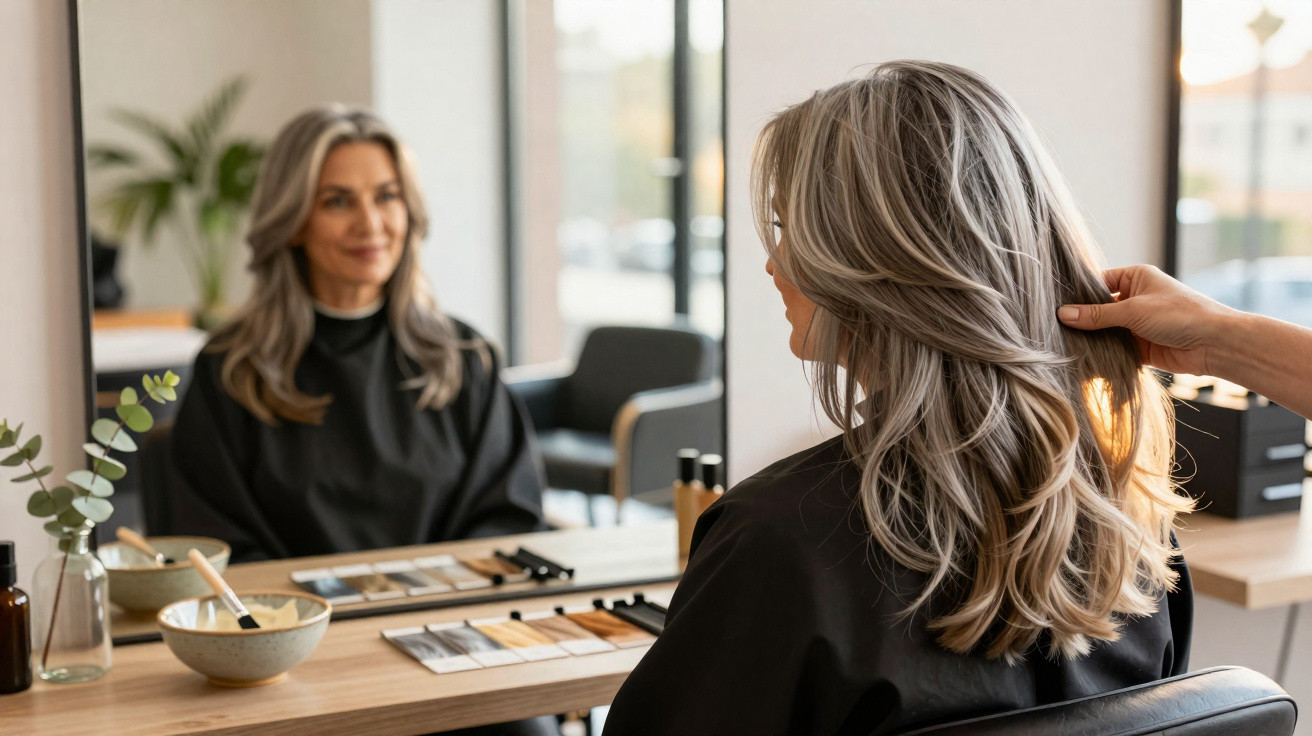
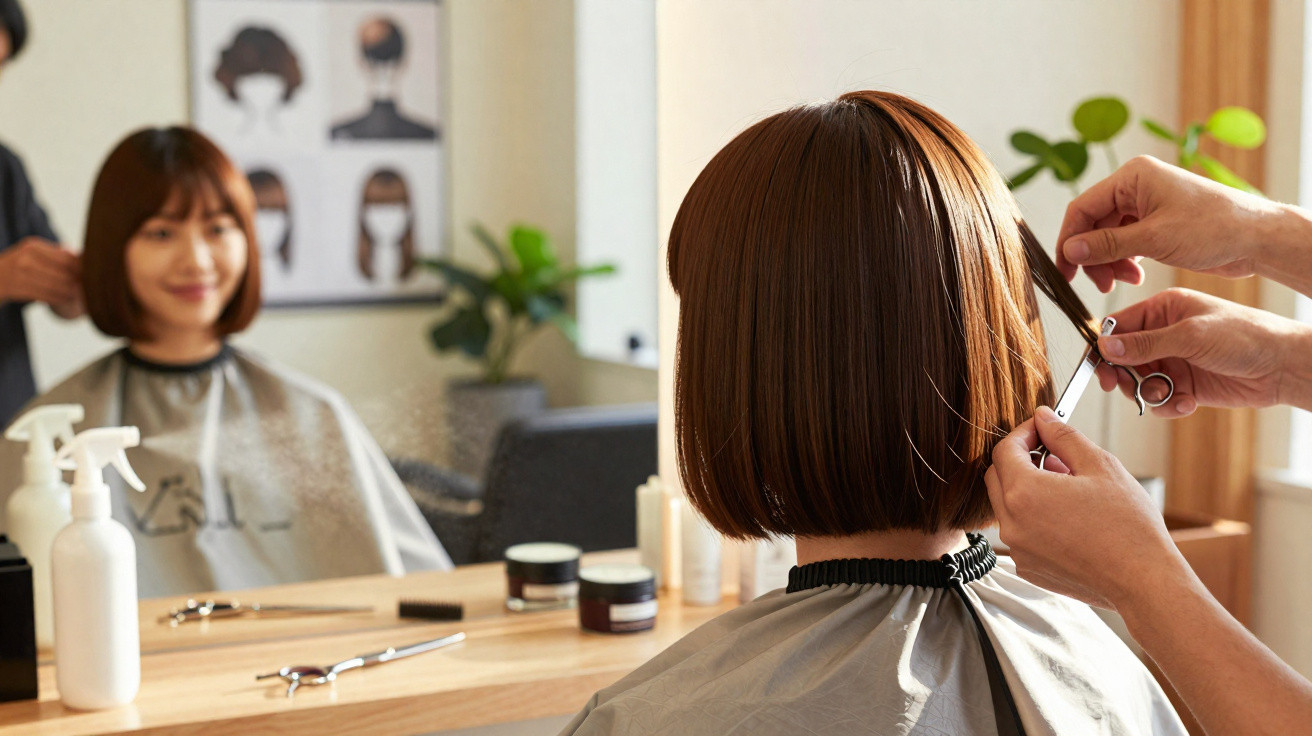
Her hair has been clipped into sections, and the cape crackles whenever she moves. “I want a shag,” she says to the stylist, “but I don’t want a mullet.” The room erupts in laughter, perhaps slightly too enthusiastically, because the concern is genuine. The stylist agrees, raises a section of hair and begins explaining layers, weight and where the length needs to sit.
In the chair beside her, another client is scrolling through Instagram, passing images of soft air-dried waves and an airy, lived-in fringe. She shows her phone to the stylist. “Is this a shag? Or a mullet? Or… both?” The images begin to merge together: choppy, tousled, beautiful – and baffling. A look that appears effortless online can feel like a real-life risk.
Somewhere between those two salon chairs is a subtle difference in shape that determines whether you leave feeling like a rock star… or like you need to buy a hat.
The almost-invisible line between shag and mullet
Ask three stylists what separates a shag from a mullet and you may hear five different definitions, but most would agree on one unspoken principle. A genuine modern shag places its energy around the front and crown, whereas a mullet allows the focus to travel too far down the back. With a shag, layers are distributed throughout the cut, taking weight from the length without leaving a long, isolated tail. The overall effect is rounded, soft and slightly wild.
Even its stylish newer forms rely more heavily on contrast: a mullet is shorter on top and longer at the back, with a more pronounced “step” between the two. The crown is flatter, while the nape carries the drama. It can look brilliant with the right face shape and styling, but for many people, that back-weighted length is precisely what feels intimidating. By contrast, the modern shag is built around balance: texture throughout, with no single area overpowering the rest.
A London colourist has a straightforward way of reassuring anxious clients. One woman arrived with a Pinterest board full of “modern mullets”, worried that she would end up looking “like an 80s throwback.” Together, they examined every image and imagined a line running from the fringe to the nape. In the photos she preferred, that line formed a gradual slope rather than a cliff. The longest section merged with the rest of the haircut instead of hanging separately. They changed her inspiration search from “mullet” to “shag with fringe”, and everything felt clearer – the same aesthetic, but different architecture.
That is the understated logic distinguishing the two styles. The mullet embraces disconnection: short beside long, abrupt changes and the deliberate feeling of “two haircuts in one.” The shag, particularly its softer modern versions, is centred on diffusion: layers that blend into one another, allowing waves to develop naturally. Weight sits nearer the head, enabling natural texture to spring upwards rather than being pulled down. This is why so many people with wavy hair find that a shag does not “create” waves; it simply stops smothering the waves they already have.
Why the modern shag loves natural waves
Most people with wavy hair learn this lesson the difficult way: texture depends on how weight is distributed. The modern shag removes heaviness from the areas where waves are most likely to be flattened – the crown and mid-lengths – while retaining sufficient length for the hair to curl and bend. Rather than one large, weighty curtain of hair, you get light, overlapping sections. Each section can move independently, giving your natural wave space to breathe. Think less triangle, more halo.
On straight, one-length hair, waves can look like a reluctant bend that has vanished by lunchtime. In a modern shag, those exact same strands can suddenly appear to “know” their place. Shorter sections around the face emphasise the cheekbones, while crown layers prevent the top from sinking into a flat helmet shape. The back lengths remain, so you do not feel too exposed, but they are broken up enough to move freely. We have all had that experience of scrunching and diffusing only to end up with a limp blob; the shag quietly changes the outcome.
There is a psychological benefit, too. Wavy hair seldom creates flawlessly even curls. It is temperamental, inconsistent and highly reactive to humidity. Rather than resisting that unpredictability, a modern shag works with it. The cut is designed to look slightly undone. If one side flicks out while the other turns in, that simply becomes part of the look. Let’s be honest: nobody truly does the full wash-day routine, precise styling and careful diffusing every day. A haircut that still looks deliberate after imperfect air-drying is an everyday kindness.
How to ask for (and style) a shag without drifting into mullet territory
Begin with words your stylist can use practically, rather than relying on a general feeling. Take two or three photos you love and, equally importantly, one you definitely dislike. Identify the details: “I like the soft fringe and layers near the face, but I don’t want the back to drop much longer than the front.” Ask for the perimeter – the outer edge of the haircut – to stay largely even or softly rounded. The closer your front and back lengths are, the further away you remain from mullet territory.
Next, discuss what your day-to-day life actually looks like. Explain how often you rough-dry, whether you go to bed with wet hair, and whether you are likely to use a diffuser or simply let your hair air-dry on the way to work. A good shag for waves is not only about layer placement on a mannequin; it is about how those layers behave when you are rushing out with damp hair and no spare time. Let your stylist know how your hair reacts to humidity and how it changes as it grows. The cut can be made looser or tighter to suit your habits.
People with waves often make similar mistakes. They see a razor-cut, rock-star shag on TikTok and request the same look, overlooking the fact that their own hair may be finer, flatter or considerably thicker. Or they pursue major volume at the crown and unintentionally remove too much weight from the nape, which is where the style begins edging towards a mullet. Be restrained with debulking, especially at the back. If your hair is thick, ask for “graduated” removal instead of obvious chunks – several small reductions rather than one major carve-out. If it is fine, request soft internal layers instead of extremely choppy ends, so that you retain density where it matters.
“The modern shag isn’t really about being edgy,” says one Paris-based stylist. “It’s about letting hair be how it secretly wants to be, but in a shape that flatters your face instead of hiding it.”
For an everyday approach, focus on small rituals you can repeat rather than a 12-step routine. Once you have washed your hair, squeeze it with a T-shirt or microfibre towel rather than rubbing it. While it is still quite wet, apply a lightweight cream or foam, then scrunch from the ends towards the roots. Diffuse on a low setting or leave it alone to dry. Touch it less than you expect to need to. If you wake with flattened areas, dampen only those sections using a spray bottle, add a pea-sized amount of product and gently encourage them back into shape. That is all.
- Keep the back close in length to the front to avoid unintentional mullet vibes.
- Request soft, blended layers through the crown and mid-lengths.
- Base the cut on your genuine styling habits, not an ideal routine you will never maintain.
- Choose lightweight products that encourage movement instead of weighing waves down.
- Consider the grow-out: a good shag should remain interesting for months, not just weeks.
Living with a shag: growth, identity, and that “is this really me?” moment
One curious thing about a shag is how it can alter the way you view your own face. The newly open cheekbone area, a piecey fringe brushing against your eyelashes and the slightly untamed crown volume all redirect the eye. Some people say it feels like meeting a version of themselves they had been editing out for years. Others need several weeks before they trust the look, especially if they have spent a lifetime smoothing and straightening every trace of a wave. Hair grows back, but identity can take longer to catch up.
As it grows, a well-executed shag becomes a succession of distinct but equally wearable shapes. In the first month, it feels sharp and buoyant. By month three, it settles into a softer, more romantic version. By month five, it may begin moving into longer “wolf cut” territory. What separates this from the harsh grow-out of a mullet is the placement of the layers. Since a modern shag disperses texture evenly, you avoid the point where the back abruptly resembles a tail. Instead, it gradually develops into longer, looser waves with dimension.
At a more personal level, the modern shag offers quiet permission. It suggests that you need not pick between polished and messy, or between “grown-up” and playful. You can enter a meeting with air-dried hair that is not perfectly symmetrical and still look put together, because the haircut itself is doing much of the styling. On some days the waves will stand out; on others, they will only be suggested. The appeal is that both results appear intentional. That small distinction between a shag and a mullet – where the weight falls and how the line moves – can be the difference between feeling as though you are in costume and feeling like yourself, simply turned up a little.
| Key point | Detail | Why it matters to the reader |
|---|---|---|
| Shag vs mullet: the line of length | A shag has a soft, blended perimeter; a mullet features a sharper transition from short to long. | Helps you describe what you want clearly and avoid haircut regret. |
| Weight and natural waves | A modern shag removes bulk from the crown and mid-lengths, rather than only from the ends. | Explains why your waves can suddenly look better without more effort. |
| Real-life styling habits | The cut should suit how often you air-dry, diffuse or “wash and go.” | Makes the haircut manageable on busy mornings, rather than merely Instagram-friendly. |









Comments
No comments yet. Be the first to comment!
Leave a Comment