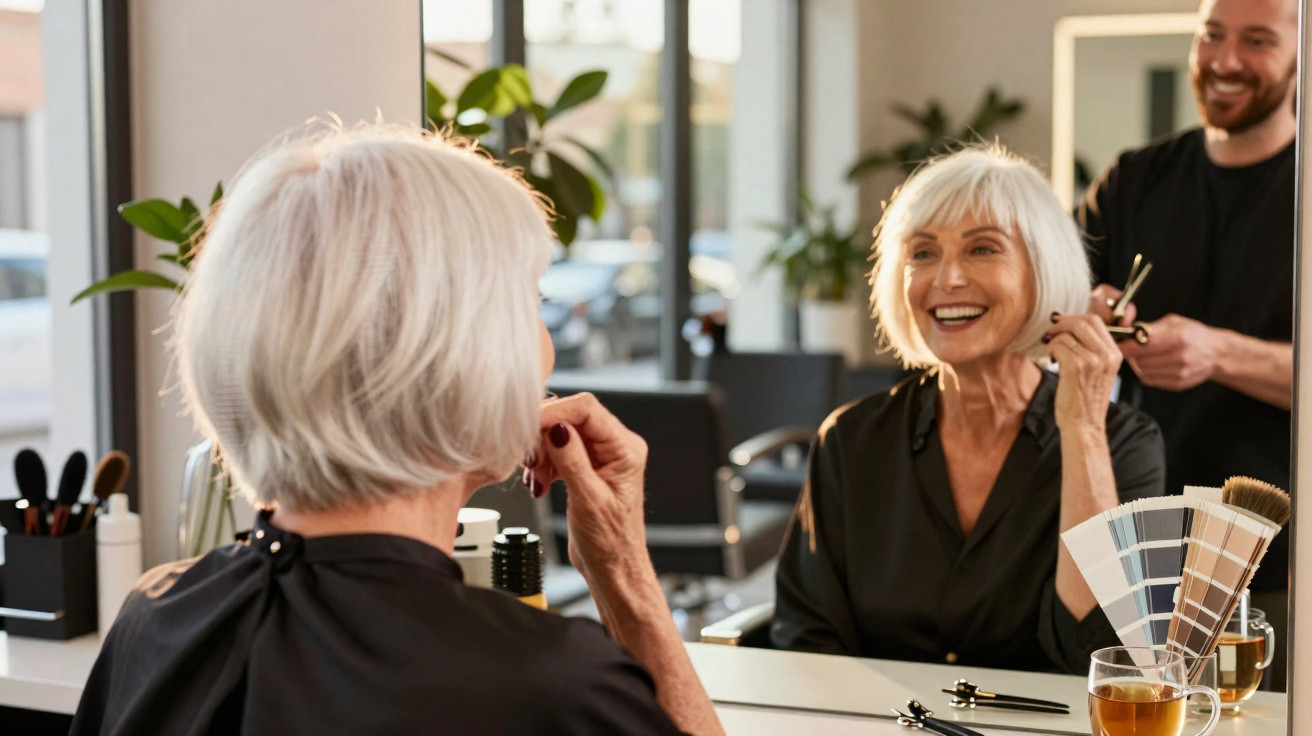
The classic Pixie has been familiar for years, but a fresh variation is currently gaining ground in international salons: the Trixie Cut. This short hairstyle is designed to give mature hair renewed lift, soften the appearance of fine lines and make white or grey hair shine. One sought-after celebrity hairdresser already hails it as the most exciting rejuvenating hairstyle for women over 70.
What the Trixie Cut is really about
Created in TONI&GUY salons, the Trixie Cut combines a modern Pixie with a particular layering method that creates soft transitions. The concept is short without looking severe; playful without becoming brash; and elegant while remaining easy to style.
Unlike a conventional Pixie, this cut is kept slightly longer and has a much more fluid finish. Rather than being closely shaved, the nape is gently shortened. Around the cheeks and face, the stylist leaves more length and introduces finely worked layers. This creates a relaxed texture that gives the hairstyle movement and lightness.
“The Trixie Cut is not a drastic cut, but a modern short hairstyle that frames the face rather than exposing it.”
This technique is especially effective on white or silver hair. The varied lengths catch and break up the light, making the contours appear more vibrant. Instead of a dense, weighty short style, the result is an airy look that feels very youthful without appearing contrived.
Why the Trixie Cut visibly rejuvenates women over 70
As hair ages, it often becomes finer at the crown and thinner around the temples. This is precisely where the Trixie Cut comes in. The stylist builds volume strategically at the top of the head and around the outline of the cut. Gentle layers and a tousled texture stop the hair from sitting flat.
The result is a silhouette that looks denser and fuller. It softens the face and gives it a more dynamic, gentler appearance.
Another advantage lies in the effect on facial shape. The fine, slightly longer sections around the cheekbones:
- soften angular lines;
- disguise small lines at the sides of the face;
- draw attention away from the forehead or nasolabial folds;
- deliberately highlight the eyes and mouth.
Grey or white hair in particular can create a kind of lifting effect: the ends reflect the light, the transition between skin and hair becomes visually less defined, and the face appears fresher and more awake.
How to switch from a Pixie to a Trixie Cut at the salon
Anyone who already wears their hair short usually does not need to sacrifice a great deal of length to try the Trixie Cut. The key is less about length than the construction of the cut. It pays to communicate clearly during the appointment.
“The more precisely the wishes are explained, the better the hairdresser can adapt the cut to the face, everyday life and personality.”
What to consider at your hair appointment
The following points can help with a salon consultation, especially in spring 2026, when many people are feeling ready to try something new:
- Take along a photo of a woman wearing a Trixie Cut on white or grey hair.
- Explain that the base should be a Pixie, but slightly longer, heavily layered and with soft contours.
- Be clear about how much length you want to retain at the nape – from lightly cropped to almost medium length.
- Mention whether you wear glasses or a hearing aid, so the hair around the ears can sit comfortably.
- Decide whether you want the look to be understated and neat or more rock-inspired and bold.
Many hairdressers welcome clients who are open to such a contemporary cut, although they may not yet recognise the name. In that case, it helps to ask for “a relaxed, layered short hairstyle with longer top layers and soft contours” and to show the direction in which you would like the hair to fall.
Everyday styling: minimal effort, maximum impact
One benefit of the Trixie Cut is how practical it is for everyday wear. The cut is designed to support the hair’s natural movement, which means styling can remain remarkably straightforward.
A typical morning routine:
- After washing, gently squeeze the hair dry with a towel rather than rubbing it.
- Apply a little volume or texture spray at the roots.
- Blow-dry using your fingers or leave the hair to air-dry.
- Finally, rub a small amount of lightweight paste or wax between your hands and loosen individual sections.
This produces the intentionally effortless texture that is a signature of the cut. Those who prefer a sleeker, tidier finish can blow-dry with a round brush and use only a small amount of product.
To help the haircut retain its shape, book a trim every five to seven weeks. This keeps the contours and layers defined, prevents the crown volume from collapsing, and ensures the look stays contemporary.
Who the Trixie Cut particularly suits
The Trixie Cut is not reserved for models in magazines. Women over 70 in particular can benefit from its visual effects when a few factors align.
| Hair type / characteristic | Suitability for the Trixie Cut |
|---|---|
| Fine hair | Very suitable, as the layers add fullness and movement. |
| Straight hair | Ideal for a clean structure with a lightly tousled finish. |
| Slight natural wave | The perfect foundation for a lively, soft look. |
| Very curly hair | More challenging; the hairdresser needs considerable experience with short haircuts. |
| Very thick hair | Requires substantial thinning and a sensitive approach, otherwise the cut can look too bulky. |
Face shape also matters. A round face gains more definition from the slightly longer top section and side strands. A narrow face looks more balanced with volume at the crown and soft sections around the cheeks.
Colour, highlights and care: making white hair shine
Many women over 70 now choose to wear their hair grey or white with confidence. The Trixie Cut makes the most of this trend. Its textured lengths and ends are ideal for subtle highlights or gloss treatments that reflect even more light.
Even small adjustments can be enough:
- Fine, cool-toned highlights reduce yellow tones.
- Glossing treatments give white hair more depth and sheen.
- Using a silver shampoo once a week keeps the shade clear and clean.
Hair care matters more here than dramatic colouring. Effective hydration, heat protection when blow-drying, and a lightweight styling mousse or cream are generally enough to keep the hair looking healthy and lively. Products that are too heavy merely weigh it down and diminish the airy effect.
Dare to cut: why the Trixie Cut is worth trying in 2026
Many women keep their classic short haircut out of habit, even though it no longer feels like a true reflection of them. The Trixie Cut offers a way to look fresher without a drastic transformation. It respects age, while visually taking the emphasis off it to a considerable degree.
If you are unsure, ask your hairdresser for a “Trixie light” version first: leave the nape a little longer, introduce layers carefully, and lift the front section only slightly as a trial. If you like how it feels, you can become more adventurous step by step at the next appointment.
It is also interesting to pair the cut with accessories. Statement glasses, small stud earrings or a neck scarf stand out far more with an exposed nape and shorter sides. Many women say that a modern short haircut suddenly makes them feel like wearing make-up again and adding colour to their wardrobe.
Above all, the Trixie Cut is an invitation not to settle for “practical” after 70, but to have fun with your own hairstyle. When this cut is tailored well, it not only brings visible freshness, but often restores a sense of lightness too.












Comments
No comments yet. Be the first to comment!
Leave a Comment