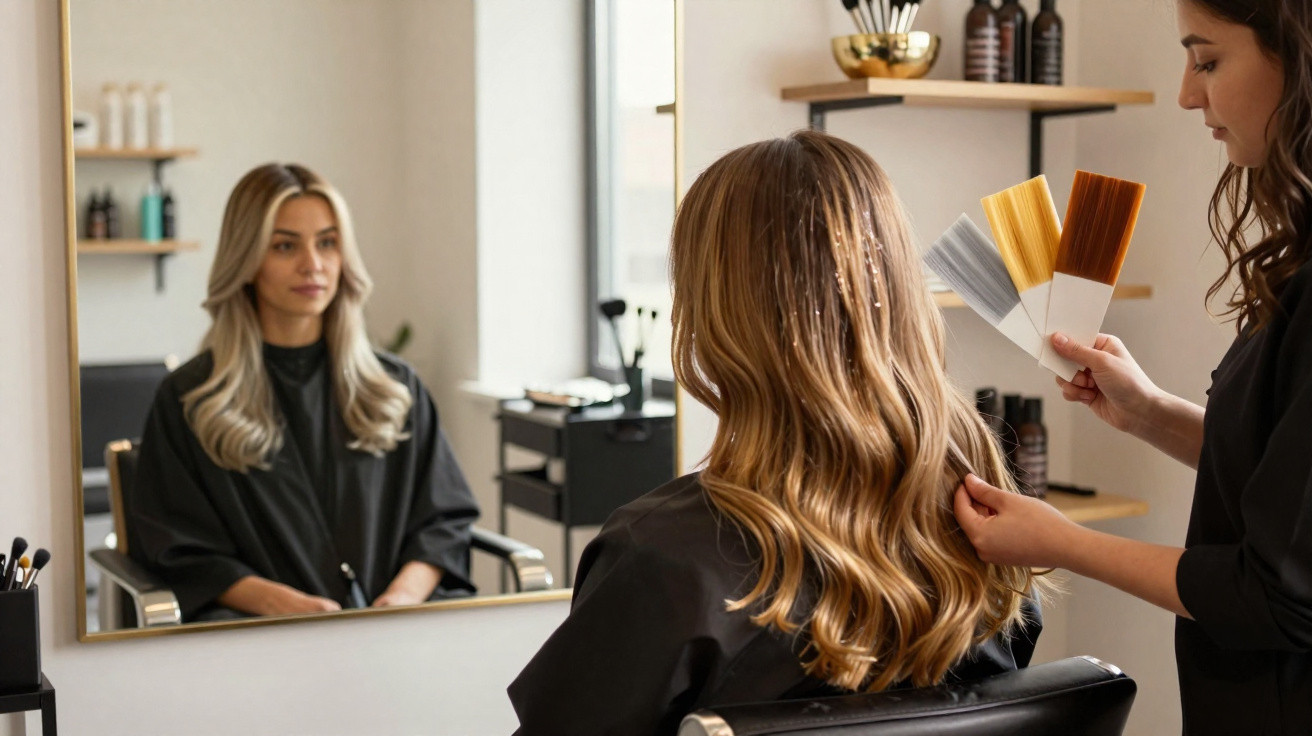
Many brunettes dream of a dramatic blonde transformation in spring – but an on-trend shade can make facial features appear harsh and tired.
Winter has ended, the sun is making a return and, for many women, so is the urge to change things up. Chunky jumpers are put away, wardrobes become lighter, and hair should look as though it is “glowing” too. Instagram and other platforms are full of images of icy-blonde manes. For brunettes, this is where the season’s biggest hairdressing pitfall begins.
The appeal of a complete transformation: why extreme blonde is so tempting
Anyone with dark hair will know the feeling: eventually, a simple trim no longer feels like enough. You want “a real change” – a new chapter, a different look and an obvious statement to the outside world. Cool, very pale blonde often sits at the top of the wish list. In photographs, it looks contemporary, luxurious and dramatic.
Social media amplifies that impression further. Filters smooth away every trace of redness, while lighting and editing make skin, hair and make-up appear perfectly coordinated. In real life, however, hardly anyone sits in the office or travels on the Tube with a ring light and professional make-up artist.
What looks like a Hollywood makeover on TikTok can quickly resemble the aftermath of a sleepless night in daylight – especially on brunettes.
That is precisely why it is worth taking a closer look before telling your hairdresser: “Make me really light!”
Contrast shock: how very pale blonde can suddenly harden facial features
Stylists refer to this as “contrast management”. Put simply, it is about how sharply the hair colour, eyes and eyebrows differ from one another. Many brunettes have dark brows and lashes, with clearly defined eyes. Adding almost-white or icy blonde can create a stark break in that balance.
As a result, the eyes may look less soft and open, and more severe or permanently surprised. Attention is drawn unintentionally to the eyebrows, even when they have been professionally styled.
There is also an optical effect around the face: very light, cool hair frames the contours like a spotlight. Every line becomes more noticeable and facial features can look more angular. While warm chocolate brown or hazelnut brown gently flatters the face, icy blonde can create an almost severe outline.
Rather than creating a “summer glow”, it can quickly result in a strict, slightly hardened look – particularly on strong facial features.
When the complexion suffers: why cool blonde can look flat on many brunettes
The biggest difficulty lies in how the shade interacts with the skin. Many people with dark hair have a warm undertone: golden, slightly olive or Mediterranean. A cool, ashy blonde rarely works particularly well with this colouring.
When a very cool, ash or silver blonde meets warm skin, the undertones cancel each other out – and not in a flattering way. The face loses radiance and can appear flat, or even slightly greyish or greenish depending on the light.
The comments are familiar: “You look a bit tired,” or “Are you unwell?” – straight after an expensive salon appointment. The intended effect of looking fresher is turned completely on its head.
The instant ageing effect: how cool blonde emphasises fine lines and dark circles
As we get older, many faces become more sensitive to the wrong hair colour. Extremely light, cool blonde can make fine lines, dehydration lines and dark circles much more visible.
The reason is that when warmth is missing from the hair, the face loses its visual “soft-focus filter”. The pale, cool shade highlights every shadowed area. Bluish or violet tones beneath the eyes become more apparent, while smile lines around the eyes stand out more clearly.
Light, cool hair acts like an overhead spotlight: it makes every contour more prominent – including the ones you would rather conceal.
Anyone already dealing with dehydration lines, mild rosacea or thin skin should be particularly cautious about heavily bleached, cool blonde.
The hidden side: what radical lightening does to your hair
Beyond its visual impact, intense bleaching seriously affects the hair structure – especially when the natural colour is dark. To achieve a very light result, the hairdresser must remove several layers of pigment from the hair. This process is exactly what dries it out and leaves each strand brittle and rough.
Many people know the result: hair feels straw-like, loses its shine and no longer falls as nicely. A salon blow-dry immediately after the appointment can be misleading, but the reality soon becomes clear at home.
- Hair is harder to comb and breaks more easily.
- Ends split sooner and look wispy.
- Shine disappears, leaving the blonde dull or patchy.
- Styling takes longer and heat damage increases.
There is also the maintenance involved: with naturally brunette hair, dark roots show through rapidly. After two to three weeks, the colour can already look grown out; after six weeks, a harsh “helmet effect” develops, with a clear dividing line between the roots and lengths.
Smarter colouring: blonde shades that genuinely flatter brunettes
The good news is that no one has to avoid lighter effects altogether. Those with naturally dark hair usually fare better with soft transitions and warm tones than with all-over icy blonde.
Soft brightness instead of block blonde
For brunettes, hairdressers often choose techniques that introduce brightness gradually:
- Bronde: a blend of brown and blonde, where the base shade remains dark while selected sections are lightened.
- Balayage: a freehand technique that adds fine light strands for a sun-kissed effect.
- A graduated colour with soft roots: the roots stay darker, while the lengths gradually transition into a lighter, warmer blonde.
These techniques add movement, make hair look more lively and are far kinder to the complexion than an even platinum-blonde head of hair.
Why warm shades often create more glow
Instead of ash or silver tones, these shades often look far more harmonious on brunettes:
- Honey blonde
- Caramel
- Hazelnut tones
- Golden or copper highlights
These colours pick up and reflect the skin’s warm undertone. The complexion looks fuller, fresher and almost lightly sun-kissed. Small imperfections are more likely to be visually softened rather than emphasised.
Bringing warm highlights into the hair is, in effect, like applying a soft-focus filter to the face – without any filter at all.
How to speak to your hairdresser and avoid a colour disaster
Many colour mistakes happen because clients show just one picture and say: “I’d like it like this.” A three-step conversation is much more useful:
- Explain your starting point: your natural hair colour, skin undertone and usual make-up habits.
- Describe the effect rather than an exact shade: say “I want to look fresher, softer and warmer” instead of “I want this platinum”.
- Discuss your care and time budget: how often can you realistically manage salon visits?
A good colourist is then more likely to recommend a shade tailored to your colouring rather than rigidly recreate a trend look. Saying from the outset that touching up your colour every four weeks is not an option helps prevent unrealistic colour goals.
When cool blonde can still work
There are brunette types who suit very light, cool blonde remarkably well – often women with very fair, porcelain-like complexions and naturally low contrast in their facial features. In these cases, a clear, icy shade can make the eyes shine and work as a style statement.
However, it usually requires:
- a highly precise colour analysis
- a consistent care routine using moisturising and repairing products
- a willingness to attend the salon frequently
Those who do not want to commit to these points, or feel uncertain when choosing a shade, will usually be safer with warm, soft gradations. The skin looks more awake, facial expressions appear more relaxed and the hair stays healthier in the long term.














Comments
No comments yet. Be the first to comment!
Leave a Comment