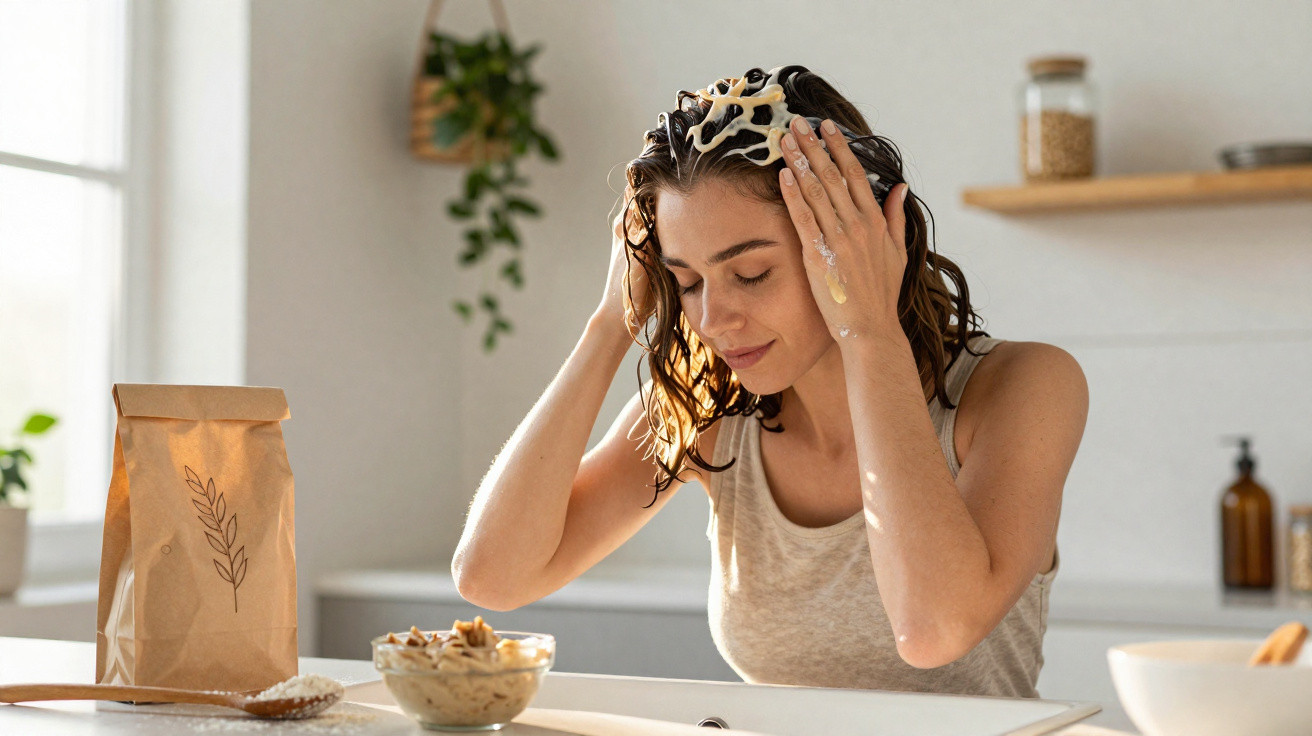
Across Germany and further afield, a modest yet expanding number of people have already responded to that question by replacing foaming bottles with a cupboard basic: simple rye flour blended with water.
From fringe trend to a quiet bathroom revolution
Rye flour hair washing forms part of the so-called “no poo” movement, whose followers abandon conventional shampoo and conditioner altogether. Its straightforward aim is to give the scalp time away from synthetic surfactants, fragrances and preservatives, allowing it to regulate naturally.
Compared with more radical approaches that use water alone, the rye flour method provides a middle ground. It is intended to cleanse well while remaining mild, inexpensive and low-waste. Searches on social media reveal tens of thousands of posts on the subject, while eco-shops in cities including Berlin and Hamburg say curious beginners ask about it regularly.
Rye flour acts as a mild, biodegradable cleanser that can remove oil and dirt without stripping the scalp’s natural barrier.
For many people, its attraction is as much emotional as it is practical: the process has an almost traditional quality, feeling more like bread-making than washing with fruit-scented lather.
Why rye flour works on hair
Flour and hair may initially appear to be an unlikely pairing. However, rye has several characteristics that make it surprisingly useful as a cleanser.
Starch as a natural emulsifier
Rye flour contains high levels of starch. Blended with water, the starch molecules expand into a gentle, gel-like mixture that can attach to sebum, perspiration and tiny dust particles on the scalp.
When the paste is rinsed out, it takes the attached oil and dirt with it. In contrast to aggressive detergents, it generally retains a light protective layer of natural lipids, potentially helping many users experience less dryness and frizz.
Kind to the scalp’s acid mantle
Healthy scalp skin has a mildly acidic pH, commonly known as the “acid mantle”. Although many shampoos are formulated to suit the skin, regular washing and powerful surfactants may still interfere with this balance.
Rye flour generally falls within a gentle, skin-compatible range. Its advocates report that, after several weeks, they experience less itchiness, fewer flakes and less redness, particularly if they follow the wash with a diluted apple cider vinegar rinse.
Environmental benefits: a paper bag rather than a plastic bottle
Sustainability is another major reason for the growing interest. An ordinary bag of rye flour is frequently sold in recyclable paper packaging and has no microplastics, silicones or synthetic fragrances that may enter rivers and seas when washed away.
For zero-waste enthusiasts, rye flour functions as both product and packaging solution: one kilo can replace multiple plastic bottles.
This change may cut household rubbish and reduce the chemical burden passing from bathrooms into wastewater networks.
How to wash your hair with rye flour
The technique may sound unconventional, but after learning it, it can be nearly as fast as an ordinary wash.
Basic recipe for shoulder-length hair
- 4 tablespoons of finely ground rye flour
- 230–250 ml of lukewarm water
- Optional: a splash of apple cider vinegar for a post-wash rinse
Begin by whisking the flour and water together until all dry lumps have disappeared. Leave the blend to rest for roughly ten minutes. This pause gives the starches time to swell, which usually improves its cleansing action.
While showering, thoroughly wet the hair before applying the rye paste to the scalp and upper lengths. Work it in gently using your fingertips. It will not foam, which may feel strange to those accustomed to shampoo, but massaging still spreads the paste to the areas that need it.
Allow it to sit for around five minutes before rinsing generously with water. If your hair is long or thick, use your fingers to separate it into sections so that every trace of flour is removed. A final rinse of water containing a little apple cider vinegar may help flatten the cuticle and increase shine.
Managing the transition phase
For many, the initial two to four weeks are the most challenging. A scalp accustomed to frequent degreasing can produce excess oil when conventional shampoo is stopped abruptly.
During the early weeks, hair may feel heavier or greasier as the scalp recalibrates its oil production.
Holistic hair-care specialists advise using helpful tools instead of abandoning the process at this stage. A brush with densely packed natural bristles can move sebum from the roots down through the lengths. A wooden comb can detangle hair without breaking delicate strands, especially while it is damp.
How hair is dried also makes a difference. Rather than rubbing vigorously with a towel, many supporters gently press out excess moisture with a microfibre towel or an old cotton T-shirt, helping to limit frizz and breakage.
Who may benefit most?
Experiences differ from person to person, but anecdotal accounts and small community surveys indicate that some groups often see particular benefits.
| Hair/scalp type | Typical experience with rye flour |
|---|---|
| Fine, quickly greasy hair | The scalp may settle over a number of weeks, and some users can leave longer gaps between washes. |
| Dry, wavy or curly hair | Many report reduced frizz and a softer texture, particularly when light oils are used on the ends. |
| Sensitive, itchy scalp | Some users describe less irritation, as long as they rinse fully and do not scratch. |
| Coloured or bleached hair | Results are varied: some appreciate the mildness, while others miss the slip provided by conditioner and use masks. |
Rye flour versus classic shampoo
Dermatologists approached by European media do not usually reject the trend completely, though they do raise concerns. Conventional shampoos are required to undergo safety and stability testing, whereas rye flour is a food ingredient being adapted for cosmetic use.
The main distinctions include:
- Foam and feel: Shampoo contains surfactants that create foam and make it easy to distribute. Rye paste is thicker in texture and may need more time to rinse away.
- Preservation: Mixed rye paste should be used promptly or refrigerated for only a short time. It spoils considerably sooner than bottled products.
- Allergies: Anyone sensitive to wheat or grains should take care, as they may develop itching or redness.
- Hard water: In areas with very hard water, some users encounter residue problems and depend heavily on acidic rinses to offset them.
Specialists occasionally suggest alternating methods: using rye flour for most washes and a mild shampoo from time to time to clear build-up from styling products or minerals.
Real-life experiments and small bathroom dramas
Within Berlin’s allotment communities, tales of rye flour hair care have developed a life of their own. A group in Neukölln made the technique into a neighbourhood science project, comparing wholegrain rye with type 1150 flour. They measured how long each mixture took to become smooth and assessed which left the least residue.
There were some mishaps. One participant confessed to missing a wash during a busy week, then arriving at a family dinner with clearly oily roots. Another got the water proportions wrong and produced a paste so thin that it slipped straight off their fringe. Even so, after several weeks, most participants said they would not return completely to conventional shampoo.
What started as a niche eco-experiment became a talking point about how much product we truly need for basic hygiene.
Risks, limitations and when to avoid the method
Despite the enthusiasm surrounding it, rye flour is not a universal solution. Trichologists advise anyone with a diagnosed scalp condition, including psoriasis, severe seborrhoeic dermatitis or recurring fungal infections, to consult a professional before altering their routine.
Flour use also involves several particular risks:
- Incomplete rinsing: Paste remaining in the hair may dry into small flakes that look like dandruff.
- Product build-up: Rye alone might not fully remove heavy styling products, silicones or hairspray.
- Storage mistakes: Making large quantities and leaving them at room temperature can encourage bacterial growth.
For those with very limited mobility or little time in the bathroom, the longer rinsing process may be impractical. A low-irritant shampoo could be a better choice in these circumstances.
Practical routines and combinations that work
Many people ultimately pair rye flour with other uncomplicated household ingredients. One common approach is to use a rye wash once or twice weekly, follow it with a diluted apple cider vinegar rinse, then apply a few drops of a light oil, such as argan or jojoba, to the ends while the hair remains damp.
Others reserve rye flour for deeper-cleaning days, using water-only rinses or co-washing, meaning washing with conditioner, in between. People who exercise and sweat heavily may find that a quick post-workout rinse followed by a full rye wash only when necessary helps prevent dryness.
Rye flour hair care does not need to be all or nothing; many households use it as one tool among several low-impact options.
For anyone thinking of trying it, dermatologists recommend a simple process: apply a little paste to the inside of the arm, wait 24 hours to check for a reaction, then begin with one mild wash and observe how the scalp feels over the following few days.
Viewed in this context, the trend is less about flour itself than a broader change in attitude. People are looking at long shelves of brightly coloured bottles and wondering whether a calmer, simpler routine could be sufficient for clean, healthy hair.
















Comments
No comments yet. Be the first to comment!
Leave a Comment