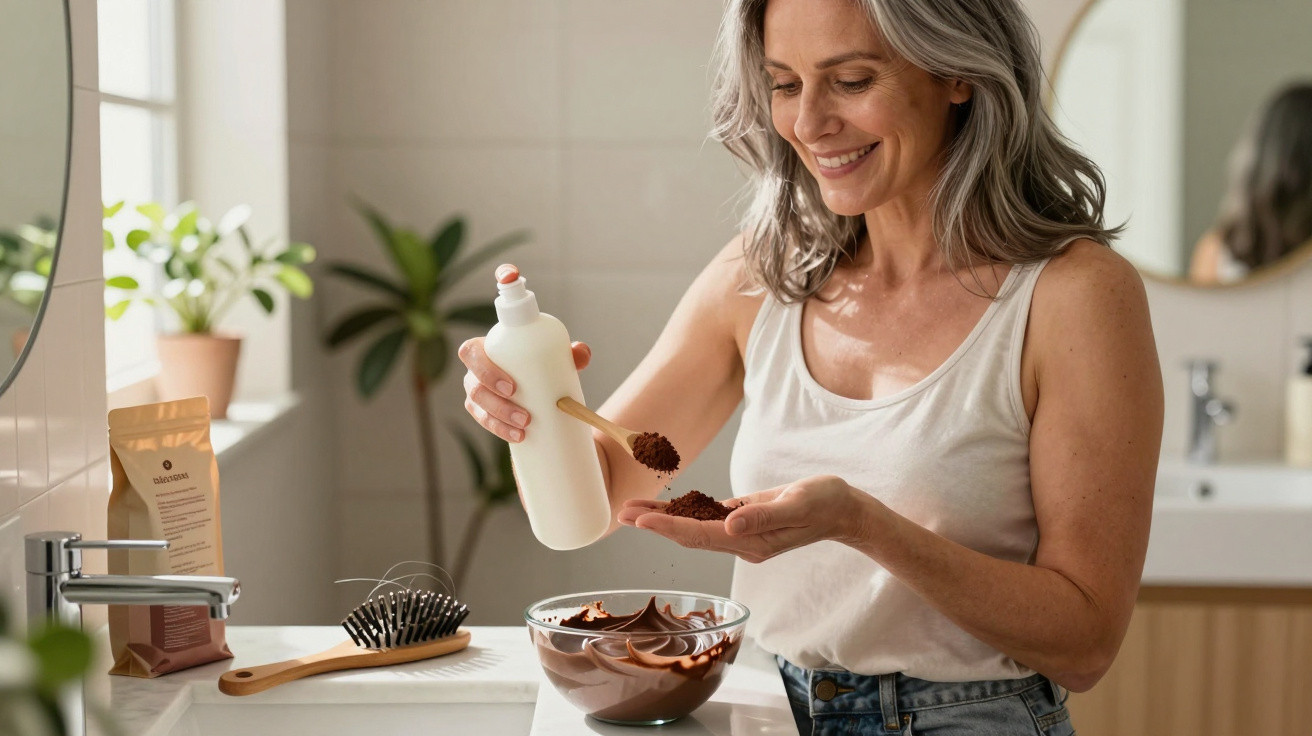
A kitchen-inspired trick is winning over thousands of users and shaking up haircare routines.
Social media is buzzing, forums are alive with discussion, and bathrooms are becoming testing grounds. The promise sounds straightforward: revive colour, coat the hair fibre and reduce damage without using traditional oxidising products. Beyond the trend, practical mechanisms help explain its popularity.
A growing trend in the bathroom
Permanent dyes offer strong grey coverage, but they can also weaken the cuticle and add to the cost. Touch-ups soon become frequent, while the scalp may grow more sensitive. Many people are looking for a gentler, adjustable option that fits into a weekly routine. An inexpensive home treatment is gaining ground and can be added easily to an existing haircare regime.
Cocoa moves from the kitchen to the bathroom
Unsweetened cocoa powder contains brown pigments, polyphenols and theobromine. These compounds sit on the surface of the hair, deepen highlights and smooth the appearance of each strand. The resulting shade remains subtle, without turning orange. Hair feels more substantial, looks shinier and appears easier to manage.
Why cocoa works on grey hair
- Brown pigments settle onto the cuticle, softening the bright white appearance of grey hair.
- Tannins gently tighten the cuticle scales, helping to boost shine.
- Combining cocoa with conditioner makes the mixture easier to spread and lowers the risk of dryness.
Typical result: deeper highlights on light brown and dark hair, with a more harmonious blend between grey strands and the natural lengths.
A precise method
The process is quick and uncomplicated. It can be adjusted to suit the thickness and porosity of your hair.
- Choose pure, unsweetened, 100% cocoa powder.
- Opt for a conditioner without heavy silicones to encourage pigment adhesion.
- Mix 2 to 4 tablespoons of cocoa with 3 tablespoons of conditioner.
- If needed, add a few drops of lukewarm water to create a smooth, creamy paste.
- Apply to clean, towel-dried hair, section by section.
- Leave it on for 20 to 30 minutes under a shower cap.
- Rinse with lukewarm water until the water runs clear, then dry as usual.
Recommended frequency: once a week for the first 3 weeks, then every 7 to 10 days to maintain the shade.
Fine-tuning for your hair type
- Thick or highly porous hair: aim for a 30-minute processing time.
- Fine hair: 15 to 20 minutes is enough.
- Stronger highlights: add 1 tablespoon of cocoa and extend the time by 5 minutes.
- A silkier feel: include 1 tablespoon of yoghurt or 1 teaspoon of aloe vera gel.
Who this method suits
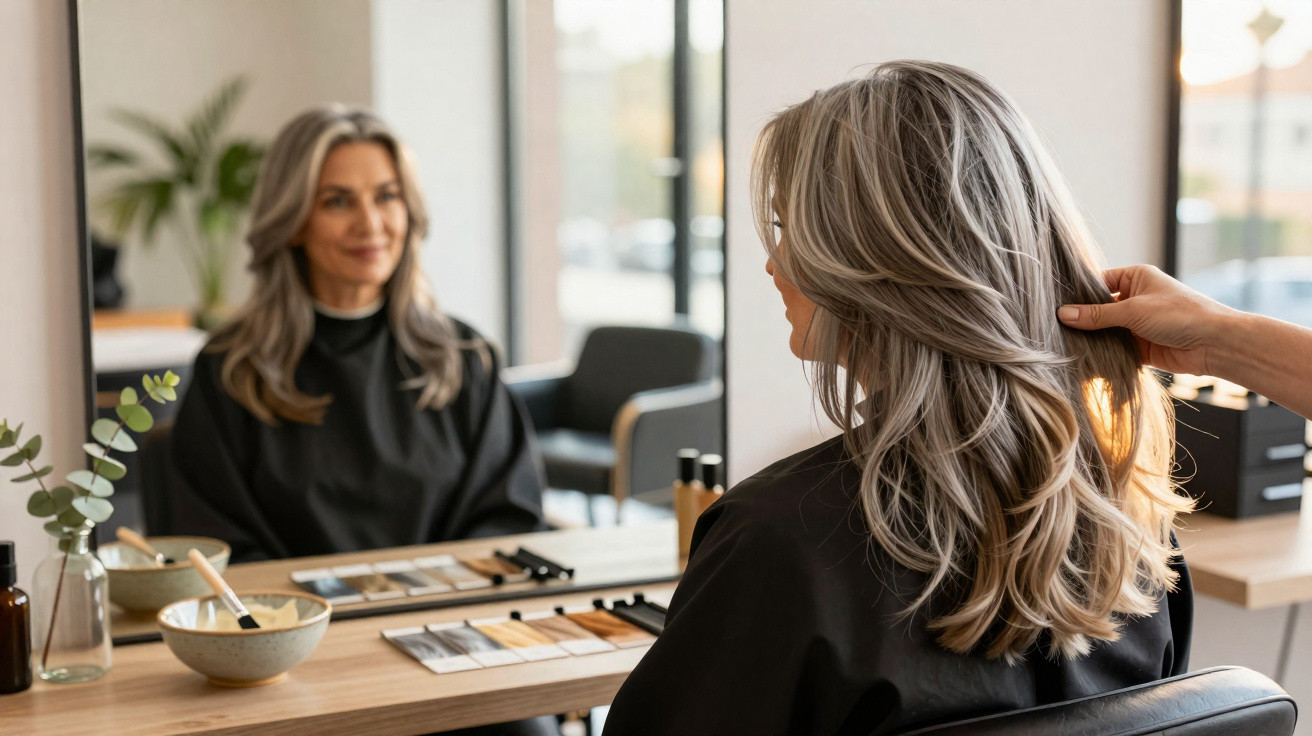
Dark brown and light brown hair benefit most from this trick. Highlights blend more naturally, the grey regrowth line is softened and the overall colour gains depth. On salt-and-pepper hair, the mixture creates an even veil that reduces the contrast between the temples and the lengths.
On very light blonde hair, cocoa can leave a warm beige tone. Some people like this result, while others do not. A strand test remains a sensible way to check the colour first.
Avoid cocoa on platinum blonde or heavily highlighted cool blonde hair if you want to retain ash tones without warmth.
Quick comparison with conventional hair dye
| Criterion | Oxidative dye | Cocoa + conditioner |
|---|---|---|
| Grey coverage | High (80–100%) | Light to medium (20–60%) |
| Lasting power | 4 to 6 weeks | 2 to 4 washes |
| Effect on the hair fibre | Can weaken hair | Coating and conditioning effect |
| Processing time | 25 to 40 minutes | 15 to 30 minutes |
| Cost per application | Medium to high | Low |
| Smell | Ammonia or alkaline notes | Cocoa notes |
| Allergy risk | Present (PPD, resorcinol) | Low, test recommended |
Professional tips to use at home
- Use a light clarifying pre-wash if you regularly apply silicone-heavy hair products.
- Wear gloves and use a dark towel to prevent staining.
- Leave the treatment on with gentle warmth, such as a warm towel, to improve pigment adherence.
- Rinse with lukewarm, never scalding, water to protect the cuticle.
- Wait 24 hours before your next shampoo, allowing the pigments time to settle.
What to avoid
- Sweetened hot chocolate powders, which can stick to the hair and weigh it down.
- Excessive quantities, which may dry out fine hair.
- Very coating conditioners, which restrict pigment adhesion.
Always test on the skin 48 hours beforehand and on a hidden strand. Natural ingredients reduce the risk; they do not eliminate it.
Natural variations and combinations
Would you like a cooler highlight? A black tea rinse can darken the hair slightly without adding obvious warmth. Need a stronger result on highly visible grey hair? Strong coffee used as a final rinse temporarily enhances the effect of cocoa. Dye plants such as sage and rosemary can also add subtle highlights, particularly around the temples.
- Cool highlight: cocoa + brewed black tea, for a more fluid paste.
- Warm highlight: cocoa + a drop of almond oil, for added shine.
- Herbal rinse: simmer sage for 10 minutes, once a week.
Precautions and safety
Cocoa can stain pale fabrics. Protect towels and pillowcases on the day of application. Avoid getting the mixture in your eyes. If your scalp becomes red, rinse it out and leave longer between applications. A very dry scalp may benefit from a little aloe or a conditioner rich in humectants.
Sensitive scalps benefit from a mildly acidic pH. A conditioner with a pH of 4.5–5.5 supports shine and helps limit frizz. Cocoa does not make the preparation alkaline, which protects the cuticle and maintains softness.
When the cocoa method reaches its limits
This method is not enough if you want full coverage or a dramatic change in shade. It tones rather than transforms. Very white hair may remain visible, although it will look less bright. A salon visit for an acidic gloss or toner can still complement this approach, especially on a light base.
Further information
Budget and duration: a 250 g bag of pure cocoa provides 8 to 12 applications, depending on hair length. The cost per treatment often comes to less than £0.50. A salon colour appointment frequently costs several tens of pounds. This method reduces spending between technical salon services and spaces out harsher touch-ups.
Maintenance plan: schedule 3 weeks of “loading” with one application each week, then switch to a maintenance rhythm. A monthly clarifying shampoo resets the hair if build-up becomes bothersome. People with salt-and-pepper hair who want to embrace the transition can combine approaches: use cocoa to blend regrowth, get regular trims to bring the grey through, and use a purple shampoo occasionally to counter any unwanted warmth.









Comments
No comments yet. Be the first to comment!
Leave a Comment